Below is a video of this 19-minute message about God’s persistence in offering salvation to each one of us.
Throughout the scriptures, God is reaching out to humanity with the offer of salvation. Isaiah 55 is filled with words of invitation from God. Joshua 5 links the liberation of the Israelites from slavery with the first Passover meal in the promised land. 2 Corinthians 5 has Paul telling us, that if anyone is in Christ, that person is a new creation – the old has gone, the new is here! And Luke 15 tells the remarkable story of the prodigal son – or perhaps it is the story of the forgiving father, who welcomes back his wayward son. The father runs down the road to embrace him and celebrate his return. The prodigal son is saved, thanks to the generosity of his father.
Today we celebrate St Stephen, after whom our church is named. It is our church’s patronal festival, our birthday.
Stephen was a young man, appointed a deacon in the early church. He appears only in Acts 6 and 7, but in those few pages, he makes a remarkable impression and impact. He is the first Christian martyr – stoned to death because he challenged the Jew people’s lack of faith in Jesus Christ.
While we walk primarily in the footsteps of Jesus Christ – he is God incarnate, our teacher and our Lord and saviour – we give heed also to the example of Stephen, and seek to continue his legacy in our parish community today.
Our readings centre on Acts, omitting Stephen’s long, but very impressive and persuasive sermon. This are supported by a reading from 2 Chronicles, where Zechariah (an earlier Zechariah – not the father of John the Baptist) is stoned to death for speaking God’s Word. Psalm 31, which includes the words that both Jesus and Stephen speak as they died. And John 6, which is the ordinary reading for today, from Jesus’ long sermon on the Bread of Life. I have tabulated these three people, because there are significant and meaningful similarities between them, that speak to all Christians, and especially those who are members of a church named after St Stephen:
Topic
Zechariah
Jesus
Stephen
Reading
2 Chronicles 24:17-22
John 6:24-35
Acts 6:8-10 & 7:54-60
Holy Spirit
Spirit of God came on him
Baptised by John and the Holy Spirit descended on him
Full of Holy Spirit, faith, grace and power
Care for the poor
–
Fed 5000 men (plus women and children) with bread and fish
Oversaw the daily distribution of food
Challenges with the people
They were chasing after other Gods
They just wanted food and miracles
Wanted quiet conformity with the past
Challenging the people
Why do you disobey the Lord’s commands?
Do not work for food that spoils
You stiff necked people! Your hearts are uncircumcised! You always resist the Holy Spirit! Was there ever a prophet your ancestors did not persecute?
Consequences for God’s messengers
Stoned to death
Crucified
Stoned to death
Their final words
May the Lord see this and call you to account.
Father, forgive them, for they know not what they are doing.
Lord, do not hold this sin against them.
Final prayer
–
Father, into your hands I commit my Spirit (in Luke)
Lord Jesus, receive my spirit (Psalm 31:5)
So, what do we take from this, and particularly from Stephen, into our daily lives?
We must take our faith seriously – it is costly, important and even worth dying for.
We must care for the poor, hungry and marginalised.
We must seek the infilling of Holy Spirit, who equips us for life and ministry.
We must seek after the things of God, and not after the things of this world.
We must forgive those who hurt even, even to death.
Today, I’d like us to reflect on giving – financial giving. Before you run for the doors, give me a chance to put giving into context.
Our Old Testament reading today (2 Samuel 1:17-27) tells of the great love between David and Jonathan. It is a very tender reading, reminding us of our loving relationships with others, with family and with God. This theme of relationship runs through all our readings today.
Psalm 130 is an intimate song of love for and trust in God. “Out of the depths I cry to you, Lord” and “I wait for the Lord, my whole being waits, and in his word I put my hope” and “with the Lord is unfailing love”. This beautiful Psalm emphasises the deep loving relationship between us and God.
And Mark 5:21-43 tells of the woman who suffered from bleeding and had all but given up hope of healing. But she hears that Jesus is in the area and so she comes towards him, hiding from the people who would judge her, trusting and having faith that he can heal her, even if she touches just the hem of his robe. And as she is healed, Jesus lifts her up and honours her.
And Jesus does the same later in the same passage with the little girl who had died, “Little girl, I say to you, get up!” And she is brought back to health and life.
All of these readings emphasise the relationship of love, faith and trust between us and God and between us and each other.
It is in this context or relationship and faith that we come to 2 Corinthians 8:7-15, where Paul speaks about giving financially:
v7 – Paul writes about the “grace of giving” – grace meaning a gift (charis in the Greek, from which we get charismatic – spiritual gifts)
v8 – He emphasises that this is not a command to give – rather it is a grace to give
v8 – He uses words like sincerity and earnestness in relation to giving, to emphasise how personal giving is
v9 – Paul compares this with Jesus’ giving of himself for us – though he was rich, for our sake he became poor, so that through his poverty we might become rich – such a great act of generosity from Christ
v10 – He affirms the Corinthians not just for being the first to give, but particularly for being the first to have the desire to give – this desire or willingness or wanting to give is more important to him than the actual giving
v11 – He emphasises that we should give “according to our means” – the quantity of giving de-emphasised in favour of the “eager willingness” with which we give
v12 – Again, Paul emphasises our “willingness” to give – and again he emphasises giving “according to what one has, not according to what one does not have”
vv13-15 – And in the following passage he speaks at length about equality. He is interested in a redistribution of wealth – that those have more give to those who have less, so that everyone has enough. “The goal is equality” he says. Perhaps the modern word ‘equity’ is more appropriate – that each person has enough according to their needs, rather than that each person has the same. This is a foundation of Christian socialism, which brings us back to the focus on relationships – we live in fellowship with each other, connected to each other, and so if we have more than we need and someone else has less than they need, our inclination should be give some of what we have to them.
And Paul concludes, “The one who gathered much did not have too much, and the one who gathered little did not have too little”, quoting from the Israelites gathering manna in the desert in Exodus 16:18, which also says, “Everyone had gathered just as much as they needed”.
Giving financially may not come naturally to most of us – we want to hold on to, protect, save or spend what money we have. But the scriptures call us to be both sensible and generous, based on our relationships with God, the church and each other – relationships of love, faith and trust. I encourage you to reflect on this and consider whether you should revise your giving to God’s work.
Today’s reading is Matthew 20:1-16. It is the story about a landowner who hires people to work in his field, starting from early in the morning (perhaps 5am) until 5pm in the evening. He promises the first a denarius – a generous day’s wage; and he promises the later workers a ‘fair’ wage. He comes out himself even late in the day and asks people why they are standing around doing nothing, and they say, because no-one has hired them, and so he hires them, knowing that humans were created to work – God’s first commands to Adam and Eve are to work in the garden and take care of the earth. This is the first grace: we are invited to work with God.
Evening comes and the landowner calls the workers together and pays everyone the same – a denarius. The workers who started early are understandably unhappy. But this is not a story about labour and economics. It is a story about grace. God’s grace is abundantly given to all of us, whether we start early or late, whether we do much or little. Think of the thief on the cross beside Jesus in Luke 23 – he could do nothing on that cross, yet he entered into Christ’s paradise. The landowner asks the disgruntled workers if they are envious that he is generous – do you envy my grace? Grace if fundamentally unfair. This is the second grace: we ALL get what we do NOT deserve.
Fix your eyes on Jesus. Be amazed by grace.
Just last night, my wife Trina shared with me this video of ‘Amazing Grace’ sung differently by Dan Vasc. It fits so perfectly, I cannot help but conclude it was God’s prompting.
During Lent, it is customary for us to fast. It is not a rule or a requirement – you should decide for yourself whether you will fast. And you should also decide for yourself what you will fast from. In this message, I offer seven basic principles of fasting.
1. Fasting is an important spiritual discipline, backed up by plenty of Biblical precedent. Jesus himself fasts in the Gospels, and of course his ministry started with a 40-day fast in the wilderness. But although Jesus does fast and does provide guidance on fasting, he does not instruct or command us to fast.
2. Fasting is between you and God. It has nothing to do with anyone else. Jesus says in Matthew 6 that we should fast in secret, hidden in a closet, even putting on makeup so that it does not look as if we are fasting. It is a private matter between you and God.
3. How you fast and what you fastfrom is between you and God. There are no clear rules in the Bible about how fasting should be done. There are diverse examples of fasting in the Bible, but no specific singular pattern that is set down. There is thus flexibility in how fasting takes place – prayerfully figure out for yourself what will be helpful.
4. There are no dire consequences to breaking your fast. I am not encouraging you to break your fast, nor to be flippant about fasting. But I am saying that if you break your fast, it is just like any other sin you might commit. Sometimes we make fasting into such a big thing, that if we slip and break our fast, it seems like the end of the world. It is not the end of the world. It is simply sin.
5. Breaking your fast is an opportunity for learning. Again, I’m not encouraging you to break your fast or to be negligent in your fasting. But it is probably true that most of us break our fast from time to time. Breaking one’s fast is, arguably, a ‘small’ sin – it’s not in the same league as adultery or murder. It thus gives us a valuable opportunity to practice repentance (saying ‘sorry’ to God) and asking for forgiveness – and then for receiving God’s forgiveness. And then getting back to your fasting. For me, the moments of breaking my fast, repenting and accepting God’s forgiveness are among the most spiritually enriching moments of fasting.
6. Fasting is primarily about the heart, not the action. When we fast from chocolate, for example, we are not giving up something sinful – chocolate is not a sin. Most things we fast from are not sin. The reason for this is that the point of fasting is less about giving up sin (since we should be doing that already all the time!) but about giving up something. It is the impact of giving up something that is at the heart of fasting. It is what happens in our heart, in our faith, in our relationships with God that makes fasting meaningful. Joel 2:12-14 stresses this with the words, “Rend your hearts and not your garments”:
“Even now,” declares the LORD, “return to me with all your heart, with fasting and weeping and mourning.” Rend your heart and not your garments. Return to the LORD your God, for he is gracious and compassionate, slow to anger and abounding in love, and he relents from sending calamity. Who knows? He may turn and relent and leave behind a blessing— grain offerings and drink offerings for the LORD your God.
7. Fasting should be paired with charity. We are called to give generously while we fast. In practice, we could calculate the cash value of the things we are giving up and then give that cash to God’s work in the church or a charity or directly to people in need. This is stated particularly clearly in Isaiah 58:3-7:
‘Why have we fasted,’ they say, ‘and you have not seen it? Why have we humbled ourselves, and you have not noticed?’ “Yet on the day of your fasting, you do as you please and exploit all your workers. Your fasting ends in quarreling and strife, and in striking each other with wicked fists. You cannot fast as you do today and expect your voice to be heard on high. Is this the kind of fast I have chosen, only a day for people to humble themselves? Is it only for bowing one’s head like a reed and for lying in sackcloth and ashes? Is that what you call a fast, a day acceptable to the LORD? “Is not this the kind of fasting I have chosen: to loose the chains of injustice and untie the cords of the yoke, to set the oppressed free and break every yoke? Is it not to share your food with the hungry and to provide the poor wanderer with shelter— when you see the naked, to clothe them, and not to turn away from your own flesh and blood?
I wish you God’s richest blessings during your Lenten fast this year.
Our reading for today is a passage from the book of Joshua 4:1-7. It tells the story of the Jewish people crossing the Jordan river from the desert or wilderness where they had wandered for 40 years, into the promised land. As they cross the river, which parts much like the Red Sea parted when they fled from Egypt, the leaders of the 12 tribes of Israel are instructed by Joshua to each collect a large stone, and carry it on their shoulder to the other side, into the promised land, into the camp where they would rest that night.
Joshua explains that these stones are
“to serve as a sign among you. In the future, when your children ask you, ‘What do these stones mean?’ tell them that the flow of the Jordan was cut off before the ark of the covenant of the LORD. When it crossed the Jordan, the waters of the Jordan were cut off. These stones are to be a memorial to the people of Israel forever.”
In today’s sermon, which I encourage you to listen to or watch, since it is too rich and compact to write down here, we review God’s engagement with humanity from Abram (later to become Abraham), Joseph, the migration of Jacob’s family to Egypt, the 100 or so years of good relations Jews had with Egyptians, and then the 100 or so years of slavery under the heavy burden of the Egyptians, the rise of Moses following his encounter with God in the burning bush, the plagues and the Jewish people’s escape across the Red Sea, their long and circuitous journey through the desert for 40 years, the death of Moses, the election of Joshua, and finally (in Joshua 4) the crossing of the Jordan river into the promised land.
In this long narrative, which extends over hundreds of years, we see repeatedly God’s engagement with and grace towards God’s people. And we see humanity’s faith in God rise and fall. And we see the remarkable things that happen when people align with God.
Thus, Joshua gathers these 12 stones to create a memorial that will remind the people of everything that God has done. As he says later in this chapter (4:21-24):
“In the future when your descendants ask their parents, ‘What do these stones mean?’ tell them, ‘Israel crossed the Jordan on dry ground.’ For the LORD your God dried up the Jordan before you until you had crossed over. The LORD your God did to the Jordan what he had done to the Red Sea when he dried it up before us until we had crossed over. He did this so that all the peoples of the earth might know that the hand of the LORD is powerful and so that you might always fear the LORD your God.”
For us today, we need things (objects) that help to remind us of the good God who is well-disposed towards us and who desires us to flourish. We need things to remind of all that God has already done for us in the past, to nourish our faith that he will continue to do so in the future. These things – these stones – may be personal objects, or something in our church. For example, the eucharist we celebrate is a weekly reminder of God’s goodness – a memorial. For our parish of St Stephen’s in Lyttelton, South Africa, the church building is itself such a thing – these stones. It was built by hand by the members of the parish, from the digging of the foundations to the laying of the roof. We see a testimony in the very building within which we worship of what is possible when God’s people bring their time, their abilities and their finances to the work of God, and partner in faith with God for building God’s Kingdom.
If you want to skip the sermon and just watch the unscripted enacted “parable of giving back to God” with 13-year-old Zachary, watch the video below. Zachary blew us all away with his 50/50 deal!
This is the fourth in our series on stewardship, in which we are concentrating on what it means to be a church – the church of Christ. In the first week, we reflected on what it means to be a God-focused (or Christ-centred) church. In week two, we reflected on being a people-driven church. Last week, we considered the role of the clergy in a people-driven, God-focused church: a clergy-supported church. And today, we consider what it means to be a generous church, or a generously giving church.
Can we accept the following core principle? Everything that exists was made by God, comes from God and belongs to God. Everything: the cosmos, the earth, the plants and animals, water and air, life itself, and we ourselves. You and me. Even the things we have made as humans originate with God – we made them from materials that come from God’s creation, using the intellect and the capacity for learning that God gave us, made by people, whom God created. Everything comes from God and belongs to God.
Including our money.
We may feel that we’ve earned our money, worked hard for it, deserve it and that it belongs to us. These are not untrue. But again, our capacity work, to learn to do our work and do it well, and the things we work with, and the self that is you who is doing the work – all of these were created by God, come from God and belong to God. Therefore, our money also is God’s. All of it.
It is a common misperception among Christians that our money belong to us, since we worked for it, earned it. This is neither true nor correct. We have to challenge this misperception many of us hold. This is vital to our being able to properly think about the money that we earn.
If we think of all the money we have as coming from God, then the small percentage of this money that we give to the work of God in and through the church, is really a blessing, because the large percentage of the money that we get to keep for our own use is a gift from God. A grace.
God invites us each to give proportionate to what we have. Traditionally, this would be ten percent of what you earn (gross or net – you decide). You could choose to give more than 10% or less than 10%, as you feel led. But having 10% in mind is a good point of departure to reflect critically on your attitude to and practice of giving.
The bottom line is that we – and you – have to give to God’s work.
It really is not optional. Everything you have is from God, and God expects you to give at least some small portion of that back to him. But God really doesn’t want you to do it grudgingly or sulkily, like a chore or unpleasant task. No! God loves a cheerful giver. God loves us to give out of gratitude for all we have already received from God, out of thankfulness, out of joy and out of the privilege to participate in God’s work in the world.
At our church, St Stephen’s Lyttelton, we’ll be doing our dedicated giving pledge next Sunday (3 October). During the coming week, give serious thought to how much of the money God has entrusted to you you will give back into God’s kingdom.
Our Eucharist readings for today align around the theme of generous giving. Read the texts:
Extracts from Psalm 112
1 Blessed are those who fear the Lord, who find great delight in his commands.
3 Wealth and riches are in their houses, and their righteousness endures forever.
4 Even in darkness light dawns for the upright, for those who are gracious and compassionate and righteous.
5 Good will come to those who are generous and lend freely, who conduct their affairs with justice.
9 They have freely scattered their gifts to the poor, their righteousness endures forever; their horn will be lifted high in honor.
Extracts from Matthew 6
1 “Be careful not to practice your righteousness in front of others to be seen by them. If you do, you will have no reward from your Father in heaven.
2-4 “So when you give to the needy, do not announce it with trumpets, as the hypocrites do in the synagogues and on the streets, to be honored by others. Truly I tell you, they have received their reward in full. But when you give to the needy, do not let your left hand know what your right hand is doing, so that your giving may be in secret. Then your Father, who sees what is done in secret, will reward you.
Extracts from 2 Corinthians 9
6-8 Remember this: Whoever sows sparingly will also reap sparingly, and whoever sows generously will also reap generously. Each of you should give what you have decided in your heart to give, not reluctantly or under compulsion, for God loves a cheerful giver. And God is able to bless you abundantly, so that in all things at all times, having all that you need, you will abound in every good work.
10-11 Now he who supplies seed to the sower and bread for food will also supply and increase your store of seed and will enlarge the harvest of your righteousness. You will be enriched in every way so that you can be generous on every occasion, and through us your generosity will result in thanksgiving to God.
Key lessons about giving generously
God consistently and insistently calls us to generosity. This giving is to be sacrificial, in other words, we give until it hurts a bit; we give so that we feel the loss a little.
Givers will be rewarded according to their generosity. There is a kind of economy of giving, with a return on our investment, possibly in this life, and certainly in the next.
Giving should be done freely. We should not give grudgingly, reluctantly or out of obligation. We should also not give in order to obtain a reward or recognition – indeed, we should give privately, secretly. Our generous giving is rather motivated by our response to God’s generous giving to us.
Over the past four weeks we’ve been reflecting on stewardship: stewarding our selves, our communion, our things and our world. The reading set for today is Luke 14:25-33, which the NIV titles, ‘The cost of discipleship’. I suggest that there is a similarity between discipleship – which means to follow Christ and model ourselves on him – and stewardship – which means to take care of the things God has entrusted to us to help build the Kingdom of God.
This passage makes it clear that stewardship (like discipleship) is not easy. Two key points emerge:
First, Luke 14:25-27 tells us that stewardship will cost us. This passage is very hard to swallow – Jesus says if we don’t hate our family, we are not worthy to follow him. When we consider Jesus’ Great Commandment – to love God and love our neighbour – we must however conclude that Jesus is not telling us actually to hate our family. That would completely contradict what he repeatedly says and demonstrates in his ministry – to love our neighbours as ourselves.
But he is saying that our love for and commitment to God must be radical. We need to give of ourselves to God, to a point of discomfort, to a point where it is hard. Our giving should not be easy and flippant. It requires something of us that is sacrificial.
Second, Luke 14:28 and 31, and the examples attached to these verses, tells us that our stewardship (or discipleship)must be thoughtful and careful. In both verses he asks something similar: When you prepare to do something, won’t you first sit down and estimate the cost of doing it or consider whether you actually are able to do it? We are not called to a reckless discipleship. It is careful, thoughtful, considered, sober, rational.
Our love for and commitment to God must be considered. We need to give in a way that we can actually give. We need to commit to the long haul. We move into ministry with sober judgement and careful thought.
Father almighty we offer ourselves to you as a living sacrifice in Jesus Christ our Lord. Send us out into the world in the power of the Holy Spirit To live and work to your praise and glory.
We end each Eucharist service with this prayer. It is the endpoint of the entire service of communion. We do come to be filled, restored and healed; we do come to worship and praise God; we do come for fellowship; we do come to learn; and we do come to celebrate the Eucharist. But the purpose of all of this is to equip and fill us to go out into the world and serve the Lord.
The church is a refuelling station, in which we are filled up and restored, so that we can go out and do God’s work in the world.
Today is the fourth and last Sunday in our stewardship programme.
In the first week, we considered stewarding ourselves;
then stewarding our communion (our church fellowship);
and last week, stewarding our things, particularly our money.
Today, we reflect on what it means to steward the world.
Genesis 2 presents the narrative of God’s creation of humanity. God then placed the man he had created in the Garden of Eden and commissioned him to ‘tend and care for it’; that is, to steward the world. We continue to carry this commission.
Stewarding the world includes a focus on the planet – the earth itself – with all its natural resources: the sky, the oceans, the water, the land, the minerals, the renewable and non-renewable energy resources. We are commissioned to take care of the earth (and indeed the cosmos) – not to exploit, plunder, rape and destroy. ‘Tend and care’ are gentle, kind, caring, nurturing words, to describe the relationship we ought to have to the world around us.
In addition, stewarding the world includes a focus on its people – on all of humankind – regardless of anything (religion, race, gender, politics, nationality, sexual orientation, gender identity, age, disability, and so on). We are to be Christ’s presence among humanity – his hands, his feet, his eyes, his mouth, his heart (as Saint Teresa of Ávila may have written – see video below). It is unfortunate that many Christians see their Christ-like presence in the world as reduced just to fighting against two issues: human sexuality and abortion. While these are important topics to engage, Jesus’ own presence in the world focused pervasively on fighting for love, kindness, justice, inclusion. To steward the people of this world is to imitate Christ’s engagement with humankind.
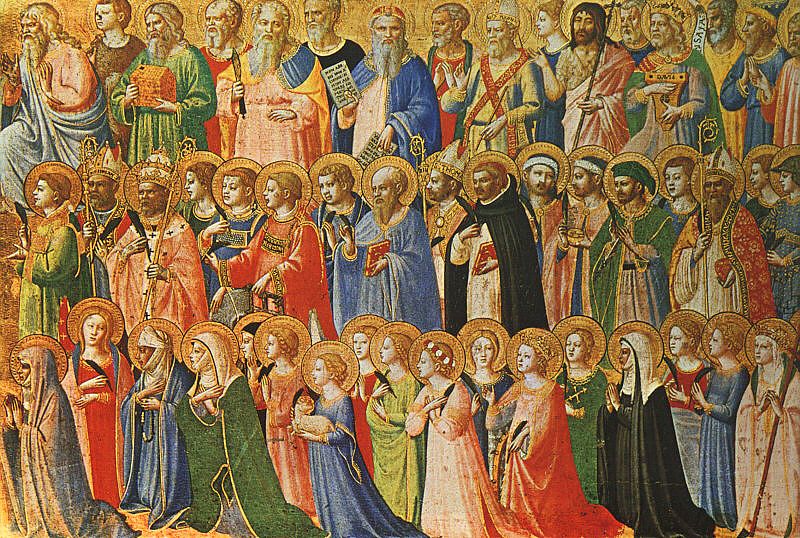
Appropriately, today is All Saints Day, the day on which we commemorate and celebrate the lives of the saints. My church is named after St Stephen, who is described in Acts 6-7. Carrying his name, we in our parish are invited to adopt Stephen as a model or example for our lives. Stephen was a young deacon, whose ministry lasted less than a year. A deacon is a servant, who works out in the community, helping the poor and marginalised. Stephen is described as being “full of faith and of the Holy Spirit”. He was a bold preacher, delivering the longest sermon in the book of Acts. It resulted in his murder, at the age of 29. As he died, his last words were to forgive those who stoned him.
Stephen is a shining example of stewarding the world. He was a servant to the people of God and to people seeking God.
Let us each take up our own role, in our own place, in our own way, using our own Spirit-given gifts, to love and serve the world.
Go in peace to love and serve the Lord In the name of Christ. Amen





 Reflections of God's Love