Principles of fasting

Click here to listen to the 16-minute audio message on principles of fasting, or read the written summary below.

During Lent, it is customary for us to fast. It is not a rule or a requirement – you should decide for yourself whether you will fast. And you should also decide for yourself what you will fast from. In this message, I offer seven basic principles of fasting.

1. Fasting is an important spiritual discipline, backed up by plenty of Biblical precedent. Jesus himself fasts in the Gospels, and of course his ministry started with a 40-day fast in the wilderness. But although Jesus does fast and does provide guidance on fasting, he does not instruct or command us to fast.

2. Fasting is between you and God. It has nothing to do with anyone else. Jesus says in Matthew 6 that we should fast in secret, hidden in a closet, even putting on makeup so that it does not look as if we are fasting. It is a private matter between you and God.

3. How you fast and what you fast from is between you and God. There are no clear rules in the Bible about how fasting should be done. There are diverse examples of fasting in the Bible, but no specific singular pattern that is set down. There is thus flexibility in how fasting takes place – prayerfully figure out for yourself what will be helpful.

4. There are no dire consequences to breaking your fast. I am not encouraging you to break your fast, nor to be flippant about fasting. But I am saying that if you break your fast, it is just like any other sin you might commit. Sometimes we make fasting into such a big thing, that if we slip and break our fast, it seems like the end of the world. It is not the end of the world. It is simply sin.

5. Breaking your fast is an opportunity for learning. Again, I’m not encouraging you to break your fast or to be negligent in your fasting. But it is probably true that most of us break our fast from time to time. Breaking one’s fast is, arguably, a ‘small’ sin – it’s not in the same league as adultery or murder. It thus gives us a valuable opportunity to practice repentance (saying ‘sorry’ to God) and asking for forgiveness – and then for receiving God’s forgiveness. And then getting back to your fasting. For me, the moments of breaking my fast, repenting and accepting God’s forgiveness are among the most spiritually enriching moments of fasting.

6. Fasting is primarily about the heart, not the action. When we fast from chocolate, for example, we are not giving up something sinful – chocolate is not a sin. Most things we fast from are not sin. The reason for this is that the point of fasting is less about giving up sin (since we should be doing that already all the time!) but about giving up something. It is the impact of giving up something that is at the heart of fasting. It is what happens in our heart, in our faith, in our relationships with God that makes fasting meaningful. Joel 2:12-14 stresses this with the words, “Rend your hearts and not your garments”:

“Even now,” declares the LORD, “return to me with all your heart, with fasting and weeping and mourning.” Rend your heart and not your garments. Return to the LORD your God, for he is gracious and compassionate, slow to anger and abounding in love, and he relents from sending calamity. Who knows? He may turn and relent and leave behind a blessing— grain offerings and drink offerings for the LORD your God.

7. Fasting should be paired with charity. We are called to give generously while we fast. In practice, we could calculate the cash value of the things we are giving up and then give that cash to God’s work in the church or a charity or directly to people in need. This is stated particularly clearly in Isaiah 58:3-7:

‘Why have we fasted,’ they say, ‘and you have not seen it? Why have we humbled ourselves, and you have not noticed?’ “Yet on the day of your fasting, you do as you please and exploit all your workers. Your fasting ends in quarreling and strife, and in striking each other with wicked fists. You cannot fast as you do today and expect your voice to be heard on high. Is this the kind of fast I have chosen, only a day for people to humble themselves? Is it only for bowing one’s head like a reed and for lying in sackcloth and ashes? Is that what you call a fast, a day acceptable to the LORD? “Is not this the kind of fasting I have chosen: to loose the chains of injustice and untie the cords of the yoke, to set the oppressed free and break every yoke? Is it not to share your food with the hungry and to provide the poor wanderer with shelter— when you see the naked, to clothe them, and not to turn away from your own flesh and blood?

I wish you God’s richest blessings during your Lenten fast this year.

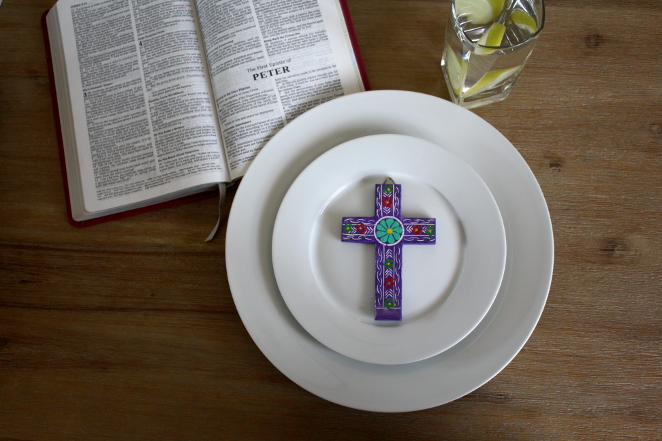
Feature image from https://www.nurtured-wellness.com/wp/wp-content/uploads/2018/06/Fasting.jpg
Light in the darkness

Click here to listen to the audio recording of this 18-minute message. Or watch the video on Facebook here (the message starts about 23 minutes into the video).

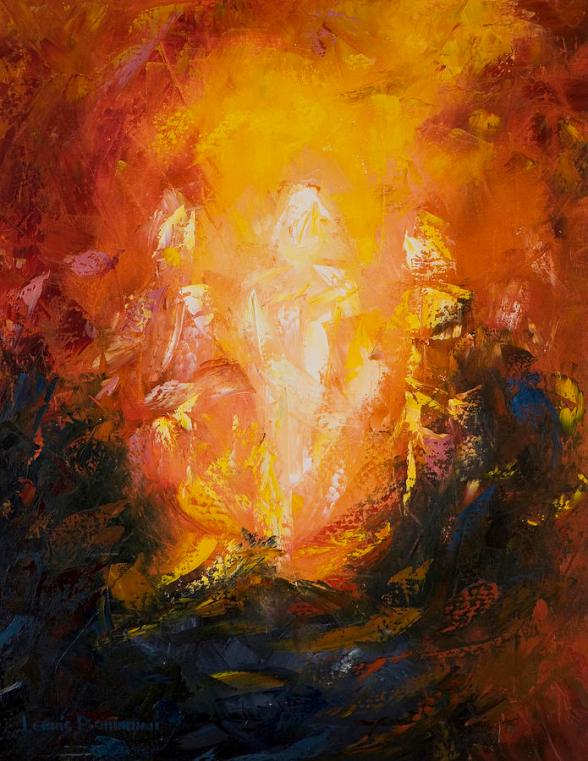
The story of Jesus’ transfiguration on the mountain top, in front of Peter, James and John, is well known to most Christians – in our church we celebrate this event at least once a year just before Lent starts (Matthew 17:1-9).

But this year I noticed for the first time the narratives about Jesus’ death on either side of the transfiguration story. In Matthew 16:21-23, Jesus tells his disciples that he will shortly be killed. Peter challenges him for this negative comment, and Jesus in turn rebukes Peter with strong words, “Get behind me, Satan!” How devastated Peter must have felt, both hearing about Jesus’ fate and hearing Jesus’ stinging rebuke.

And shortly after the transfiguration, in Matthew 17:22-23, Jesus repeats this statement, “The Son of Man is going to be delivered into the hands of men. And they will kill him.” The disciples were filled with grief at these words. What dark encounters to have immediately before and after the transfiguration.

In addition to hearing these words, the disciples hear other difficult-to-swallow messages. In Matthew 16:24-28, Jesus tells his disciples that if they want to follow him, they must deny themselves and take up their cross and lose their life. A hard teaching – they thought they were going to journey with their saviour towards the Eternal Life that Jesus so often spoken about. But instead, they hear these hard words.

And after the transfiguration, they go out to heal people and cast out demons (Matthew 17:14-20). But there is one child they cannot save. Jesus comes and heals the body immediately. They ask Jesus why they couldn’t drive out the demon, and Jesus responds “Because you have so little faith.” Ouch! Tough, harsh words from their Lord.

It is like there are these tall walls on their left and their right, before and after the transfiguration, that block out the sun and that undermine and disrupt the disciples’ faith. Almost like they are at the bottom of a chimney tower, with walls all around that reach up into the sky, so that no light gets down.

And yet is it is in this very space – in this dark place – that the transfiguration takes place. It is here, in this darkness, that the light of Christ, his dazzling divine nature, is revealed to Peter, James and John.

Here is an important lesson: It is often in the darkest spiritual times that we we have the brightest encounters with God.

It is clear from Matthew 17 that Jesus goes immediately into the transfiguration – he wastes no time. It is as if this is exactly why he brought them up the mountain – so that in the midst of their darkness, they could encounter his light. And they hear the voice of God speaking, “This is my son, whom I love; with him I am well pleased. Listen to him!”

Here are hope and courage and spiritual resources to sustain the disciples, in the midst of spiritual testing.

Have a look back at Exodus 24:12, where Moses is invited to go up the mountain to meet with the Lord and to receive the Ten Commandments. God says to him, “Come up to me on the mountain and stay here.” What a remarkable invitation! To be not only invited up the mountain to meet with God, but also to stay there with God. And Moses stayed there 40 days and 40 nights. All around the mountain, the Israelites saw a storm, thunder and lightning, dark clouds – it was terrifying. But Moses was safe in the light of God within the darkness of the cloud, just staying with God.

During the period of Lent, which kicks off on Wednesday this week, many of us will experience an intensification of spiritual attack. We will be working to deepen our faith, to nurture our spiritual life, to strip down the outer layers of excess, to step away from sin and get down to a more fundamental and authentic relationship with God. But in this very time, when we are trying so hard to grow spiritually, Satan attacks us the most. We experience increased difficulties, challenges, disruptions, criticisms, failures, hardships, losses. These are the dark walls of the chimney tower rising up around us.

It is in these times that we are most in need of the light of Christ. Peter, having recounted his experience on the mountain top, provides us with some helpful advice (2 Peter 1:19):

We also have the prophetic message as something completely reliable, and you will do well to pay attention to it, as to a light shining in a dark place, until the day dawns and the morning star rises in your hearts.

‘The light shining in the dark place’ and the ‘morning star rising in our hearts’. This is the transfiguration of Christ taking place within us as we seek to follow Christ, even when the world is dark around us, even when our faith seems weakest, even when we feel besieged by evil. This is where we encounter the transfigured Christ.

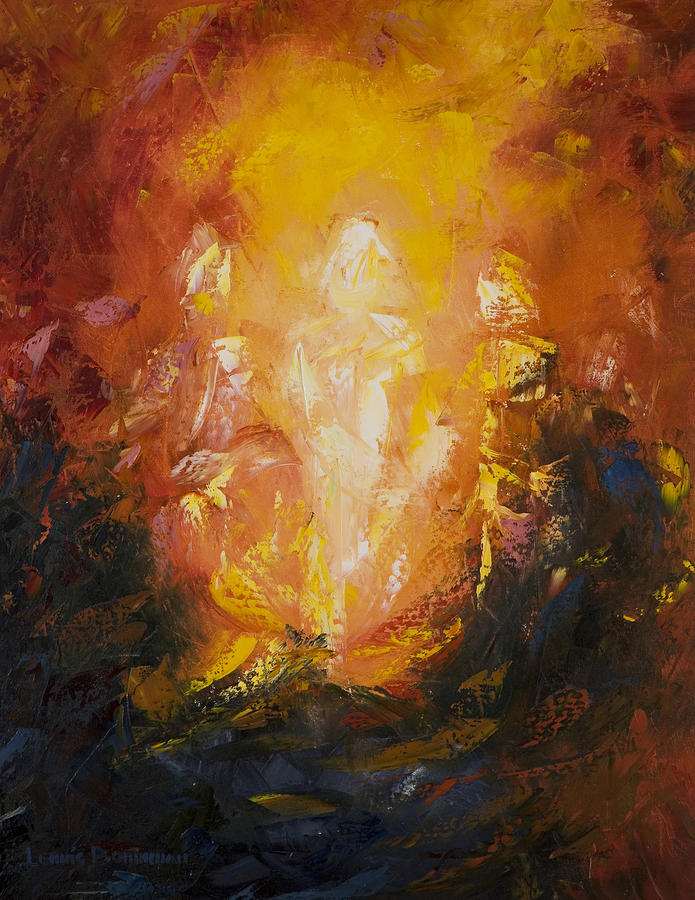
“Transfiguration” by Lewis Bowman, from https://fineartamerica.com/featured/transfiguration-lewis-bowman.html

God, the Bible, the Church and Sexuality

Click here to listen to the audio recording of this 34-minute message. Or watch the video of the message here on Facebook (the message starts about 23 minutes into the recording). Or download my fairly detailed sermon notes (not a full-text transcript) in MS Word.

Today’s set of compelling readings from Micah 6:8, Psalm 15:1-3, Matthew 5:3-10 and 1 Corinthians 1:27-28, point us to the heart of a God who is concerned for those who are marginalised, vilified and outcast. They also emphasise that our responsibility as Christians is to be merciful, kind, humble, inclusive and generous.

In light of these readings, today’s message addresses the complex and controversial topic of sexuality in the church, particularly homosexuality. This is a topic that has been long ignored and more recent has lead to deep divisions within the the church between those who are against and those who are for (or at least tolerant of) gay relationships. Many gay Christians feel deeply rejected by the church – not just for what they do sexually, but for who they are – for their very being, their humanity, which is experienced to be under attack by Christians and the church.

In today’s message, I endeavour to the following, which I encourage you to watch, listen to or read, using the links provided at the top of today’s blog.

  • Some clarification of terminologies, particularly the difference between gender identity (who I see myself as being in terms of gender – traditionally male or female) and sexuality (who I have sexually or romantically attracted to – traditionally heterosexual or homosexual). Both of these terms have become increasingly diverse and nuanced in recent years.
  • Developing an understanding of how the Scriptures were authored within particular historical and cultural contexts that differ vastly from contemporary society.
  • I address five broad points of discussion in this message:
    • The belief of many Christians that heterosexuality is God’s only legitimate sexual orientation. I’ll show that this is not true.
    • The belief of many Christians that the Bible does not anywhere say that gay relationships are okay. I’ll show that this is not entirely true.
    • The belief of many Christians that the Bible condemns homosexual relationships as an abomination. I’ll show that this is not true.
    • The point that among the numerous laws in the Bible, some Christians draw on preconceived cultural beliefs to justify their condemnation of homosexual relationships.
    • And the primary of love that is presented in Jesus Christ’s teachings and his example of radical inclusivity.
  • Based on the above discussion points, I draw 4 key conclusions:
    • In human relationships, God is most interested in the quality of our love.
    • God is not interested in the sex or gender of the person we love.
    • Marriage is sacred, a divine joining together, and must be protected.
    • Marriage (defined as a sacred joining together or union) is not restricted to a man and a woman.
  • And in light of this I hope that my parish and your church community would aspire to:
    • emulate Jesus’ example of radical inclusivity, diversity and love
    • create a church space where people of various sexual orientations feel welcome, accepted and loved
    • focus on and champion the quality of love in human relationships.

I do appreciate that the views of Christians on the subject of homosexuality vary widely, and that there are many that will view my understandings and interpretations of the Scriptures as false and heretical. Our views on this subject can be deeply divisive. Nevertheless, I take Jesus’ lived life (how he behaved with people he encountered) and Jesus’ spoken teachings about what is most important to God as the central guides to make sense of the rest of Scripture. He is God incarnate – he is the perfect reflection of who God is. He himself says, “Whoever has seen me has seen the Father” (John 14:9). I follow him.

Invited to follow

Click here to listen to the audio recording of this 22-minute message. Unfortunately the video livestreaming did not work today, so we have only the audio version of this message.

One of the foci of the Bible is on the past. Lots of references to ‘remember’ – remember when I brought you out of Egypt, remember when I led you into the promised land, remember Abraham and Jacob, remember where you came from, etc. Our region focused on ‘remembrance’ last year (2022). In our parish, and perhaps in your church also, there are good things to remember and also bad things to remember. Churches are seldom always happy all the time – we go through ups and downs, storms and rainbows. This is certainly true in my church.

Our readings today speak of such troubled times. 1 Cor 1:10-18 speaks about divisions and quarrels in the Corinthian church, with members aligning with different leaders and sowing descension between between them. And Isaiah 9:1-7 similarly speaks of darkness, oppression, a bar across one’s shoulders, distress, gloom and defeat. And later Isaiah 58 speaks of the yoke of oppression. There are many hard times in most churches. Some of this might be hidden from many members of a church, but when you look closely, there it is.

We want something better! For 2023, we want a better experience of church. And so, our region this year is focusing on ‘identity’ in 2023. The question to answer is, “Who are we?” What are we about? What’s important to us? What characterises us? Sometimes we say nice things about our identity, but don’t actually live the out. We need to walk our talk. At the start of last year, our parish did some strategic planning about identity and came up with values like being Christ-centred, generous, united, a family/community, a sense of belonging, caring and so on.

Back to Isaiah 9:1-7 where we read about some of these ideas: light, overcoming oppression, the shattering of the yoke, peace, justice and righteousness. And Psalm 27 – what a magnificent and uplifting Psalm!! – speaks about light, salvation, dwelling in God’s home, sheltered by God, seeking God’s grace and (my favourite line), “to gaze on the beauty of the Lord”.

Actually, at this point in the sermon, I went to sit with the congregation and joined them in looking forward into the sanctuary. I invited them to imagine God standing up there in the front and us just gazing on him. We spend some minutes doing just what. What a wonderful experience it was to sit quietly in God’s gracious presence and to just be and to feel his love.

And then we come to Matthew 4:18-23, about Jesus’ calling of the brothers Simon Peter and Andrew, and the other brothers James and John, sons of Zebedee. They were all fishermen, out on the Sea of Galilee catching fish. Jesus stands on the water’s edge and calls them, “Hey you! Follow me! With me you’ll catch people instead of fish! Come!” No hesitation from any of them! None!! Peter and Andrew: “At once they left their nets and followed him.” James and John: “Immediately they left the boat and their father and followed him.”

It’s incredible really. Jesus was not well known at that point. He had no followers, no reputation, no means, nothing. But something in his call must have been so compelling that without a second thought they all left their livelihood, their families, their community and followed Jesus, and remained faithful disciples until they died.

At this point in the sermon, I went around the church touching people on their shoulder and calling them, “Jesus is calling you to follow him… He wants you to partner with him… He wants you to work alongside him.”

This invitation is incredible. God’s modus operandi, from Genesis 1, has always been to work in partnership with people. He could do everything and anything himself without us. But he chooses and desires to work in partnership with us. What a mind-blowing opportunity – to work alongside God, to be a co-worker with and partner of God.

This is what we want to do more of in our parish this year. This is who our identity is. We want to be a church that partners with God in accomplishing God’s goals and living out God’s values. As a start, we want to become an increasingly caring and compassionate church. We want to see each other, know each other, reach out to and support each other, take care of and care for each other. Jesus says that when people see how we love each other within the church, then they will know that we are his disciples and will be drawn to him. So, that’s our main churches main programme for the first half of 2023 – to strengthen our capacity to care. We will do this through two main initiatives. First, during Lent, which start in a couple of weeks, we will focus our teaching on caring for and loving one another, and after Easter, we will run a series of short training sessions on how to be a better, more attentive, more caring friend – not a counsellor or therapist, but a good friend.

In this way, we will be responding to Jesus’ invitation to follow him and build our identity as people after Jesus’ heart.

Calling of the Apostles Peter and Andrew, Lorenzo Veneziano, 1370; Staatliche Museum, Berlin. From https://www.praytellblog.com//wp-content/uploads/2017/11/15_Lorenzo_Veneziano_Calling_of_the_Apostles_Peter_and_Andrew._1370_Staatliche_Museen_Berlin..jpg

Preparing the world for Christ

Click here to listen to the audio recording of this 20-minute message. Or watch the video recording on Facebook here (the message starts at about 28 minutes).

John the Baptist is the one who prepares the world for the first coming of Christ, some 2,000 years ago. We, today, follow in his footsteps in continuing to prepare the world to receive Christ when he comes again. The world we live in now continues to grapple with many challenges.

  • Currently, we think of those many who have died of Covid-10: in South Africa, since the start of the pandemic, some 102 000 people have died, amounting to an average of about 102 per day since March 2020.
  • We continue to grapple with HIV and AIDS: 14% of South Africans are living with HIV or Aids, an average of about one in seven people.
  • We continue to see high Aids-related death rates: 86 000 this year alone, an average of 235 deaths per day – and the death rates have been rising over the past five years.
  • And gender-based violence remains a scourge of our society, with an average 115 women raped every day this year – a total of 45 000 so far this year.

It is into this broken and wounded world that we prepare for the coming of Christ. How do we do this? What are the guidelines we’re given in the scriptures set for today?

Matthew 3:1-12 presents John’s call to repentance, confession and baptism. He strongly confronts the religious leaders of his day: “You brood of vipers!” His words are confrontational and damning. He calls them to produce the fruit of repentance – it is one thing to repent, and another to demonstrate that repentance in your behaviour – the fruit. And he warns, all very challengingly, that if they fail to do so, they will be chopped down like an unproductive tree, or burned up in the fire, like the chaff from winnowing.

The story of John’s ministry in Mark’s gospel is a little softer: there he speaks of a baptism of repentance for the forgiveness of sins. Matthew doesn’t make any mention of forgiveness. And Luke’s version incorporates both what Matthew and what Mark say. (And John provides a quite different version altogether.)

John, then, sets a pattern for us that is both encouraging and challenging. But what else can we learn from today’s readings about preparing the world for Christ?

Isaiah 11 presents a prophecy of the branch that will come from Jesse – King David’s father and, many generations later, forefather of Jesus. This passage opens with a repeated emphasis on the Spirit: “The Spirit of the LORD will rest on him— the Spirit of wisdom and of understanding, the Spirit of counsel and of might, the Spirit of the knowledge and fear of the LORD” (Isaiah 11:2). Clearly, we cannot do anything without the enabling of the Spirit of God.

And in the following verses, Isaiah emphasises God’s concern for those who are vulnerable: “He will not judge by what he sees with his eyes, or decide by what he hears with his ears; but with righteousness he will judge the needy, with justice he will give decisions for the poor of the earth” (Isaiah 11:3-4). Righteousness and justice are the keywords here.

And this is followed by the imagery of wolves, leopards and lions living in harmony with lambs, goats and yearlings, under the leadership of children (Isaiah 11:6). This is the kind of egalitarian and harmonious society that we are called to bring into being as we prepare for Christ’s return.

Psalm 72 continues some of these themes from Isaiah, notably God’s defence of the poor, vulnerable, needy, marginalised, silenced and outcast: “May he defend the afflicted among the people and save the children of the needy; may he crush the oppressor” (Psalm 72:4). Here we see God taking sides – he aligns with the poor and against the oppressor. God is not neutral – he sides with those who are vulnerable. The Psalmist goes on, “For he will deliver the needy who cry out, the afflicted who have no one to help. He will take pity on the weak and the needy and save the needy from death. He will rescue them from oppression and violence, for precious is their blood in his sight” (Psalm 72:12-14). In those days, life was in the blood, so when the Psalmist says, “precious is their blood in his sight”, s/he is in effect saying that God sees their lives as precious and worthy of protection. Theologians call this “God’s option for the poor” or “God’s preference for the poor”.

When we wonder where we should stand on things, the Biblical answer is unequivocal – stand with those who are vulnerable. That is always where we will find God. And that is where we should be found.

Romans 15 invites us to take on the attitude of Christ: “May the God who gives endurance and encouragement give you the same attitude of mind toward each other that Christ Jesus had, so that with one mind and one voice you may glorify the God and Father of our Lord Jesus Christ. Accept one another, then, just as Christ accepted you, in order to bring praise to God” (Romans 15:5-7). The result of thinking like Christ, is that we will accept one another – here again is a call to inclusivity and now also being non-judgmental. Indeed, in the previous chapter, Paul explicitly tells us to stop judging others: “Therefore let us stop passing judgment on one another. Instead, make up your mind not to put any stumbling block or obstacle in the way of a brother or sister” (Romans 14:13). This was in the context of conflicts of various dietary laws of the diverse group of Jewish and Gentile Christians. But regardless of the topic of conflict, the principles remain: accept and do not judge. Be tolerant and inclusive. Celebrate diversity.

As we strive to be Christians who, like John the Baptist, are preparing the way for Christ’s return, we need to take up the examples we are given in the Scriptures: honest words, an invitation to repent and receive forgiveness, the presence of the Spirit, values of righteousness and justice, an option for the ‘poor’, and acceptance and tolerance. These constitute the mind of Christ. And as we embody and live out Christ’s mind, we will be preparing the world for his return.

Featured image from https://za.pinterest.com/pin/653092383442878284/

Unpacking the Eucharist

Click here to watch the 2-hour video of this service on Facebook.

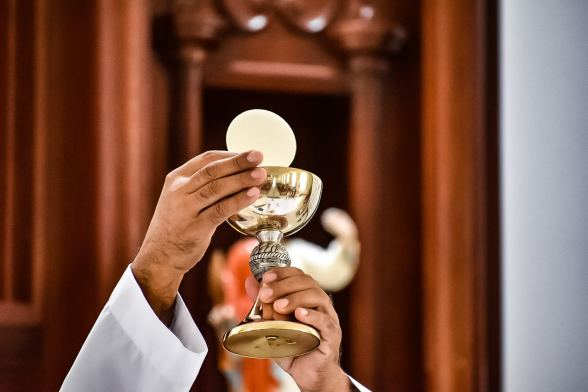
Today we did an Instructed Eucharist. This is a normal Anglican Eucharist service, the same as we do every Sunday, but with a commentary on what we’re doing and why we’re doing it. We learn about the meaning of the colours, the liturgy, our prayers, the readings, our gestures, the things on the altar, and why we do what we do.

You can download the text that was read here, in case you want to read the details more closely.

Featured image from https://lacatholics.org/wp-content/uploads/2021/06/eucharist-being-consecrated-during-Mass.jpg

What happens to souls

Click here to listen to the audio recording of this 23-minute message. Or watch the video here on Facebook (the message starts at about 26 minutes into the video).

Today we celebrated All Souls, also known as the Commemoration of the Faithful Departed. In fact, it should be celebrated on 2 November, but we moved it today, since it’s Sunday. It is the day on which remember all those whom we have loved and lost – parent, family, friends, and others who have died. Later in the service we came up to light candles to remember and appreciate them.

Strictly, the ‘faithful departed’ mean those who died in the faith. But what about those who died outside the faith? What happens to them? And, indeed, what happens to the faithful departed? In this message, I try to explain the main teachings in the scriptures about what happens to us after we die. The truth is that the Bible presents rather mixed and even contradictory accounts of this, which can leave us a bit confused. Perhaps because no-one who has died, has come back to explain what happens. But what we can rely on in all this, is the grace and love of God, whose heart is open to humanity.

Psalm 130: 3-4 says, “If you, Lord, kept a record of sins, Lord, who could stand? But with you there is forgiveness , so that we can, with reverence, serve you.” And late, the same Psalm encourages us to “put your hope in the Lord, for with the lord is unfailing love and with him is full redemption”.

So, what happens to those die in the faith?

  • There are some verses that say our spirit goes immediately into the presence of God. Luke 23 tells of Jesus hanging on cross and saying to the one criminal hanging next to him, “Truly I tell you, today you will be with me in paradise.” Today means today – not sometime in the future, but this very day. 2 Corinthians 5:8 is also thought to say that we transition immediately into the presence of God.
  • But other passages suggest we go to sleep for a period, until the last day. 1 Thessalonians 4:13-15 speaks three times about believers who were asleep – all those who died before Christ’s second coming would remain asleep, until he returned and woke them up with a the trumpet call of God.
  • Either way, it seems that our bodies will be resurrected only on the last day, when Christ returns – the second coming. Whether you’ve been cremated, or long buried and decomposed, or recently buried, God seems able to raise up our bodies. 1 Thessalonians 4:16 speaks about this, as well as several other passages about the resurrection, e.g., 1 Corinthians 15:12-58.
  • And will the faithful departed then be judged? John 5:24 and 29 say ‘no’: “Very truly I tell you, whoever hears my word and believes him who sent me has eternal life and will not be judged, but has crossed from death to life … Those who have what is good will rise to live”. But 2 Corinthians 5:9-10 say ‘yes’: “So we make it our goal to please [God], whether we are home in the body or away from it. For we must all appear before the judgement seat of Christ, so that each of us may receive what is due to us for the things done while in the body, whether good or bad.”

It’s all a bit confusing! Although we may not know the specifics of the mechanisms of what happens after we die, we can surely rest assured that we will experience the love, grace and forgiveness of God.

And what, then, about those who die without faith in Christ? What happens to them?

  • In John 3:36, Jesus is pretty blunt: “Whoever rejects the Son will not see life, for God’s wrath remains on them.”
  • And John 5:29 reinforces this: “Those who have done what is evil will rise to be condemned.”
  • Again, in Luke 13:27, Jesus speaks about the narrow gate through which few will get, and the door closing and the owner saying, “I don’t know you! Away from me!”

It seems then that there is no hope for the ‘unfaithful’ departed. But, we must remember the repeated messages through the entire Bible about God’s great, extravagant and all-embracing love. This gives us hope, that maybe somehow God will find a way to win over the hearts of all or at least many people who died outside of faith.

  • For example, Lamentation 3:31-33 says, “For no-one is cast off by the Lord for ever. Though he brings grief, he will show compassion, so great is his unfailing love. For he does not willingly bring affliction or grief to anyone.” This points us to the heart of God, which seeks good for every person.
  • Col 1:17-20 also speaks of God’s desire to save every person: “He is before all things, and in him all things hold together. And he is the head of the body, the church; he is the beginning and the firstborn from among the dead, so that in everything he might have the supremacy. For God was pleased to have all his fullness dwell in him, and through him to reconcile to himself all things, whether things on earth or things in heaven, by making peace through his blood, shed on the cross.”
  • And similarly in Ephesians 1:9-10 tells us that the mystery of God’s will is “to bring unity to all things iun heave and on earth under Christ”.

Since Christ died for the sins of the whole world, and not just for the sins of the faithful, universal salvation is at least a possibility. God’s love is radically inclusive, not exclusionary, and so there is the possibility that all could be saved. But God does not force himself on people – we have the right reject God. But it is perhaps hard to imagine unbelievers encountering the God of love face to face and denying his existence or rejecting his offer of a relationship. His love is almost irresitable.

And so, we try to win over those who do not believe, through our witness, our words and our prayers. And we continue to pray for those who have died outside the faith, that God will make a way for them to find salvation. We don’t have to understand how – that’s God’s business. But we can pray and hope and trust in the expansive and extravagant love of God.

Featured image from https://live.staticflickr.com/5046/5642983250_95071a5ca8_b.jpg

These stones

Click here to listen to the audio recording of this 23-minute message. Or watch the video on Facebook here (the message starts about 26 minutes into the recording).

Our reading for today is a passage from the book of Joshua 4:1-7. It tells the story of the Jewish people crossing the Jordan river from the desert or wilderness where they had wandered for 40 years, into the promised land. As they cross the river, which parts much like the Red Sea parted when they fled from Egypt, the leaders of the 12 tribes of Israel are instructed by Joshua to each collect a large stone, and carry it on their shoulder to the other side, into the promised land, into the camp where they would rest that night.

Joshua explains that these stones are

“to serve as a sign among you. In the future, when your children ask you, ‘What do these stones mean?’ tell them that the flow of the Jordan was cut off before the ark of the covenant of the LORD. When it crossed the Jordan, the waters of the Jordan were cut off. These stones are to be a memorial to the people of Israel forever.”

In today’s sermon, which I encourage you to listen to or watch, since it is too rich and compact to write down here, we review God’s engagement with humanity from Abram (later to become Abraham), Joseph, the migration of Jacob’s family to Egypt, the 100 or so years of good relations Jews had with Egyptians, and then the 100 or so years of slavery under the heavy burden of the Egyptians, the rise of Moses following his encounter with God in the burning bush, the plagues and the Jewish people’s escape across the Red Sea, their long and circuitous journey through the desert for 40 years, the death of Moses, the election of Joshua, and finally (in Joshua 4) the crossing of the Jordan river into the promised land.

In this long narrative, which extends over hundreds of years, we see repeatedly God’s engagement with and grace towards God’s people. And we see humanity’s faith in God rise and fall. And we see the remarkable things that happen when people align with God.

Thus, Joshua gathers these 12 stones to create a memorial that will remind the people of everything that God has done. As he says later in this chapter (4:21-24):

“In the future when your descendants ask their parents, ‘What do these stones mean?’ tell them, ‘Israel crossed the Jordan on dry ground.’ For the LORD your God dried up the Jordan before you until you had crossed over. The LORD your God did to the Jordan what he had done to the Red Sea when he dried it up before us until we had crossed over. He did this so that all the peoples of the earth might know that the hand of the LORD is powerful and so that you might always fear the LORD your God.”

For us today, we need things (objects) that help to remind us of the good God who is well-disposed towards us and who desires us to flourish. We need things to remind of all that God has already done for us in the past, to nourish our faith that he will continue to do so in the future. These things – these stones – may be personal objects, or something in our church. For example, the eucharist we celebrate is a weekly reminder of God’s goodness – a memorial. For our parish of St Stephen’s in Lyttelton, South Africa, the church building is itself such a thing – these stones. It was built by hand by the members of the parish, from the digging of the foundations to the laying of the roof. We see a testimony in the very building within which we worship of what is possible when God’s people bring their time, their abilities and their finances to the work of God, and partner in faith with God for building God’s Kingdom.

Featured image from: https://i.pinimg.com/originals/e5/f1/6e/e5f16ead9dcbdebfd53bdb8c6c057dda.jpg

Honouring Marriage

Click here to listen to the audio recording of this 18-minute message. Or watch the video of the message on Facebook here (the message starts at about 23 minutes).

The incalcitrance of the people of God

One of the hardest responses of God for us to handle is God’s disappointment with us. It is somehow easier to accept God being angry with us when we mess up. But when God is disappointed and feels let down by us, that’s hard to handle.

Jeremiah 2:4-13 reflects this disappointment. God had brought the people of Israel out of generations of slavery in Egypt, across the Red Sea, through the desert and into the promised land. But they seemed ungrateful and discontent. God says,

I brought you into a fertile land to eat its fruit and rich produce. But you came and defiled my land and made my inheritance detestable. The priests did not ask, ‘Where is the LORD?’ Those who deal with the law did not know me.

And so God continues:

My people have committed two sins: They have forsaken me, the spring of living water, and have dug their own cisterns, broken cisterns that cannot hold water.

God gives his people such a precious gift – freedom, a land of their own, a God who loves them – but they turn away from this God and seek to dig their own cisterns. They have at their disposal the water of life, which God offers, but they spurn it for fractured cisterns of their own.

Psalm 81 provides a similar sentiment. God reminds his people of what he has done for them and of his generosity:

I am the Lord your God, who brought you up out of Egypt. Open wide your mouth and I will fill it.

This image of God filling our wide-open mouths, like baby birds, is so evocative of the generosity and willingness of God to take care of us. But, alas, his people are not interested:

But my people would not listen to me; So I gave them over to their stubborn hearts to follow their own devices. … If my people would only listen to me, if Israel would only follow my ways, … you would be fed with the finest of wheat; with honey from the rock I would satisfy you.

Here again, there is a stubbornness in the people of Israel to follow their own ways, to spurn the God who had already demonstrated himself to be faithful, and as a result to lose out on all the good things God had in store for them.

Building marriage

One of the ways that we let God down is through neglecting our marriages (or other intimate relationships). Hebrews 13:4 says,

Marriage should be honoured by all, and the marriage bed kept pure.

Marriage is of central importance because, as we read in Genesis 1:27-28, God created a couple, not an individual. And it is this couple who is created in the Image of God. We thus most closely reflect the character and nature of God, when we have good, healthy, mutual, respectful relations with our partner or spouse. Marriage is a great gift from God – the first gift given to humanity, according to Genesis.

Yet, we so easily squander and waste it, as the people of Israel did in their relationship with God in Jeremiah 2 and Psalm 81. I am dismayed at the numbers of Christian couples whose marriages are broken, damaged, abandoned. When we neglect, belittle, criticise, abandon, assault, betray or in other ways harm our partner, we are profoundly harming our relationship with God and desecrating a sacred thing that he has entrusted to us.

Marriage is not easy – it takes work and often we may fail. But let us hold central and sacred this most precious gift and make every effort to make things work. Let us not throw in the towel easily and head for divorce or separation. Let us invest our everything to make this gift of God something that God can be proud of.

Featured image from: https://www.meerkat.co.za/hubfs/benita-elizabeth-vivin-RWbt7NjS4Bo-unsplash.jpg

Women in God’s Eyes

Click here to listen to the audio recording of this 27-minute message. Or watch the video on Facebook here (the message starts at 30 minutes).

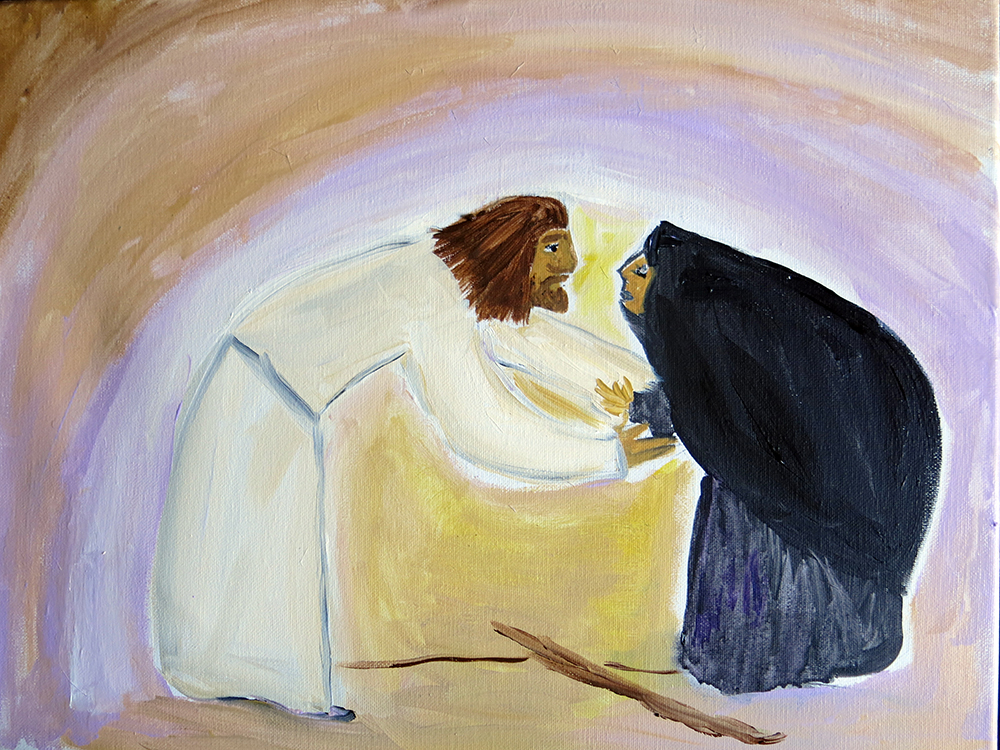
In our Gospel reading for today (Luke 13:10-17) we read a less familiar story about Jesus healing a woman who has been crippled – bent over double – for 18 years. He heals of her on the Sabbath, and for that he (and all those present) are reprimanded for seeking healing on the Sabbath. Come on any of the other six days of the week for healing, the synagogue leader says, but not on the Sabbath.

Jesus then compares the situation of his healing of this woman, with helping an oxen. He says,

“You hypocrites! Doesn’t each of you on the Sabbath untie your ox or donkey from the stall and lead it out to give it water? Then should not this woman, …whom Satan has kept bound for eighteen long years, be set free on the Sabbath day from what bound her?”

Jesus here is calling out the synagogue leader for his deep patriarchy, even misogyny. Because he regards a donkey as more important than a woman. The church has a long history of supporting patriarchy. Even in our Bible, there are numerous patriarchal passages. And the church too often upholds patriarch – that women are less than, less than men, less than human. Even women contribute to patriarchy. Research in South Africa by a colleague of mine (Prof Shahana Rasool) shows that women (mothers and aunts) are often the first person to tell a battered woman to return to her abusive husband. So, while today’s message is in many ways particularly for men to take up, it is indeed for all of us.

In this passage in Luke, we see Jesus doing five transformational anti-patriarchal things in these few verses (vv12-13, 16):

  1. He sees her – he picks her out among the crowds, recognises her as a human in need.
  2. He calls her – in the synagogues then, men and women were kept separate, like in orthodox synagogues today – he calls across the synagogue and calls her to him
  3. He speaks with her – he speaks words of healing to her: “Women you are set free from your infirmity”
  4. He lays his hands on her – he doesn’t merely touch her politely on the shoulder. He “put his hands on her” – almost unthinkable in those days.
  5. He affirms her – and then later he refers to her as a “woman, a daughter of Abraham”.

These five acts set for us an example of recognising the full humanity, and indeed, the divine createdness of women. There is absolutely no space here for patriarchy, and even less for misogyny. Jesus see her as a unique and individual daughter of God, a person in need, who is as deserving of the ministrations of God as any one else.

Indeed, we find narratives like this throughout the scriptures. Many women and some men have given up on the Bible, because it is so saturated in patriarchy; and unfortunately, this is true. I struggle with it myself, constantly. But, when we read the Bible closely, in the context of its own time, we find that the Bible frequently challenges deeply held cultural beliefs about the relationships between men and women, and about the the status and place of women in God’s plan. Scripture is, in many ways, countercultural when it comes to patriarchy. And these challenges seem as relevant today as they were thousands of years ago.

Four quick examples – two in Genesis and two in John:

  1. In Genesis 1:27-28, the writer describes the creation of humanity – God created man in his image, male and female he created them, in the image of God he created them. Both are fully created in God’s image. It is not that man is in God’s image, and woman is in man’s image. No! Both man and woman derive their image directly from God. And then God goes on to mandate both of them (not just the man) to rule over earth, its plants and animals – both of them! There is nothing that says Adam should rule over Eve – no! Both of them are equally commissioned with the authority of God to jointly rule over the world. This is how God created humanity! Yet, so many churches teach something different about the differential authority of women and men. It does not exist here in Genesis 1!
  2. Two chapters later, in Genesis 3:16, we read the story of the fall of humanity. Both Adam and Even eat of the Tree of Life – both sinned. And God pronounces consequences of their sin on each of them. One of the consequences for the woman is that her husband “will rule over you”. There are Christians today who argue that this rule of husbands over wives is God’s plan for how gender relations are to be structured following the fall. Honestly, this is absolute rubbish! A consequence of the fall of humanity is patriarchy. It is not God’s desire for humanity. If it were, then all men should be out toiling in the fields to produce crops by the sweat of their their brow, because this is a consequence God gives to the man in v18. Yes, men are not doing that – they have invented machines to do it for them, or hired migrant labourers to work on their behalf for nearly nothing. Singling out this ONE facet of the fall, from all of the others, and raising it up to God’s plan for humankind post-fall, is a clear sign of patriarchy, and indeed of misogyny. It is NOT God’s desire! Indeed, Christ’s mission is to undo the effects of the Fall, including patriarchy, not to reinforce them!
  3. Let’s move to John’s Gospel. Jesus meets the Samaritan woman at the well on a very hot day (John 4:1-42). Knowing who she is – Samaritan, not Jewish; a woman of ill repute – Jesus engages with her in a deep theological conversation. They don’t talk about baking or raising children. They talk about complex matters of faith. And she becomes the first female evangelist, as she returns to her community to tell them all about this man she had met. Jesus engages with her as a human being; not as a woman per se. Her gender, and the social norms around the relationship between men and women, are completely irrelevant to Jesus – he simply walks over them. Patriarchy is no barrier!
  4. Lastly, let’s look at John 8:1-11, the story of the woman caught in adultery. The male religious leaders bring the woman to Jesus and ask Jesus what they should do, in accordance with the Law. Note that the man is no where to be found! It’s takes at least two to commit adultery – but where is he? They say, “This woman was caught in the act of adultery”, meaning they were were caught in the act of having sex. So he was there having sex with her; where is he now? And Leviticus instructs that both the man and the woman must be stoned – not just the woman. In this highly hostile context, Jesus kneels down and doodles in the sand. I imagine that in response, all the men shift their focus from the woman to what Jesus is doing. In so doing, he redirects the ‘male gaze‘ away from her and towards himself. He spares her the shame and humiliation of this gang of men staring at her. He champions her dignity as a human being, as a child of God. And then he challenges the men, and of course they must go. And then, at the end, he holds her accountable for her sin – she really had sinned, she has the capacity and agency to make both bad and good choices – and he forgives her and sends her off to choose to sin no more. But in the process, he has dismantled the deep patriarchy and misogyny that was at work in this narrative.

There is a great deal of patriarch in the Bible – the Bible was written in patriarchal times, mostly or perhaps entirely by men. We live today in patriarchal times. Our world is full of domestic violence (physical and verbal); of women getting passed over for promotion in favour of men; of the ways men silence, dismiss and diminish women; of the brutal rape of women and girl children; and of the exclusion of women from leadership in the church. There is certainly a lot of patriarchy in the Bible and in our church.

But there is no patriarchy in Jesus. No patriarchy in God. Our Triune God celebrates the full humanity of both men and women, and all gender fluid and nonbinary people. Jesus saw her, he called her, he spoke words of healing over her, he laid his hands on her and he celebrated her as a daughter of Abraham. How much must we follow in his footsteps.

Featured image by Barbara Schwarz, OP, “Jesus and the Bent Over Woman,” acrylic on canvas, 2014, from https://www.globalsistersreport.org/files/stories/images/Schwarz_JesusBentWomanPainting%20better%20color%20%281000×750%29.jpg