Riding the storm (part 2)

Click here to listen to the audio recording of this 18-minute messages. Or watch the video on Facebook here (the message starts at about 30 minutes into the video). Or read the short summary below.

Last week, we read and reflected on the story from Mark 4:35-41 about Jesus calming the storm (see last week’s message – Riding the storm – here). It’s worth watching or listening to if you missed it. I emphasised three key points:

  1. Jesus is in the boat with us in the midst of the storm. He is not sitting far off watching, dispassionate. No! He is right in the storm with us, in the boat with us.
  2. Jesus controls the storm that buffets and scares us. He is more than capable to put the storm in its place.
  3. Jesus reminds us of the many times before that he has been faithful and capable, so that we can have faith in him, confidence in him, even during the storm.

Today, I want to add two additional stories to this one, so that we can build up our faith muscles when we are weathering a storm. This is particularly important, given that we are in the midst of the third wave of the COVID-19 pandemic, and given that our churches have, once again, closed their doors and moved online for services.

The first story is an echo of the one above and comes from Mark 6:45-51. The disciples are again in a boat on the Sea of Galilee, but this time Jesus is up on the hillside praying. He can see that the disciples have encountered a storm and are struggling. So he walks down the hill and across the top of the water towards the disciples’ boat. They are terrified, thinking he’s a ghost, but he calms them, saying, “Take courage! It is I. Don’t be afraid.” Then he climbs into the boat with them, and the storm calms down. Mark does not say Jesus calmed the storm, but it seems an unlikely coincidence that the storm just happened to subside when Jesus arrived. We learn three important lessons about Jesus when we are in a storm:

  1. Jesus sees the disciples plight and comes to them and speaks words of comfort to them: ‘I am here, it is I, don’t be afraid.’
  2. Jesus climbs into the boat. In the previous story Jesus was already in the boat when the storm arrived. In this story, Jesus climbs into the boat with the disciples in the midst of the strong winds. He chooses to enter the difficult place where they are.
  3. Jesus calms the waves, demonstrating (again) that he is more than capable.

The second story is a healing story, that is located within a larger healing story. The larger story is about Jairus’ daughter who is mortally ill and (it seems) dies before Jesus gets there, because Jesus is delayed by the inner story, which is recounted in Mark 5:24-34. The story is set in a large crowd – many people, all jostling around and up against Jesus, as he walks the streets.

The crowd feels like a storm – buffeting, noisy, knocking up against, pushing, threatening. (Hence the picture for today’s message.)

This is the story of the woman who had been bleeding for 12 years and all her efforts to find a cure were futile. He hears about Jesus and believes that even if she can just touch just the hem of his outer clothing, she will be healed. Even though she is unclean due to her persistent bleeding, she enters the crowd and manages to just touch Jesus’ clothes. And she is fully healed! Jesus can feel that power has gone out of him and wants to see who was healed. We learn three important lessons about Jesus when we are struggling in life’s storms:

  1. Jesus cures her. She merely needed faith, and without him even knowing or intending it, without even actually touching her, she is healed. It is as if Jesus’ natural instinct is to heal and make whole, so it just pours out of him when someone has faith in him.
  2. Jesus knows her. He initially doesn’t know who touched him, but he knows someone did, and when she owns up, he fully engages with her as if the crowd is not even there – like the still centre of a tornado.
  3. Jesus restores her. Her healing is primarily physical. But the result of that physical healing is that she becomes clean again, and thus able to touch other people, able to engage in the life of her family and community, able to participate in her faith.

There are many storms raging around us. Covid is the most public and universal. But there are others: financial concerns, loss of work, mental health issues, substance abuse, marital problems, divorce, illness, death, loneliness, addictions, and so on and so on. The list is almost endless.

But there are three important take-home messages for you today:

  1. Jesus sees you. He sees and knows you right where you are. He knows everything about you and your circumstances, no matter how private you are and no matter how alone you might feel. He sees you.
  2. Jesus joins you. He does not remain remote. He does not watch from a distance. He climbs into your boat, into your life, into your shoes. He is right there with you – so close, there is no gap between you and him.
  3. Jesus acts for you. Jesus calms storms, he banishes fear, he heals disease. He is more than capable and he is more than willing. We just have to reach out to him, to touch the hem of his robe.
Featured image from: https://www.popsci.com/what-to-do-crowd-crush-panic/

Riding the storm

Click here to listen to the audio recording of this week’s 12-minute message (followed by some singing). Or watch the video here on Facebook (the message starts at about 35 minutes).

The disciples find themselves in a boat in the midst of a ferocious storm (Mark 4:35-41). They cry out to Jesus: “Don’t you care?” We sometimes find ourselves in a similar situation. The world seems to swirl around us, exploding, destabilising. We wish for a granite foundation, but instead we are in a boat in the storm; at sea. But the disciples learn three things in this experience:

  1. Jesus is in the boat with them. He is not standing at a distance, watching. He is right with them in the boat, in the midst of the storm.
  2. Jesus demonstrates that he has the power to subdue nature. He is more than able to overcome any adversity we may experience, to calm any storm we may experience.
  3. Jesus reminds his disciples that they have experienced his capability in the past; and so should remember it in the present. “Do you still have so little faith?” he asks them.

When we are in the midst of the storm – as we are now with the third wave of Covid threatening to overwhelm us – we need to keep turning back to Jesus. He is the source of strength, healing and wholeness.

Featured image by Bernard Allen at https://twitter.com/bernardallenart/status/900703185479897090
I appreciate how we see Jesus both sleeping (in the lower left) and calming the storm (in the upper right), with the sea reflecting the storm and calm in the two sections.

Give generously

Click here to listen to the audio recording of this 8-minute message. Or watch the YouTube video below. Or read the short text summary after that.

Our Eucharist readings for today align around the theme of generous giving. Read the texts:

Extracts from Psalm 112

1 Blessed are those who fear the Lord, who find great delight in his commands.

3 Wealth and riches are in their houses, and their righteousness endures forever.

4 Even in darkness light dawns for the upright, for those who are gracious and compassionate and righteous.

5 Good will come to those who are generous and lend freely, who conduct their affairs with justice.

9 They have freely scattered their gifts to the poor, their righteousness endures forever; their horn will be lifted high in honor.

Extracts from Matthew 6

1 “Be careful not to practice your righteousness in front of others to be seen by them. If you do, you will have no reward from your Father in heaven.

2-4 “So when you give to the needy, do not announce it with trumpets, as the hypocrites do in the synagogues and on the streets, to be honored by others. Truly I tell you, they have received their reward in full. But when you give to the needy, do not let your left hand know what your right hand is doing, so that your giving may be in secret. Then your Father, who sees what is done in secret, will reward you.

Extracts from 2 Corinthians 9

6-8 Remember this: Whoever sows sparingly will also reap sparingly, and whoever sows generously will also reap generously. Each of you should give what you have decided in your heart to give, not reluctantly or under compulsion, for God loves a cheerful giver. And God is able to bless you abundantly, so that in all things at all times, having all that you need, you will abound in every good work. 

10-11 Now he who supplies seed to the sower and bread for food will also supply and increase your store of seed and will enlarge the harvest of your righteousness. You will be enriched in every way so that you can be generous on every occasion, and through us your generosity will result in thanksgiving to God.

Key lessons about giving generously

  1. God consistently and insistently calls us to generosity. This giving is to be sacrificial, in other words, we give until it hurts a bit; we give so that we feel the loss a little.
  2. Givers will be rewarded according to their generosity. There is a kind of economy of giving, with a return on our investment, possibly in this life, and certainly in the next.
  3. Giving should be done freely. We should not give grudgingly, reluctantly or out of obligation. We should also not give in order to obtain a reward or recognition – indeed, we should give privately, secretly. Our generous giving is rather motivated by our response to God’s generous giving to us.
Featured image from https://museumnotes.blogspot.com/2017/11/gratitude-and-generosity.html

Growing seeds

Click here to listen to the audio recording of today’s 18-minute message. Or watch the video on Facebook (the message starts at 32 minutes). Or read the short summary below.

Mark 4:26-29 provide a short parable about the Kingdom of God, a parable that has no similar parallel in any of the other Gospels, and that is sandwiched between two much more familiar parables about the kingdom – the parable of the sower and the parable of the mustard seed. It is worth spending a bit of time reflecting on this less-well-known parable:

Jesus also said, “This is what the kingdom of God is like: a person scatters seed on the ground. Night and day, whether they sleep or get up, the seed sprouts and grows, though they do not know how. All by itself the soil produces grain—first the stalk, then the head, then the full kernel in the head. As soon as the grain is ripe, they put the sickle to it, because the harvest has come.” 

As we approach this parable, we must ask, “What does this story tell us about the Kingdom of God”, since Jesus uses parable almost exclusively in his teachings about many things, including the Kingdom. As Mark writes a few verses later, “Jesus did not say anything to them without using a parable” (Mark 4:34).

A few interesting things to note about this brief parable:

  1. The human character is referred to only as ‘a man’ or ‘a person’ and then simply as ‘he’. This suggests that the human is not an important character in this story.
  2. The rich part of the story is what happens between the two actions of the person – between scattering the seed on the ground and harvesting it. Between these, the person does nothing. This focus of the story is this in-between space between human actions and in which God works.
  3. While the human character is thin and peripheral, two other non-human characters have prominent roles, both of which are preceded with a definite article (the) instead of the ‘a’ used for the human:
    • “The seed sprouts and grows”. It is clear that the human does nothing to enable this. It is something the seed does on its own. This is what seeds do.
    • “The soil produces grain”. It is clear that the human again does nothing to enable this. It is done by the soil. Indeed, Jesus emphasises this by preceding the phrase with “all by itself” (αὐτομάτη / automatē) – the soil produces a crop of its own accord, through its own volition.
  4. These activities of these two characters, who show agency and power, are a mystery to the human, who does “not know how” it happens.
  5. Those who garden or farm will know that to produce good crops (or flowers, etc.) you need good soil. If you have good soil, you’ll have good produce. It’s all about the quality of the soil. Those who garden will also know that there is nothing you can do to make seeds grow – that is something they do themselves – all you can do is ensure conducive conditions for growth.

From this analysis of the parable, I suggest Jesus has three main lessons for us regarding our place and work in the Kingdom of God:

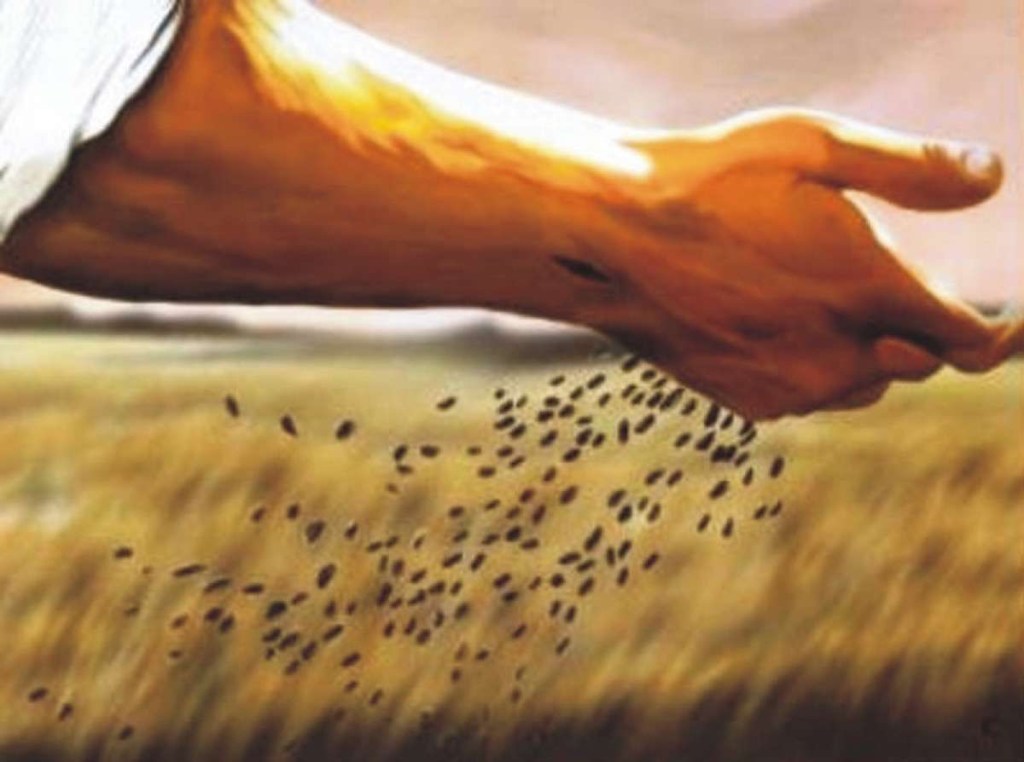
  1. We must scatter spiritual or evangelical seeds. Our words and our actions must scatter Kingdom of God seeds around the world.
  2. We must work to ensure that the soil into which we scatter the seeds is well composted and conducive for growth. We get the most detail from Jesus on this in Mark 4:1-20. We can do this by nourishing and nurturing the values of the Kingdom – justice, love, inclusivity, generosity, truthfulness, integrity, humility, service, sacrifice, etc.
  3. We must trust God to do what God does, which is to make seeds grow and to produce a crop for harvest. This is in God’s domain. We cannot make seeds grow in another person; only the Spirit of God can do that.

Featured image from https://middleburgeccentric.com/wp-content/uploads/2017/02/Scatter-Seeds-2.jpg

Appreciating the Trinity

Click here to listen to the audio recording of this 19-minute message. Or watch the Facebook video (the message starts 27 minutes into the service). Or read the short text summary below – but this is really a message you need to watch or listen to as requires your active participation.

The church’s teaching on the Trinity (God as three persons in one being) is one of the most complex and difficult concepts for us to grasp. While 1+1+1=3, 1x1x1=1, and that’s kind of what we’re trying to get our minds around when we think about the Triune (three-in-one) God. God’s self-revelation to humankind was progressive: first, the world met only God the Father (in the First Testament); then later God the Son appeared (in the Gospels) and there was a gradual realisation that Jesus was not just a prophet or teacher, not even just the Son of God, but in fact God the Son; and still later (at Pentecost most clearly) God the Holy Spirit appeared (in Acts 2) and there was a gradual realisation that the Spirit was not a force or power, but also God.

The early church was now faced with the challenge of three divine persons (Father, Son and Holy Spirit) yet still holding to the believe that there is but one God, one divine being or essence. Gradually, over the first centuries after Christ’s earthly ministry, the church come to settle on the Nicene Creed that sets out the orthodox theology of a triune God: three divine persons somehow blended together in one divine being.

Many metaphors are used to make sense of God as 3-in-1: the three states of H2O, the egg, a clover leaf, a man, etc. All of these diminish God and tend towards the heresy of modalism – the idea that there is one God who manifests in three modes, ways of presenting to us or masks/faces. In other words, they tend to over-emphasise the oneness of God at the expense of three distinct persons. Modalism contradicts what we see in Scripture, particularly in Jesus’ words, where he clearly and repeatedly refers to the Father and the Spirit as being separate persons from himself and persons with whom he as a relationship.

It is, therefore, more aligned with the facts as we have them to start with the three persons of the Trinity and try to figure out how the three might be one being. In the recording of the sermon (particularly the video recording) you will see an exercise I do with the congregation to consider this three in one, the challenges of it, and the potential ‘solution’ to it (as much as one can hope for a solution).

We have to imagine what might be powerful enough to bind three distinct persons together into one being, and the only force powerful that I can imagine is love. A love that is so extreme, so fiery, so consuming, so utterly self-giving, so passionate, so deep in its joining, yet also so delighted in diversity and distinctness, that it welds the three persons together into one being. Love is thus the centre of the experience of the Godhead. And it is not that God was three and then become one; no! Rather, God has eternally been three persons in one being, joined together by ultimate love.

This itself is almost unimaginable, so the best we can do is to simply gaze upon a love so amazing, so divine, that three are one. And appreciate the depth and expansiveness of this love. And delight in the fact that this is what drove God to create everything that is – to share that love with us, so that we might share it among each other, and with God. We are therefore, most human and most divine and most in the image of God, when we live in relationships characterised by ultimate love. That is the centre of God. And that explains why Jesus is always going on and on about Love. It is the quintessential character trait of the triune God.

For those interested in reading up more about this, search for the terms perichorsesis and social model of the Trinity (or social trinitarianism). I’ve here provided Wikipedia links, which provide a good brief introduction to the formal theology that underlies this sermon. Beyond these, there are numerous volumes written on this.

Featured image by Joan Stratton, from https://pixels.com/featured/celtic-triquetra-or-trinity-knot-symbol-3-joan-stratton.html

Servanthood

Click here to listen to the audio recording of this 6-minute message. Or watch the YouTube video below. Or read the short text summary after that.

Two of Jesus’ disciples come to him asking for positions of authority in heaven (Mark 10:35-45). It is really an immature and arrogant request. Understandably, Jesus responds quite firmly. In part he points out that in the world people are grasping for positions of power that they can lord over others, but then he says, “Not so with you!” He calls us to a different value system.

And then he continues to says that “even the Son of Man did not come to be served, but to serve, and to give his life as a ransom for many.” If even Jesus – the Son of God – has come as a servant, how much more should we be servants. We are called to take on a servant mentality – as awful as that might sound – and to live out his role in the world – serving humanity.

We have a critical failure in South Africa of public service, from those employed by the State (who are called “public servants”, as described in the Batho Pele White Paper for Public Service). Far too many people who are employed as public servants (whether as general assistants, chief directors or ministers) have lost this focus – that they are employed to serve the public. But not just them – all of us! We Christians are all put here on earth to serve humanity, to serve the world. Even the Son of Man did not come to be served, but to serve.

Featured image from https://i2.wp.com/truthimmutable.com/wp-content/uploads/2016/05/jug-water-poured-out-servanthood.jpg

Introducing Holy Spirit

Click here to listen to the audio recording of this 22-minute message. Or watch the video on Facebook (the message starts about 29 minutes into the service). Or read the key points below.

1. Pre-existent Spirit. The Spirit of God has been present since before the beginning. Spirit was already hovering over the waters at the time of creation in Genesis 1:2. Holy Spirit has always been.

2. God – the third person. Holy Spirit is God, as much as Jesus is God and the Father is God. Holy Spirit is the third person of the Trinity.

3. Person just like God. Holy Spirit is a person, just as the Father is a person and the Son is a person. Holy Spirit has personality, emotions, intentions and actions. Holy Spirit is not a force, not a love that binds together Father and Son, not the breathe of God. Holy Spirit is a person. Thus we must (in English) refer to Holy Spirit with the word “who’, not “which”, for example, we must say, “The Spirit who was poured out at Pentecost,” not ‘which was poured out’.

4. Holy Spirit as a name. ‘The Father’ and ‘the Son’ are titles or offices. Similarly, ‘the Holy Spirit’ is a title or office. But when we talk with the Father and Son, we use their names: “Father”, “Yahweh”, “Jesus”, “Christ”, etc. What can we call Holy Spirit, then? I suggest we drop the definitive article “the” and call Holy Spirit “Holy Spirit”, as a name.

5. Pronouns. If Holy Spirit is a person with whom we can talk and relate, do we refer to Spirit as ‘him’? In the Bible, Jesus always refers to Holy Spirit with a personal pronoun: he, him. However, we know that God is not ‘male’, not a ‘man’. God transcends gender. So God the Spirit is no more male than female. So we can use either ‘he’ or ‘she’. Unfortunately, English does not have a gender-inclusive pronoun (‘they’ or ‘ze’ are being used, but have not yet caught on). So I prefer to use ‘she’, to contribute to a deconstruction of the misperception that God is male.

6. Gifts vs relationship. Christians often chase after the gifts of the Spirit, when rather we should chase after a relationship with Holy Spirit. Spirit is not a cash dispenser of spiritual gifts. Spirit is a person, who desires to be in relationship with us. And in the context of that relationship, she gives us gifts. The focus is the relationship, not the gifts.

7. Sanctification. We are saved through the enabling of the Spirit. Christ did the work for our salvation, but Spirit enables our regeneration (our being born again) and our sanctification (our becoming increasingly Christlike). We need Spirit for every moment of our journey as Christians.

8. Fruit of the Spirit. The fruit of the Spirit are the result of having Holy Spirit residing in us, and of us relinquishing ourselves to Spirit. When we allow Spirit to work in us, we will begin to be transformed into the likeness of Christ, and we will bear the fruit of the Spirit: love, joy, peace, patience, kindness, goodness, faithfulness, gentleness, and self-control.

9. Gifts of the Spirit. As much as we don’t run after gifts from Holy Spirit, we do need and desire the spiritual gifts, and Holy Spirit is the one who gives them to us, as she determines, to enable the building up of the body of Christ and to empower us for God’s mission.

10. Presence of God. And finally, Holy Spirit is the person of the Trinity who is present among us now. The Father and Son sit in heaven; but Holy Spirit is among us. So, we sometimes refer to her as the go-between God, because she connects us to God the Father and God the Son. When we experience the presence of God, we are experiencing Holy Spirit.

In light of all this, can we see how important Holy Spirit is? How wonderful it is to have a relationship with her? To experience her working in our lives? Holy Spirit has been poured out into the lives of all believers. Let us embrace her presence and grow in faith through her.

Featured image from https://www.livinggospelchurchrio.org/wp-content/uploads/2020/01/Holy-Spirit.jpg

Christ in the world

Listen to the audio recording of this 12-minute message here. Or watch the message on YouTube here. Or read the text summary that follows.

Towards the end of John’s Gospel, Jesus prays for his disciples, “My prayer is not that you take them out of the world but that you protect them from the evil one” (John 17:15). It seems that Jesus wants his disciples to be immersed in the world. Indeed, he reinforces this in verse 18, when he prays, “As you sent me into the world, I have sent them into the world”, with his double use of “into the world”. Christians, therefore, cannot stand apart from the world. We need to be invested in and participate in the world.

But in his prayer, Jesus also prays that we may be protected “from the evil one”. I suggest that he is praying that we don’t get co-opted into the ways and values of the world, whose master is the evil one. Jesus wants us in the world, but not of the world; active in the world, but not colluding with the values of the world, that is, the values of Satan.

It reminds us of the Lord’s Prayer, where Jesus prays both “thy kingdom come on earth as in heaven” and “deliver us from evil”.

John 8:2-11 provides us with an example of how Jesus implements this. A woman who was caught in the act of adultery is brought to Jesus by a group of men (teachers of the law and Pharisees). We don’t hear about the man who was engaged in adultery with her, which already tells us something is not right. They want Jesus’ opinion on what should be done. Jesus doodles in the dust – we’re not sure what he is writing. Perhaps he is weighing up the sins of the woman and the sins of each of the men.

When he stands up it is clear from his responses to the men (“Let any one of you who is without sin be the first to throw a stone at her”) and the woman (“Go now and leave your life of sin”) that both the men and the women were sinful. Jesus then appears to lift up and suspend their sin – it is something they have in common – all are sinners. And what is left once their sin is lifted away?

A massive power differential. The men, as a group, as leaders and as men in a patriarchal society, have far greater power than the woman, as an individual and as a woman in a patriarchal society. The degrees of power between them are enormously disparate.

In light of that, Jesus opts to stand with the woman. He stands in solidarity with the one who is less powerful, more marginalised, more poor. This is Jesus’ pattern throughout his ministry. Scholars have come to call this Jesus’ “option for the poor“, because he repeatedly opts to stand with the poor. Not because they are less sinful than anyone else, but because they are less powerful, more vulnerable.

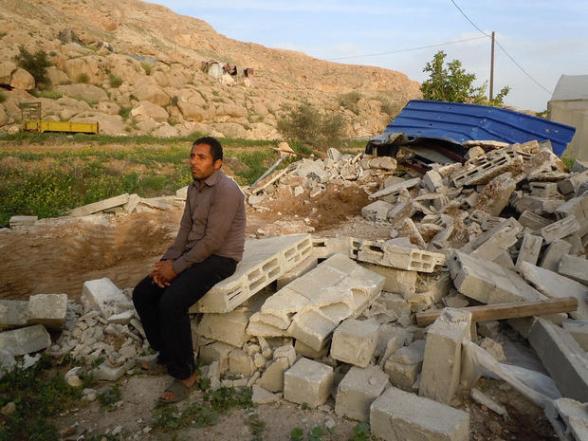
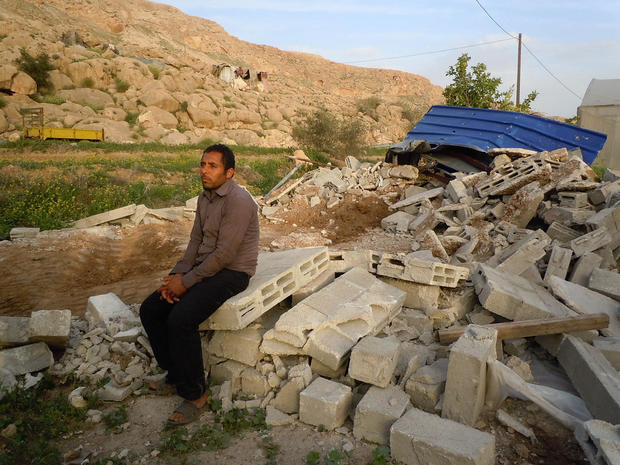
In the world right now, we are deeply disturbed by the escalating violence in the Middle East, between Palestine and Israel. This is a fraught situation, with a long history going back decades and even centuries. There are no easy answers. And whatever one says, one may be judged to be wrong. Nevertheless, let us attempt to apply Jesus’ method to this situation.

Both Israel and Palestine (and Hamas) have used and are currently using violence against each other. Each side blames the other for their use of violence, making it hard or even impossible to say who started it. Let us, then, like Jesus recognise that both sides use violence and lift or suspend that, for now. Not for ever, just for now. What is left once violence is lifted away?

A massive power differential. Israel, compared to Palestine, is wealthy, has powerful allies, has large amounts of land, has tremendous resources to protect itself. Palestine is impoverished, lacking in infrastructure, with very little access to the world, with few powerful allies and with increasingly little land and freedom. The degrees of power between them are enormously disparate.

In light of that, where would Jesus stand? He would stand in solidarity with the one who is less powerful, more marginalised, more poor. He would stand with Palestine. Not because Palestine is less sinful than Israel, but because they are less powerful, more vulnerable. This is Jesus’ option for the poor. He opts to stand with the poor.

And so we too should stand with the poor and not collude with the evil one who would prefer us to stand with the powerful. While it is good to pray for peace in that region of the world, it is better to pray for justice. Once the violence stops, the problems that fuel the violence will still not be resolved. These problems have existed for decades. They are fundamentally about justice for Palestine. Let us pray for justice for Palestine that leads to peace with Israel.

Featured image from https://unjppi.org/index.html

He ascended into heaven

Click here to listen to the audio recording of this 10-minute message. Or watch the video here on YouTube. Or read the text summary afterwards.

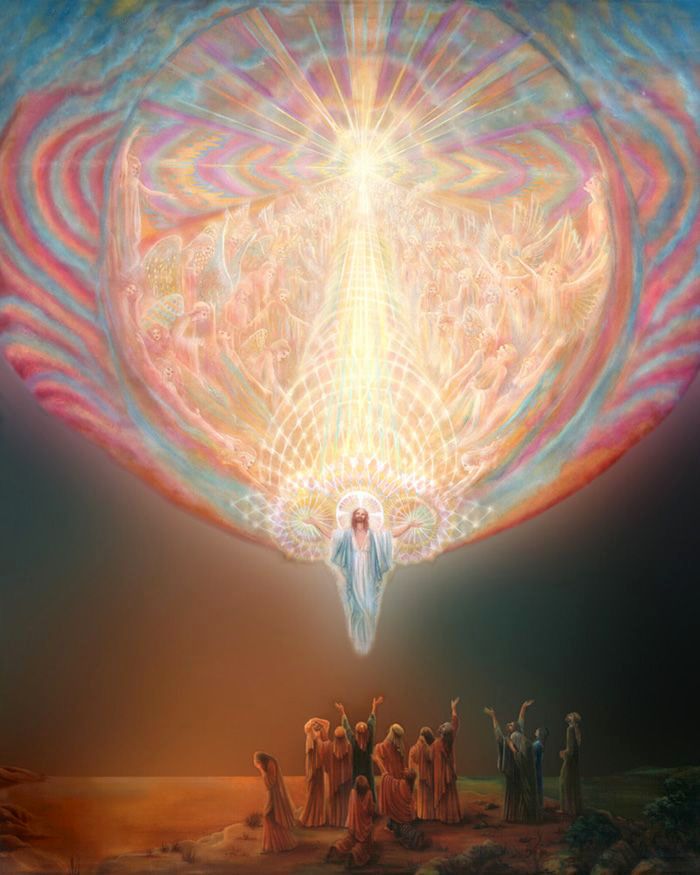
Today we celebrate Ascension Day – the day on which the risen Christ ascended from earth back to the right hand of God the Father in heaven. We get the narrative for this from Luke 24:46-53 and Acts 1:1-11.

It is helpful to think of history as divided into three main phases:

  1. Era of God the Father, which we get in the First Testament – humanity’s encounter with Yahweh.
  2. Era of the Son, which comprises the 30 years of life or 3 years of ministry of God the Son
  3. Era of the Spirit, which is the era we are living in now, where our most immanent contact with God is in the person of the God the Spirit

What bookends the Era of Son? It is inaugurated by the conception – when Mary conceives a child who is both human and divine. This is the incarnation, when God the Son leaves his glory and becomes smaller and smaller, emptying himself out, until he is no more than a single cell, an embryo. This is called the ‘kenosis’ – the emptying out of God, which you can read more about in a past sermon on the incarnation or another one on the mother of God.

After the incarnation at the conception, we have a continuing emptying out that leads ultimately to Jesus’ death on the cross. After that he rises from the dead, back to human life, and then he continues to rise in the ascension back to the right hand of God. I call this the Kenotic U, which you can read more about in a past message called The Kenotic U. Illustrate this way of thinking about history below.

So, Jesus’ ascension back into heaven completes his human life’s work on earth, which began with the incarnation (or conception) and concludes with his ascension. Now that he his back at the right hand of the Father, he intensifies his work of distributing forgiveness and reconciliation of humanity with God. This has always been and always will be his life’s work. And he sends Holy Spirit on Pentecost to continue his work in our immediate vicinity – right alongside and within us.

This Ascension Day, let us reflect on God’s continuous work on behalf of humanity and the great love that Christ has demonstrated for his children and the glory that he now enjoys again in heaven.

Featured image: The Ascension by Catherine Andrews, from https://www.lordsart.com/asbycaan16pr.html

Pick your bakery

Click here to listen to the audio recording of this 8-minute message. Or watch the YouTube video below, or read the text summary after that.

In John 4:35, Jesus says “I am the bread of life. Whoever comes to me will never go hungry, and whoever believes in me will never be thirsty.” And later in the same chapter (v48-51), he says,

I am the bread of life. Your ancestors ate the manna in the wilderness, yet they died. But here is the bread that comes down from heaven, which anyone may eat and not die. I am the living bread that came down from heaven. Whoever eats this bread will live forever.

Earlier in John’s Gospel (4:13-14), Jesus says something similar to the Samaritan woman at the well:

Everyone who drinks this water [from the well] will be thirsty again, but whoever drinks the water I give them will never thirst. Indeed, the water I give them will become in them a spring of water welling up to eternal life.

When we are going through stressful, difficult times, or are feeling out of sorts, we have to choose what kind of bakery we go to, to get some bread to satisfy and calm ourselves.

Sometimes, we engage in things that are psychologically and socially healthy, like meditation, going for a walk or some other kind of exercise, meeting up with a friend or resting.

But oftentimes, we engage in things that are not psychosocially healthy and that can even have harmful consequences, like going on a shopping spree, drinking too much alcohol, watching pornography, lashing out physically or verbally at our loved ones, driving too fast, using drugs, skipping work and so on. These mechanisms provide temporary relief, but leave us hungry for more, and often create more problems than we had in the first place. They do not truly satisfy our hunger. Indeed, we might end up more hungry than before, and need more of this kind of bread next time.

Jesus invites us to come to his bakery when we are hungry for something to satisfy our souls. The bread he offers is healthy, wholesome, long lasting and satisfying.

When we reach these points of difficulty in life, we have the opportunity to make a choice – to pick our bakery. Do we go to the one on the corner where we can buy the soft white bread that lasts only a moment? Or do we choose to drive a distance to get the healthy bread that lasts a long time?

Or can we choose to turn to Jesus, the master baker, to get the bread that will last for eternity, bread from heaven?

Featured image from https://www.countrykitchenlisburn.com/bakery/