The Prophet (Advent 3)

Click here to listen to the audio recording of this 18-minute message. Or watch the video here on Facebook (the message starts about 25 minutes into the recording). Or read the text summary below.

John the Baptist is arguably the second most important person in the New Testament – second only to Jesus. He was the last of the First Covenant prophets – prophesying about the coming Messiah. Once Jesus arrived, John’s ministry, and that of all the prophets in the First Testament, had reached fulfillment.

Curiously, in John 1:6-35, John the Baptist (or the writer of the Gospel according to the John) repeatedly speaks to who John is NOT, rather than to who John IS. In total, there are five negative declarations in this passage, suggesting a humility on the part of John and a clear understanding of his role, as the forerunner and preparer for the Messiah. John is not the light (8), not the Messiah (20), not Elijah (21), not the Prophet (21) (even though that is really what he is), and not worthy to untie the sandals of the Messiah (27). Strong negative statements about who he is NOT.

Alongside these are three affirmations of who John IS, only one of which he voices himself: he is a witness to testify concerning the light (7), he is a witness to the light (8) and he is the voice of one calling in the wilderness, ‘Make straight the way for the Lord’ (23), even though this last is John quoting Isaiah. John makes not independent statements of himself in his own words.

John’s negations and lack of affirmations about his pivotal role and place in the Christian story suggest great humility and that the focus of all his efforts is on Jesus, the Messiah, the promised Son of God. His life purpose is to point to Christ.

This is confirmed in John’s testimony about Jesus, which includes him sharing that he himself did not recognise Jesus (31), but that he saw the Spirit of God descend upon him and remain on him (33).

And so John points us to Jesus: “Look, the Lamb of God, who takes away the sin of the world! This is the one I meant…” (29) and the next day, “Look, the Lamb of God!” (35). This is the role of the Prophet – to witness to his experience of Jesus and to point us to Jesus. He is the pointer.

Our role, as Christians today, at the end of 2023, is to take up John’s prophetic role, by pointing to Jesus, as John did. Through our lives, our actions, our words and our values, we are (for better or worse) God’s prophets, pointing the way to Christ.

How do we do this? Our readings provide suggestions:

Isaiah 61 suggests we do so by sharing good news to the poor, binding up the broken hearted, proclaiming freedom to captives, comforting those who mourn, providing for those who grieve, restoring places long devastated, standing up for justice, and standing against robbery and wrong doing. All of these prophetic actions are located in the world – they all speak to the social justice that characterises the Kingdom of God.

Mary’s song in Luke 1:46-55 echoes some of Isaiah’s sentiments: extending mercy, lifting up the humble, and filling the hungry with good things. But Mary’s vision of her son, the Messiah, also includes some strong prophetic words: scattering the proud and sending the rich away empty.

And 1 Thessalonians 5:16-22 focuses on more obviously ‘spiritual’ actions: to rejoice always, pray continually, give thanks in all circumstances, hold to the good and reject evil.

It is all of these actions – standing up for social justice, speaking out against injustice and evil, and ensuring a robust spiritual life – that serve as a prophetic voice in the world today. This is perhaps the most important thing for us as Christians to be doing in the world – pointing the way to the Messiah.

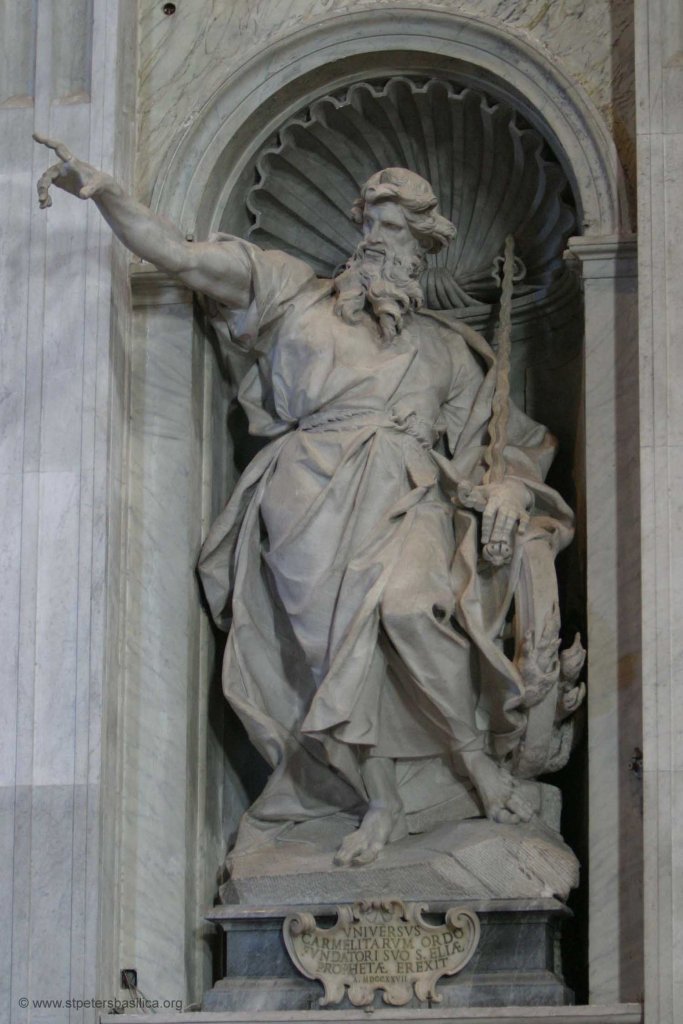
Statue of Elijah pointing, by Agostino Cornacchini (1727) at St Peter’s Basilica, Vatican City

Grace amazing

Today’s reading is Matthew 20:1-16. It is the story about a landowner who hires people to work in his field, starting from early in the morning (perhaps 5am) until 5pm in the evening. He promises the first a denarius – a generous day’s wage; and he promises the later workers a ‘fair’ wage. He comes out himself even late in the day and asks people why they are standing around doing nothing, and they say, because no-one has hired them, and so he hires them, knowing that humans were created to work – God’s first commands to Adam and Eve are to work in the garden and take care of the earth. This is the first grace: we are invited to work with God.

Evening comes and the landowner calls the workers together and pays everyone the same – a denarius. The workers who started early are understandably unhappy. But this is not a story about labour and economics. It is a story about grace. God’s grace is abundantly given to all of us, whether we start early or late, whether we do much or little. Think of the thief on the cross beside Jesus in Luke 23 – he could do nothing on that cross, yet he entered into Christ’s paradise. The landowner asks the disgruntled workers if they are envious that he is generous – do you envy my grace? Grace if fundamentally unfair. This is the second grace: we ALL get what we do NOT deserve.

Fix your eyes on Jesus. Be amazed by grace.

Just last night, my wife Trina shared with me this video of ‘Amazing Grace’ sung differently by Dan Vasc. It fits so perfectly, I cannot help but conclude it was God’s prompting.

God’s timing

Click here to listen to the audio recording of this 16-minute message. Or watch the video here on Facebook (the message starts about 25 minutes into the recording). Or read the text summary below.

Psalm 119:105 is a key text for Christian living: “Your word is a lamp for my feet, and a light on my path.” Not only does this verse point us to Scripture – the Word of God – as the source of light in life, but it also tells us something important about how God reveals Godself to us: in small increments.

We think of a lamp or light as a torch, providing a beam of light to shine up a path to see ahead to where we’re going. But the lamp the Psalmist writes about creates just a puddle of light around us – enough to see only the next step. To translate this verse into contemporary times, think of pointing your flashlight down at your feet rather than beaming ahead several meters.

Today’s world is premised on knowing the future and planning strategically and systematically. This is not bad – I do this all the time. But it is not the way God engages with humanity. God points us to a destination but typically does not provide us with the steps.

Let’s look, for example, at the story of Abraham and his descendants. In Genesis 12, God promises that he will make Abraham into a great nation and a blessing to all people. This promise is renewed several times over Abraham’s life. But he has his first child, Isaac, only around the age of 100 years! That’s a long time to wait for the most critical next step to becoming a great nation.

Then Isaac married only at age 40 and had his first son, Esau, at 60. And after Esau sold his birthright to Jacob, Jacob only had his first son, Reuben, at around 80 years. (Making up for lost time, Jacob had his other 11 sons within about half as many years!)

The point here is that there was little sign of God’s promise fulfilled across three generations from God’s promise to Abraham, covering perhaps 200 years. Where are the descents as many as stars in the sky and sand on the seashores? Abraham was given a destination, but he saw only a few steps of this over a very long time. Yet, throughout this time, Abraham was renowned for his deep faith that God was working out God’s purposes in him.

My journey to ordination is not as dramatic as Abraham’s, but it too was long in coming. I became a Christian at age 16, in 1984. Soon after, I began to feel a calling to become a minister. Though it persisted, I ignored it for nearly 20 years. In 2004, the call appeared again with an irresistible insistence. The following year, I started my BTh at TEEC and was licensed to preach. 12 years later, after much adversity, I was ordained deacon and the next year priest. Three years later, in 2021, I was appointed Rector at St Stephen’s. In total, the journey took around 35 years. That’s quite a long time to be journeying towards the fulfilment of a call to pastor a congregation. I knew the destination, but God took God’s good time to make it happen.

Jesus’ parable in Matthew 13 about the seeds sown in different soils tells a similar story. The fruitful crop emerged from seeds scattered on good earth. These seeds had to grow deep roots in healthy, nutritious soil to produce an abundant harvest. It takes time. Plant radishes if you want something quick, though most of us don’t like how they taste! Those who grow fruit trees or olives will know that farming is a long-term investment.

The lesson from these three readings (Genesis, Psalms and Matthew) seems to be that while we may have insight into God’s will for us, for our destination, the path from here to there is often long and opaque. We have to trust God – to trust his Word – that he will do what he says. But we should not expect quick answers.

Romans 8 reminds us that our minds must be governed by the Spirit and that we live in the realm of the Spirit. We do not live on the internet superhighway. We live our lives in the eternal life space of God. And that means being patient and faithful while God takes God’s good time to work out God’s purpose in our lives.

And so, dear ones, as we surrender the whole of ourselves to God, I encourage you to be patient with God and to have faith in God. Give God the space to do what God does best. Remember that the Lord says, “I know the plans I have for you, plans to prosper you and not to harm you, plans to give you hope and a future” (Jeremiah 29:11).

Featured image from https://antiquesknowhow.com/wp-content/uploads/2022/11/Branded-Antique-Pocket-Watches-1024×864.jpg

Loving encouragement

Click here to listen to the audio recording of this 24-minute message. Or watch the video here on Facebook (the message starts about 36 minutes into the recording). Or read the text summary below.

Over this Lenten period, we have focused on Jesus’ repeated command to love one another, to love each other, as he has loved us. In the first week, we focused on the ‘primacy of love’ – that this command is central to Jesus’ teaching, practice and expectations of us. Love is not just something Jesus does, it is who he is. Indeed, it is who God is! It is the essential identity of God, who has existed in loving fellowship within the Trinity, since before the beginning of time and space. And thus, love is to be the defining identity of ourselves, individually and collectively, as Christ’s followers.

In the second week, we unpacked the qualities of this love, things like sincerity, goodness, brotherliness, humility, gentleness, patience, bearing, forgiving, depth, sympathy, compassion, humility and hospitality. Many of these qualities suggest that we make ourselves smaller and less important, less dogmatic and opinionated, as we make space for others.

In the third week, we moved towards the dark side of love – what does the failure of love look like. We recognized that it is often when we are dogmatic, opinionated, rigid and arrogant that our behaviour and disposition towards others becomes unloving. In Jesus’ book, being ‘right’ is far less important than being good, kind, inclusive, generous and patient.

And then in the fourth week, last week, we reflected on love expressed as acceptance and unity. Acceptance implies being willing to make space for people who are different to us (in race, culture, gender, language, etc.) and with whom we have different views (on politics, theology, practises, etc.). Acceptance does not require us to agree, but to tolerate and listen to other ways of being. Unity implies that, even in the midst of difference, we work together as a unit towards common goals. In this, Christ is our head – he sets our path for us, and we, as bits of his body, cooperate towards his vision.

This week is the last week of our Lent programme, and we focus on loving encouragement. We are invited to think about how we build one another up in faith and competence and confidence, to each play our part in the body of Christ. It is about affirming each other. That affirmation often involves recognising what someone brings to our collective, appreciating it and encouraging its expression. It is also about recognising when someone is struggling with life and reach out to them with compassion, care and support.

Let’s start in Ezekiel 37 – the story of the valley of dry bones. The people of God are feeling dried up, dusty, hopeless, cut off, scorned and dead. It is then God’s breath that brings them to life. God twice says, “I will make breath enter you and you will come to life” (Ez 37: 5&6). But although the bones came together, “there was no breath in them.” And so God calls on Ezekiel to prophesy to the breath: “Come, breath, from the four winds and breathe into these slain, that they may live”. And Ezekiel writes, “So I prophesied as he commanded me, and breath entered them; and they came to life and stoop up on their feet” (Ez 37:9-10).

The Hebrew word for ‘breath’ is ruach, and can also be translated spirit. It’s the word used in Genesis 1:2, “The Spirit of God was hovering over the waters”. So this word ‘ruach’ can be mean’s God’s breath, our breath and the Holy Spirit – indeed all of these! It is God’s breath, with which he speaks, that enters the dry bones, empowered by the Holy Spirit, bringing them to life. Ruach brings the dead to life, brings them out of their graves!

Just as Jesus brings forth Lazarus from the grave, by his word, his breath, his ruach: “Lazarus! Come out!” (John 11:43). And out he came!

When we speak loving to each other, we are using our breath, and speaking with the Spirit of God who dwells in us – it is our ruach that can bring life to those around us. A kind, gentle, affirming, encouraging word can go along way to bring new life to someone who is feeling dried out.

Our psalm for today, Psalm 130, reads like the cry of those dead people in the valley of death in Ezekiel. You can imagine them crying out with these words, “Out of the depths I cry to you, Lord. Lord, hear my voice. Let your ears be attentive to my cry for mercy” (Psalm 130:1-2).

This Psalm speaks more to those who need encouragement, than to those who offer it. There is a call to those of us who are feeling dry and tired and dead to wait on God, to trust in God, to kindle some faith that there is forgiveness and mercy, hope and redemption. We need to call out to God: Lord, hear my voice! And in v5 we hear again the breath of God: “In his word I put my hope” – it is as God’s speak that we find our hope. When are needing encouragement, we need to allow ourselves to yearn for God, to turn to him for refreshment, to seek his life-giving spirit.

So, loving encouragement has two main sides: first, we are invited to be attentive to the needs of those sitting around us here in church and to speak words of life and encouragement to them. And second, when we are feeling dried up and frail, we need to speak up and call on God and on those around us for God’s Spirit, God’s love, God’s mercy, God’s restoration. In so doing, we stand in the light, love and breath of God – we are encompassed around by his Spirit, we receive life and find our place in the Body of Christ.

So, as we close today, let me read to you the words of encouragement that Paul speaks to the church in Thessalonica when they were feeling stuck in darkness: 1 Thes 5: 4-11, 14b-24:

But you, brothers and sisters, are not in darkness so that this day should surprise you like a thief. You are all children of the light and children of the day. We do not belong to the night or to the darkness. So then, let us not be like others, who are asleep, but let us be awake and sober. For those who sleep, sleep at night, and those who get drunk, get drunk at night. But since we belong to the day, let us be sober, putting on faith and love as a breastplate, and the hope of salvation as a helmet. For God did not appoint us to suffer wrath but to receive salvation through our Lord Jesus Christ. He died for us so that, whether we are awake or asleep, we may live together with him. Therefore encourage one another and build each other up, just as in fact you are doing. … And we urge you, brothers and sisters, …encourage the disheartened, help the weak, be patient with everyone. Make sure that nobody pays back wrong for wrong, but always strive to do what is good for each other and for everyone else. Rejoice always, pray continually, give thanks in all circumstances; for this is God’s will for you in Christ Jesus. Do not quench the Spirit. Do not treat prophecies with contempt but test them all; hold on to what is good, reject every kind of evil. May God himself, the God of peace, sanctify you through and through. May your whole spirit, soul and body be kept blameless at the coming of our Lord Jesus Christ. The one who calls you is faithful, and he will do it.

Featured image from https://c1.wallpaperflare.com/preview/127/129/189/park-park-at-night-streetlight-light-ray.jpg

Light in the darkness

Click here to listen to the audio recording of this 18-minute message. Or watch the video on Facebook here (the message starts about 23 minutes into the video).

The story of Jesus’ transfiguration on the mountain top, in front of Peter, James and John, is well known to most Christians – in our church we celebrate this event at least once a year just before Lent starts (Matthew 17:1-9).

But this year I noticed for the first time the narratives about Jesus’ death on either side of the transfiguration story. In Matthew 16:21-23, Jesus tells his disciples that he will shortly be killed. Peter challenges him for this negative comment, and Jesus in turn rebukes Peter with strong words, “Get behind me, Satan!” How devastated Peter must have felt, both hearing about Jesus’ fate and hearing Jesus’ stinging rebuke.

And shortly after the transfiguration, in Matthew 17:22-23, Jesus repeats this statement, “The Son of Man is going to be delivered into the hands of men. And they will kill him.” The disciples were filled with grief at these words. What dark encounters to have immediately before and after the transfiguration.

In addition to hearing these words, the disciples hear other difficult-to-swallow messages. In Matthew 16:24-28, Jesus tells his disciples that if they want to follow him, they must deny themselves and take up their cross and lose their life. A hard teaching – they thought they were going to journey with their saviour towards the Eternal Life that Jesus so often spoken about. But instead, they hear these hard words.

And after the transfiguration, they go out to heal people and cast out demons (Matthew 17:14-20). But there is one child they cannot save. Jesus comes and heals the body immediately. They ask Jesus why they couldn’t drive out the demon, and Jesus responds “Because you have so little faith.” Ouch! Tough, harsh words from their Lord.

It is like there are these tall walls on their left and their right, before and after the transfiguration, that block out the sun and that undermine and disrupt the disciples’ faith. Almost like they are at the bottom of a chimney tower, with walls all around that reach up into the sky, so that no light gets down.

And yet is it is in this very space – in this dark place – that the transfiguration takes place. It is here, in this darkness, that the light of Christ, his dazzling divine nature, is revealed to Peter, James and John.

Here is an important lesson: It is often in the darkest spiritual times that we we have the brightest encounters with God.

It is clear from Matthew 17 that Jesus goes immediately into the transfiguration – he wastes no time. It is as if this is exactly why he brought them up the mountain – so that in the midst of their darkness, they could encounter his light. And they hear the voice of God speaking, “This is my son, whom I love; with him I am well pleased. Listen to him!”

Here are hope and courage and spiritual resources to sustain the disciples, in the midst of spiritual testing.

Have a look back at Exodus 24:12, where Moses is invited to go up the mountain to meet with the Lord and to receive the Ten Commandments. God says to him, “Come up to me on the mountain and stay here.” What a remarkable invitation! To be not only invited up the mountain to meet with God, but also to stay there with God. And Moses stayed there 40 days and 40 nights. All around the mountain, the Israelites saw a storm, thunder and lightning, dark clouds – it was terrifying. But Moses was safe in the light of God within the darkness of the cloud, just staying with God.

During the period of Lent, which kicks off on Wednesday this week, many of us will experience an intensification of spiritual attack. We will be working to deepen our faith, to nurture our spiritual life, to strip down the outer layers of excess, to step away from sin and get down to a more fundamental and authentic relationship with God. But in this very time, when we are trying so hard to grow spiritually, Satan attacks us the most. We experience increased difficulties, challenges, disruptions, criticisms, failures, hardships, losses. These are the dark walls of the chimney tower rising up around us.

It is in these times that we are most in need of the light of Christ. Peter, having recounted his experience on the mountain top, provides us with some helpful advice (2 Peter 1:19):

We also have the prophetic message as something completely reliable, and you will do well to pay attention to it, as to a light shining in a dark place, until the day dawns and the morning star rises in your hearts.

‘The light shining in the dark place’ and the ‘morning star rising in our hearts’. This is the transfiguration of Christ taking place within us as we seek to follow Christ, even when the world is dark around us, even when our faith seems weakest, even when we feel besieged by evil. This is where we encounter the transfigured Christ.

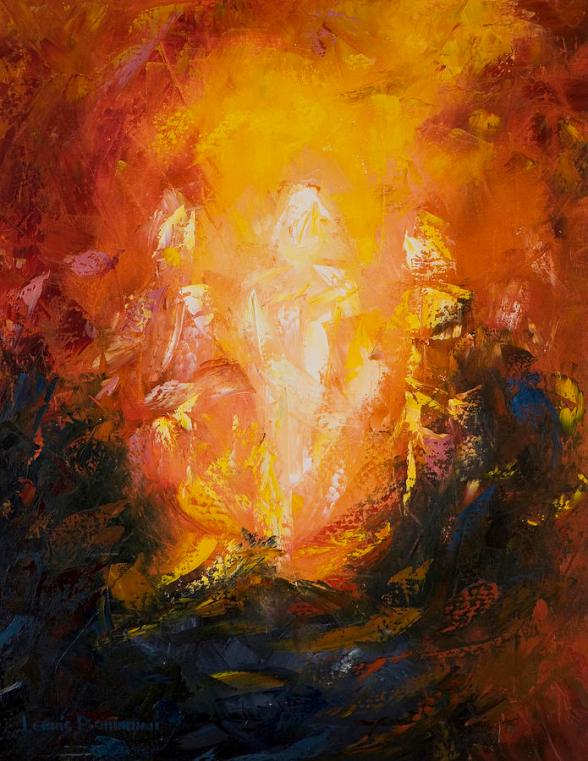
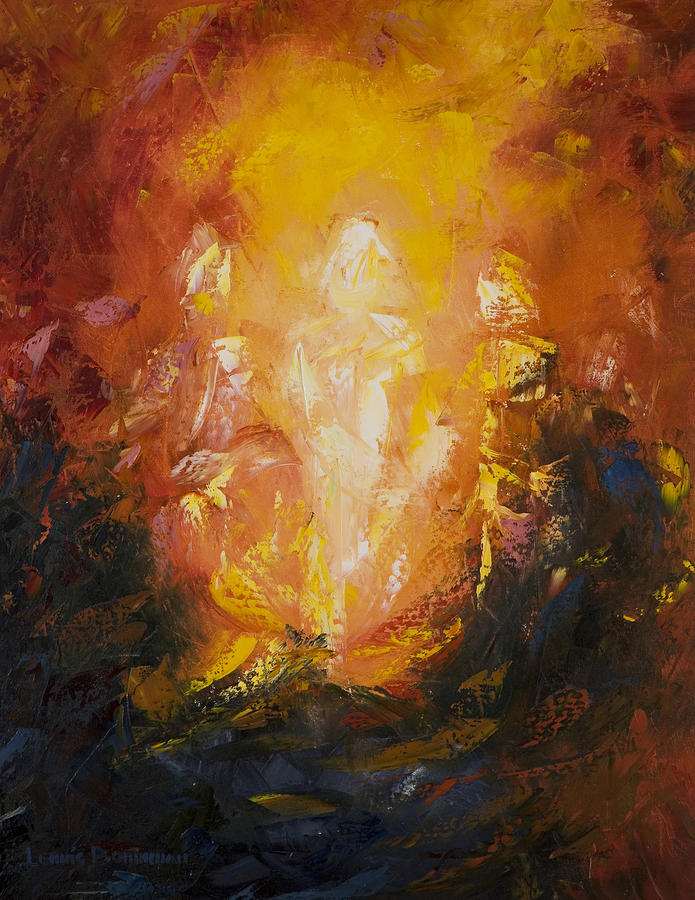
“Transfiguration” by Lewis Bowman, from https://fineartamerica.com/featured/transfiguration-lewis-bowman.html

Preparing the world for Christ

Click here to listen to the audio recording of this 20-minute message. Or watch the video recording on Facebook here (the message starts at about 28 minutes).

John the Baptist is the one who prepares the world for the first coming of Christ, some 2,000 years ago. We, today, follow in his footsteps in continuing to prepare the world to receive Christ when he comes again. The world we live in now continues to grapple with many challenges.

  • Currently, we think of those many who have died of Covid-10: in South Africa, since the start of the pandemic, some 102 000 people have died, amounting to an average of about 102 per day since March 2020.
  • We continue to grapple with HIV and AIDS: 14% of South Africans are living with HIV or Aids, an average of about one in seven people.
  • We continue to see high Aids-related death rates: 86 000 this year alone, an average of 235 deaths per day – and the death rates have been rising over the past five years.
  • And gender-based violence remains a scourge of our society, with an average 115 women raped every day this year – a total of 45 000 so far this year.

It is into this broken and wounded world that we prepare for the coming of Christ. How do we do this? What are the guidelines we’re given in the scriptures set for today?

Matthew 3:1-12 presents John’s call to repentance, confession and baptism. He strongly confronts the religious leaders of his day: “You brood of vipers!” His words are confrontational and damning. He calls them to produce the fruit of repentance – it is one thing to repent, and another to demonstrate that repentance in your behaviour – the fruit. And he warns, all very challengingly, that if they fail to do so, they will be chopped down like an unproductive tree, or burned up in the fire, like the chaff from winnowing.

The story of John’s ministry in Mark’s gospel is a little softer: there he speaks of a baptism of repentance for the forgiveness of sins. Matthew doesn’t make any mention of forgiveness. And Luke’s version incorporates both what Matthew and what Mark say. (And John provides a quite different version altogether.)

John, then, sets a pattern for us that is both encouraging and challenging. But what else can we learn from today’s readings about preparing the world for Christ?

Isaiah 11 presents a prophecy of the branch that will come from Jesse – King David’s father and, many generations later, forefather of Jesus. This passage opens with a repeated emphasis on the Spirit: “The Spirit of the LORD will rest on him— the Spirit of wisdom and of understanding, the Spirit of counsel and of might, the Spirit of the knowledge and fear of the LORD” (Isaiah 11:2). Clearly, we cannot do anything without the enabling of the Spirit of God.

And in the following verses, Isaiah emphasises God’s concern for those who are vulnerable: “He will not judge by what he sees with his eyes, or decide by what he hears with his ears; but with righteousness he will judge the needy, with justice he will give decisions for the poor of the earth” (Isaiah 11:3-4). Righteousness and justice are the keywords here.

And this is followed by the imagery of wolves, leopards and lions living in harmony with lambs, goats and yearlings, under the leadership of children (Isaiah 11:6). This is the kind of egalitarian and harmonious society that we are called to bring into being as we prepare for Christ’s return.

Psalm 72 continues some of these themes from Isaiah, notably God’s defence of the poor, vulnerable, needy, marginalised, silenced and outcast: “May he defend the afflicted among the people and save the children of the needy; may he crush the oppressor” (Psalm 72:4). Here we see God taking sides – he aligns with the poor and against the oppressor. God is not neutral – he sides with those who are vulnerable. The Psalmist goes on, “For he will deliver the needy who cry out, the afflicted who have no one to help. He will take pity on the weak and the needy and save the needy from death. He will rescue them from oppression and violence, for precious is their blood in his sight” (Psalm 72:12-14). In those days, life was in the blood, so when the Psalmist says, “precious is their blood in his sight”, s/he is in effect saying that God sees their lives as precious and worthy of protection. Theologians call this “God’s option for the poor” or “God’s preference for the poor”.

When we wonder where we should stand on things, the Biblical answer is unequivocal – stand with those who are vulnerable. That is always where we will find God. And that is where we should be found.

Romans 15 invites us to take on the attitude of Christ: “May the God who gives endurance and encouragement give you the same attitude of mind toward each other that Christ Jesus had, so that with one mind and one voice you may glorify the God and Father of our Lord Jesus Christ. Accept one another, then, just as Christ accepted you, in order to bring praise to God” (Romans 15:5-7). The result of thinking like Christ, is that we will accept one another – here again is a call to inclusivity and now also being non-judgmental. Indeed, in the previous chapter, Paul explicitly tells us to stop judging others: “Therefore let us stop passing judgment on one another. Instead, make up your mind not to put any stumbling block or obstacle in the way of a brother or sister” (Romans 14:13). This was in the context of conflicts of various dietary laws of the diverse group of Jewish and Gentile Christians. But regardless of the topic of conflict, the principles remain: accept and do not judge. Be tolerant and inclusive. Celebrate diversity.

As we strive to be Christians who, like John the Baptist, are preparing the way for Christ’s return, we need to take up the examples we are given in the Scriptures: honest words, an invitation to repent and receive forgiveness, the presence of the Spirit, values of righteousness and justice, an option for the ‘poor’, and acceptance and tolerance. These constitute the mind of Christ. And as we embody and live out Christ’s mind, we will be preparing the world for his return.

Featured image from https://za.pinterest.com/pin/653092383442878284/

What happens to souls

Click here to listen to the audio recording of this 23-minute message. Or watch the video here on Facebook (the message starts at about 26 minutes into the video).

Today we celebrated All Souls, also known as the Commemoration of the Faithful Departed. In fact, it should be celebrated on 2 November, but we moved it today, since it’s Sunday. It is the day on which remember all those whom we have loved and lost – parent, family, friends, and others who have died. Later in the service we came up to light candles to remember and appreciate them.

Strictly, the ‘faithful departed’ mean those who died in the faith. But what about those who died outside the faith? What happens to them? And, indeed, what happens to the faithful departed? In this message, I try to explain the main teachings in the scriptures about what happens to us after we die. The truth is that the Bible presents rather mixed and even contradictory accounts of this, which can leave us a bit confused. Perhaps because no-one who has died, has come back to explain what happens. But what we can rely on in all this, is the grace and love of God, whose heart is open to humanity.

Psalm 130: 3-4 says, “If you, Lord, kept a record of sins, Lord, who could stand? But with you there is forgiveness , so that we can, with reverence, serve you.” And late, the same Psalm encourages us to “put your hope in the Lord, for with the lord is unfailing love and with him is full redemption”.

So, what happens to those die in the faith?

  • There are some verses that say our spirit goes immediately into the presence of God. Luke 23 tells of Jesus hanging on cross and saying to the one criminal hanging next to him, “Truly I tell you, today you will be with me in paradise.” Today means today – not sometime in the future, but this very day. 2 Corinthians 5:8 is also thought to say that we transition immediately into the presence of God.
  • But other passages suggest we go to sleep for a period, until the last day. 1 Thessalonians 4:13-15 speaks three times about believers who were asleep – all those who died before Christ’s second coming would remain asleep, until he returned and woke them up with a the trumpet call of God.
  • Either way, it seems that our bodies will be resurrected only on the last day, when Christ returns – the second coming. Whether you’ve been cremated, or long buried and decomposed, or recently buried, God seems able to raise up our bodies. 1 Thessalonians 4:16 speaks about this, as well as several other passages about the resurrection, e.g., 1 Corinthians 15:12-58.
  • And will the faithful departed then be judged? John 5:24 and 29 say ‘no’: “Very truly I tell you, whoever hears my word and believes him who sent me has eternal life and will not be judged, but has crossed from death to life … Those who have what is good will rise to live”. But 2 Corinthians 5:9-10 say ‘yes’: “So we make it our goal to please [God], whether we are home in the body or away from it. For we must all appear before the judgement seat of Christ, so that each of us may receive what is due to us for the things done while in the body, whether good or bad.”

It’s all a bit confusing! Although we may not know the specifics of the mechanisms of what happens after we die, we can surely rest assured that we will experience the love, grace and forgiveness of God.

And what, then, about those who die without faith in Christ? What happens to them?

  • In John 3:36, Jesus is pretty blunt: “Whoever rejects the Son will not see life, for God’s wrath remains on them.”
  • And John 5:29 reinforces this: “Those who have done what is evil will rise to be condemned.”
  • Again, in Luke 13:27, Jesus speaks about the narrow gate through which few will get, and the door closing and the owner saying, “I don’t know you! Away from me!”

It seems then that there is no hope for the ‘unfaithful’ departed. But, we must remember the repeated messages through the entire Bible about God’s great, extravagant and all-embracing love. This gives us hope, that maybe somehow God will find a way to win over the hearts of all or at least many people who died outside of faith.

  • For example, Lamentation 3:31-33 says, “For no-one is cast off by the Lord for ever. Though he brings grief, he will show compassion, so great is his unfailing love. For he does not willingly bring affliction or grief to anyone.” This points us to the heart of God, which seeks good for every person.
  • Col 1:17-20 also speaks of God’s desire to save every person: “He is before all things, and in him all things hold together. And he is the head of the body, the church; he is the beginning and the firstborn from among the dead, so that in everything he might have the supremacy. For God was pleased to have all his fullness dwell in him, and through him to reconcile to himself all things, whether things on earth or things in heaven, by making peace through his blood, shed on the cross.”
  • And similarly in Ephesians 1:9-10 tells us that the mystery of God’s will is “to bring unity to all things iun heave and on earth under Christ”.

Since Christ died for the sins of the whole world, and not just for the sins of the faithful, universal salvation is at least a possibility. God’s love is radically inclusive, not exclusionary, and so there is the possibility that all could be saved. But God does not force himself on people – we have the right reject God. But it is perhaps hard to imagine unbelievers encountering the God of love face to face and denying his existence or rejecting his offer of a relationship. His love is almost irresitable.

And so, we try to win over those who do not believe, through our witness, our words and our prayers. And we continue to pray for those who have died outside the faith, that God will make a way for them to find salvation. We don’t have to understand how – that’s God’s business. But we can pray and hope and trust in the expansive and extravagant love of God.

Featured image from https://live.staticflickr.com/5046/5642983250_95071a5ca8_b.jpg

These stones

Click here to listen to the audio recording of this 23-minute message. Or watch the video on Facebook here (the message starts about 26 minutes into the recording).

Our reading for today is a passage from the book of Joshua 4:1-7. It tells the story of the Jewish people crossing the Jordan river from the desert or wilderness where they had wandered for 40 years, into the promised land. As they cross the river, which parts much like the Red Sea parted when they fled from Egypt, the leaders of the 12 tribes of Israel are instructed by Joshua to each collect a large stone, and carry it on their shoulder to the other side, into the promised land, into the camp where they would rest that night.

Joshua explains that these stones are

“to serve as a sign among you. In the future, when your children ask you, ‘What do these stones mean?’ tell them that the flow of the Jordan was cut off before the ark of the covenant of the LORD. When it crossed the Jordan, the waters of the Jordan were cut off. These stones are to be a memorial to the people of Israel forever.”

In today’s sermon, which I encourage you to listen to or watch, since it is too rich and compact to write down here, we review God’s engagement with humanity from Abram (later to become Abraham), Joseph, the migration of Jacob’s family to Egypt, the 100 or so years of good relations Jews had with Egyptians, and then the 100 or so years of slavery under the heavy burden of the Egyptians, the rise of Moses following his encounter with God in the burning bush, the plagues and the Jewish people’s escape across the Red Sea, their long and circuitous journey through the desert for 40 years, the death of Moses, the election of Joshua, and finally (in Joshua 4) the crossing of the Jordan river into the promised land.

In this long narrative, which extends over hundreds of years, we see repeatedly God’s engagement with and grace towards God’s people. And we see humanity’s faith in God rise and fall. And we see the remarkable things that happen when people align with God.

Thus, Joshua gathers these 12 stones to create a memorial that will remind the people of everything that God has done. As he says later in this chapter (4:21-24):

“In the future when your descendants ask their parents, ‘What do these stones mean?’ tell them, ‘Israel crossed the Jordan on dry ground.’ For the LORD your God dried up the Jordan before you until you had crossed over. The LORD your God did to the Jordan what he had done to the Red Sea when he dried it up before us until we had crossed over. He did this so that all the peoples of the earth might know that the hand of the LORD is powerful and so that you might always fear the LORD your God.”

For us today, we need things (objects) that help to remind us of the good God who is well-disposed towards us and who desires us to flourish. We need things to remind of all that God has already done for us in the past, to nourish our faith that he will continue to do so in the future. These things – these stones – may be personal objects, or something in our church. For example, the eucharist we celebrate is a weekly reminder of God’s goodness – a memorial. For our parish of St Stephen’s in Lyttelton, South Africa, the church building is itself such a thing – these stones. It was built by hand by the members of the parish, from the digging of the foundations to the laying of the roof. We see a testimony in the very building within which we worship of what is possible when God’s people bring their time, their abilities and their finances to the work of God, and partner in faith with God for building God’s Kingdom.

Featured image from: https://i.pinimg.com/originals/e5/f1/6e/e5f16ead9dcbdebfd53bdb8c6c057dda.jpg

Our Father

Click here to listen to the audio recording of this 20-minute message. Or watch the video recording on Facebook here (the message starts about 30 minutes into the service).

Today we read Jesus’ instruction to his disciples on how to pray (Luke 11:1-13). It is a rich and invaluable teaching. Prayer is not easy for many of us, and Jesus’ template for prayer is worth using. Today, we focus on two words from the Lord’s prayer: “Father” and “daily”.

Father

Jesus starts his prayer with “Father”. Not “Our Father”. It is an indicating of his intimacy with God the Father, and the invitation to us to be similarly intimate and close with God. It also speaks of an informality that we can have in our communication with God. We’ve not all have good experiences of fathering – referring to God as our ‘Father’ might not be comforting for everyone. But in this passage, Jesus emphasises the goodness of Father God.

In Luke 11:11-13, Jesus describes God as a good parent, who gives his children good things. He reminds us that even if we did not have good fathering and even if we (who are fathers) are not good fathers, we all have a mental picture of a ‘good and loving father’. We many not have experienced it ourselves, but what we do know what it is. Jesus emphasises in this passage that God lives us to our ideal of good fathering.

Colossians 2:13-14, another of today’s readings, also emphasises the good God, who takes away our sin, who wipes us clean, who accepts us in love.

And even in Genesis 18:23-25, also one of today’s readings, we see Abraham reminding God of who God is – righteous, loving, forgiving, patient, tolerant.

God is a good parent and we are invited to be intimate and informal with God in our prayer.

Daily

In Luke 11:3, Jesus prays, “Give us each day our daily bread”. We are encouraged to bring our every day needs to God – our need for bread, a staple of life. God is not interested only in big challenges and global issues; God is also interested in the daily struggles of life. We are invited to bring everything to God.

We’re also invited to come to God every day in prayer. This verse uses ‘day’ or ‘daily’ twice. The bread we ask for is daily bread. We do not buy it in bulk for the month – we buy it fresh each day – it is daily bread. And we come every day (‘give us this day’ or ‘give us each day’) to God to receive it. God invites to come daily to God to pray for today’s needs.

Later in this passage (Luke 11:9-10), Jesus invites to ask, to seek and to knock. He reassures us that we we do so, we will receive and find and the door will be opened. Although we have all had experiences of prayers not answered, Jesus encourages us to continue asking, seeking and knocking. We don’t need to be shy in coming to God with our needs.

Luke 11:5-8 also tells the story of a man who comes to his neighbour in the middle of the night asking to borrow some bread, as he has unexpected visitors. His neighbour is not interested in getting up so late at night to give him bread. But Jesus tells us that the persistence of the man will eventually get his neighbour out of bed. He encourages us to persist in prayer. My NIV uses the phrase “shameless audacity” to describe this persistence – just keep on knocking and knocking, keep engaging with God.

We see this shameless audacity in Abraham in Genesis 18:26-33, as he haggles with God for mercy on the people of Sodom. He starts with 50 righteous or innocent people, and negotiates God down to just 10. Actually, Abraham shows a great deal of trepidation and caution, as he recognises he’s bargaining with the Creator. But he persists and is indeed audacious in the way he negotiates with God for mercy.

Engaging the Father daily

In many ways, this is the crux of our readings for today. God wants us to engage with him, persistently, shamelessly, audaciously. He is our Father – it gives him joy when we engage him. And he invites and encourages us to come daily into his presence. There is nothing too big or too small, too shameful and terrible to bring to God. He is the good parent who loves to engage with us.

Father, give us each day our daily bread.

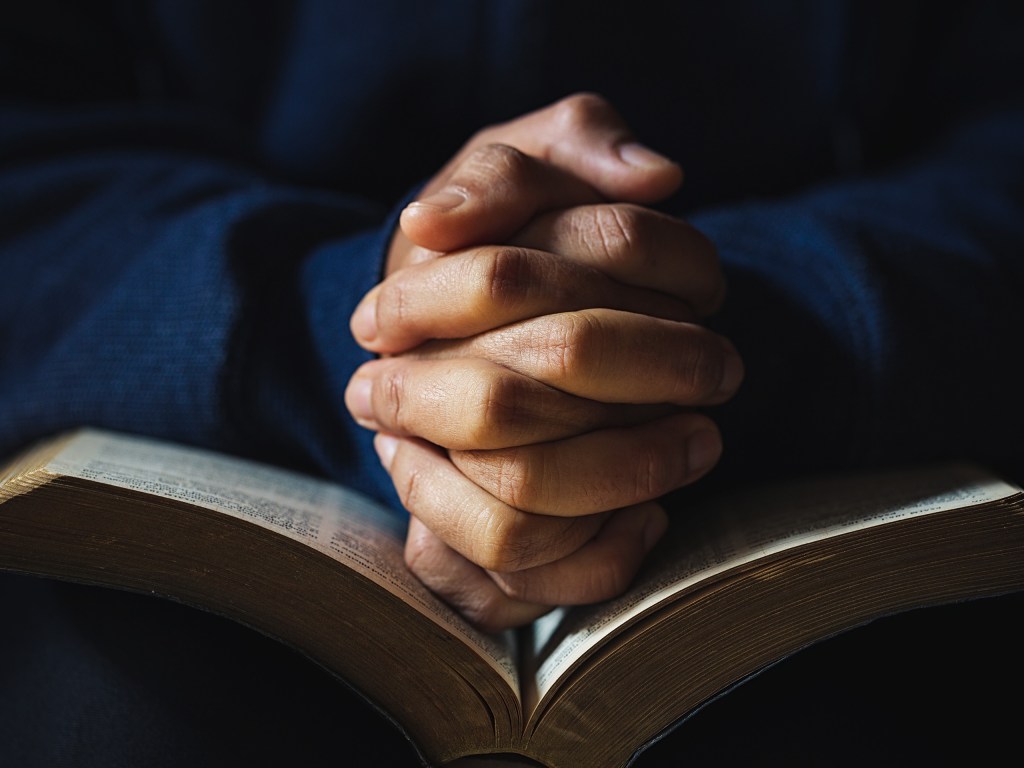
Featured image from https://www.catholicherald.com/wp-content/uploads/2022/03/mans-hands-in-prayer_WEB.jpg

He ascended into heaven

Today (Thursday 26 May 2022) is Ascension Day. It is 40 days after Easter and 10 days before Pentecost. On this day in history, Jesus met with his disciples and ascended to heaven, completing the cycle of his earthly ministry, started some 30 years before. Here is the account of this event in Acts 1:

In my former book, Theophilus, I wrote about all that Jesus began to do and to teach until the day he was taken up to heaven, after giving instructions through the Holy Spirit to the apostles he had chosen. After his suffering, he presented himself to them and gave many convincing proofs that he was alive. He appeared to them over a period of forty days and spoke about the kingdom of God. On one occasion, while he was eating with them, he gave them this command: ‘Do not leave Jerusalem, but wait for the gift my Father promised, which you have heard me speak about. For John baptised with water, but in a few days you will be baptised with the Holy Spirit.’

Then they gathered round him and asked him, ‘Lord, are you at this time going to restore the kingdom to Israel?’

He said to them: ‘It is not for you to know the times or dates the Father has set by his own authority. But you will receive power when the Holy Spirit comes on you; and you will be my witnesses in Jerusalem, and in all Judea and Samaria, and to the ends of the earth.’

After he said this, he was taken up before their very eyes, and a cloud hid him from their sight.

They were looking intently up into the sky as he was going, when suddenly two men dressed in white stood beside them. ‘Men of Galilee,’ they said, ‘why do you stand here looking into the sky? This same Jesus, who has been taken from you into heaven, will come back in the same way you have seen him go into heaven.’

Below is a short (5-minute) message reflecting on the meaning Christ’s ascension.

Extract from “The Ascension of Christ” by Rembrandt, 1636