Watch the 22-minute video of this 18-minute sermon and 4-minute song.
Sickness and trouble in life are sometimes a result of problems in our relationship with God. This is often true and often not true – sometimes sickness and trouble just arrives, even when (perhaps even especially when) our relationship with God is good. But when things are going wrong in life, when we struggle with illness, it is wise to reflect on where we are in our relationship with God.
Today’s message draws from Psalm 32, an extract of which I include below:
1 Blessed is the one whose transgressions are forgiven, whose sins are covered. 2 Blessed is the one whose sin the Lord does not count against them and in whose spirit is no deceit.
3 When I kept silent, my bones wasted away through my groaning all day long. 4 For day and night your hand was heavy on me; my strength was sapped as in the heat of summer.
5 Then I acknowledged my sin to you and did not cover up my iniquity. I said, “I will confess my transgressions to the Lord.” And you forgave the guilt of my sin.
6 Therefore let all the faithful pray to you while you may be found; surely the rising of the mighty waters will not reach them. 7 You are my hiding place; you will protect me from trouble and surround me with songs of deliverance.
8 I will instruct you and teach you in the way you should go; I will counsel you with my loving eye on you.
In the video message I talk through the message of this Psalm, drawing on the beautiful insights of Walter Brueggeman’s “The message of the Psalms: A theological commentary”.
Below is a video of this 19-minute message about God’s persistence in offering salvation to each one of us.
Throughout the scriptures, God is reaching out to humanity with the offer of salvation. Isaiah 55 is filled with words of invitation from God. Joshua 5 links the liberation of the Israelites from slavery with the first Passover meal in the promised land. 2 Corinthians 5 has Paul telling us, that if anyone is in Christ, that person is a new creation – the old has gone, the new is here! And Luke 15 tells the remarkable story of the prodigal son – or perhaps it is the story of the forgiving father, who welcomes back his wayward son. The father runs down the road to embrace him and celebrate his return. The prodigal son is saved, thanks to the generosity of his father.
Click here to listen to the audio recording of this 27-minute message. Or watch the video here on Facebook (the message starts 24 minutes into the recording). Or read the text summary below.
Our readings for today – the First Sunday in Lent – includes God’s Covenant with Noah after the great flood, in Genesis 9:8-17. Below I present this text from the interlinear bible, which endeavours to translate the Hebrew word-for-word into English:
8And God spoke to Noah, and to his sons with him, saying, 9“Behold, I, even I, am establishing my covenant with you, and with your seed after you, 10and with every living creature which is with you, among fowl, among cattle, among every animal of the earth with you, from all that go out from the ark, to every animal on earth. 11And I have made stand my covenant with you, and all flesh shall not be cut off again by the waters of a flood; nor shall there ever again be a flood to destroy the earth.”
12And God said, “This is a sign of the covenant, which I am about to make between me and you, and every living soul which is with you, for everlasting generations. 13I have set my bow in the cloud, and it shall be a sign of a covenant between me and the earth. 14And when I gather the clouds on the earth, then the bow shall be seen in the clouds. 15And I will remember my covenant which is between me and you, and every living soul in all flesh. And the waters shall not again become a flood to destroy all flesh. 16And the bow shall be in the clouds, and I shall see it, to remember the everlasting covenant between God and every living soul, in all flesh which is on the earth.”
17And God said to Noah: “This is the sign of the covenant which I have made stand between me and all flesh that is on the earth.”
It is worth taking careful note of the language used this passage, to gain an understanding of how radically inclusive God’s post-flood covenant with Noah was. See below the same text with coloured key words.
In green, note the 8 uses of “you“: 5x “with you”, 1x “with your seed” and 2x “me and you”. God’s message to Noah is very directed towards him and particularly towards a partnership with him – the ‘with’ and the ‘and’.
In yellow, note the 6 uses of “every“: 1x “every living creature”, 2x “every animal” and 3x “every living soul”. The Hebrew words behind the English all point towards living entities, whether human or animal – context may lean us towards one or other, but overall, the passage speaks equally about both people and animals.
In blue, note the 5 uses of “all flesh“. In the Hebrew, ‘all flesh’ refers to the skin or flesh of any living being – again, people or animals, and also plants. The verb form of this Hebrew word means to be full of life, hence the skin (perhaps with its reddish colour) prompts us to think of living beings. But the Hebrew verb also means ‘good news’ and that’s a lovely link between this passage and the goodness of the Kingdom of God that Jesus preaches.
In pink, note the 7 (yes 7!) mentions of the “earth“. In 5 of these, the reference is merely to people or animals “on the earth” – the earth is just a ground (soil) on which living things live. But in verses 11 and 13, we get two radical statements. In v11, God says that a flood will never again destroy the ‘earth’ – this is an expansion on God’s covenant not to destroy living things (animals and people) – now God also commits to protecting the earth itself. Moreover, in v13, God says that the rainbow “shall be a sign of a covenant between me and the earth”! Not only is the Noahic Covenant with Noah, people, animals AND plants, it is ALSO with the very earth itself. As if the earth is a living and sentient being! A great passage for those committed to ecospirituality.
Finally, in lime, note the 5 uses of “between“. Two of these are “between me and you” emphasising a close partnering between God and Noah. The other three ‘between’s are between God and the earth, every living soul and all flesh. Here God shows his partnering with people, animals, plants and the planet (and perhaps by implication, the cosmos).
In short, this passage strongly emphasises a radical inclusivity by God towards the whole of God’s creation, encompassing not only all of humanity, not even also only of all animals, but also of the entire planet itself. This implies a universal covenant – a broad baobab tree with enough space for all created things to shelter under is branches. Humans, plus, plus, plus!
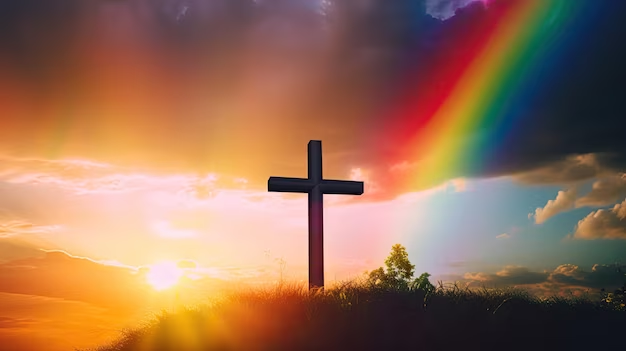
In this same passage, we also have 7 uses of the term “covenant”, which is why this passage is referred to the Noahic Covenant, following the devastating flood. A covenant is a binding agreement, and we get the heart of it in v11, “I have made stand [erected] my covenant with you, and all flesh shall not be cut off again by the waters of a flood; nor shall there ever again be a flood to destroy the earth.” The famous rainbow (mentioned three times as “bow”) is “a sign of the Covenant” – it is not the Covenant itself; just a symbol or sign that points to it (vv 12-13).
But what is most striking about this sign, is that it appears to be more for God’s benefit than for ours. God says in v16, “And the bow shall be in the clouds, and I shall see it, to remember the everlasting covenant between God and every living soul, in all flesh which is on the earth.” The bow is there for God to see, so that God will remember the covenant. It is hard to imagine God might forget about the covenant, so this is particularly intriguing, suggesting a strong commitment on God’s part.
It is reminiscent of the Passover blood that the Israelites painted on the doors of their homes. Exodus 12:13 has God saying, “When I see the blood, I will pass over you.” Here again is a sign that God sees that activates Covenant protection and blessing.
God’s covenant with Noah is universal – humans, plus, plus, plus. It foreshadows a far later Covenant, made in Christ.
This new covenant that we have through Jesus Christ is similarly radically inclusive and universal. Jesus died for the sins of the whole world, not just of some. Thus everyone can potentially be saved. And perhaps, if one adopts a universalist theology, God may just find a way to actually save every person. I don’t know, but I hope so!
Christ expands the Noahic covenant and completes it. His death and resurrection is God’s final Word on salvation. Christ incarnated, ministering, on the cross, resurrected and ascended is the new sign, replacing the rainbow. It fulfils the Noahic covenant.
We look forward in Lent towards remembering and walking through this new covenant that Jesus makes possible for the whole of creation.
Today (Sunday 10 December) is the Second Sunday in Advent, a season in which we remember and celebrate Christ’s first coming into the work and prepare ourselves for his second coming into the world.
Two key themes emerge from our readings: repentance and redemption.
Central to our preparation for Christ’s coming is repentance of sin:
Mark 1 speaks of John’s ministry of a call to prepare for Christ’s coming, to a baptism of repentance of sin, and to confession,
Isaiah 40 speaks of the sins of the people of Israel,
Psalm 85 refers to our iniquity and sin, and warns us of God’s wrath and anger, and
2 Peter 3 calls us to repentance and warns of the possibility of us perishing.
Repentance is an important part of our lives as followers of Christ. The Greek word for repentance means to turn around – a 180 degree about turn. In repentance, we turn away from sin and towards God. It is a reorientation of ourselves in relation to God and sin. This is the most important work we can do during Advent, as we prepare for Christ.
Repentance leads to restoration. Through repentance, we are stored into our fellowship with God and experience the blessings of God in our lives:
Mark 1 speaks of John’s baptism of repentance leading to God’s forgiveness of our sins,
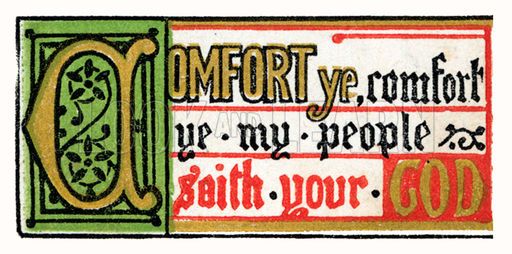
Isaiah 40 uses the most wonderful language, starting with “comfort, comfort my people”, tenderly, our hard service is complete, sin is paid for, valleys will be raised up and mountains made low, rough ground becomes levels and rugged places a plain, we all (humans) will see God’s glory and restoration, and God will tenderly gather, carry and lead us,
Psalm 85 says that God will restore us again and revive is again, That we will be together in righteousness and peace, that righteousness and peace will kiss, that faithfulness will spring up while righteousness will look down, and that God will give us what is good, and
2 Peter 3 speaks of God’s patience with us, of a new heaven and earth, of us becoming spotless, blameless and at peace with God, and that God’s patience means our salvation.
These wonderful words of restoration are the fruit of repentance. As we turn 180 degrees away from sin and towards God, something most of us have to do daily (even hourly or minutely!), God forgives and restores. This is the great gift of God’s son – Jesus comes into our world to forgive and restore.
I am working in the United States from early August to early December, at the Appalachian State University in Boone, North Carolina. During this time, I will be sending out a short mid-week message. This is the message that went out 9 August. My apologies for posting it late here on my blog.
Matthew 15:21-28 is a story of Jesus’ encounter with a Samaritan woman. He looks into her heart and hears her deep faith and grants her her request. He ignores her demographic – female, Samaritan – and sees her true self. Jesus does the same with us. And expects us to do the same with others.
Click here to listen to a reading of the Passion of Christ according to St Matthew (26:14-27:66, from the New International Version) or click here to watch a video of this reading (the reading starts at about 26 minutes).
For centuries, Christians have combined the celebration of Palm Sunday with the reading of the Passion Story. I did not grow up in a church that did this. We had “Hallelujah’s” on Palm Sunday as Jesus rides triumphally into Jerusalem, and then “Christ is Risen Indeed” on Easter Sunday. In between, there was nothing. But our tradition is to set together these two sets of narratives to drive home the stark reality of how easily we humans can go from ‘Hallelujah!’ to ‘Crucify him!’ within days. The reading takes about 25 minutes. It is the only time each year that we read the entire Passion Story, and so well worth listening to or watching.
John the Baptist is the one who prepares the world for the first coming of Christ, some 2,000 years ago. We, today, follow in his footsteps in continuing to prepare the world to receive Christ when he comes again. The world we live in now continues to grapple with many challenges.
Currently, we think of those many who have died of Covid-10: in South Africa, since the start of the pandemic, some 102 000 people have died, amounting to an average of about 102 per day since March 2020.
We continue to grapple with HIV and AIDS: 14% of South Africans are living with HIV or Aids, an average of about one in seven people.
We continue to see high Aids-related death rates: 86 000 this year alone, an average of 235 deaths per day – and the death rates have been rising over the past five years.
And gender-based violence remains a scourge of our society, with an average 115 women raped every day this year – a total of 45 000 so far this year.
It is into this broken and wounded world that we prepare for the coming of Christ. How do we do this? What are the guidelines we’re given in the scriptures set for today?
Matthew 3:1-12 presents John’s call to repentance, confession and baptism. He strongly confronts the religious leaders of his day: “You brood of vipers!” His words are confrontational and damning. He calls them to produce the fruit of repentance – it is one thing to repent, and another to demonstrate that repentance in your behaviour – the fruit. And he warns, all very challengingly, that if they fail to do so, they will be chopped down like an unproductive tree, or burned up in the fire, like the chaff from winnowing.
The story of John’s ministry in Mark’s gospel is a little softer: there he speaks of a baptism of repentance for the forgiveness of sins. Matthew doesn’t make any mention of forgiveness. And Luke’s version incorporates both what Matthew and what Mark say. (And John provides a quite different version altogether.)
John, then, sets a pattern for us that is both encouraging and challenging. But what else can we learn from today’s readings about preparing the world for Christ?
Isaiah 11 presents a prophecy of the branch that will come from Jesse – King David’s father and, many generations later, forefather of Jesus. This passage opens with a repeated emphasis on the Spirit: “The Spirit of the LORD will rest on him— the Spirit of wisdom and of understanding, the Spirit of counsel and of might, the Spirit of the knowledge and fear of the LORD” (Isaiah 11:2). Clearly, we cannot do anything without the enabling of the Spirit of God.
And in the following verses, Isaiah emphasises God’s concern for those who are vulnerable: “He will not judge by what he sees with his eyes, or decide by what he hears with his ears; but with righteousness he will judge the needy, with justice he will give decisions for the poor of the earth” (Isaiah 11:3-4). Righteousness and justice are the keywords here.
And this is followed by the imagery of wolves, leopards and lions living in harmony with lambs, goats and yearlings, under the leadership of children (Isaiah 11:6). This is the kind of egalitarian and harmonious society that we are called to bring into being as we prepare for Christ’s return.
Psalm 72 continues some of these themes from Isaiah, notably God’s defence of the poor, vulnerable, needy, marginalised, silenced and outcast: “May he defend the afflicted among the people and save the children of the needy; may he crush the oppressor” (Psalm 72:4). Here we see God taking sides – he aligns with the poor and against the oppressor. God is not neutral – he sides with those who are vulnerable. The Psalmist goes on, “For he will deliver the needy who cry out, the afflicted who have no one to help. He will take pity on the weak and the needy and save the needy from death. He will rescue them from oppression and violence, for precious is their blood in his sight” (Psalm 72:12-14). In those days, life was in the blood, so when the Psalmist says, “precious is their blood in his sight”, s/he is in effect saying that God sees their lives as precious and worthy of protection. Theologians call this “God’s option for the poor” or “God’s preference for the poor”.
When we wonder where we should stand on things, the Biblical answer is unequivocal – stand with those who are vulnerable. That is always where we will find God. And that is where we should be found.
Romans 15 invites us to take on the attitude of Christ: “May the God who gives endurance and encouragement give you the same attitude of mind toward each other that Christ Jesus had, so that with one mind and one voice you may glorify the God and Father of our Lord Jesus Christ. Accept one another, then, just as Christ accepted you, in order to bring praise to God” (Romans 15:5-7). The result of thinking like Christ, is that we will accept one another – here again is a call to inclusivity and now also being non-judgmental. Indeed, in the previous chapter, Paul explicitly tells us to stop judging others: “Therefore let us stop passing judgment on one another. Instead, make up your mind not to put any stumbling block or obstacle in the way of a brother or sister” (Romans 14:13). This was in the context of conflicts of various dietary laws of the diverse group of Jewish and Gentile Christians. But regardless of the topic of conflict, the principles remain: accept and do not judge. Be tolerant and inclusive. Celebrate diversity.
As we strive to be Christians who, like John the Baptist, are preparing the way for Christ’s return, we need to take up the examples we are given in the Scriptures: honest words, an invitation to repent and receive forgiveness, the presence of the Spirit, values of righteousness and justice, an option for the ‘poor’, and acceptance and tolerance. These constitute the mind of Christ. And as we embody and live out Christ’s mind, we will be preparing the world for his return.
We live in a world that is fraught with challenges and unpredictabilities. We think of Russia’s war on Ukraine, the continued challenges of the people of Palestine and the various conflicts in Africa. We think in South Africa of increasing unemployment, rising inflation, the upcoming petrol price hike. We think of loadshedding and the ongoing challenges of Covid. We think of the water crisis in Nelson Mandela Bay and the devastation of the floods in KwaZulu-Natal. The world is unpredictable. Our lives are often unpredictable. Sometimes, we may feel disoriented and anxious because of the many challenges that we face at personal, national and global levels.
In these times, it is reassuring to recognise that while life may be unpredictable, God is consistent. God persists. God has always, continues to and will always engage with us. When life feels chaotic, we have a God we can rely on.
Today’s reading from John 14:23-27 is particularly strong in reassuring us of God’s continuity. Jesus starts in v23 with himself: “Anyone who loves me will obey my teaching.” And then he immediately continues, “My Father will love them.” Here is the first affirmation of consistency – between God the Son and God the Father. Jesus draws the immediate and strong link between himself, his Father and us – rooted in love – our love for Christ and the Father’s love for us. And he continues with these amazing words, “and we will come to them and make our home with them”. I love this use of ‘we’ and ‘our’ – here Jesus is referring to himself and his Father as operating together, as a partnership, and of coming dwell with us as a partnership. What a great reassurance of the continuity between the Father and the Son. And Jesus continues further, “These words you hear are not my own; they belong to the Father who sent me” – yet further reassurance of continuity and consistency between God the Father and God the Son.
Jesus then continues, introducing the Holy Spirit as “the Advocate, the Holy Spirit, whom the Father will send in my name”. In this short phrase we have Father, Son and Holy Spirit, collaborating together – the Father sends the Holy Spirit in the Son’s name. And the role of the Holy Spirit will be to “teach you all things and [to] remind you of everything I have said to you”. Here again, we have continuity and consistency – Holy Spirit does not start a new work in us, but rather continues the work of the Son, by reinforcing his teachings in us.
The result of all of this continuity from the Father of the Old Testament, the Son of the Gospels and the Spirit of the New Testament church is peace. Peace! Jesus says, “Peace I leave with you; my peace I give you. Do not let your hearts be troubled and do not be afraid.” We can breathe out, we can rest in God, we can trust that God has been consistently and persistently at work throughout history, from the creation until now and into the future. Do not be troubled. Do not be afraid. Be at peace.
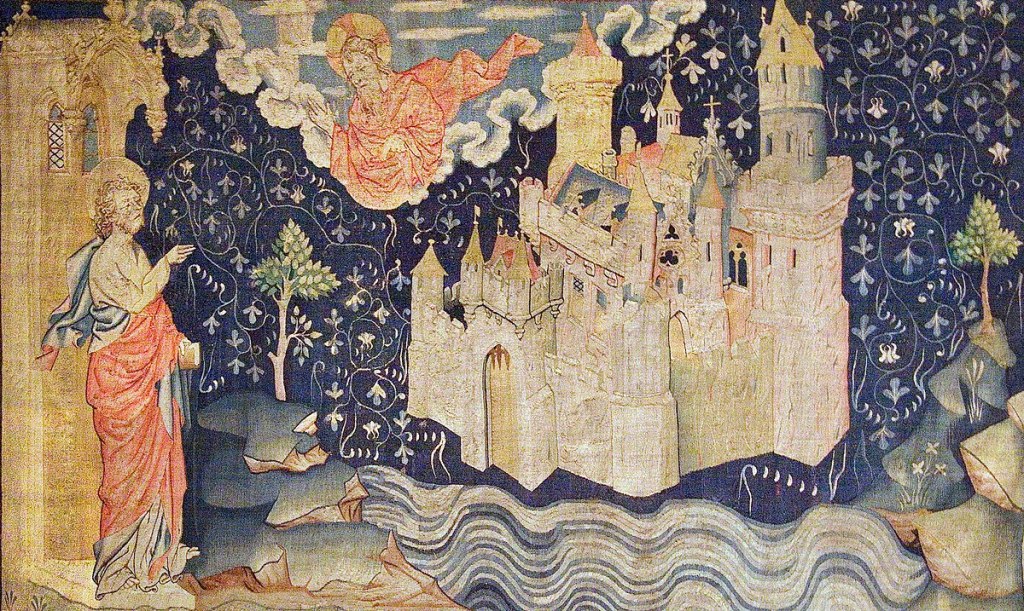
And these reassurances of God’s continuity extend into the future. Revelation 21:10 and 21:22-22:5 paint a compelling image of the heaven. John is taken by the Spirit – the same Spirit Jesus has spoken about in John’s Gospel – and sees the new Jerusalem, the Holy City coming down out of heaven from God. It is a glorious sight! There is no temple there, because God (the Father) and the Lamb (the Son) are its temple. God’s light shines out brilliantly. The gates of the city are always open. There is a river running through the city, with the water of life, and the tree of life, with leaves for the healing of the nations. We can see God’s face.
John’s vision is a deep reassurance of God’s continuity – what have seen in the Father throughout the first Testament, what we have seen confirmed in the life of the Son in the Gospels, and what we have been promised and experienced in the coming of Holy Spirit in the early Church and continuing until today, will continue into the future, until the day Christ returns.
We can rest deeply into the continuity of God, into God’s steadfast faithfulness and persistence. We can hold onto a God who is faithful, even when our own faith is frail or when life’s burdens overwhelm or depress us. We can hold fast to God’s continuity.
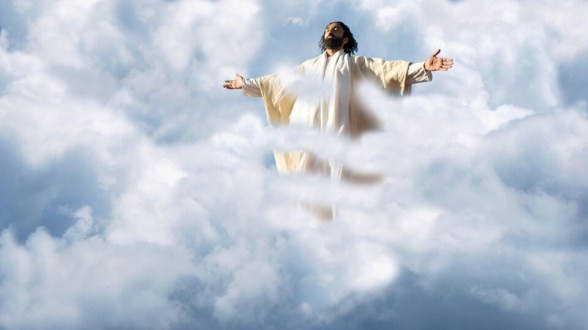
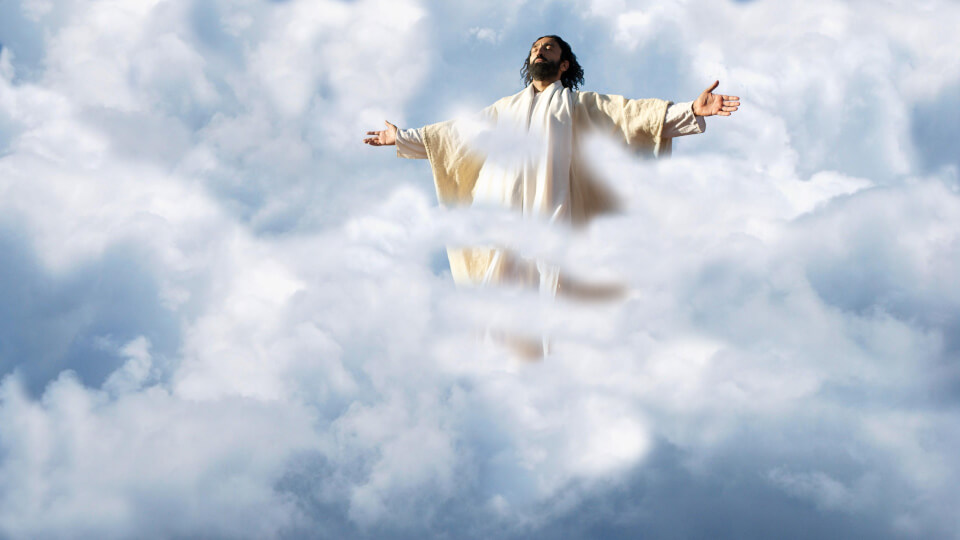
From the dawn of time, God has had his arms outstretched to receive and embrace us. God has always been open and receptive to us. He always has been like this, he is like this today, and he will remain like his into the future. This is permanent posture of God. Arms open and looking towards you.
When we feel disconnected from God, can’t perceive or feel him, feel abandoned – it is not God who has turned away. It is we who have turned away. Sin is one of the main causes of us feeling cut off from God – sin is us turning away from God. But God has not moved – he is still there.
Luke 13:1-9 tells of people coming to Jesus saying that some people who had died horribly must have sinned terribly to suffer such a death. But Jesus challenges this, and says they were no worse than anyone else. And then he cautions those who said this: “Repent, else you too will perish!” He then tells the parable of a fruit tree that was unproductive. The owner wanted to cut it down, but the gardener interceded for is, saying he’s car for it for three years and see if it produced fruit: if so, good; if not, then cut it down. The parable is not particularly confident about the tree becoming fruitful and being saved. Sin is serious – it can lead to our deaths.
1 Corinthians 10:1-13 also speaks of sin. The people of Israel wandering through the desert for 40 years saw the most remarkable miracles – the plagues against the Egyptians, the parting of the Red Sea, water gushing from a rock, manna from heaven every morning, the pillars of fire and smoke and so on. Yet, they repeatedly turned from God and engaged in all kinds of sin. And many died as a result. Paul says these are warnings for us, of how NOT to live our lives. And he offers a bit of hope: that God will not let us be tempted beyond what we can bear and that there will always be an escape route.
These two readings focus on the real risks of sin causing us to be estranged from God. But I say again: God has not moved! He is still there! His arms are still open to us!
“Come, all you who are thirsty, come to the waters; and you who have no money, come, buy and eat! Come, buy wine and milk without money and without cost. Why spend money on what is not bread, and your labor on what does not satisfy? Listen, listen to me, and eat what is good, and you will delight in the richest of fare. Give ear and come to me; listen, that you may live. I will make an everlasting covenant with you, my faithful love promised to David.”
Hear these repeated words from God: Come, come, come. Listen, listen, give ear. Eat and drink. Free, without cost. Good, delight, richest, everlasting, faithful, love, promise. These are words of God who is always facing us, with his arms always outstretched. This is the invitation to come to him, to quench our thirst, to eat and rest.
Seek the LORD while he may be found; call on him while he is near. Let the wicked forsake their ways and the unrighteous their thoughts. Let them turn to the LORD, and he will have mercy on them, and to our God, for he will freely pardon.
You, God, are my God, earnestly I seek you; I thirst for you, my whole being longs for you, in a dry and parched land where there is no water. I have seen you in the sanctuary and beheld your power and your glory. Because your love is better than life, my lips will glorify you. I will praise you as long as I live, and in your name I will lift up my hands. I will be fully satisfied as with the richest of foods; with singing lips my mouth will praise you. On my bed I remember you; I think of you through the watches of the night. Because you are my help, I sing in the shadow of your wings. I cling to you; your right hand upholds me.
Again, hear David’s response to the God of love, the God with open arms, the God who is always present and always available.
I encourage you, if you are feeling burdened and challenged by life, or if you are feeling that God is remote, to come to our Lord, who is the fountain of life, who offers food and drink to refresh your soul, at no cost, with no conditions.
Last week we learned some Advent yoga – reaching back and seizing hold of the promises God made and fulfilled in Christ, which God has fulfilled, which feeds our faith; and reaching forward and grasping at the promises God has made that still will be fulfilled in Christ, which gives us hope. Today we focus forwards towards the hope of things yet to come. Central among this is Jesus’ second coming.
Our readings today (Malachi 3:1-4; Luke 1:68-79; Philippians 1:3-11 and Luke 3:1-6) all speak about the anticipation of Christ’s coming, including his second coming. Malachi (and Jesus) speaks about the second coming as being sudden, unexpected, which gives us a fright. We don’t know when to expect him. Malachi also says, when the Lord comes, the messenger we long for, the Son of Man, who will be able to stand? It will be daunting. (Though Jesus prays in Luke 21:36 that at the end times “you may be able to stand before the Son of Man”.)
Malachi, John the Baptist, Jesus and Paul all tell us we need to prepare for the coming of Christ. We must be ready. We must repent of our sins and receive God’s forgiveness, then we are made right God, and ready to receive Christ. Malachi speaks about purification – metal purified by fire and clothing cleansed with launderer’s soap.
There will be a sifting, a separation. Malachi calls it a sifting – of flour from chaff and sand and stones. Jesus speaks about it as a separation of sheep and goats, of pruning away and discarding unproductive branches off a fruit tree.
But it is not all challenge and judgement. It is also about hope. HOPE! The hope that comes through Jesus Christ and the great work he has done for us. Zechariah, praying over his new-born son, John (the Baptist), uses words of hope like: salvation, mercy, rescue, forgiveness, peace, covenant, righteousness, tender mercy, sunshine, rising sun. And Paul, writing to the Philippians, speaks of love that may abound more and more in knowledge and depth of insight.
Let us prepare for Christ’s return. And let us hope for what he will accomplish in and around us. Let us articulate and pray for what we hope for – our lives, our world as a better place, as redeemed and sanctified. Let us pray with hope for the world we desire God to make real for us.






 Reflections of God's Love