Encountering the risen Christ

Watch the video below of this 42-minute message. Yes, much longer than usual! I’m sorry about that, but it is – I think – worth the time, as a close reading of John 20:19-29 sheds to much light on Jesus’ character, his relationship with the disciples and his work as the Son of God. My notes are available below the video

Verses 19, 26    Both times Jesus “stood right in the middle of them”

Christ is the centre – not the priest, Bible, APB – only the person Christ

Christ-centred church

1, 19, 26               Easter Sunday morning – Jesus appears to Mary

Easter Sunday evening – Jesus appears in the upper room

Following Sunday (today) – Jesus appears again, to Thomas

19, 21, 26             Peace be with you – Shalom alechem x3

Easter Sunday – Christ made peace between us and God

Forgiveness of sins – done, paid for, wiped clean, forgotten, cast the deep

Everything is good. It’s all okay

Easter is the Great Forgiveness!

20           He showed them his hands and side

Emphasis on bodily resurrection, reconnected to his people

Not just some spiritual, esoteric thing

He is fully embodied, albeit with some unusual capacities

20           He could have come back healed, but doesn’t. Why?

His identification with us, solidarity with our pain & suffering

He remains the suffering servant of Isaiah 53 (4-5):

He took up our pain and bore our suffering. He was pierced for our transgressions, he was crushed for our iniquities, the punishment that brought us peace was on him, and by his wounds we are healed.

20           The disciples were overjoyed – full of joy

Joy (chara) & grace/gift (charis) – joy is a gift of God – because Jesus is back

21           “As the father has sent me, I am sending you”

We are to continue God’s work. We are sent, just as Christ was sent

Jn 3:16/7 “God so loved the world that he gave [sent] his one and only Son … For God did not send his Son to condemn the world, but to save it”

Every Christian is sent – not just clergy or evangelists

22           He breathed on them, “Receive the Holy Spirit

Hebrew for spirit & breath are both? Ruach

Gen 1:2: Spirit of God hovering

22           Gen 2:7: “Then the Lord God formed a man from the dust of the ground and breathed into his nostrils the breath of life, and the man became a living being”

To receive Jesus’ breath & Holy Spirit is to be made a new living being

22           To receive Jesus’ breath & Holy Spirit is a grace/gift (charis)

As the Spirit/breath was active in the creation of earth and humanity

2 Cor 5:17: “If anyone is in Christ, they are a new creation. The old has passed away, the new has come.”

22           Holy Spirit poured out on Pentecost: Easter Season is from Easter Sunday to Pentecost

23           Forgive anyone’s sin

The gift of HS is not so much miraculous signs, etc.

Instead the central commission – sending – is to forgive

And to warn that to not repent = no forgiveness

The Great Forgiveness!

24           Thomas was not with the disciples when Jesus came.

Where was he? He should have been in church! We should be in church!

27           Touch, see

V20. Jesus showed them his hands and side.

Thomas wants what the others got – to see. But also to touch

Our Eucharist is a see and touch moment

– receive the body of Christ broken for you (not receive this bread)

– receive the blood of Christ (not receive this wine)

Not clear if Thomas did actually touch: “Thomas answered and said…”

Perhaps seeing and the invitation to touch was enough for him

27           Stop doubting and believe. Be a believer!!

Accept the small and periodic signs of God and believe into him

28           My Lord and my God!

Hebrew: Yahweh & Elohim – names for God

Greek: Kyrie & Theos – names for God

The only place in the Gospels where Jesus is referred to as God – A profound statement of faith – perhaps the most

The Great Forgiveness

This Easter Sunday message centres on the idea that a most important fruit of the Easter story is that God’s forgiveness is extended and stretched to its limit, thereby including every sin imaginable. It is all already paid and cleared, cast into the deep. The return of Christ to humanity, after we so brutally murdered him, is the evidence of God’s extreme and great forgiveness. There could be no greater crime or violence against God. That God returns his son to us on Easter morning is a sign of God’s radical forgiveness. This great act of forgiveness for the murder of Christ is like a great whirlwind that catches up not only this sin, but all of our other sins also. They are all caught up in the one extra-ordinary and unprecedented act of forgiveness, and done with. And so, when we sin – as we will – we can know for sure that we can come to God, to sincerely ask his forgiveness, and to be sure that he will forgive and indeed has already, long ago done so.

(We love the screams and laughs of the children throughout this sermon. Jesus welcome children around him, while he was teaching. Certainly, they would have been as noisy as these ones were. Many were here to be baptised. Others were just full of beans!)

God’s offer of salvation

Below is a video of this 19-minute message about God’s persistence in offering salvation to each one of us.

Throughout the scriptures, God is reaching out to humanity with the offer of salvation. Isaiah 55 is filled with words of invitation from God. Joshua 5 links the liberation of the Israelites from slavery with the first Passover meal in the promised land. 2 Corinthians 5 has Paul telling us, that if anyone is in Christ, that person is a new creation – the old has gone, the new is here! And Luke 15 tells the remarkable story of the prodigal son – or perhaps it is the story of the forgiving father, who welcomes back his wayward son. The father runs down the road to embrace him and celebrate his return. The prodigal son is saved, thanks to the generosity of his father.

Today’s readings are:

  • Isaiah 55
  • Joshua 5:9-12
  • 2 Corinthians 5:16-21
  • Luke 15:1-3 & 11-32

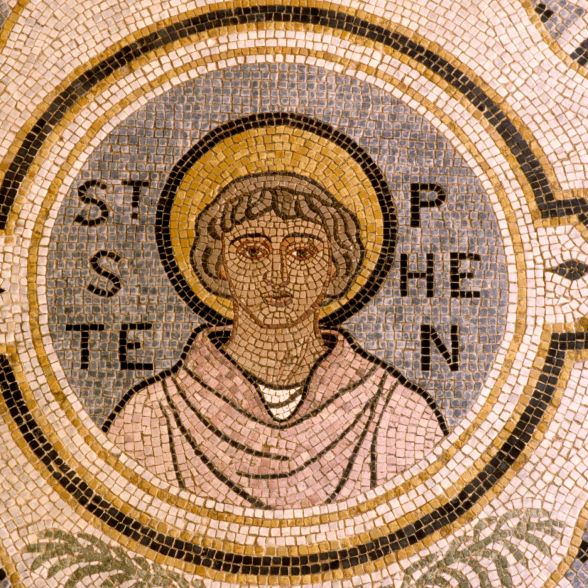
St Stephen

Click here to listen to the audio recording of this 20-minute message. Or watch the video here on Facebook (the message starts 25 minutes into the recording). Or read the text summary below.

Today we celebrate St Stephen, after whom our church is named. It is our church’s patronal festival, our birthday.

Stephen was a young man, appointed a deacon in the early church. He appears only in Acts 6 and 7, but in those few pages, he makes a remarkable impression and impact. He is the first Christian martyr – stoned to death because he challenged the Jew people’s lack of faith in Jesus Christ.

While we walk primarily in the footsteps of Jesus Christ – he is God incarnate, our teacher and our Lord and saviour – we give heed also to the example of Stephen, and seek to continue his legacy in our parish community today.

Our readings centre on Acts, omitting Stephen’s long, but very impressive and persuasive sermon. This are supported by a reading from 2 Chronicles, where Zechariah (an earlier Zechariah – not the father of John the Baptist) is stoned to death for speaking God’s Word. Psalm 31, which includes the words that both Jesus and Stephen speak as they died. And John 6, which is the ordinary reading for today, from Jesus’ long sermon on the Bread of Life. I have tabulated these three people, because there are significant and meaningful similarities between them, that speak to all Christians, and especially those who are members of a church named after St Stephen:

TopicZechariahJesusStephen
Reading2 Chronicles 24:17-22John 6:24-35Acts 6:8-10 & 7:54-60
Holy SpiritSpirit of God came on himBaptised by John and the Holy Spirit descended on himFull of Holy Spirit, faith, grace and power
Care for the poorFed 5000 men (plus women and children) with bread and fishOversaw the daily distribution of food
Challenges with the peopleThey were chasing after other GodsThey just wanted food and miraclesWanted quiet conformity with the past
Challenging the peopleWhy do you disobey the Lord’s commands?Do not work for food that spoilsYou stiff necked people! Your hearts are uncircumcised! You always resist the Holy Spirit! Was there ever a prophet your ancestors did not persecute?
Consequences for God’s messengersStoned to deathCrucifiedStoned to death
Their final wordsMay the Lord see this and call you to account.Father, forgive them, for they know not what they are doing.Lord, do not hold this sin against them.
Final prayerFather, into your hands I commit my Spirit (in Luke)Lord Jesus, receive my spirit (Psalm 31:5)

So, what do we take from this, and particularly from Stephen, into our daily lives?

  1. We must take our faith seriously – it is costly, important and even worth dying for.
  2. We must care for the poor, hungry and marginalised.
  3. We must seek the infilling of Holy Spirit, who equips us for life and ministry.
  4. We must seek after the things of God, and not after the things of this world.
  5. We must forgive those who hurt even, even to death.
  6. We must entrust ourselves to God – He has got us!

St Stephen the protomartyr. Icon by Theophili

Eternal consequences of care

Today’s Gospel reading is from Matthew 18:15-20. It speaks about Jesus’ call for us to be engaged with one another, and particularly about church discipline. But in this short 7-minute message, I invite a focus on two key points.

First, that Jesus wants us to be meaningfully engaged with each other in the church and to speak into each other’s lives. In other words, to care about each other.

Second, that what we do in this life has eternal consequences. Our caring engagement with others can bind them in ongoing sin or difficulties, or loose them through forgiveness and reconciliation.

We are urged to engage with one another, to be honest with one another and to pray for and with one another. I hope you will find this short message both encouraging and challenging.

(This video was recorded just outside my front door in Boone, North Carolina, with the mountain “Howards Knob” in the background. This message originally went out on 16 August 2023.)

Passion of Christ (according to Matthew)

Click here to listen to a reading of the Passion of Christ according to St Matthew (26:14-27:66, from the New International Version) or click here to watch a video of this reading (the reading starts at about 26 minutes).

For centuries, Christians have combined the celebration of Palm Sunday with the reading of the Passion Story. I did not grow up in a church that did this. We had “Hallelujah’s” on Palm Sunday as Jesus rides triumphally into Jerusalem, and then “Christ is Risen Indeed” on Easter Sunday. In between, there was nothing. But our tradition is to set together these two sets of narratives to drive home the stark reality of how easily we humans can go from ‘Hallelujah!’ to ‘Crucify him!’ within days. The reading takes about 25 minutes. It is the only time each year that we read the entire Passion Story, and so well worth listening to or watching.

Featured image by Jyoti Sahi (Indian, 1944–), Way of the Cross, 2009. Oil on canvas. From: https://www.imb.org/2017/04/12/journey-cross-artists-visualize-christs-passion-part-2/

Principles of fasting

Click here to listen to the 16-minute audio message on principles of fasting, or read the written summary below.

During Lent, it is customary for us to fast. It is not a rule or a requirement – you should decide for yourself whether you will fast. And you should also decide for yourself what you will fast from. In this message, I offer seven basic principles of fasting.

1. Fasting is an important spiritual discipline, backed up by plenty of Biblical precedent. Jesus himself fasts in the Gospels, and of course his ministry started with a 40-day fast in the wilderness. But although Jesus does fast and does provide guidance on fasting, he does not instruct or command us to fast.

2. Fasting is between you and God. It has nothing to do with anyone else. Jesus says in Matthew 6 that we should fast in secret, hidden in a closet, even putting on makeup so that it does not look as if we are fasting. It is a private matter between you and God.

3. How you fast and what you fast from is between you and God. There are no clear rules in the Bible about how fasting should be done. There are diverse examples of fasting in the Bible, but no specific singular pattern that is set down. There is thus flexibility in how fasting takes place – prayerfully figure out for yourself what will be helpful.

4. There are no dire consequences to breaking your fast. I am not encouraging you to break your fast, nor to be flippant about fasting. But I am saying that if you break your fast, it is just like any other sin you might commit. Sometimes we make fasting into such a big thing, that if we slip and break our fast, it seems like the end of the world. It is not the end of the world. It is simply sin.

5. Breaking your fast is an opportunity for learning. Again, I’m not encouraging you to break your fast or to be negligent in your fasting. But it is probably true that most of us break our fast from time to time. Breaking one’s fast is, arguably, a ‘small’ sin – it’s not in the same league as adultery or murder. It thus gives us a valuable opportunity to practice repentance (saying ‘sorry’ to God) and asking for forgiveness – and then for receiving God’s forgiveness. And then getting back to your fasting. For me, the moments of breaking my fast, repenting and accepting God’s forgiveness are among the most spiritually enriching moments of fasting.

6. Fasting is primarily about the heart, not the action. When we fast from chocolate, for example, we are not giving up something sinful – chocolate is not a sin. Most things we fast from are not sin. The reason for this is that the point of fasting is less about giving up sin (since we should be doing that already all the time!) but about giving up something. It is the impact of giving up something that is at the heart of fasting. It is what happens in our heart, in our faith, in our relationships with God that makes fasting meaningful. Joel 2:12-14 stresses this with the words, “Rend your hearts and not your garments”:

“Even now,” declares the LORD, “return to me with all your heart, with fasting and weeping and mourning.” Rend your heart and not your garments. Return to the LORD your God, for he is gracious and compassionate, slow to anger and abounding in love, and he relents from sending calamity. Who knows? He may turn and relent and leave behind a blessing— grain offerings and drink offerings for the LORD your God.

7. Fasting should be paired with charity. We are called to give generously while we fast. In practice, we could calculate the cash value of the things we are giving up and then give that cash to God’s work in the church or a charity or directly to people in need. This is stated particularly clearly in Isaiah 58:3-7:

‘Why have we fasted,’ they say, ‘and you have not seen it? Why have we humbled ourselves, and you have not noticed?’ “Yet on the day of your fasting, you do as you please and exploit all your workers. Your fasting ends in quarreling and strife, and in striking each other with wicked fists. You cannot fast as you do today and expect your voice to be heard on high. Is this the kind of fast I have chosen, only a day for people to humble themselves? Is it only for bowing one’s head like a reed and for lying in sackcloth and ashes? Is that what you call a fast, a day acceptable to the LORD? “Is not this the kind of fasting I have chosen: to loose the chains of injustice and untie the cords of the yoke, to set the oppressed free and break every yoke? Is it not to share your food with the hungry and to provide the poor wanderer with shelter— when you see the naked, to clothe them, and not to turn away from your own flesh and blood?

I wish you God’s richest blessings during your Lenten fast this year.

Feature image from https://www.nurtured-wellness.com/wp/wp-content/uploads/2018/06/Fasting.jpg

St Stephen

Click here to listen to the audio recording of this 19-minute message. Or watch the video on Facebook (the message starts at about 25 minutes).

I am fortunate to belong to a church named after a great figure in the early church – St Stephen. He was one of the first second-generation leaders in the church (meaning people who came after Jesus’ ascension). Stephen fills up two chapters of Acts (chapters 6 & 7). The first person to become a leader after the first disciples was Matthias, who replaced Judas as the 12th disciple (Acts 1:23-26) – Matthias is not mentioned anywhere else in our Bible. Next, were seven deacons, who were appointed in Acts 6:5-6. Stephen is one of these seven, and the only to be discussed in any detail. Saul (who later becomes Paul) is introduced right at the end of the story about Stephen, as being present at Stephen’s stoning (Acts 7:58).

Stephen is described in some detail in the first verses of Acts 6, as being full of faith, full of the Holy Spirit, full of God’s grace, full of wisdom and full of power. He is also described as having “the face of an angel” (which might refer to a look of power and authority, more than pale cherub-like skin).

Stephen’s primary role as deacon was to take care of the widows in the early church. But he is described also as performing great signs and wonders and teaching authoritatively (as we see in his 50-verse sermon in Acts 7). Stephen was the first follower of Christ to die for his faith – the first Christian martyr. And he demonstrated his profound faith while being stoned to death and, like Jesus, forgave his murderers as he died. In many ways, Stephen exemplifies what Jesus says to his disciples in Matthew 10:17-22: “You will be hated by everyone because of me, but the one who stands firm to the end will be saved.”

While we are primarily followers of Christ, we are also all followers of St Stephen, particularly in the following ways:

  1. We should strive to be filled with the Spirit – filled with God – in the same way that Stephen was. He was saturated with power, grace and faith through the Spirit. Perhaps, before we even climb out of bed, we should ask God to fill us anew every morning.
  2. We should care for others, both within and without the church. Stephen’s primary role was to take care of those who were struggling. His calling was to serve the poor and vulnerable, hence we call him a ‘deacon’ (a servant). We similarly should be always alert to the opportunities to serve and care.
  3. We should be public about our faith. This does not mean forcing our beliefs or values on others, nor necessarily about preaching on street corners. But it does mean that people should know that we are followers of Christ – Christians – and that they should know this not only by what we say but also by what we do. Our lived lives should exemplify the values that Jesus showed during his earthly ministry.
  4. We should be steadfast in our faith, even under pressure. There is a saying, “The true flavour of a teabag only comes out in hot water.” Similarly, our faith is really revealed and proven when we go through hard times. In Stephen’s most pressured moment, he forgave, like Jesus forgave. He turned his eyes towards God and entrusted himself into God’s care.

What a great privilege it is to be a follower not only of Christ, but also of Stephen. His life reflects many of the qualities of Jesus that we appreciate and that we should emulate.

Featured image of St Stephen from https://www.learnreligions.com/saint-stephen-542519

Dealing with sin

Click here to listen to the audio recording of this 23-minute message. Or watch the video recording on Facebook (the message starts at about 31 minutes).

1 John 1:1 – 2:2 provides a remarkable account of sin in the life of the Christian. John’s point of departure is that God is light, which comes up also in the opening chapter of John’s Gospel. In 1 John 1:5, John affirms that because God is light, no darkness can exist in or around him at all. The consequence of this is that if we are walking a path of darkness – in other words, a path of sin – then we cannot be in God’s light, because darkness cannot exist in the light. (In the message I provide an explanation of how darkness disappears in light, and apply this to John’s account in 1:6.

However, the reality for Christians is that we do sin, as John says in v 8 (If we claim to be without sin, we deceive ourselves) and v 10 (If we claim we have not sinned, we make God out to be a liar). Clearly, in John’s mind and experience, sin is inevitably part of the life of the Christian. And merely claiming that we are without sin is to sin! We deceive not only ourselves, but also God. So the question is not whether you or I sin, but rather what sin(s) we are committing. What is important is to at least acknowledge that we sin, to own it, to be honest about it.

But even though John sees sin as inevitable for Christians, he does also say that we should not sin: “My dear children, I write this to you so that you will not sin” (2:1). There is an expectation that we ought to be sinning, since (as we saw before) sin cannot exist within God’s light. How then to we resolve this conundrum?

Jesus Christ is solution to this challenge. His incarnation, life, ministry, teaching, death, resurrection and ascension together create a solution for our inevitable sin. His blood purifies us from sin (1:7). If we confess our sin, God will (because God is faithful and justice) forgive us and purify us (1:9). And Jesus will serve as our advocate, speaking on our behalf with God the Father, atoning for our sins, and indeed the sin of all humanity (2:1-2). Everything we have focused on over the past weeks, since Ash Wednesday, has been laying the foundation for this understanding: the great salvation work of Christ on behalf of all of humankind.

In summary, John gives three steps for a Christian response to sin:

  1. Try hard not to sin! Avoid stepping out of the light into the darkness.
  2. When to you do (inevitably) sin, be honest about it. Don’t pretend like you’re not sinning. But also don’t beat yourself up about it. We are all sinners!
  3. When you sin, stepping into the shadow and the path of darkness, turn as quickly as you can back towards Christ, the Light and Life of the world. Say you’re sorry. Ask for his forgiveness and accept it. Go back to step 1 and repeat (many times).
Featured image from https://personal-injury-claims-scotland.co.uk/general/how-to-avoid-mistakes-when-making-a-personal-injury-claim/attachment/yellow-road-sign-saying-danger-wrong-way-turn-back/

Passion of Christ (according to Mark)

Today, instead of a sermon, we listened to a reading of the Passion of Christ, from Mark chapters 14 and 15, using the JB Phillips translation. You can listen to the audio recording of the reading here. Or you can watch the video of the reading on Facebook here (the reading starts at 30 minutes). The reading takes 27 minutes.

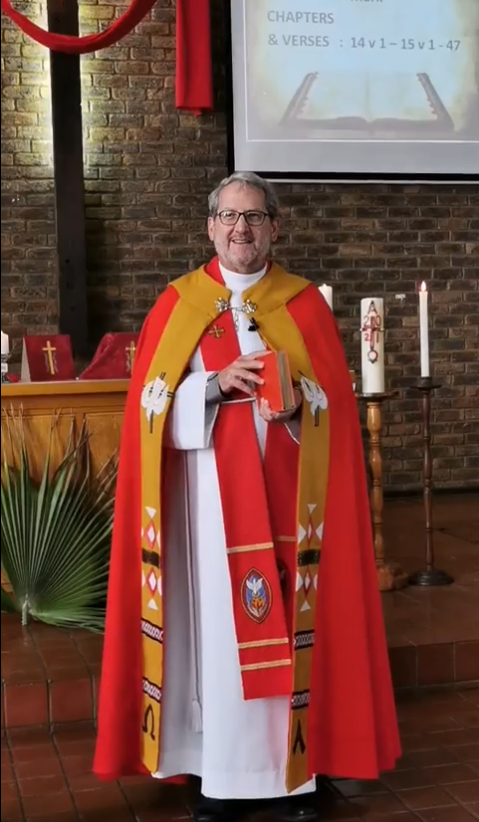
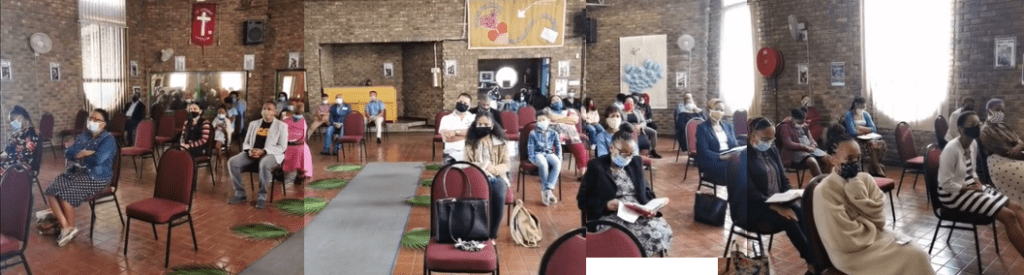
Below are a few photos of me reading and a composite photo of our in-house congregation.