Jesus’ Law

Click here to listen to this 13-minute message.

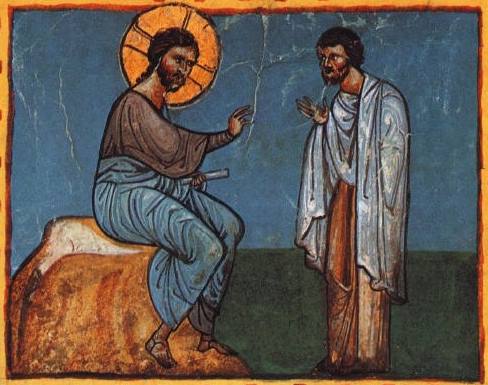
In Matthew 5:17-20, Jesus presents (albeit very briefly) his most comprehensive teaching on his view of Law of Moses. He says that he has not come to abolish the law, that the dot on every i and the cross on every t is vital, that the Law has not passed away, and that we need to practice and teach it. Many commentators (naturally) read this to mean that the First Testament Law is as binding on Christians today as it was on the people of Israel in years between Moses and Christ.

However, when we look at Jesus’ teaching and behaviour, even just within Matthew’s Gospel, we see him repeatedly massaging the Law, challenging the Law, even brazenly disobeying the Law – certainly as the Law was understood by the Pharisees of his day. For example:

  1. Matthew 5:21-48. Through the rest of chapter 5, Jesus uses the formula: “You have heard that it was said… But I tell you…” In this formula he, by his own authority, reinterprets the Law and in cases appears to overturn it. At its heart, he shifts the focus from the external letter of the Law, towards the heart attitude underlying the Law. And is so doing, makes keeping the Law much harder.
  2. Matthew 9:14-17. Here Jesus breaks the fasting laws. He is challenged on this, and explains that since the he is there, they should celebrate.
  3. Matthew 12:1-14. Here Jesus breaks the Sabbath laws – very important laws! He walks, he harvests and he eats, all on the Sabbath, and with his disciples. When challenged by the Pharisees, he even uses the Law to justify his breaking of the Law! And then he goes on to heal a man. In the parallel story in Mark’s Gospel (2:27), Jesus justifies his breaking of the Sabbath Laws by saying, “The Sabbath was made for man, not man for the Sabbath”
  4. Matthew 15:1-20. Here Jesus breaks the dietary (Kosher) laws (specifically not washing their hands before they eat). His answer is quite wide-ranging. He says, “What goes into someone’s mouth does not defile them, but what comes out of their mouth, that is what defiles them” (v11). And then he later explains in more detail: “Don’t you see that whatever enters the mouth goes into the stomach and then out of the body? But the things that come out of a person’s mouth come from the heart, and these defile them. For out of the heart come evil thoughts—murder, adultery, sexual immorality, theft, false testimony, slander. These are what defile a person; but eating with unwashed hands does not defile them

How do we reconcile Matthew 5’s apparently strict teaching with the rest of Jesus’ teaching and his daily behaviour? They do appear to be at odds with each other!

I suggest the following:

  • Under the First Testament Law, people believed that keeping the Law lead to Righteousness (i.e. to a right relationship with God). Because of this, they invested in keeping the Law down to the smallest letter (the jot and the tittle in the King James version). And the Pharisees, in particular, were highly devout in unpacking what each Law meant, and how it had to be lived out in the daily life.
  • Under the Second Testament, Jesus teaches that Righteousness (i.e. having a right relationship with God) leads to the keeping of the Law. We are made right with God through Jesus’ incarnation, ministry, death and resurrection. He is the one who, through his grace, makes us right with God, and we receive this righteousness through faith. Because of this, and in the power of the Spirit, we are enabled to keep God’s Law. But even this Law is not a legalistic ‘jot and tittle’ law, but a living, heart-based, relationship-centred Law. It is the Law of Love.

I end with a paraphrase of Matthew 5:17-20 by RT France (2007, pp. 190-191) in his commentary on Matthew’s Gospel:

“Do not suppose that I came to undermine the authority of the OT scriptures, and in particular the law of Moses. I did not come to set them aside but to bring into reality that to which they pointed forward. I tell you truly: the law, down to its smallest details, is as permanent as heaven and earth and will never lose its significance; on the contrary, all that is points forward to will in fact become a reality (and is now doing so in my ministry). So anyone who treats even the most insignificant of the commandments of the law as of no value and teaches other people to belittle them is an unworthy representative of the new regime, while anyone who takes them seriously in word and deed will be a true member of God’s kingdom.

“But do not imagine that simply keeping all those rules will bring salvation. For I tell you truly: it is only those whose righteousness of life goes far beyond the old policy of literal rulekeeping which the scribes and Pharisees represent who will prove to be God’s true people in this era of fulfillment.”

 

Turn to God

Click here to listen to this 18-minute sermon.

Today is the first Sunday in Lent, when we reflect on Jesus’ 40-day fast in the desert, and the way the devil tempted him during this time (Luke 4:1-13). Here’s the point I believe God wants us to hear from this passage today:

  1. Fasting from something makes that something a point of focus for spiritual tension.
  2. As a result, we’ll experience an increase in temptation related to that something.
  3. That creates increased opportunities to choose to turn towards God or to sin.
  4. Thus, fasting creates opportunities for us to turn to God.

Jesus experienced this during his 40-day fast. We experience it when we fast. Fasting creates these intensified opportunities to turn to God. It is the gift of the fast.

How can we turn to God? Here are two ways:

  1. Select a Bible verse that is meaningful to you and and relevant to what you’re fasting from. Memorise it. Whenever you feel tempted, recite the verse.
  2. Select a brief prayer that you can easily memorise and recite, e.g. the Jesus Prayer: “Lord Jesus Christ, Son of God, have mercy on me, a sinner.” Whenever you feel tempted, say the prayer.

Use the verse or prayer to remind you that you have made a commitment to God. Use it to help turn your focus towards God. Remind yourself that while breaking your fast may, actually, be trivial, remaining true to God is not.

Blessings as you journey through Lent.

2019.03.10_Forkintheroad

Featured image from https://thewellarmedwoman.com/blog/fork-in-the-road/

Turning towards God

Click here to listen to this 11-minute message.

Today is Ash Wednesday, the first day of Lent. Lent is the period of 40 days of fasting and prayer that leads up to Easter. It is a time of preparation for Calvary.

We have three key readings today:

  1. Matthew 6:1-16,16-21. Jesus emphasises that when we do things like giving to the needy, praying and fasting in a way that draws people’s attention to ourselves, our reward for doing it is people’s attention. God is no much impressed. But when we do these things quietly, secretly, then God (who sees what is done in secret) will reward us with treasures that last for eternity.
  2. Psalm 51. In this Psalm, David acknowledges his brokenness and comes before God with empty hands. He does not pretend that he is something when he’s not. And he is honest about his sinfulness. He concludes that God will not despite or reject a broken spirit or a broken and contrite heart.
  3. Isaiah 58:1-12This passage (titled ‘true fasting’ in the NIV translation) emphasises that our fasting my (1) be wholehearted, not merely a performance or duty, and (2) must be matched with how we live out our faith in deeds of justice, compassion and rightness. When we just go through the motions, God will not answer. But when we are sincere and ‘walk the talk’, and call on God, he will say, “Here am I”.

In light of this, I make four key recommendations for prayer and fasting during Lent:

  1. Turn to God – quietly and privately.
  2. Repent of your sins – sincerely.
  3. Align yourself with God – wholeheartedly.
  4. Act on this alignment – purposefully.

Finally, I recommend a prayerful reading of Psalm 51 (NRSV).

1 Have mercy on me, O God,
according to your steadfast love;
according to your abundant mercy
blot out my transgressions.
2 Wash me thoroughly from my iniquity,
and cleanse me from my sin.

3 For I know my transgressions,
and my sin is ever before me.
4 Against you, you alone, have I sinned,
and done what is evil in your sight,
so that you are justified in your sentence
and blameless when you pass judgement.
5 Indeed, I was born guilty,
a sinner when my mother conceived me.

6 You desire truth in the inward being;
therefore teach me wisdom in my secret heart.
7 Purge me with hyssop, and I shall be clean;
wash me, and I shall be whiter than snow.
8 Let me hear joy and gladness;
let the bones that you have crushed rejoice.
9 Hide your face from my sins,
and blot out all my iniquities.

10 Create in me a clean heart, O God,
and put a new and right spirit within me.
11 Do not cast [fling] me away from your presence,
and do not take your holy spirit from me.
12 Restore to me the joy of your salvation,
and sustain in me a willing spirit.

13 Then I will teach transgressors your ways,
and sinners will return to you.
14 Deliver me from bloodshed, O God,
O God of my salvation,
and my tongue will sing aloud of your deliverance.

15 O Lord, open my lips,
and my mouth will declare your praise.
16 For you have no delight in sacrifice;
if I were to give a burnt-offering, you would not be pleased.
17 The sacrifice acceptable to God is a broken spirit;
a broken and contrite heart, O God, you will not despise.

Or listen to Bach’s Cantata based on Psalm 51 (music adapted from Pergolesi’s Stabat Mater)


Featured image from https://www.catholiccompany.com/getfed/ash-wednesday-beginning-lent-5548

2019.03.06_AshWednesday

Truth

Click here to listen to this 17-minute message.

What do you believe? What do you hold to be true? How certain are you that these truths are in fact true? Are you open to the possibility that what you think is true might actually be incorrect? Are you open to possibility that other truths, that are different from your own, might be true? Or are you certain that you are right and they are wrong? In the pantheon of all that you believe is true, is there a central truth – a core truth – that you hold with the greatest certainty? That you’d be prepared to die for?

Truth is a big deal in contemporary society. We live in a post-modern era, where we regard truth as socially constructed, and where one person’s truth is acceptably another person’s fiction or even falsehood. It is a time of relative belief, of ‘live and let live’, of ‘each to their own’.

Yet, for many Christians, truth is absolute and unquestionable. What the Bible says – at least, what those passages that we choose to read – is absolutely true and must be imposed on others as being undoubtedly truly for all people everywhere.

The Apostle Paul presents what appears to be a core truth for himself in 1 Corinthians 15. It centres on the resurrection of Christ. He argues that Christ’s resurrection is so central, that if you don’t believe it, then everything else that you think you believe is flawed and futile.

What is your core truth?

I believe a lot of things about my faith strongly. For example, I believe that God created everything, that God is three distinct persons in one being, that Jesus Christ was the incarnation of God into the world, and that Jesus has uniquely facilitated the restoration of our relationship with God. But I’m not entirely certain how God created everything, whether God is just three persons or if there may yet be additional persons in the Godhead whom we’ve not yet met, or when and how the incarnation took place, and whether there is any limit on the reach of Christ’s reconciliation of people to God. I have thoughts on all of these, and I believe them quite strongly, but I’m open to the possibility – even the likelihood – that I may be wrong.

Yet, for me, I have an unshakable core belief that the heart of God is filled to overflowing with generous, extravagant, fierce love. This one core belief is the centre of my faith. I’m willing to lay down my life for that belief. And everything else that I believe emanates from that central truth. It is why I wrote the book Being God’s Beloved.

What is your core truth?

2019.02.10_Truth

Link to featured image

Jesus’ Anointing

Click here to listen to this 16-minute message.

We continue through the season of Epiphany in my church, which is the season in which we reflect on the manifestation or appearance of God in the world. This is particularly so in his Son Jesus Christ, who is the great shining forth of God’s presence in the incarnation of Christ, the Son of God, the second person of the Trinity.

Today we focus on the baptism of Jesus by John. In Matthew and Mark’s accounts of the baptism, God the Father speaks and God the Holy Spirit descends as John baptises Jesus and as Jesus comes up out of the water. But in Luke’s version of the baptism (Luke 3:15-22), things look quite different and it is less about his baptism and more about his anointing.

John is removed from the scene a few verses earlier, Jesus’ baptism is mentioned only in passing as background, and the appearance of God happens as Jesus prays. Moreover, the language used (passive voice and infinitive clauses – people were being baptised, Jesus was baptised, heaven was opened, a voice came from heaven)) creates a sense of time being suspended. It is as if the globe stops spinning and all falls silent, as the heavens are torn open, the Spirit descends in bodily form and the voice of God is heard. It is a moment of mystery. It is an epiphany!

Luke accentuates this by echoing imagery and language from the prophetic literature and the Psalms of the First Testament, e.g.

  • Ezekiel 1.1 and 2:1-3:1, where the heavens open, Ezekiel is filled with the Holy Spirit and God appears, reaching out of the heavens towards Ezekiel, and commissions him for ministry.
  • Psalm 2:7, where God says “you are my son”.
  • Isaiah 42:1, where God speaks of his chosen servant, who he fills with Spirit, to bring justice to the world.

These passages reinforce what follows Jesus’ baptism in Luke: Jesus goes out in the desert for 40 days (Luke 4:1-13) and then into the synagogue, where he proclaims his manifesto – “The Spirit of the Lord is on me, because he has anointed me to preach good news to the poor” (Luke 4:14-30).

How wonderful it would be if we ourselves experienced such an epiphany! Sadly, for most of us, God speaks quietly and subtly, not in such dramatic ways. Yes, let us not doubt that God does call us, manifest himself to us, anoint us with Holy Spirit and commission us for service. We are as much called into God’s work as Jesus was.


Featured image from: https://www.desiringgod.org/interviews/why-was-jesus-baptized

The Word became flesh

Click here to listen to this 20-minute message.

In the beginning was the Word, and the Word was with God and the Word was God (John 1:1).

These majestic words open the Gospel according to St John, and continue over 18 verses in one of the most majestic hymns to the Christ. On Christmas Day, we celebrated the birth of an infant, a little child who promised hope and new life. But he was, after all, just an infant. By contrast, John presents us with the pre-existent second person of the Trinity, the Son of God, the Holy One. Magnificent, eternal, powerful, unfettered, transcendent.

We really cannot dissect and analyse such an image of Christ. Rather, we must merely apprehend it, gaze upon it, marvel at it. My own church tradition is low church, not high, but it is on days like today that I wish we had incense in my church, as its fragrance and appearance would serve to lift us up out of the intellectual to the mystical, and to merely and deeply appreciate the mystery of the Word.

This Word, who became flesh, and who made his dwelling among us (John 1:14). How amazing that God should became human, that God should shrink down to be merged with a single human cell at conception, and develop into a neonate, a son.

We, like John the Baptist, like John the beloved disciple, can only witness this gift of love, to see it and hear it and know it. And then to be witnesses to it, to proclaim it. The Word made flesh!

Here are today’s key readings:

Featured image from: https://www.nbcnews.com/mach/science/what-big-bang-theory-ncna881136

Opening bars of Strauss’ Also sprach Zarathustra, performed by the Berlin Philharmonic Orchestra, under the baton of Gustavo Dudamel: https://www.amazon.com/Strauss-R-Also-sprach-Zarathustra/dp/B00EYVGAO6

Wondering where that music comes from? Here you are:

Faith Impossible

Click here to listen to this 20-minute message.

Mark 10:17-31 presents us with the story of the (rich, young) man who came to Jesus asking, “Good teacher, what must I do to inherit eternal life?”. Jesus’ response conveys to us the impossibility of faith. Jesus’ expectations of this man are so high, that the man goes away crestfallen. And Jesus’ engagement with his disciples after that serves only to make faith yet more impossible. No wonder the disciples asked each other, “Who then can be saved?”

The lectionary does nothing to soften Jesus’ hard words. Indeed, the other readings reinforce them yet further:

  • Hebrews 4:12-13 says that the Word of God reveals everything about us to God – everything is uncovered, everything is laid bare. There is no place to hide, no place for modesty.
  • Psalm 22 opens with the words “My God, my God, why have you forsaken me?”, which Jesus spoke on the cross. They remind us of the profound and utter devotion of Jesus towards God and his willingness to give up everything for us.
  • Job 23 presents a man who has lost everything and who wants to encounter God, to challenge God, to confront God. But God is not to be found. Having lost everything, but still seeking faith, Job experiences God as unreachable.

Together these readings paint a picture of faith as utterly unattainable. It can leave us feeling perplexed and hopeless.

But, there are three lines in Mark 10 that provide us with some hope. In this sermon, I unpack each of these and show what they mean and how they provide a counterbalance to the impossibly high standards for faith that Jesus sets for us:

  1. Mark 10:21 “Jesus looked at him and loved him.”
  2. Mark 10:15 “Truly I tell you, anyone who will not receive the kingdom of God like a little child will never enter it.”
  3. Mark 10:27 “With man this is impossible, but not with God; all things are possible with God.”

This juxtaposition of the impossible demands of faith that God makes of us, with the loving permissiveness and generosity of Jesus, suggests that while we should strive for faith and to be true disciples of Christ, we can and should also relax into his grace, not fretting and not losing hope.

See also: A little faith

Feature image from: http://kairosterzomillennio.blogspot.com/2015/05/lunedi-della-viii-settimana-del-tempo.html

There will be signs!

Click here to listen to this 20-minute message.

Today is the first Sunday in Advent – the four Sundays leading up to Christmas – during which time we reflect on our preparation for Christ’s comings into the world – his first coming some two thousand years ago, and his second coming some time in the future.

Today’s Gospel reading, Luke 21:25-36, presents part of Jesus’ prophecy about the future, specifically, the Day of the Lord, or the day on which he will return, aka the ‘second coming’. He opens this passage with the words, “There will be signs…”

We all look for signs – signs about our past, to explain where we come from; signs about the future, so we know where we’re going; and signs about the present, to help us make sense of our current situations. In this passage, Jesus gives us insights into all of these.

Advent is a time of going back more than 2000 years, so we can look forward to the birth of Christ, whose birthday we will celebrate in a few weeks. In those days, people were looking for signs of the long-awaited Messiah. Now, today, we are looking forward to his second coming, and looking at the signs that foretell this.

Jesus’ teaching in Luke raises both the light and dark of Jesus’ second coming, some time in the future. He cautions us about the dangers and risks of that time. And he also encourages us to be faithful during these times.

Drawing on Christ’s teaching, I suggest that he calls us – in our faith, and also in our private and public lives – to cast one eye on the future and the other on the present. I explain why he says this and why it is a useful approach for contemporary living. I argue that we should live in the present, with roots in our past and looking forward to the future.

Feature image from: https://blog.obitel-minsk.com/2017/05/orthodox-understanding-of-the-second.html

Images of Stewardship

Click here to listen to this 21-minute message.

September each year is ‘stewardship month’ in the Anglican Church of Southern Africa, during which we focus intensively on the question of our contribution to God’s work in building the Kingdom of God in our midst. Traditionally, we focus on time, talents and treasures as the main focus areas of our contribution. This year, we’ve also focused on our stewardship of creation, particularly in response to the growing plastics threat.

This is the last of our stewardship messages this year, where I was led, by some difficult circumstances, to reflect on the meaning of stewardship. Using a set of six images, I show the multifacetedness of stewardship, and what it means to work as partners with God in transforming our world into the image of God. These images are:

  1. Parenthood
  2. Safeguarding (1 Corinthians 6)
  3. Care-taking (1 Kings 17)
  4. Gardening (Psalm 24)
  5. Loving (serving) (Ephesians 5)
  6. Friendship (John 15)

The image of stewardship as parenthood emerged in a crisis with my son during this past week, where he was involved in a very serious car accident. Although he was not badly hurt, thankfully, his life was jeopardised, and this raised considerable distress for me as a parent. It led me to think of my role as parent as that of a steward of this young man, who is first and foremost God’s son, and only secondarily my son.

The image of stewardship as friendship emerged from John 15, where Jesus says that we are not servants, but friends; friends of Christ and friends of God. Friendship, I suggest, involves freedom, reciprocity (mutuality) and equality. And friendship is the ultimate foundation of stewardship.

It is against these images that I believe we are invited to be coworkers with Christ in his mission to redeem the cosmos.

Blessings
Adrian

A Little Faith

Click here to listen to this 14-minute message.

While there are people who have oodles of faith, many of us have a frail, faltering, fractured faith. I’m one of these people. As a young Christian, I berated myself for being faithless, and envied those who seemed to have waterfalls of faith. As I got older, I clung to Matthew 17: 20, where Jesus says, “Truly I tell you, if you have faith as small as a mustard seed, you can say to this mountain, ‘Move from here to there,’ and it will move. Nothing will be impossible for you.” While large faith is wonderful – God bless those of you who have lots of faith – a little faith is fine.

It is not the quantity of our faith that is so important, as much as the one in whom we place our faith.

Our faith does not accomplish much, but the one in whom we place our faith can accomplish a great deal.

Today’s message draws on John 6:5-13, the narrative of Jesus feeding the 5000. I focus on four points to make the argument that a little bit of faith can go a long way:

  1. Philip‘s problem was that he was so focused on the thousands of hungry people that he lost sight of Jesus, who was standing right beside him. We also, often, get so absorbed in the problem, that we forget to look to Jesus, who is standing right next to us.
  2. Andrew had a little faith: he found a boy who had 5 little loaves of bread and 2 little fish. ‘Here is something, something small’, he thought. But then he too lost sight of Jesus and became overwhelmed by the enormity of the task. We also may find that we have a little faith, a little gift, a little ability, but quickly feel daunted by the enormity of the task ahead and falter.
  3. Jesus, however, is more than able to feed thousands and already had a plan long before he asked Philip’s input. Jesus’ capacity to do the Work of God is not dependent on us, on our faith. However, he wants our partnership. So, he instructs Philip and Andrew to prepare the crowd for the miracle, by getting them to sit down. Regardless of our faith – large, little or nothing – Jesus invites us to move ahead, as if we had faith. We are invited to act. You don’t actually have to have faith to act; through action comes faith.
  4. The crowd receive the bread and the fish, and they eat their full. Today, we’d probably question the bread and the fish, and be hesitant to partake. But the crowd then also exercised a little faith – they participated, they ate. When Jesus offers us a gift – a gift of faith – do we accept it? Or do we critique and doubt it?

Ultimately, Jesus shows that he is more than able to take care of an impossible need, with or without the faith of the disciples. This shows us, that it is not about our faith, but about Jesus, the one in whom we entrust our faith. And that whether our faith is large or little or absent, Jesus can and does work out God’s purposes among us.

Let us, then, cultivate just a little faith by looking to Jesus, by taking small steps, by doing something and by opening ourselves to his capacity for love and work.

Brandon Heath – A Little Faith (Official Audio):
“A little faith, just a little faith; a little faith goes a long long way”