Watch the 22-minute video of this 18-minute sermon and 4-minute song.
Sickness and trouble in life are sometimes a result of problems in our relationship with God. This is often true and often not true – sometimes sickness and trouble just arrives, even when (perhaps even especially when) our relationship with God is good. But when things are going wrong in life, when we struggle with illness, it is wise to reflect on where we are in our relationship with God.
Today’s message draws from Psalm 32, an extract of which I include below:
1 Blessed is the one whose transgressions are forgiven, whose sins are covered. 2 Blessed is the one whose sin the Lord does not count against them and in whose spirit is no deceit.
3 When I kept silent, my bones wasted away through my groaning all day long. 4 For day and night your hand was heavy on me; my strength was sapped as in the heat of summer.
5 Then I acknowledged my sin to you and did not cover up my iniquity. I said, “I will confess my transgressions to the Lord.” And you forgave the guilt of my sin.
6 Therefore let all the faithful pray to you while you may be found; surely the rising of the mighty waters will not reach them. 7 You are my hiding place; you will protect me from trouble and surround me with songs of deliverance.
8 I will instruct you and teach you in the way you should go; I will counsel you with my loving eye on you.
In the video message I talk through the message of this Psalm, drawing on the beautiful insights of Walter Brueggeman’s “The message of the Psalms: A theological commentary”.
Jesus declares: You ARE the salt of the earth! You ARE the light of the world!
In Matthew 5:13-16, Jesus does not say that we should become salt and light, or that we should be salt and light. No! Instead, he declares that we ARE salt and light. This message unpacks what this means for us.
Apologies that the sound is quite soft, and you may also not hear what the parishioners are saying in response to my questions. Try turning up the volume.
Today is Trinity Sunday and I provide a reflection on the notion of a triune God, drawing particularly on Proverbs 8, as well as Genesis 1 and Romans 5. The crux of it is that relationality is central to the being of God – the three-in-oneness of God. Therefore, the core of human life also is relationality. We need to invest in relationships, and we need to give particular attention to those relationships that are struggling or fragile.
Love is central to the being of God, so it is little wonder that Love infuses Jesus’ post-resurrection, post-crucifixion appearances, and also his post-ascension appearances. This message unpacks the details of Jesus’ infinite and irresistible love for his people in John 21, and also his demanding and liberating love for those who are not his people in Acts 9. Watch the 24-minute video message or read my notes below that.
Let us consider John chapter 21
v3. The disciples go fishing. So ordinary – living life, even in the absence of their Lord.
v5. Jesus appears on the seashore and asks if they have caught no fish. He is concerned for them, for their well-being, for their everyday life.
v6. He tells them to cast their nets to the other side of the boat and the catch a massive haul! Jesus acts on behalf of the disciples, with their ordinary, everyday needs. Like he did at the wedding in Cana (Jn 2), where he rescued a couple’s wedding by making water into wine. He is concerned for our everyday lives.
v9. Next thing, he’s cooking food for them! This is the Son of God, raised from the dead! This is the one we read out in Rev 5, “Many angels, ten thousand times ten thousand, encircling the throne, saying in a loud voice: Worthy is the Lamb, who was slain, to receive power and wealth and wisdom and strength and honour and glory and praise!” This is the one cooking breakfast for them!
v9. Jesus provides the fish for the meal. They bring their catch only after he has already caught and cooked fish for them. He cares, he’s thoughtful.
v12. Jesus invites them, “Come and have breakfast.” So ordinary, so thoughtful. He breaks bread and fish, like he did when he fed the 5000 in Jn 6.
v12. This meal reminds us of the Last supper just a week or so previously in Jn 13. From supper to breakfast; from night to dawn; from death to life. This is a transformative meal – more than just brekky.
v15-17. Three times Jesus asks Peter, “Do you love me?” Three times Peter protests, “Of course I love you!” Here Jesus gives Peter a chance to undo the three denials on Good Friday. In so doing, Jesus resets Peter’s standing – his slate is wiped clean. This is grace.
v15-17. Each time, Jesus says, “Feed my lambs, take care of my sheep, feed my sheep.” This is good shepherding. This is what we want in our new bishop. We remember Jesus in Jn 10, “I am the good shepherd. I know my sheep and my sheep know me. I lay down my life for my sheep.” This is good shepherding.
v19. Finally, Jesus says, “Follow me!” His example is the one we are called to follow – his example, his footwashing in Jn 13. “Now that I, your Lord, have washed your feet, you should wash one another’s feet. I have set you an example.” An example of humility, of care, of love.
Let us also consider Acts 9
v1. “Saul is breathing out murderous threats against the Lord’s disciples”. He is a bad, bad man, full of perverse religious self-righteousness.
v4-5. On the road, Saul encounters the risen Jesus, who says, “Saul, Saul, why do you persecute me? I am Jesus, whom you are persecuting.”
Here Jesus demonstrates his “option for the poor”. He identifies with those whom Saul is persecuting – ‘you are persecuting me’, he says, because he is one with those who are persecuted.
Like then, still today, Jesus stands with those who suffer. He is always to be found in the midst of conflict and suffering. He stands in Gaza, he stands in Ukraine, he stands in the DRC, in Ethiopia, in Myanmar. He stands today even among minority groups in the USA who are being persecuted by their new government.
v6. But despite all of Saul’s repugnant hatred and self-righteousness, Jesus calls and uses Saul, who becomes Paul.
God’s choices are radical and loving.
He can transform anything and anyone. Nothing we do can block God’s purposes.
Jesus’ love and intentions are irrepressible.
Best we just surrender to him, because we cannot overcome God’s love.
To wrap up, let’s read Psalm 30
I will exalt you, O LORD, for you lifted me out of the depths and did not let my enemies gloat over me. O LORD my God, I called to you for help and you healed me. O LORD, you brought me up from the grave; you spared me from going down into the pit. Sing to the LORD, you saints of his; praise his holy name. For his anger lasts only a moment, but his favor lasts a lifetime; weeping may remain for a night, but rejoicing comes in the morning. When I felt secure, I said, “I will never be shaken.” O LORD, when you favored me, you made my mountain stand firm; but when you hid your face, I was dismayed. To you, O LORD, I called; to the Lord I cried for mercy: “What gain is there in my destruction, in my going down into the pit? Will the dust praise you? Will it proclaim your faithfulness? Hear, O LORD, and be merciful to me; O LORD, be my help.” You turned my wailing into dancing; you removed my sackcloth and clothed me with joy, that my heart may sing to you and not be silent. O LORD my God, I will give you thanks forever.
Watch the video below of this 42-minute message. Yes, much longer than usual! I’m sorry about that, but it is – I think – worth the time, as a close reading of John 20:19-29 sheds to much light on Jesus’ character, his relationship with the disciples and his work as the Son of God. My notes are available below the video
Verses 19, 26 Both times Jesus “stood right in the middle of them”
Christ is the centre – not the priest, Bible, APB – only the person Christ
Christ-centred church
1, 19, 26 Easter Sunday morning – Jesus appears to Mary
Easter Sunday evening – Jesus appears in the upper room
Following Sunday (today) – Jesus appears again, to Thomas
19, 21, 26 Peace be with you – Shalom alechem x3
Easter Sunday – Christ made peace between us and God
Forgiveness of sins – done, paid for, wiped clean, forgotten, cast the deep
Everything is good. It’s all okay
Easter is the Great Forgiveness!
20 He showed them his hands and side
Emphasis on bodily resurrection, reconnected to his people
Not just some spiritual, esoteric thing
He is fully embodied, albeit with some unusual capacities
20 He could have come back healed, but doesn’t. Why?
His identification with us, solidarity with our pain & suffering
He remains the suffering servant of Isaiah 53 (4-5):
He took up our pain and bore our suffering. He was pierced for our transgressions, he was crushed for our iniquities, the punishment that brought us peace was on him, and by his wounds we are healed.
20 The disciples were overjoyed – full of joy
Joy (chara) & grace/gift (charis) – joy is a gift of God – because Jesus is back
21 “As the father has sent me, I am sending you”
We are to continue God’s work. We are sent, just as Christ was sent
Jn 3:16/7 “God so loved the world that he gave [sent] his one and only Son … For God did not send his Son to condemn the world, but to save it”
Every Christian is sent – not just clergy or evangelists
22 He breathed on them, “Receive the Holy Spirit”
Hebrew for spirit & breath are both? Ruach
Gen 1:2: Spirit of God hovering
22 Gen 2:7: “Then the Lord God formed a man from the dust of the ground and breathed into his nostrils the breath of life, and the man became a living being”
To receive Jesus’ breath & Holy Spirit is to be made a new living being
22 To receive Jesus’ breath & Holy Spirit is a grace/gift (charis)
As the Spirit/breath was active in the creation of earth and humanity
2 Cor 5:17: “If anyone is in Christ, they are a new creation. The old has passed away, the new has come.”
22 Holy Spirit poured out on Pentecost: Easter Season is from Easter Sunday to Pentecost
23Forgive anyone’s sin
The gift of HS is not so much miraculous signs, etc.
Instead the central commission – sending – is to forgive
And to warn that to not repent = no forgiveness
The Great Forgiveness!
24Thomas was not with the disciples when Jesus came.
Where was he? He should have been in church! We should be in church!
27 Touch, see
V20. Jesus showed them his hands and side.
Thomas wants what the others got – to see. But also to touch
Our Eucharist is a see and touch moment
– receive the body of Christ broken for you (not receive this bread)
– receive the blood of Christ (not receive this wine)
Not clear if Thomas did actually touch: “Thomas answered and said…”
Perhaps seeing and the invitation to touch was enough for him
27 Stop doubting and believe. Be a believer!!
Accept the small and periodic signs of God and believe into him
28My Lord and my God!
Hebrew: Yahweh & Elohim – names for God
Greek: Kyrie & Theos – names for God
The only place in the Gospels where Jesus is referred to as God – A profound statement of faith – perhaps the most
This 20-minute message is part of a larger reflection on Jesus’ beatitude, “Blessed are the peacemakers, for they shall be called the children of God” (Matthew 5:9). Today, the day before Maundy Thursday, we reflect on peacemaking in a broken world, by considering the story of Shadrack, Meshack and Abednego’s encounter with the grandiose, narcissist, golden King Nebuchadnezzar in Daniel 3. This passage – about imperialism and oppression, about the power of God, and about tyranny’s downfall – has great relevance in this world in 2025. The passage speaks to the presence of Christ in suffering. It speaks to the downfall of empires. It speaks to the power of disobedience, and the triumph of faith and smallness. Daniel 3 is a passage for today.
Below is a video of this 19-minute message about God’s persistence in offering salvation to each one of us.
Throughout the scriptures, God is reaching out to humanity with the offer of salvation. Isaiah 55 is filled with words of invitation from God. Joshua 5 links the liberation of the Israelites from slavery with the first Passover meal in the promised land. 2 Corinthians 5 has Paul telling us, that if anyone is in Christ, that person is a new creation – the old has gone, the new is here! And Luke 15 tells the remarkable story of the prodigal son – or perhaps it is the story of the forgiving father, who welcomes back his wayward son. The father runs down the road to embrace him and celebrate his return. The prodigal son is saved, thanks to the generosity of his father.
Today we celebrate Christ’s baptism, which inaugurates his ministry. John the Baptist had been preaching a Gospel of repentance for the forgiveness of sin, made tangible through baptism. And Jesus came to him to be baptised, even though Jesus was without sin.
As Jesus comes up out of the water, the heavens open and the Spirit of God descends on Jesus in the form of a dove, and the voice of God is heard saying, “You are my Son, whom I love; with you I am well pleased.” This is the only place in the Bible where Father, Son and Holy Spirit are tangibly present at the same time. This is an expression of the Epiphany, which is the season we’re currently in – Epiphany being all about God’s revelation of God’s self to the world. And this scene is certainly a great revelation of the triune God!
We could also think about this moment as an incarnation not only of Christ himself, but of all three persons of the Trinity – Jesus is there in the flesh, the Holy Spirit comes in bodily form like a dove, and God’s voice is audible to human ears (sound waves moving through the air). Father, Son and Spirit all materialise in the human world in that brief moment. This conveys the sense that the triune God works together for the salvation of humankind.
In our service, I invited three people to create a tableaux of the Father, the Spirit and the Son, similar to the paintings of Jesus’ baptism (see picture below). They are standing with their arms outstretched in love. This is an image of the triune God: three persons working in perfect harmony to pour out God’s love and salvation on humanity.
This expression of the triune God is flooded with love. Today’s first testament reading from Isaiah 43:1-7 contains these words from God: I created you, I have redeemed you, I have summoned you by name, I will be with you, I love you, I am with you, I will bring you, I will gather you, I formed you, I made you. And in Luke 3:22, we hear God saying, “You are my son, whom I love; with you I am well pleased”. We hear in these words the great enduring love that God has for his son and for us. And this is expressed through the incarnation and through the epiphany. It reminds us that love is the central characteristic of God – the foundation on which God engages within the triune Godhead and on which God engages with us.
We are encouraged, therefore, to rest into the great and generous love that God lavishes on us, which we see so clearly in the baptism of Christ.
From back to front: Father, Spirit, Son – replicating the painting below of Jesus’ baptismJuan Fernández Navarrete: The Baptism of Christ (c1567)
Epiphany, which we celebrate today, centres on revelation of Christ to the world, and in particular to the Gentiles (those who are not Jewish). Our key text is in Matthew 2:1-12, where we learn about the magi (wise men or kings) who came from the East (possibly Persia, now Iran). Seeing a star in the sky they studied it and concluded that a king had been born in Bethlehem. They followed the light, which is a keyword in today’s message. Even though Jesus’ ministry was primarily to the Jews, the magi represent everyone else – the Gentiles, and they are among those few who recognised and followed the light of Christ. The opening verses of John 1 emphasise Christ as the light and life of the world.
In Ephesians 3:1-11, Paul shares his experience of Christ and his calling to the Gentiles – the other disciples had focused mostly on sharing the Gospel with the Jews. Paul emphasises that while God’s will and working in human history had been restricted to the Jews, now God’s will and working were being made available to everyone. This is a breaking open of the ‘people of God’ as God throws open the doors and invites everyone in.
Isaiah had already had a sense of all this, as found in Isaiah 60:1-5. In the first two verses, God writes about his own light that is shone upon us:
Arise, shine, for your light has come, and the glory of the Lord rises upon you. See, darkness covers the earth and thick darkness is over the peoples, but the Lord rises upon you and his glory appears over you.
In these opening verses it is clear that the ‘you’ refers to the people and that the ‘light’ is God’s light.
But in the following three verses, there is a shift:
Nations will come to your light, and kings to the brightness of your dawn. Lift up your eyes and look about you: All assemble and come to you; your sons come from afar, and your daughters are carried on the hip. Then you will look and be radiant, your heart will throb and swell with joy; the wealth on the seas will be brought to you, to you the riches of the nations will come.
Here, the words you and your still to the people. But now God says that the light is theirs. It is no longer the Light of God that rises, but the people’s light. And people will come to this light – to the light of God shining out of us. We are the light of God – we are given the light of God and called to reveal this light to the people, so they may come to believe in God.
Today is the last Sunday in Advent, a few days before Christmas. During this Advent season, we’ve been reflecting on Christ’s coming into the world, both 2000 years ago and one day in the future. We’ve also reflected on John the Baptist, and the prophets before him, who prophesied Christ’s coming in the past and his coming again one day. And we’ve reflected on Christ’s birth in our hearts this Christmas, 2024.
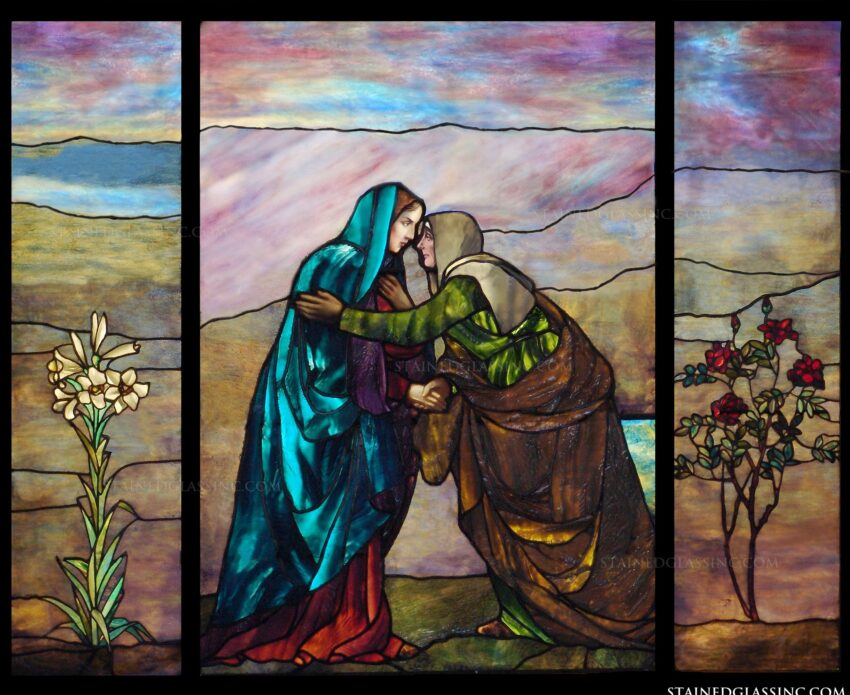
Today, as we bring Advent to a close, we read about Mary’s and Elizabeth’s pregnancies, and about what they and the prophets thought about the kind of person the Messiah would be. Although he came as an infant, he was set to turn the world upside down. God’s emerging into humanity was a profound change for the universe – disruptive, outrageous and exciting. Watch the 18-minute video of today’s message, and let’s be challenged by the readings from Micah 5, Hebrews 10 and Luke 1.







 Reflections of God's Love
