Love & Justice

Click here to listen the audio recording of this 12-minute message. Or watch the YouTube video below, or read the text summary after that.

Even though I emphasise God’s love as the central essence of God’s being, we see God behaving in angry, wrathful and violent ways. How are we to make sense of this? This message defines justice as follows

Justice is God’s love working to protect those who are vulnerable

As much as God stands up against those who harm God’s loved-ones, God also reaches out a hand of reconciliation, rooted in repentance and contrition. And God desires reconciliation between people, rooted in forgiveness. We call this restorative justice – love and justice.

Featured image adapted from https://metro.co.uk/2015/03/05/this-is-the-real-reason-why-people-shake-hands-5089999/

Jesus at the centre

Click here to listen the audio of this 13-minute message. Or watch the YouTube video of the message below, or read the text summary after that.

John 14:6-11 is located immediately after the Last Supper and the washing of the disciples’ feet, as well as Jesus’ prediction of Judas’ and Peter’s betrayals. John 14 starts a four-chapter long sermon – Jesus’ final words to his disciples before his death.

In the opening of this section, Jesus presents himself as at the centre of our faith. He says to Peter, “You [already] believe in God [the Father]; [I now invite you to] believe also in me” (John 14:1). To believe in the Father is to believe in the Son. He goes on famously to say, “I am the way and the truth and the life. No one comes to the Father except through me” (John 14:6). Jesus places himself at the centre of our relationship with God the Father. It is through him that we encounter God. Jesus is the centre.

But lest we think that Jesus is setting himself up as the mediator between us and God, he goes even further, audaciously, to say that he and the Father are one. “If you really know me, you will not know my Father as well … Anyone who has seen me has seen the Father … Don’t you believe that I am in the Father and that the Father is is in me? … I am in the Father and the Father is in me” (John 14:7-11). And just a few chapters earlier, Jesus had said, “I and the Father are one” (John 10:30).

Jesus is not merely a path to God. He is God. He is God the Son. He is locked into the Father and the Father is locked into him. In the very following passage (John 14:15-27), Jesus speaks about Holy Spirit, the third person of the Trinity, who will come to continue the work of the Father and the Son, once the Son has returned to the Father. When we relate to Jesus, we are relating to God, because Jesus is God.

Ultimately, sensing that Philip and the other disciples are grappling to grasp these complex and elusive concepts, Jesus says, “At least believe on the evidence of the works themselves” (John 14:11): You have heard me teaching. You have seen me heal people, raise the dead, feed thousands. You have witnessed me reaching out to women, tax collectors, lepers, prostitutes, menstruating women, disabled people, Samaritans and Gentiles. You have heard me speak truth to power and challenge rigid interpretations of the law. You have heard me proclaim a new Law that supersedes the Law of Moses.

What you are seeing is God at work among you!

Jesus must be at the centre of our personal and collective faith. The things of the church are helpful and perhaps even important. Jesus does not do away with them. But they must not be at the centre.

Jesus – the person Jesus – is the only one worthy of being at the centre.

He is our friend, our brother, our teacher, our healer, our saviour, our Lord, our very God.

2020.05.10_6059765012_d7fafb9504_b

Featured image is the ‘glory window’ of the Thanksgiving Chapel in Dallas, Texas.

To work

Click here to listen to this 15-minute message. Or watch the YouTube video below, or read the summary text that follows.

One of the impacts of COVID-19 has been to dramatically increase unemployment rates. We see this in both the developed world (e.g., the USA) and the developing world (e.g., South Africa). By ‘work’ I don’t necessarily mean employment (in the sense of being employed and paid by someone else) or even to have a job (in the sense of doing something that generates an income). ‘Work’ includes productive activities, such as volunteering or raising a family. So, I am using ‘work’ in an inclusive and flexible way.

Our current challenging context should prompt us to think about work from a Christian perspective. I suggest three key points about work.

  1. We were created to work. The creation story in Genesis 1:28 and 2:15 emphasises work. God created humankind to work. Specifically, to work as labourers, gardeners, farm workers. Work is thus bound up in the DNA of humanity, and when we cannot work, this can create difficulties for us. This is part of the threat of the COVID lockdowns – it is not good for people not to work.
  2. Work is about caring for (stewarding) the things of God. Genesis 2:15 emphasises that Adam was placed into the garden (probably the Garden of Eden, which can be thought of as the jewel of God’s natural creation) to tend and work it. We often refer to this as ‘stewardship’ – that the things of God are entrusted to us to (on loan) to care for. And to make productive. The garden is intended to be a well-cared for, creative and productive space.
  3. We work for God, not people. In Ephesians 6:7, Paul says to workers, “Serve wholeheartedly, as if you were serving the Lord, not people.” To be a Christian at work is not so much to publicise your faith, to hold prayer meetings or to evangelise, as much as it is to do your job with the exceptional devotion and energy that comes form working for God.

I encourage us to think about work at this present time and to:

  1. Consider how we help people who are out of work to have work.
  2. Do our own work – if we are blessed to be able to work – as if for God.

There is so much more I want to say about Christian perspectives on work! One day I will write a book!

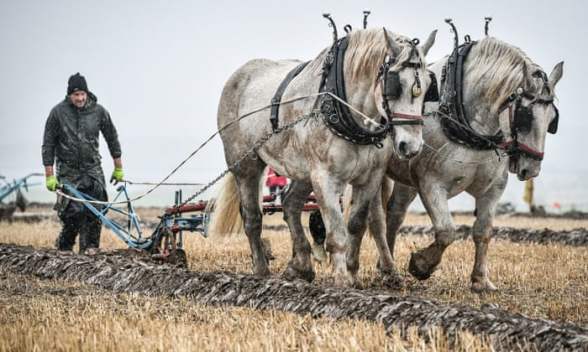
Featured image from: https://www.theguardian.com/environment/2018/nov/23/world-ploughing-championships-no-till-farming

Standing in the gap

Click here to listen to this 12-minute message. Or watch the YouTube video below, or read the summary text after the video.

I’ve been thinking a lot about the concept of ‘standing in the gap’ and its relevance during this rolling COVID-19 crisis. The levels of human and social vulnerability are staggering. Many people are hungry, struggling financially, lonely, anxious, depressed, experiencing domestic violence and so on. In such times, we need people who are willing to stand in the gap – people who are willing to advocate and intercede for those who are suffering and sometimes to stand up against those who use power in oppressive and exploitative ways.

We read about this in Ezekiel 22:30 where God is looking for someone to stand in the gap of the wall of Jerusalem to protect them against God’s wrath for Israel’s sin. And we read it in Psalm 106:23, which refers to a story about Moses standing in the gap for the people of Israel after they made the golden calf (Exodus 32:12-14). In both stories, people (Moses and Ezekiel) are asked to stand in the gap between people and God, to protect the people from God’s wrath. This is ‘speaking truth to power’ at its highest level! Standing up to God!!

But we in our daily lives can stand in the gap in much more accessible and manageable ways. Standing in the gap is about standing between those who are vulnerable and those who are powerful. It is not a comfortable space – it takes some courage.

It requires us to:

  1. Recognise the vulnerabilities of people around us and to see the ways in which they need advocacy, intercession or support.
  2. Use the gifts and resources that God has given us through the Spirit in the service of others, by standing in the gap for them.

2020.04.16_Standing_in_the_gap

Featured image from https://www.geograph.org.uk/photo/5401039

Seeing Jesus

John 12:21 tells us about a group of Greek seekers who come to Philip saying, “Sir, we would like to see Jesus”. And so begins a story of one person introducing another person to Jesus, in a chain of people seeking to see Jesus.

Click here to listen to the audio of this 5-minute message. Or watch the video below.


Fragrant Offering

Click here to listen to this 5-minute message. Or read the summary below or watch the video thereafter.

Today is the first Monday in Holy Week. The video below is a very brief (5-minute) reflection on our Gospel reading for today: John 12:1-11. Mary, the sister of Martha and Lazarus, anoints Jesus’ feet with an expensive perfume called Nard. Judas reprimands her for wasting money that should rather be given to the poor. But Jesus speaks up for her saying that she has done a good thing for Jesus, who will be with them for just a little while, while the poor will always be with us. This narrative reminds us of the need for all of us to pour ourselves out for others, like Mary did with her perfume and Jesus did with is life.

2020.04.06_nard

Featured image of Spikenard flowers from http://www.draganacmonastery.com/product/nard/

Following Jesus’ Example

Click here to listen to this 14-minute message. Or watch the video below. Or read the text after that.

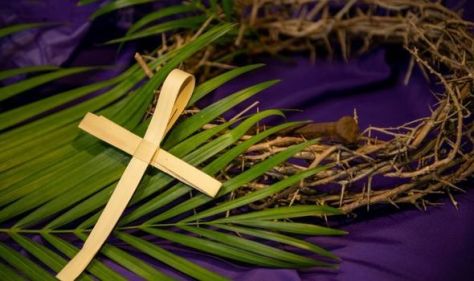
Today is Palm Sunday. Many churches on this day will start their service outside with the blessing of palm crosses and then process around the church or community, shouting or singing: “Hosanna to the Son of David! Blessed is he who comes in the name of the Lord! Hosanna in the highest heaven!” (Matthew 21:1-11). This is commemorate Jesus’ triumphal entry into Jerusalem on the back of donkey or colt and people’s recognition that he is king or messiah.

And then some churches will also read the whole passion story (Matthew 26:14-27:66). This is a long reading that can take 20 or more minutes (click here to listen to a recording of the passion narrative, from Luke). The juxtaposition of these two stories – one of triumph and glory and the other of suffering and death – is a stark and shocking contrast.

In today’s message, I suggest three main lessons we can learn from Jesus’ experience of suffering and challenge in life:

  1. Jesus does not rush towards suffering. He does not revel in it. Christianity has tended to glorify suffering, often encouraging people (such as women in abusive marriages) to endure their suffering as their sharing in the suffering of Christ. However, Jesus is not a masochist. He does not relish or rush towards or celebrate suffering. During this passion week, he appears to appreciate the recognition of the crowd as he enters Jerusalem, he enjoys supper with his friends and he spends time in prayer with his Father – he enjoys life. Of course, we do suffer, and some suffer more than others. But Jesus does not appear to enjoy or celebrate suffering.
  2. However, Jesus also does not run away from or avoid suffering. Instead, he moves into difficult places, and in the passion narrative, he walks towards his inevitable suffering and death. Jesus is a realist. He is not naive. He does not avoid difficulty; instead, he faces the truth. And he speaks the truth, challenging injustice, exclusion and poverty. He calls people out when they lie. He champions integrity. He faces the world as it is, without sugar-coating anything.
  3. Yet, Jesus is an idealist. Despite knowing that he will soon die, he continues to believe that God can use his suffering and death for good. He persists in believing that God can redeem humanity and the cosmos. He insists that people can participate in this salvific work of God. He remains steadfastly optimistic, hopeful and confident about the future.

There are many people whose example we can follow during difficult times, including this time of the Coronavirus and the lockdown that many countries are experiencing. I think Jesus provides a good, balanced and sensible example for us. Blessings.

2020.04.05_Palm-Sunday-messages-and-quotes-1264981

Featured image from https://www.express.co.uk/life-style/life/1264981/palm-sunday-messages-best-quotes-greetings-to-mark-palm-sunday-2020

Waiting for Christ

Click here to listen to this 23-minute message.

I preached this message on 1 December 2019, the first Sunday in Advent, but did not have a chance at that time to publish it. I thought today would be a good day to post it, given that so many people in South Africa and globally are staying away from church to promote physical distancing during the Coronavirus (COVID-19) crisis. In the recording, I apply the message to Aids and violence against women and against children. But in this blog, I apply it to the Coronavirus.

This message draws on Matthew 24:36-44, where Jesus speaks about That Day when he will return – one day still in the future (as of writing this blog!). Jesus’ teaching in his passage tells us two main things:

First, God does not want us to know when he will return again.

Indeed, he explains that NO-ONE knows. Not even the angels. Not even the Son of Man! If God wanted us to know, God would have told us. Or at very least, God would have told the Son. This means for us:

  1. We need to stop worrying about when he is going to come back and should stop believing people who think they’ve worked out the date.
  2. We need to believe and accept that Jesus WILL return. One day, perhaps not in our lifetime, or perhaps tonight, he will return.

Second, Jesus’ return will be unexpected.

Whenever it is that he returns, we will be caught off guard. Jesus uses the story of Noah and the flood as an example – in those days, life was just going on as usual. There were no signs to warn anyone of the flood, until the day the flood started – then it came unexpectedly. This means for us:

  1. “Therefore, keep watch” – stay awake, be alert – so that when Jesus comes, we will awake to see him.
  2. And keep watch not for the signs, but rather for Jesus himself. It is for Jesus we need to keep a lookout.

Coronavirus

During this time of the Coronavirus – as we watch the death toll rise by the hundreds day by day, and as we experience countries closing borders, hear of people stopping work, see the empty streets – we may think that these are the signs of the end times.

But no! Jesus’ teaching in Matthew 24 clearly indicates that because we might think these are the signs, he will not be coming back now. If we are expecting him to return, he is not returning.

There are many things we may learn from Coronavirus, but it is not about the End Times. Rather, it is about the present times. What may we learn?

  • We may learn how reversable the negative impact of humanity on the environment might be.
  • We may learn how important human relationships are, while we have to keep away from each other.
  • We may recognise the vulnerability of certain groups of people, such as those in precarious employment, older persons and single parents.
  • We may learn that we are not really in control of the planet and that nature can, if it wants, profoundly disrupt human society.

These are not lessons for the End Times. Rather, they are lessons for the present time and for life after the Coronavirus. Just imagine how stupid we’d have to be to exit the Coronavirus crisis and revert to our former ways of living. How dumb would be? I don’t believe God has sent this virus to punish or teach us. But I do believe God desires us to learn something important from this virus.

The summary of this message:

Live your life in such a way that, when you are surprised by Christ’s return, you will be ready for him!

Whoever has ears, let them listen!

2019.12.01_JesusRioFlags

Image from https://www.nbcnews.com/video/flags-of-countries-struck-by-coronavirus-projected-onto-rio-s-christ-the-redeemer-80958021701

Fast of the heart

Click here to listen to this 14-minute message.

Lent, which kicks off on Ash Wednesday (26 February this year), is usually associated with fasting, and this, together with prayer and giving to the needy, is the topic of the first half of Matthew 6 (part of Jesus’ Sermon on the Mount). In this passage Jesus differentiates between fasting that is done for public approval and fasting that is done in secret and for God. It is this latter fasting (and prayer and giving to others) that Jesus esteems. It is this fasting, done in secret, that Jesus says “your Father, who sees what is done in secret, will reward you.” And we know that this reward is eternal, in heaven, as this is where Jesus encourages us to store up our treasures.

For those of you who are fasting during this Lent, I encourage you to fast for yourself and for God, and keep your fasting secret and hidden. It is in this fast of the heart that we allow ourselves to experience discomfort and difficulty. And this reminds us of the discomfort and difficulty Jesus faced as he journeyed towards the cross.

Have a blessed Lent.

prayer-and-fasting-1024x576

Featured image from here.

Light of the world

Click here to listen to this 15-minute message.

(This message was preached at Irene Homes, a residential care facility for women with intellectual disabilities. They are an engaging and participating congregation. I was moving around a bit, so the volume varies as I move away from the recorder. Also, at about 13 minutes, we spent a few minutes passing out battery-operated candles; I’ve edited this out, which explains the slight jump a few second after 13 minutes.)

Jesus says of all of us who follow him (Matthew 5:13-16):

You all are the very salt of the earth!

You all are the very light of the world!

He states this as a present fact – you are, not you should be or you will be or you ought to be or one day you might be. No! He states is as Truth: You are! In our lived experience, however, we’re probably often not salt and light. So, Jesus here appears to be declaring a Truth that is to come as a present reality, much as he does when he says “The Kingdom of God is here”. It is a ‘now, but not quite yet’ statement. A prophetic Word, that encourages us to live up to the image Christ already has about us.

What does it mean to be salt and light?

Salt has many uses (primarily flavouring and preserving), but Jesus emphasises the saltiness of salt. If I presented a white powder to you that did not taste salty, you’d be reluctant to call it ‘salt’. Saltiness is the essential characteristic of salt; without saltiness, salt is not salt. So what are the essential characteristics of a follower of Christ, without which we can hardly call ourselves Christians? The most immediate answer is the qualities Jesus has just presented in the Beatitudes (Matthew 5:3-10), which open the Sermon on the Mount (Matthew 5-7), which speak about being poor in spirit, mourning, meek, hungering and thirsting after righteousness, merciful, pure in heart, peacemaking and being persecuted because of being righteous. These qualities of Christian living – love, mercy, inclusivity, justice, reconciliation – are the distinctive qualities of a Christ-follower. They are the saltiness of a Christian.

Light also has many uses, but Jesus emphasises that light enables things to be seen. It is not the essential characteristic of light he highlights, but rather the purpose to which it is put, viz. so that people can see us putting into practice these distinctive qualities of a Christ-follower, so that people will praise God in heaven. He thus speaks about how silly it would be to place a light under a bowl, or to put it in a corner on the ground rather than up on a stand. When we do that, you can’t see the light; it is wasted.

When Jesus says, “You are the salt/light”, he uses a plural ‘you’, thus “You all…” or “Y’all”. Our individual distinctive qualities and our individual light may be insufficient to be seen from far or to make much impact. But our collective qualities and our collective light, like a city on a hill with many lights burning from many windows, can be seen from far and make a real difference in the world.

Just imagine if every Christian truly put into practice the distinctive qualities of a Christ-follower set out in the Beatitudes! What a remarkable place the world would be!!

2020.02.09_Light

The ladies of Irene Homes being the light of the world!