Who do you say I am?

Click here to listen to the audio of this 16-minute message. Or watch the YouTube video below, or read the text summary after that.

In Matthew 16:15, Jesus asks his disciples, “But what about you? Who do you say I am?” This is arguably the most central question of our faith as Christians. We are, after all, Christians. We are followers of Christ. Who Christ is – this person we follow, this person whose name defines our faith -is thus of central importance.

Jesus first asked, in Matthew 16:13, “Who do people say the Son of Man is?” and the disciples run off a list of names: “John the Baptist, Elijah, Jeremiah or one of the prophets.” These are all great prophets, and in some ways Jesus is the preeminent prophet. A prophet reveals God’s mind to us, opens up the truth of God to us. And certainly Jesus does do that. But they stop short. Jesus is so much more than ‘just’ a prophet.

So, if your answer to Jesus’ question is things like (for me) – my friend, my brother, my healer, my whole-maker, my teacher, my example, my comforter, my safe space, and so on – these are right (they are certainly not wrong!), but they don’t go far enough.

This is the only place in Matthew’s Gospel where Jesus engages in discussion about himself. He is doing identity work here – discussing who he is with his disciples. This takes place in chapter 16 of a 28-chapter book. So, it appears in the second half of the Gospel. Jesus is half-way through his journey with his disciples, and only now does he ask who they say he is. This is meaningful.

As Christians, particularly evangelical Christians, we tend to have an expectation that people must make a statement of faith in Christ as a prerequisite for conversion. But here, Jesus has allowed his disciples to walk alongside him and witness his life and his engagement with the world for a long time. And only now, much later, does he ask for a statement of faith.

The understanding of who Jesus is is not the prerequisite for faith, but the result of the journey of faith.

I converted to Christianity at age 16. At that moment, on the evening of 21 October 1984, I really didn’t know who Christ was. All I knew was that God was calling me and I had to respond to his call. It was only over years of journeying with him, through all the ups and downs of faith, that my understanding of who he is and of who he is for me has become clearer. And I anticipate in the following decades of my life, this understanding will continue to mature and deepen.

Peter’s answer, after having walked with Christ, is strong and certain: “You are the Messiah, the Son of the living God.” In the Greek, the phrasing is, “You are the Christ, the Son of the God, of the Living One”. There were, in Peter’s time, as in our time, many Gods. He feels the need to qualify who he is referring to when he says ‘God’. He is not referring to just any God, but to the God who is alive, the Living God.

It is important for us to incorporate into our experience of who Christ is for us the insight that he is the Christ, the Messiah, the Anointed One, the Son of God, God the Son, the Logos, a member of the triune Godhead, the one who has been present since before time and will continue to present after time itself has ended. This is who Jesus is!

But what about you?
Who do you say I am?

Gender, by God

Click here to listen to the audio of this 35-minute message. Or watch the YouTube video below, or read the text summary after that. This is a longer-than-usual message, because this is such an important topic, that is so seldom spoken about. So, while 35 minutes is quite a long time, I urge you to set aside some time – particularly today, Women’s Day – to listen to this message.

Today – 9 August – is Women’s Day in South Africa. It’s a day when we celebrate women. But it is also a day when we confront the profound and relentless violence against and subordination of women in our society. The church must, on this day, give particular attention to its role in perpetuating, supporting and even advancing such patriarchal and misogynistic views and behaviours. My own church – the Anglican Church of Southern African – must take responsibility for our role in advancing violence against and oppression of women. And men, like me, must do the same.

So, in this message, I unpack four passages of the Bible – three in the Genesis creation story and one in the writings of Paul – that are often used to support patriarchy. I invite you to read the texts and see what they actually say and to critique how they have been used. Of course, the Bible was written in patriarchal times by people who held patriarchal views. But we are invited to read through their views to see the mind of God on the issues of gender inequality in the world.

This is an important and substantial topic, hence this is a rather lengthy message. I urge you to engage with it, as I think it will help to lay a foundation for thinking about gender relations in the world, in the church, in the workplace and in our homes.

  1. Genesis 1:27-28 tells us that both women and men are equally created in God’s image. It also tells us that they were both – as a couple, as a partnership – given authority to rule over the earth. There is no hint that the man is more created in God’s image than the woman, that he is important or more powerful than the woman. The man is not given dominion over the woman; instead both the woman and the man are given conjoint dominion over everything else. This is a picture of unity, equality and power-sharing between man and woman – a picture that is very much at odds with how life is lived in many homes today.
  2. Genesis 2:18-23 is part of the second creation story, where God recognises that it is not good for man to be alone and decides to create a ‘helper’ for him. Initially, God looks among the animals, but realising that none of these will do, God creates woman. The word ‘helper’ is often used to imply woman’s supportive, helping, subordinate role. But in v18 God recognises that man is somehow inadequate or deficient – unable to be alone – he is incomplete and needs a partner to make him whole. Therefore God creates a woman. The woman is there to help him be a whole person – this is by no means a subordinate role.
  3. Moreover, she is created from his rib, suggesting that they are equal – they stand side-by-side, joined at the rib – the midpoint between the head and the foot. God did not take Adam’s toe and create Eve’s collarbone so that Adam could stand on her head! Instead, they are created as the same, as equal, as partners. It reaffirms Genesis 1 – they are equal partners.
  4. Genesis 3:16-19 tells of God’s cursing of man and woman for their sin. v16 has a line that says “and he [your husband] will rule over you”. Many male theologians and scholars and ministers have used this verse to construct a theology that God’s divine plan for human relations post-fall is that men (husbands) exercise authority over women (wives). This is a profound perversion of the scriptures, because this is just one line out of several lines of curses, including that women will experience pain in childbirth (which humanity has constantly worked to reduce and to reduce maternal mortality).
  5. In addition to hers, there is a lengthy curse against the man (72 words to the man, compared with just 31 to the woman – the man’s curse is more than double the length of the woman’s!). God says that he will suffer and struggle to produce crops from the earth. And yet men have never accepted this as God’s divine plan for them! Men have worked, since they left Eden, to ease the burden of producing crops, through the use of slaves, animals, machines, genetic modification and most recently artificial intelligence. If the curse against men is not part of God’s divine order, why is the curse against women? It is simply patriarchy and misogyny at work!
  6. Overall, the creation story across Genesis 1-3, there is an overriding narrative of equality between woman and man. Even in the fall, both woman and man eat the apple and both woman and man are cursed. Everything is equal, parallel. Indeed, if there was any hint of gender inequality, it would be in favour of woman – she was God’s second attempt at creating a human (we are usually better the second time round) and her curse is shorter than man’s. But indeed, the dominant and pervasive narrative is one of equality and partnership between gender. This is God’s vision for gender.
  7. So, we do need to look also at the New Testament, and particularly to the writings of Paul. It is true that Paul was raised in a patriarchal society and household. He is certainly a patriarch and probably also a misogynist. He does write that men are the head over women, that women must be silent in church, etc. He clearly writes about male domination over women. This is how he was raised. There are, however, NO passages where Paul advocates or endorses, even tacitly, violence against women or the oppression of women. And just because Paul was a patriarch, does not mean God is a patriarch.
  8. Paul grapples with gender issues. He writes “there is neither male nor female, for you are all one in Christ” (Galatians 3:28). He has some sense that in God’s eyes, there is no gender; but in his own thinking, he still sees and supports gender inequality. What we seem to be seeing in Paul’s writings is a developing insight into God’s view on gender equality, emerging and receding.
  9. 1 Corinthians 7:2b-5 presents to us a profoundly egalitarian view of gender relationships from the pen of Paul. It shows a perfect equality between women and men, equal exercising of power over one’s body, equal self-giving of oneself to one’s partner. It is an image of a very modern marriage. It is completely out of step with the traditional passages we quote from Paul on ‘wives must submit to their husbands’. If men are going to quote Paul on gender, let us quote ALL of Paul on gender, and recognise that here is a man whose views on gender are uneven. And this unevenness is best explained as Paul’s growing understanding of God’s view of gender equality.

In light of these challenges about God’s views – and Scriptures views – on gender equality, I suggest two principles that should inform and shape how we interpret scripture:

  1. First, we need to look at the whole of scripture when we formulate a position on something, like gender relations. We need to look at the whole body, and we need to understand the underlying mind of God, which we see most clearly expressed in the mind of Christ, which we best gain insight into in the Gospel narratives.
  2. Second, we need to separate custom from teaching, description from prescription. Just before the Bible writers believed the earth was flat and that the sky was a bowl over the earth, does not mean that the earth is actually flat and that there is actually a bowl in the sky. Even though they express this view in the Bible, e.g., in the Psalms, does not mean it is true or that God believes this. We are inclined to bring our cultural beliefs and impose them onto scripture – gender is a good example of this. Instead, we are required to bring God’s mind, expressed in the scriptures, and use these to sanctify and transform society. When it comes to gender, we impose our preconceived patriarchal beliefs on scripture, even though scripture advocates a far more egalitarian view on gender.

2020.08.09_St. Praxedes and Paul

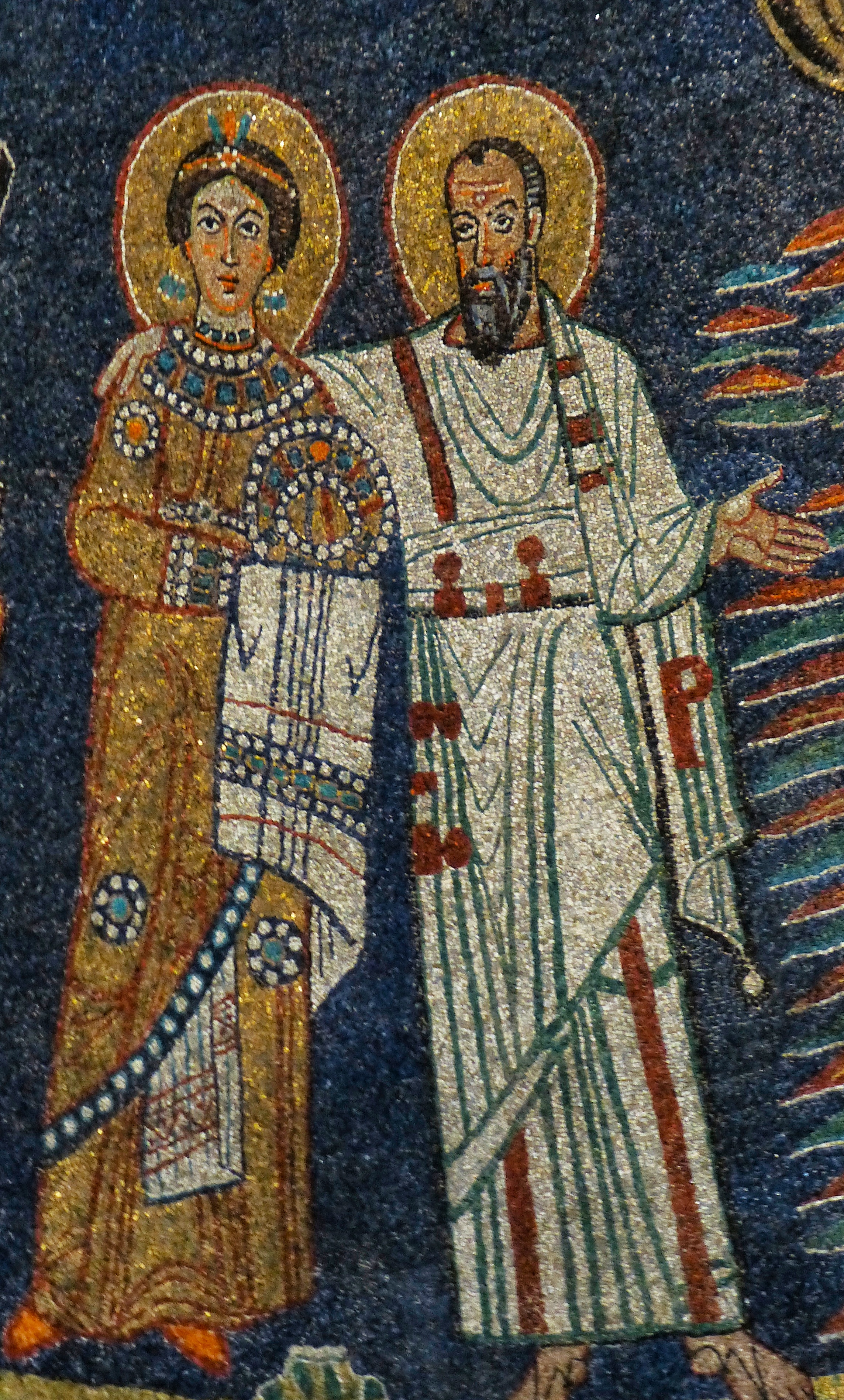
Featured image of St Praxedes and St Paul, presented as equal co-workers for Christ, in the Basilica Santa Prassede, Rome, from here

What to do about evil

Click here to listen to the audio of this 22-minute message. Or watch the YouTube video below, or read the introductory text message after that.

Today’s message is from Matthew 13: 24-30, in which Jesus tells the parable of the weeds. It is followed, later in the chapter, by Jesus’ explanation of the parable (Matthew 13: 36-43). Preachers are generally expected to ‘have all the answers’ when they preach the Word of God, but in truth, preachers are just people like all other people.

The passage set for today is – for me – an exceptionally difficult passage, because (a) Jesus’ message seems to contradict his own consistent message through word and action and (b) Jesus appears to be telling us to do nothing about evil in our midst, but rather to leave it until the end of the age, the Day of judgement. If we were to live according to this passage, we would have allowed evil to flourish over the past 2000+ years since Jesus preached this message.

So what are we do with a message that seems fundamentally wrong. Was Jesus mistaken?

I encourage you listen to the audio recording or watch the video to see my grappling with the message and how I try to make sense of it. Evil in the world – and evil in our midst (our family, community, workplace, church, etc.) – is a serious matter and warrants our critical engagement and reflection.

To offer ourselves

Click here to listen to the audio of this 7-minute message. Or watch the YouTube video below, or read the text summary thereafter.

Romans 12:1-2a:

Therefore, I urge you, brothers and sisters, in view of God’s mercy, to offer your bodies as a living sacrifice, holy and pleasing to God—this is your true and proper worship. Do not conform to the pattern of this world, but be transformed by the renewing of your mind.

This passage offers us two sets of verbs:

  • Offer, sacrifice, worship – which speak to giving ourselves to God
  • Transform, renew – which speak to an inward-focused process

The passage also offers us two nouns:

  • Our bodies – which speaks to the embodied being that we are, crafted from clay and in-breathed by God’s Spirit
  • Our minds – which speaks to the immaterial being that we are, mind, emotion, thought, spirit

Together, these two verbs and these two nouns call us towards a complete offering of ourselves – a surrender, a relinquishment – to God.

2020.07.16_wind-installations-falling-off-a-cliff-in-india

Feature image from https://www.patheos.com/blogs/emergentvillage/2013/03/off-the-cliff-of-surrender/

Be audacious!

Click here to listen to the audio recording of this 12-minute message. Or watch the YouTube video below, or read the text summary after that.

In Matthew 10:7-14, Jesus sends out his 12 disciples on their first solo mission, and his instructions seem to be grounded in this message:

Be audacious!

Jesus is not saying, be arrogant, insolent, obnoxious, offensive, dogmatic or judgemental. But he is saying, be brave, be courageous, be reckless, jump in the deep end!

Here’s what we are to do:

  • We proclaim the good news that God is present in the midst of human life. God is near, right here, present, engaged.
  • We heal, cleanse, raise and cast out illnesses in all its manifestations, at both personal and social levels. Healing is, in Jesus’ understanding and practice, not only physical, but also relational and social.
  • We are generous in our investment in the lives of others – freely we have received, freely we give. We don’t hold back, we don’t over think, we don’t over risk manage.
  • We don’t take provisions with us, we don’t over plan, we don’t pamper ourselves. We simply go – a bit reckless.
  • We don’t take from the people we go to. We don’t go to enrich ourselves. We go to give.
  • We find people who are receptive to what we have to offer, and we spend time with them. And if people are not receptive, we just move on, shake the dust off our feet. It is almost blasé – if people want to listen, we talk with them; if they don’t, we don’t worry, we just move on.

Be audacious, be courageous, be reckless, be blasé. Don’t worry, don’t over plan, don’t over think. Jump in! Be brave!

Be audacious!

Feature image from here.

Come to me

Click here to listen to the audio of this 14-minute message. Or watch the YouTube video below, or read the text summary below.

Our reading today is Matthew 11:28-30

“Come to me, all you who are weary and burdened, and I will give you rest. Take my yoke upon you and learn from me, for I am gentle and humble in heart, and you will find rest for your souls. For my yoke is easy and my burden is light.”

It seems strange that Jesus’ solution to our feeling burdened is to offer us a yoke, which is a heavy wooden pole used to join two oxen together so they can plough fields. This does not sound like a relief! However, in v30, Jesus equates the yoke with the burden. The truth is, we are already yoked – yoked to and burdened by the world and its worries. What Jesus offers is to replace our own heavy yoke with his yoke, which is ‘easy’ and ‘light’.

A yoke connects two animals together, so that they can work in partnership with each other, as they walk through their work in the world. This is what Jesus offers us: to be yoked to him, in partnership, walking together as we journey through life’s challenges. The idea of working together with Christ, as a team, as partners, is quite remarkable.

The idea of working together, of walking together, leads us to the next point, which is to “learn from” Jesus. Not “learn about me” but “learn from me”. He invites us to see how he moves through the world and to learn from that. We learn from what he says – particularly in the Sermon on the Mount, in Matthew chapters 5-7, which came shortly before today’s reading. And we learn from how he behaves – how he interacts with those who are powerful and oppressive and those who are meek and humble. Chapter 11 speaks a great deal about these two groups. What better way to learn from a master, than to be yoked to them.

Jesus chooses to emphasise that we should learn from his gentleness and humility: “for I am gentle and humble in heart“. It is remarkable that God, the Son, the Second Person of the Trinity, who co-created the universe with the Father and the Spirit, chooses to describe himself as gentle and humble (or simple). His use of ‘in heart’ suggests that these qualities are essential to his being – they describe who he is, not merely how he acts. He is, deep in his being, gentle and humble. If God the Son chooses these qualities as essential to a description of himself, how much more should we not embody these same qualities of humility and gentleness.

The result of all this is that we will find rest for our soul. For those who are weary and burdened, soul-rest is very much what we need – rest, refreshment, deep peace. God promises us this frequently, e.g.

The Lord is my shepherd, I lack nothing. He makes me lie down in green pastures, he leads me beside quiet waters, he refreshes my soul. (Psalm 23:1-3)

The sovereign Lord says: I myself will tend my sheep. I will make them lie down. I will search for the lost. I will bring back the strays. I will bind up the injured. I will strengthen the weak… I will shepherd the flock with justice. (Ezekiel 34:15-16, with slight rephrasing)

This is the kind of rest that we get, when we put down our burden, and take on Christ’s yoke, and walk together with him.

Featured image by Yongsung Kim, from Pinterest.

Two songs that were running through my mind all the while I prepared today’s message:

Go before the Lord

Click here to listen to the audio recording of this 16-minute message. Or watch the YouTube video below, or read the summary of the message after that.

Today we celebrate the birth of John the Baptist, the story which is recounted in Luke 1. John is perhaps the most important character in the Gospel, after Jesus. He is the last of the prophets, and the one who prepares the way for the coming of Christ Jesus. Almost the entire chapter is devoted to the origins of John, before we learn about the birth of Jesus in chapter 2.

As we read this chapter, we see a large cast of characters: Zechariah, the angel Gabriel, Elizabeth, Mary, the foetus John, the foetus Jesus, Elizabeth’s neighbours and relatives, and, in the 80th verse, John himself growing to adulthood, filled with the Spirit, and preparing in the wilderness for ministry.

This narrative speaks about the working together in faith of several individuals, each in their own way, all with the common purpose of preparing the way for the Lord. Each person has to play their role for the story to work out and to prepare the way for the coming of the Messiah. John is officially the prophet who will prepare Jesus’ way, but all these other people were involved in preparing the way for John. Even Jesus, yet unborn, helped to prepare John for his ministry of preparing for Jesus.

We are still each called to help prepare the way for the Lord, or to prepare the way for someone else who will prepare the way for the Lord. To make this world the kind of place that Jesus would want to live in. To give expression to the Songs of Mary and Zechariah. To transform the world into the Kingdom of God.

We are, each in our own way, prophets of the most high, who will go on before the Lord to prepare the way for him.

2020.06.24_Nativity_of_Saint_the_Baptist_icon

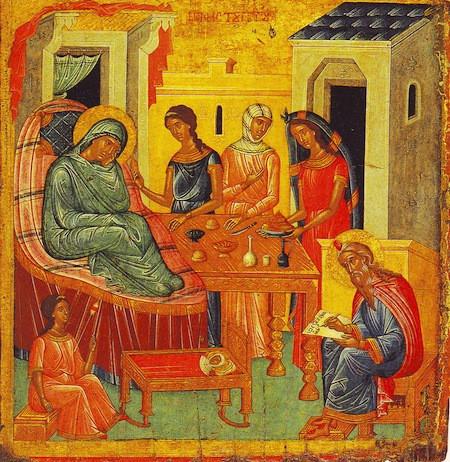
Featured image: 15th century Orthodox icon of the Nativity of Saint John the Baptist, Hermitage Museum, St Petersburg, Russia, from https://www.orthodoxmonasteryicons.com/products/nativity-of-john-the-baptist-icon

Called – Authorised – Sent

Click here to listen to the audio of this 18-minute message. Or watch the YouTube message below, or read the summary text thereafter.

Matthew 9:35-10:8 sets us on a path of discipleship in which we have the opportunity to participate in God’s work in building the Kingdom of Heaven or the Kingdom of God. Jesus’ message is “the good news of the kingdom”, which includes personal salvation as well as a transformation of the world in which we live. It shows God’s interest in the whole of human life, from the individual through to the societal.

But while the harvest is plentiful, the workers are few. Jesus calls the disciples to pray for workers who can participate with God in building the kingdom of Heaven. You are that worker! As am I! We pray regularly, “Thy Kingdom come, thy will be done, on earth as it is in heaven”. And we are the answer to that prayer.

And then in Matthew 10:1 & 5, we read that Jesus:

  • Called his twelve disciples to him” – the calling is individual and collective. He calls you and he calls me, and he calls all of his followers, the church.
  • “Gave them authority” – Jesus authorises them to do God’s work in building the kingdom
  • Sent out” the disciples – he sends them out to do his work.

We are called, authorised and sent!

Jesus instructs them to proclaim this message: “The kingdom of heaven has come near”. The kingdom is near because Christ is near; and Christ is near, because he dwells in the hearts of his followers.

What does this look like in practice? Matthew lists four things that the disciples do. These are the same things Jesus has been doing. And Jesus does them not to show off his power, but to demonstrate the heart of God – God’s loving heart for humankind. These are:

  1. The ill are healed. This is about making people whole, and relieving pain and distress.
  2. The dead are raised. This points us forward to the resurrection of Christ, who becomes the first of the the many who will be raised to new life in Christ.
  3. Those with leprosy are cleansed. Leprosy was not just an illness, but also a social condition that lead to profound social exclusion and rejection. Cleansing or purification from the disease would lead to re-entry into the community, thus social restoration and integration.
  4. Demons are driven out. Demons oppress people, holding them in bondage. When they are driven out, people are liberated from oppression. This links to Jesus’ manifesto (Luke 4:18), where he proclaims freedom for prisoners and sets the oppressed free. In this way, oppressive power in human relationships is overcome.

The proclamation of the Kingdom being near, and the evidence of this in these four acts of service, show that God is interested in wholeness, life, social integration and liberation from oppression. These are all facets of salvation and all manifestations of God’s presence.

It is to this that we are called in this present time, a time when there is much fracturing of social relationships, much oppression, much brokenness.

We do this work out of a fullness of gratitude for what God has already done for us. “Freely you have received; freely give” (Matthew 10:8b).

2020.06.14_img_1467

Featured image from: https://thereeldeal.blog/2017/07/13/on-mission-for-jesus-mark-67-13/

Why Jesus would say ‘Black Lives Matter’

Click here to listen to the audio of this 14-minute message. Or watch the YouTube video below, or read the very brief textual summary that follows.

I appreciate that this topic will be controversial for many. I really encourage you to watch this message please and not just read it, particularly if you find the title problematic. At least, just listen to what I have to say, even if you decide you don’t agree with it.

But, very briefly, the main points are:

  1. Jesus died for ALL of humanity – for the whole world – and would thus say, without equivocation, ‘All lives matter‘.
  2. But Jesus would also confront us, saying that we do not live our lives as if all lives mattered.
  3. Jesus’ ministry consistently and deliberately positions himself with those who are vulnerable, oppressed, poor, or marginalised: women, Samaritans, lepers, prostitutes, menstruating women, the dead.
  4. Throughout his ministry – throughout the Gospels – Jesus enacts the message that Black lives matter, Women’s lives matter, Immigrants’ lives matter, Children’s lives matter, etc.
  5. Jesus is not saying the lives of the poor matter more than other people’s lives; but that their lives do not matter less than other people’s lives.
  6. Jesus is sensitive to power differentials and deliberately chooses to stand with those who are disempowered and often against those who are powerful. The story of the woman caught in adultery is a good example.
  7. Jesus sometimes engages with the powerful, but does so in a way that helps them to recognise and challenge their privilege. The story of Zacchaeus is a good example example.
  8. Jesus’ ministry is consistently one of bringing down the powerful and raising up the powerless – a reversal of fortunes. Mary’s Magnificat is a good sermon on this.
  9. In the new heaven and the new earth, all lives will actually matter in people’s lives experience. But in today’s society, this is not true. Today, all lives are not equal and not equally valued. And in this times, Jesus would be saying: Women’s lives matter, Children’s lives matter, Immigrant lives matter, LGBTQI lives matter, Black lives matter.

True North

Click here to listen to the audio of this 13-minute message. Or watch the YouTube video below, or read the text summary that follows.

John 15:18-19 reads,

“If the world hates you, keep in mind that it hated me first. If you belonged to the world, it would love you as its own. As it is, you do not belong to the world, but I have chosen you out of the world. That is why the world hates you.”

Jesus acknowledges that sometimes the world will hate us for our faith and teaches two things about this:

  1. He comforts us by sharing that the world hated him first, so we’re in good company, we’re not alone, we’re not the first.
  2. He explains that the world hates us because we don’t belong to the world, we don’t conform. The word ‘belong’ is what he uses in John 17:16, where he says “They are not of the world, even as I am not of it.” The Greek for ‘belong’ or ‘of’ is ‘up out of’, like a plant or a tree grows up and out of the ground. Jesus is saying that we do not come up out of the world, and that this can lead to tension with the world – that the world hates us when we speak the Truth of God.

Our capacity to speak the Truth of God requires us to have a kind of spiritual and moral compass that shows us the Truth of God. A compass that helps us discern the mind of God.

The verse just before our passage (John 15:17) reads:

This is my command: Love one another.

And this verse is the tail end of a longer passage about the vine and branches, in which Jesus calls us to ‘remain’ rooted in him and in his love (John 15:1-17). So our understanding of the world hating us is the context of loving others and remaining in the love of Christ and thus of God. This love – the command to love – is the frame around our experience of being hated by the world.

On the basis of that, I suggest two learnings about our relationship with the world and its possible hatred of us:

First, Jesus calls us to be thoughtful about HOW we speak to the world. Our words need to be saturated in the love of God. In truth, the Church has often been – and continues today often to be – hateful in the way it speaks to the world. Even if what Christians and the church says is True, it is often said in a hateful, unloving, judgemental, diminishing way. This is the not the way of Christ. Jesus was challenging and direct, but he was never hateful in the way he spoke. We need to model our way of engaging the world on Jesus.

Second, WHAT we speak out on is also important. It is not only about how we speak, but also about what we speak. Let’s return to the metaphor of the compass. A compass points to the magnetic north, but this is not the True north. In fact, they are about 500km apart – similar, but not the same. We need to ensure that our words point to the True north, not the some off-centre north.

How do we know what to speak up for and what to speak out against? How do we know what is True? Again, we must look to Jesus. In Jesus’ ministry, he almost always spoke up for sinners and marginalised people, and out against those in power. We seldom hear Jesus speaking out against sinners and marginalised peoples. And the people Jesus usually speaks out against are the powerful – the powerful of the world and of politics and the powerful of the church.

Christians today have tended to invert this, speaking up for the rich and powerful, and against those who sin and those who are marginalised. They have lost their True North. They are not following in the way of Christ. They are not remaining in Christ and not adhering to his command to love one another.

We must go back to the Gospels and model our lives on Christ, in the ways he spoke truth to power, on the issues that he spoke up for and on the issues he spoke out against.

Jesus is our True North.

2020.06.03_Ny+kompass

Featured image from https://www.euro-academy.com/euroacademy-blog/2018/2/18/pujof0xh909ihjovyuusrkvzsym4pl