We live in a world that seems to be increasingly self-centred, selfish, self-serving, self-obsessed. A world that seems often harsh, intolerant, judgmental, hostile and exclusionary. We are seeing a growth in nationalism – people putting their country’s needs first and subordinating or even rejecting the needs of the global community. Perhaps the world has always been this way. But it seems to me to be a growing trend over the past several years.
What do we as Christians do in such context?
When we want to know how to be behave in the world, the best place to go is to the Gospel narratives, to see how Jesus behaved. And to hear how Jesus spoke – not just his teachings, but what he said to people informally and how he spoke to and engaged with people.
In Matthew 15 we find the story of Jesus feeding the four thousand with a few fish and loaves of bread. The story starts with Jesus healing people of a wide array of afflictions, leaving the crowds amazed. But in the middle of this story is a profound verse that ties the entire story together:
Jesus called his disciples to him and said, “I have compassion for these people; they have already been with me three days and have nothing to eat. I do not want to send them away hungry, or they may collapse on the way.”
What we see here in Jesus is kindness. He is kind. We could say ‘compassionate’ and that would be correct. But ‘kind’ is a much simpler, shorter word. It is the word a child is likely to use.
If we scan through the pages of the Gospels, we will see more and more examples of Jesus being kind. He is thoughtful, considerate, sensitive, responsive, engaged, attentive, slow, open, willing, touchy, generous. in a word: kind.
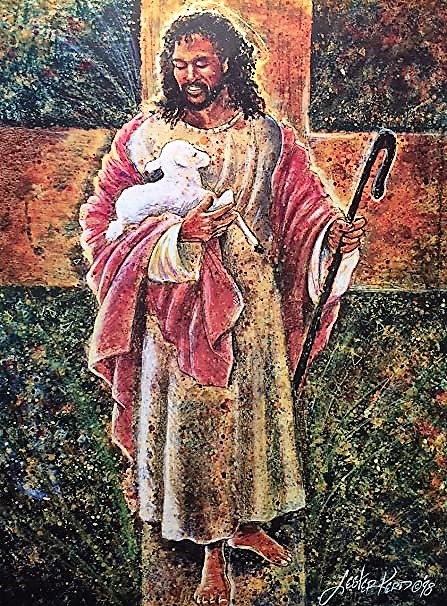
Psalm 23 is also a set reading for today: The Lord is my shepherd. The shepherd also is kind. Indeed, there are numerous passages in the first and second testaments about shepherds who care for and protect their sheep, who seek lost sheep, who bind up and heal injured sheep, who fight off wild animals. These images of shepherding are images of kindness.
Today is the first Sunday in Advent, a season in which we look forward to the coming of Christ into the world – historically 2,000 years ago (which we celebrate at Christmas), in this very moment (Christ is continually coming into the world) and one day in the near or distant future (when Christ comes again). Today we reflect on the last of these – Jesus’ second coming.
Our reading is Isaiah 64:1-9, which opens with these powerful words, “Oh, that you would rend the heavens and come down!” While this sounds like a joyful call for Christ to return, the passage is filled with caution and a call for critical self-reflection.
Let me summarise the flow of thought. Initially, there is a call for Christ to come down, to make the mountains tremble, to set fire to the world, to cause the nations to quake and to make his name known to his enemies. This passage seems to work from the assumption that there are clear enemies of God, and implicitly that we are in the right:
Oh, that you would rend the heavens and come down, that the mountains would tremble before you! As when fire sets twigs ablaze and causes water to boil, come down to make your name known to your enemies and cause the nations to quake before you! For when you did awesome things that we did not expect, you came down, and the mountains trembled before you. (Isaiah 64:1-3)
Second, there is a similarly smug and self-satisfied view that God is inevitably on our side – that we are right, and everyone else is wrong, because we wait for Christ, we gladly do right, and we remember his ways. There is a complacency that we are right and thus God is for us – a complacency that easy slides into arrogance – an arrogance that easily slides into hatred and judgement of everyone else:
Since ancient times no-one has heard, no ear has perceived, no eye has seen any God besides you, who acts on behalf of those who wait for him. You come to the help of those who gladly do right, who remember your ways. (Isaiah 64:4-5a)
But third, it seems that Isaiah pauses and reflects. He becomes self-critical, as he writes, “But…” That ‘but’ initiates a series of recognitions that there is little difference between ‘us’ and ‘them’. He faces up to our continued sin, our uncleanness, that even the best we do is like filthy rags, that we are shrivelled like a leaf, that the wind of our sins will sweep us away, and that we neglect to call on God’s name or to strive towards him. Isaiah recognises that, as a result, God hides his face from us and gives us over to our sin. And so he says, “How then can we be saved?”:
But when we continued to sin against them, you were angry. How then can we be saved? All of us have become like one who is unclean, and all our righteous acts are like filthy rags; we all shrivel up like a leaf, and like the wind our sins sweep us away. No-one calls on your name or strives to lay hold of you; for you have hidden your face from us and have given us over to our sins. (Isaiah 64:5b-7)
And then, out of this stepping down, stepping back, looking within, critically self-reflecting, challenging himself and his religious community, Isaiah comes to some important realisations. He starts the next passage with, “Yet”, signalling that he has recognised something new. He discovers afresh that God is our father and we all are his children. That God is the potter and we are but clay in his hands. That God is merciful and does not store up anger against his children. That God sees us as we pray. And that we all are God’s people, all the work of his hand.
This last line is perhaps the most the important of all – having started by dividing the world into right and wrong, good and bad, saved and lost; and then realising that we also are wrong, bad and lost – he realises that God is for everyone. God desires to save everyone. God longs to reconcile with all of us. And that we can be reconciled only through the work of Christ, not by us being ‘more right’ than anyone else:
Yet you, LORD, are our Father. We are the clay, you are the potter; we are all the work of your hand. Do not be angry beyond measure, LORD; do not remember our sins for ever. Oh, look upon us we pray, for we are all your people. (Isaiah 64:8-9)
As much as we long for Christ to return – for the rending of the heavens and the coming down of Christ – let us recognise that we are little different from anyone else. We are as dependent on Christ for our salvation as anyone else, because we are as sinful as anyone else. That when we become smug about our salvation or about how spiritual or righteous we think we are, we are actually moving away from God, not towards him.
And so let us be cautious, humble, critically self-reflective and watchful. As Jesus says at the end of Mark 13:24-37,
There are many valid reasons for us to feel depressed and discouraged this year. Covid has had many negative impacts on our lives – on our freedom, our health, our ability to move around. We may have lost people to Covid. Our own health may have suffered. We may have lost our jobs or income Research has shown significant increases in mental ill health this year.
But the scriptures repeatedly exhort us to express thanksgiving, gratitude and joy. We could say that the Bible encourages an attitude of gratitude. Actually, neuroscience is showing that expressing gratitude or thankfulness really does have direct impacts on our brain chemistry, facilitating well-being and happiness. And these effects can be sustained over months – it is not just a quick fix. Read this article from the Greater Good Magazine about how gratitude changes your brain.
Paul certainly grasps the importance of gratitude. For example, in 1 Thessalonians 5:16-18, he writes:
Rejoice always, pray continually, give thanks in all circumstances; for this is God’s will for you in Christ Jesus.
The last phrase about God’s will refers not to our circumstances, but rather to our continual rejoicing and prayer. It is God’s will for us in Christ Jesus that we should always rejoice and continually pray. That we should adopt an attitude of gratitude!
Rejoice in the Lord always. I will say it again: Rejoice! … Whatever is true, whatever is noble, whatever is right, whatever is pure, whatever is lovely, whatever is admirable—if anything is excellent or praiseworthy—think about such things.
Paul continues to emphasise the importance of joy and giving thanks. And then goes further to encourage us to think more about the things of God. We might even say that Paul was a proponent of positive psychology or rational emotive behaviour therapy!
Gratitude is an expression of faith, because even though we might not perceive a reason to be grateful, we nevertheless express gratitude. We are grateful, even when it seems there is nothing to be grateful for. Neuroscience now helps us understand how thinking and behaving with gratitude actually changes our brain and generates feelings of well-being and happiness. And our faith helps us recognise that as we express gratitude to God, we begin to recognise God at work in us and in the world. Our perspective on life begins to shift. We begin to perceive the world from God’s perspective.
The Psalm set for today is Psalm 98. It speaks beautifully of the power of God to take care of his people, and calls us to gratitude. This translation is from the Jerusalem Bible:
Sing Yahweh a new song for he has performed marvels; his own right hand, his holy arm, gives him the power to save.
Yahweh has displayed his power; has revealed his righteousness to the nations, mindful of his love and faithfulness to the House of Israel. The most distant parts of the earth have seen the saving power of our God.
Acclaim Yahweh, all the earth, burst into shouts of joy!
Sing to Yahweh, sing to the music of harps, and to the sound of many instruments; to the sound of trumpet and horn acclaim Yahweh the King!
Let the sea thunder and all that it holds, and the world, with all who live in it; let all the rivers clap their hands and the mountains shout for joy, at the presence of Yahweh, for he comes to judge the earth, to judge the world with righteousness and the nations with strict justice.
Today is the Festival of Christ the King – the last Sunday of the church’s annual calendar and the day on which we celebrate Christ as the King of the Universe.
There are numerous passages in the Bible that present Christ as not just a great teacher, healer and prophet, but also as the King of the Kingdom of God, as the King of Universe, as the Cosmic Christ, For example, Matthew 25:31, Ephesians 1:20-22, Philippians 2:9-11 and Colossians 1:15-19.
Our primary readings for today are Matthew 25:31-46 and Ezekiel 34:1-24. Both readings focus on Christ as King – Ezekiel in the form of a prophecy and Matthew in Jesus’ own words about the return of the Son of Man. And both passages tell us the same thing about what Christ will do when he returns:
Christ will separate humanity
Christ will divide us in two groups: those on his right who will inherit eternal life and those on his left who will go away to eternal punishment. This splitting of the world into two distinct groups is hard for us to grasp and accept, but this is what the passages say.
Matthew divides the world into the sheep on Christ’s right and goats on Christ’s left. Ezekiel prophesies two further divisions. First, the sheep on the right and neglectful shepherds on the left. And second, a dividing of the sheep into the lean sheep on the right and the fat sheep on the left.
This separation that the Son of God will create leaves:
Sheep (lean/thin sheep) on the right
Goats, neglectful shepherds and fat sheep on the left
Surely, we want to be on Christ’s right!
Our passages give us clear, detailed reasons for this separation, which show that we have a great deal of control over which group we may be assigned to in future.
Matthew 25 makes it clear that the division is not based on our belief in Jesus as the Son of God, of our adherence to Christian doctrine, our participation in Church, our tithing, etc. No! Instead, the separation is based on kindness to those who are vulnerable. That’s it. Such a simple thing, it might seem. Just kindness. Compassion. Caring. The sheep who go to the right hand of Christ as those who care for the hungry, the thirsty, the naked, the ill and the imprisoned. Jesus says, “Whatever you did for one of the least of these brothers and sisters of mine, you did for me” (Mat 25:40).
Ezekiel 34’s first separation is the shepherds from the sheep. The shepherds here are the leaders of Israel. In our time, the shepherds are the pastors of the church – ministers, priests, clergy – as well as lay leaders – wardens, councillors, elders, ministry leaders. God’s charge against the shepherds was that they did not take care of their flock. They were neglectful, so that the flocks became vulnerable to wild animals. Even worse, the shepherds were eating the sheep entrusted into their care! Thus the Lord says, “I am against the shepherds and will hold them accountable for my flock” (Ez 34:10). Stated positively, the separation here is based on caring for the flock, specifically by those into whose care the flock has been placed, i.e. church leaders.
And Ezekiel 34’s second separation is a separation within the flock of sheep – the fat from the lean. This is not a commentary on body size! Instead, the fat sheep are those members of a church who inflate themselves at the expense of others. The Lord says, “You [the fat sheep] shove with flank and shoulder, butting all the weak [lean] sheep with your horns until you have driven them away” (Ez 34:21). The separation is based on bullying, criticising and breaking down each other in a church. Stated positively, the separation here is based on caring for each other within the flock.
How then do we turn to Christ’s right?
We as individuals – and we as a church community (for my congregation, it is the parish of St Stephen’s in Lyttelton) – can and should live our lives in such a way that we keep turning to Christ’s right, turning to the right, turning to Christ’s right. And we can do that on a day-to-day basis by showing kindness and compassion to those who are going through hard times, by caring for the God’s people if we hold positions of leadership in the church, and by treating each other kindly within the church community.
St James wrote only one letter that is included in our Bible – a letter to all the churches. James is not one for subtlety. He pulls no punches. He says things as he sees them. His goal is to build up the church, and he is quite willing to challenge us to do so.
So, today’s message is an “if the shoe fits” message. If what I say today fits you or your church, put on the shoe. If it doesn’t, treat it as merely an interesting teaching or pass the shoe on to someone at another church who might need it.
In chapter 4, James provides a series of cautions and advice to churches that are experiencing internal troubles. And out of that I wish to draw three words of advice:
First, examine yourself. In the opening three verses, James asks, “What causes fights and quarrels among you?” And his answer is that it is things within ourselves – our own discontent, own own illicit desires, our own wrong motives. We have to start by critically examining ourselves, looking into a mirror that does not show us as we’d like to see ourselves, but that reveals our shadow side – our inner being. In short, deal with yourself first.
Second, submit to and focus on God. In verses 7-10, James calls us to turn away from ourselves and towards God. The primary purpose of coming to church is God. Fellowship with each other is vitally important, but follows after fellowship with God. When we take our eyes off Christ, we inevitably begin to devour each other and we put our souls in peril. We are to humble ourselves before God, to submit ourselves to God – these are words that speak of our recognition of how much we need God.
Third, stop breaking each other down. In verses 11-12, James says that when we slander or speak against our sisters and brothers in the church, we are breaking the second of Jesus’ Great Commandments – love your neighbour as yourself. James asks, “But you? Who are you to judge your neighbour?” There may well be individuals in a church who are harming the church – members and leaders of the church – and of course they must be challenged on this. But James cautions about judging, slandering and breaking down our sisters and brothers, turning against one another – it is not good for the church.
We need to be part of God’s solution for the church. We do NOT want to be part of the problem, working against God’s solution for the church.
The ‘reversal of fortunes‘ is one of the central themes in Luke’s Gospel of Christ. The reversal involves a switching around of power and privilege in society. We think of Mary’s, “He has brought down rulers from their thrones but has lifted up the humble” and, “he has filled the hungry with goo things but has sent the rich away empty” from Mary’s song in Luke 1:46-55. And of Jesus’ manifesto in Luke 4:16-21 (though the reversal is less clear), where he says, “he has anointed me to proclaim good news to the poor. He has sent me to proclaim freedom for the prisoners and recovery of sight for the blind, to set the oppressed free.” And Jesus’ famous, “There are those who are last who will be first, and first who will be last” in Luke 13:30. Indeed, there are numerous examples in Luke’s Gospel.
But this reversal of fortunes is demonstrated most unequivocally and powerfully in Jesus’ death and subsequent resurrection in Luke 22-24. When all seems lost – when the worst imaginable outcome occurs – we still remember Jesus’ words that he would rise on the third day. And indeed he does! What was intended as an annihilation of the Son of God and indeed of God’s entire plan for the salvation of humankind, turns into the absolute accomplishment of that plan!
Blessed are you who are poor, for yours is the kingdom of God. Blessed are you who hunger now, for you will be satisfied. Blessed are you who weep now, for you will laugh.
We see again the reversal of fortunes in this passage (mirrored in the woes that Jesus proclaims in Luke 6:24-25 a couple of verses later):
Poor > yours is the Kingdom of God
Hunger > satisfied
Weep > laugh
But what is additionally striking in this passage is the emphasis on time. Particularly in the second and third blessings, Jesus contrasts ‘now’ with the future “you will”. This suggests that what is true now, will not be true for always. While in the first sentence, the phrases are both in the present tense – “are” and “is” – which suggests that the future improvement to our lot can be tasted now already.
It seems that there is folding in of time in Jesus’ understanding of human life. Past, present and future are not as differentiated for God as they are for us humans. For God – being outside of time and space – past, present and future all co-exist. But for us – being bound within time and space – Jesus’ message here is that the reversal of fortune – from struggle to contentment – is something sure and guaranteed that we can look forward to, and even enjoy in moments right now.
All of this points us towards adopting an eternal perspective in which we are encouraged to look at the world and our life circumstance, not just as it is right now, but as it is within the context of out eternal existence. This life, with its challenges and troubles, is not all there is. Indeed, this physical life is but a blink in the life we can continue to enjoy in the presence of God for eternity.
And much can change between now and then. The reversal of fortunes principle continues to emphasise that God will set right what is wrong in the world. And that whatever suffering or oppression or poverty we experience at this time, will not last forever. It will switch. God will set all things right.
As we continue through our stewardship programme, and particularly this week as reflect on how we steward our things and especially our money, let us hold this eternal perspective and the reversal of fortunes in mind. What we do now, has an impact on the future. Our giving of our hearts to Christ now will bring a return on investment, sooner or later. Giving generously now may be uncomfortable, but will repeat rewards that are greatly to be desired.
Today is our third Sunday in our four-part series on stewardship. We have already reflected on stewarding ourselves and stewarding our communion (our church fellowship). Today, we reflect on stewarding our things. By ‘things’ I mean all the things we have or own – our house, our car, our furniture, the space in the place we live, our books, our garden, and our money.
I’m going to focus on our money in this message, because money is in many ways a proxy for all our things – most of our things were purchased with money. But also, money is needed for the church to to be church and to grow – there are real costs associated with operating a church – salaries, rent, water and lights, supplies, and so on. So, we do have to think about the real costs of serving the communion (the local church) and of building God’s Kingdom (the mission).
In 2 Corinthians 8 and 9, Paul writes an extended passage about giving. The context is that the church in Corinth had promised to give Paul some money towards the spreading of the Gospel, but had not actually paid it over. So Paul tries in this passage to persuade them to pay it over, not out of obligation, but freely. This makes this passage quite relevant for the modern church, as we also need money from our members, but want members to give freely.
There are four primary themes about giving in this extended passage:
GIVE WHAT YOU CAN, ACCORDING TO YOUR MEANS
8:3 For I testify that they gave as much as they were able…
8:11 …[give] according to your means.
8:12 For … the gift is acceptable according to what one has, not according to what one does not have.
GIVE FREELY, BY YOUR OWN WILL
8:3-4 …they gave …even beyond their ability. Entirely on their own, they urgently pleaded with us for the privilege of sharing in this service to the Lord’s people.
8:8 I am not commanding you…
8:10 Last year you were the first not only to give but also to have the desire to do so.
8:12 For if the willingness is there, the gift is acceptable
9:7 Each of you should give what you have decided in your heart to give, not reluctantly or under compulsion
GIVE GENEROUSLY, SO IT’S UNCOMFORTABLE
8:2 In the midst of a very severe trial, their overflowing joy and their extreme poverty welled up in rich generosity.
8:5 And they exceeded our expectations: They gave themselves first of all to the Lord, and then by the will of God also to us.
8:7 Since you excel in everything… see that you also excel in this grace of giving.
9:5-7 So I thought it necessary to … finish the arrangements for the generous gift you had promised. Then it will be ready as a generous gift, not as one grudgingly given. Remember this: Whoever sows sparingly will also reap sparingly, and whoever sows generously will also reap generously… God loves a cheerful giver.
GIVE, AND YOU WILL RECEIVE
9:8 And God is able to bless you abundantly, so that in all things at all times, having all that you need, you will abound in every good work.
9:10-11 Now he who supplies seed to the sower and bread for food will also supply and increase your store of seed and will enlarge the harvest of your righteousness. You will be enriched in every way so that you can be generous on every occasion, and through us your generosity will result in thanksgiving to God.
Perhaps the most striking verse in these chapters is an extract from 2 Corinthians 8:7, “see that you also excel in this grace of giving”. Grace in Greek is charis which means a gift (like the gifts of the Spirit). Paul views giving as a gift, a privilege, an opportunity and something that God enables us to do.
As we come closer to the time when we make a commitment to contribute financially to the work of the church, I pray that God will stimulate in you this sense of the opportunity and gift of giving, and that you will be able to give freely and generously, according to your means.
In Luke 11:42-44, Jesus issues a series of ‘woes’ (or warnings) against the Pharisees, who were a group of highly religious, devout Jewish people. They were also religious leaders, so these woes are issued against both those who think of themselves as highly religious and against those who are occupy leadership positions in the church (including both clergy and laypeople).
Woe to you Pharisees, because you give God a tenth of your mint, rue and all other kinds of garden herbs, but you neglect justice and the love of God. You should have practiced the latter without leaving the former undone.
Jesus draws a contrast between tithing (specifically tithing of food, but we can apply it equally to tithing of money) and justice (which can be considered the love of neighbour) and the love of God.
Jesus draws this contrast frequently in the Gospels. It is the contrast between the inner (heart) life and the outer (public) life. He repeatedly calls for alignment between these two, and he speaks out particularly harshly against those who emphasise the outer life and neglect the inner life.
The story of the widow’s mite in Luke 21:1-4 illustrates this very nicely:
As Jesus looked up, he saw the rich putting their gifts into the temple treasury. He also saw a poor widow put in two very small copper coins. “Truly I tell you,” he said, “this poor widow has put in more than all the others. All these people gave their gifts out of their wealth; but she out of her poverty put in all she had to live on.”
While outwardly, the rich gave more money than the widow, they gave only a tiny percent of what they had, while the little she gave was all she had. The percentage of what is given is more important than the absolute amount that is given. The motivation for giving is more important than the absolute amount given. The external appearance of the money is not important; rather, the inner heart out of which the money is given is what is important to Jesus.
Jesus also emphasises social justice in this passage, as well as love of God. In Luke 10:27, Jesus answers the question about what we must do to inherit eternal life with the Great Commandment:
“ ‘Love the Lord your God with all your heart and with all your soul and with all your strength and with all your mind’; and, ‘Love your neighbour as yourself.’”
This vertical and horizontal love is absolutely foundational to what it means to be an authentic Christian or follower of Christ. Jesus issues these woes against the Pharisees because they had neglected these fundamental expressions of authentic faith – they had neglected to love God and they had neglected social justice.
We would, however, be wrong to conclude that Jesus is saying the outward expression of faith is unimportant, and only the heart is important. NO! In fact, Jesus stresses that BOTH are important! He wraps up this verse:
You should have practiced the latter without leaving the former undone.
Tithing – giving of our material resources – remains important! He wants:
Today we begin a four-part series on stewardship. The notion of stewardship, albeit not named as such, comes from the creation narrative in Genesis 1 and 2. After God has invested tremendously in creating the heavens and earth, God entrusts God’s creation to humanity. In Genesis 1:28, we read,
God blessed them and said to them, “Be fruitful and increase in number; fill the earth and subdue it. Rule over the fish in the sea and the birds in the sky and over every living creature that moves on the ground.”
And in Genesis 2:15, after a detailed account of God’s creation of the Garden of Eden, we read:
The LORD God took the man and put him in the Garden of Eden to work it and take care of it.
In both, narratives, the first thing God does after the creation of humanity, is to place humans in a position of responsibility to take care of what God has made. Later in this series we’ll talk more about taking care of the world itself, but these narratives are speaking not only about the earth, but about everything that God has created. And since everything that exists was created by God, stewardship is about everything!
During this series, we’ll look at four things God calls us to steward:
Ourselves
Our communion
Our things
Our world
Today we start with stewarding ourselves.
It might seem strange to think about stewarding ourselves, because we normally think about stewarding other things. But since we are God’s creation, we need to steward ourselves. A lovely passage that speaks about this is Romans 12:1-2:
Therefore, I urge you, brothers and sisters, in view of God’s mercy, to offer your bodies as a living sacrifice, holy and pleasing to God—this is your true and proper worship. Do not conform to the pattern of this world, but be transformed by the renewing of your mind. Then you will be able to test and approve what God’s will is—his good, pleasing and perfect will.
The ’offering’ or ‘sacrificing’ of ourselves that Paul speaks about here is comparable to what we are calling ‘stewarding’. In a sense, we give ourselves to God. In this brief passage, Paul speaks about offering our bodies, offering our spirits and offering our minds. This aligns with the classic way of understanding the components of a person: body, mind and spirit. Paul is really saying that we need to steward the whole of ourselves.
Let me briefly suggest three ways that we can do this:
First, we can focus our mind, our emotions, our will or intention or purpose on God. All too often, we carry out the business of living our life as if God does not exist. We just live life, like any person who is not a follower of Christ. But stewarding ourselves means that we focus ourselves on God; in other words, we recognise that we exist because of God and that we exist to please God. God becomes central in our thinking and in our intentions. This is the sense of surrendering ourselves to God in a way that is ‘holy and pleasing to God’ that Paul speaks about in Romans 12.
Second, how can we put that first point into action, to take it from an idea to something tangible and practicable? Perhaps we can ask ourselves every morning as we wake up, “How will I serve God today?” Stewarding ourselves doesn’t just fall out of the sky; it’s not going to ‘just happen’. We have to choose to make it happen. Imagine if, before we did something, we asked ourselves, “Will this please God?” And imagine what our lives would be like if, having realised it would not please God, we chose to not do it or to change the way we do it – into a way that is pleasing to God. Or imagine if we asked ourselves, “Does what I’m doing now reveal the heart of God?” If our words and actions are not revealing who God is and what is most important to God, then we are not stewarding ourselves for God – we’re just doing what we feel like doing. But when we shape the way we behave so that it is pleasing to God and reveals the character of God, then we are stewarding ourselves.
Third, we can put the gifts that we have into God’s service. We all have gifts. Some people are friendly and find talking to strangers easy. (This is something I’m not good at.) Some people can cook or sing or fix things or manage money. These are (perhaps) what we could call natural gifts. And there are also what Paul calls spiritual gifts (e.g., 1 Cor 12) which are given to us by Holy Spirit when we make a personal commitment to Christ. These include some supernatural gifts like prophecy, tongues, healing and so on. But whatever gifts you have – whatever you are good at – are gifts that we can steward, by putting them to work in building God’s kingdom. Of course, as a church, we’d love you put these gifts to work in the church; but you can also put them to work anywhere and everywhere – at home, at work, in your community, in your family.
As we journey through this coming week, I encourage you to put a note up in a place where you’ll see it every day – perhaps on your mirror in the bedroom or bathroom, or next to your kettle. Write on a slip of paper, “How will I serve God today?” Make an effort to remember this little question and to keep looking for ways to serve God. It does not necessarily mean doing something extra; it usually means changing the way we do what would have done anyway.
When you do that, you’ll be stewarding yourself for God.
Matthew 18:15-20 speaks about church discipline. Jesus provides us with both principles for church discipline and some practical steps that can be followed.
Principles
This specific passage is located within the larger narrative of Matthew chapter 18:
Jesus starts by advocating for humility; a warning particularly to those who think they are important people in the church, including church leaders (Matthew 18:1-5).
Jesus says we should be considerate of our sisters and brothers, not causing people to stumble while we stand on our rights (Matthew 18:6-13).
Jesus tells the parable about the lost sheep – the shepherd leaves (and even risks) the 99, while he goes in search of the one (Matthew 18:10-14).
Then we have today’s passage on church discipline (Matthew 18:15-20).
Immediately after that, we have Peter asking how many times he should forgive a sister or brother who sins against him. Seven times? (which to Peter probably felt very generous!) But Jesus, says, no! 70 times 7. And goes on to the parable of the unmerciful servant who was forgiven much (as we all are forgiven very much by God) but was unwilling to forgive another person a little (Matthew 18:21-35).
In combination, this chapter strongly emphasizes relationships of love. Love that is humble and little, love that is considerate, love that see the individual as of inestimable value, love that forgives and forgives, love that recognized how we have been blessed and seeks to pass it on.
This is the context within which Matthew wants us to hear Jesus’ words about church discipline.
While we are instructed to challenge or confront sin – Jesus says, “Go! And point out their fault” – nevertheless, the way in which we do it, our purpose, our understanding of ourselves in this challenging role and our understanding the person being confronted, are all to be shaped by the deep love, consideration, valuing and forgiving that Jesus has presented to us in this chapter.
Practice
Perhaps the first thing to recognize in practice is that we are all sinners, so this is a case of one sinner confronting another sinner. This is not a situation of the righteous confronting the sinner. “For all have sinned and fall short of the glory of God” (Romans 3:23). The steps are really quite sensible:
Go directly to the person whose sin you have become aware of and point it out to them. Have a conversation with them, according to the principles set out above. And hopefully they will be able to hear you and the prompting of Holy Spirit and repent. (In the sermon, I share an example where I was the one being confronted regarding my own sin against another person in the church.
But if they don’t listen, go again with another one or two people, and try again. These other people are witnesses and may see that actually you are in the wrong in your assessment of the situation. They provide a third perspective.
But if the person still does not listen, then bring it to ‘the church’, by which Matthew probably mean the whole church, though perhaps today it would be better to bring it to the church leaders or elders. This is now a more formal and confrontational situation
But if the person still does not listen, then “treat them as you would a pagan or a tax collector”.
This final step appears to suggest excommunication or ‘shunning’, though Jesus does not make explicit what he means. There certainly are other passages in the Second Testament that make provision for casting someone out of the church community. However, when we look at how Jesus treats pagans and tax collectors, we see that he reaches out to them, engages them, works to reconcile them and save them:
The Canaanite woman in Matthew 15:21-28 was a pagan. Jesus engaged with her when she approached him, proclaimed her faith to be incredible, and healed her daughter from demon possession.
Zacchaeus in Luke 19:1-10 was a tax collector. Jesus initiated dialogue with him, invited himself to his house to share a meal with him, and concludes by saying, “Today salvation has come to this house, because this man, too, is a son of Abraham. For the Son of Man came to seek and to save the lost.”
Regarding both pagans and tax collectors, we Jesus working to reconcile, restore, include, forgive, save. Combining these examples of Jesus’ actual behaviour with pagans and tax collectors, and in light of the words just before this passage – “your Father in heaven is not willing that any one of these little ones should perish” (Mat 18:14) – and the words just after it – “[forgive] not seven times, but seventy-seven times” (Mat 18:22) – we should conclude that the fourth step in Jesus’ practice guidelines is not about excommunication, but rather about persistent attempts to challenge and restore.
Paul summarises this very neatly in Galatians 6:1:
Brothers and sisters, if someone is caught in a sin, you who live by the Spirit [meaning we need check our own faith and conduct before we step in to confront someone else] should restore that person [not dump on them, not humiliate or belittle them, not shame them, not cast them out] gently [with kindness, consideration, sensitivity and above all, authentic love]. But watch yourselves, or you also may be tempted [be humble, watch out for pride, arrogance of complacency, because you might easily be the one caught in a sin next week].