Reconciliation

Click here to listen to this 20-minute message

South Africa, at the moment, has become a pot reaching boiling point, as racial tensions and anger mount. For some, reconciliation has become a dirty word, and for others there is fear that the reconciliation that was built up in the last 90s is under serious threat. Globally, we see similar breakdowns in relationships and rolling often violent fracturing of relationships – among the states of the former USSR, in the Middle East, in parts of Africa. And at a domestic level, we all too often experience broken and pain-filled relationships in our communities, with our neighbours and friends, and even in our families. How is it that we humans are so good at breaking fellowship?

This 20 minute message tackles these difficult issues and questions. Starting at the beginning of Genesis, I trace this origins of broken relationships: between people, with God, with the world and with ourselves. We call this ‘sin’.

Working through the First Testament, I show the many ways in which God, who created relationships and is in the business of reconciliation, worked to restore these fractures, and to build harmony and wholeness in humanity.

And then I show how Christ’s incarnation, life, death and resurrection are the pinnacle of God’s work to redeem us, to restore us, to reconcile us.

And finally, drawing on Paul’s teachings in 2 Corinthians 5, I show how we are called to be agents of reconciliation, to join with God in bringing about reconciliation. I suggest four main ways that we can and should do this: accepting God’s offer of reconciliation with us, praying for those who have fallen out of fellowship, transforming our hearts of racism and sexism (and all the other -isms), and taking a step towards an estranged loved-one. In so doing, we build the Kingdom of God in our midst.

Living on Purpose

Click here to listen to this 23-minute message.

Luke 13:31-33 gives us a penetrating insight into the Jesus’ understanding of living with purpose. It a master class of a life lived with intensity, rooted in both the present and the future, where personal will is aligned with Divine Will. In just two verses, Jesus shares with us a philosophy and a method for living on purpose.

This message breaks open this brief passage, showing how Jesus makes sense of his own purpose and God’s purpose for his life; how he thinks about today and tomorrow and the next day; how he understands that there can be a sequences of ultimate purposes for one’s life; for living fully in the present while also looking towards one’s future.

It is my hope that we can walk in Jesus’ footsteps, in whatever occupies our time and attention (be it formal employment, unpaid voluntary service, raising a family, or doing ministry part-time), but living on purpose, not by accident.

Blessings and joy
Adrian

Servant Leadership

Click here to listen to this 18-minute message.

So many leaders today are in it for themselves and not to provide care and equipping to those they lead. Increasingly, people want to get into leadership positions for power, money and recognition, not to gain an opportunity to be of service to humanity.

This was true also of Jesus’ disciples. In Mark 10:35-45, the brothers James and John ask Jesus to give them whatever they ask. When Jesus asks what they want, they ask to sit at his right and left in his glory. They were jostling with the other disciples for positions of power. In this message, I trace the source of this jostling back to Mark 9, where Jesus is transfigured in front of them into the glory he possessed in eternity. James and John wanted some of that glory for themselves, and over the next two chapters we read various incidents in which they jostle for power and status. In response, Jesus repeated points them back to the purpose of leadership and authority: to serve those who are vulnerable.

This is a call to develop a service or servant mindset among those in power – politicians, church leaders, business persons and teachers. But it is also challenge for all of us, to consider carefully what we strive towards. Are we striving to move up the ladder to the top in order to acquire greater wealth and status? If so, Jesus warns us that those on top will discover that in the Kingdom of God they are at the bottom. Rather, let us strive to be of greater service to humanity, to the values of compassion, community, integrity, stewardship (sustainability), social justice and grace.

Blessings and peace

Gender in the Kingdom of God

Click here to listen to this 26-minute sermon

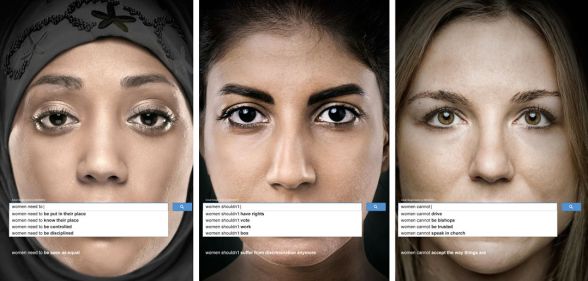
God’s vision for the Kingdom is one in which all of humanity is related to each other in relationships of equality, dignity, respect and peace, under the sole headship of Jesus Christ (Eph 1:9-10). But in South Africa, as in many parts of the world, women do not enjoy this Kingdom. Women and girl children are all too frequently the victims of abuse, violence, exploitation, domination and subordination. I have been harshly confronted with this over the past 33 years, since I was a young teenager. We live in one of the most dangerous countries in the world for women.

But the church has typically been silent and even complicit in this oppression of women. This is often because people of faith interpret the Bible through the lens of their culture, and most cultures are patriarchal – thus we come to the Bible with preconceived notions of gender and ‘find’ support for our ideas in the Bible. And of course the Bible itself was written in patriarchal societies by people who endorsed patriarchal beliefs. But while the Bible is surely filled with patriarchal passages, there are also many passages that have been invalidly used in support of patriarchy – texts have been distorted to serve the interests of men in power. What is required, in fact, is that we allow the Scriptures to interpret our culture, so that our culture is redeemed and transformed into the image of the Kingdom of God.

In this sermon, I take two passages that have, for thousands of years, been used to support the subordination (and often abuse) of women by men, and read them closely and carefully to show that they really do not provide support for male superiority or female subordination, but rather for equal partnership between the genders.

Genesis chapters 1 to 3 lay the foundation for our understanding of God, creation, humanity and the divine-human relationship. But far from endorsing gender power differentials, these chapters (specifically 1:28, 2:22-23 and 3:16) endorse both domestic and commercial partnership and equality between women and men, and depict patriarchy (a husband’s rule over his wife) as sin.

Paul, of the New Testament, was almost certainly a chauvinist, and grapples with the implications of there being “neither male nor female … in Christ” (Gal 3:28). Ephesians 5, with it’s infamous verse about wives submitting to their husbands, must be located against 5:21, which calls for mutual submission within the household of God. Using three pairs of power-differentiated relationships (wife-husband, child-parent and slave-master) Paul first introduces the cultural norm of submission/subordination for the less powerful person, though with a bit of a spiritual spin; and then a counter-cultural requirement for submission by those in power. Read as a whole, this passage calls for mutual submission or consideration in all human relationships, particularly when there are cultural power differences.

Through all of this, I am calling for people of faith to set aside their cultural assumptions as they read the Bible; to be transformed by the renewing of their minds, in choosing to unlearn racist, sexist and colonialist ways of thinking and relating; and to not stand by silently when women are humiliated or oppressed.

Blog image from http://www.borgenmagazine.com/10-examples-gender-inequality-world/

In-Filling and Out-Pouring of the Holy Spirit

Click here to listen to this 17-minute sermon.

Today is Pentecost, the last day of the Easter season, on which we celebrate the coming of the Holy Spirit among the new Christian Church in Acts 2. It is one of the high days in the Christian calendar. In today’s sermon, I draw on key themes that emerge from Jesus’ teaching on the Holy Spirit in John 16, the Pentecost narrative in Acts 2 and the vision of the valley of dry bones in Ezekiel 37. Based on these passages, I suggest that the Spirit has two main ways of working: he in-fills us in quiet and individualised ways to develop faith, life and truth, and he out-pours in dramatic and public ways to demonstrate the love and power of God and to proclaim the Gospel of the Kingdom of God.

My thanks to Fiona Langham for sharing her Spirit Tapestry that was part of a Pentecost Art Festival I organised back in 2008. You can see more of our works at adrian.vanbreda.org.

The Parable of the Talents (Remixed)

Click here to listen to the MP3 of this 21-minute message.

How often have we heard a sermon on Parable of the Talents? The idea that God has bestowed talents or gifts on each of us? And that we have to use our talents or lose them? This is not a bad idea, but it is not what Jesus is saying in this parable.

In this message, I deconstruct the notion that this parable is about talents and place it where it belongs – in the metaphor of business and commerce. I put forward the idea that Jesus is inviting us to become shareholders in God’s business venture on earth – the business or mission to bring salvation to the whole cosmos. What a great opportunity, if a little daunting, to be a business partner with the Son of God!


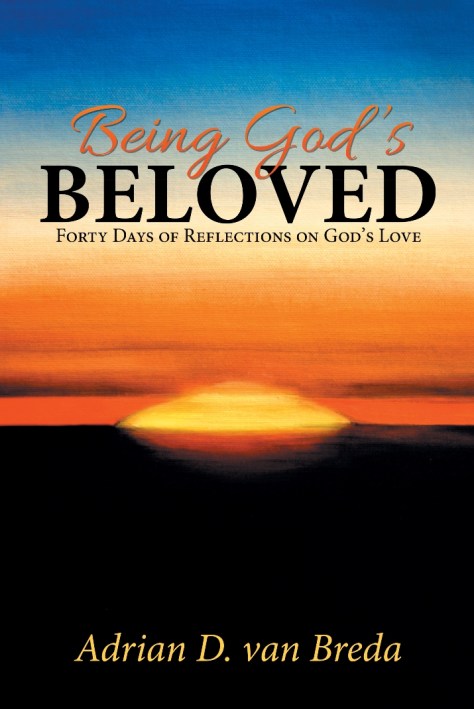
Being God’s Beloved: Forty Days of Reflections on God’s Love


Dear Friends

I am delighted to tell you that you Being God’s Beloved has been published by Westbow and is available for sale. It pulls together, in printed form and with a lovely cover, the reflections that we shared together during Lent this year, and a set of discussion questions for use in a small group study. Many thanks to everyone who participated in the course during Lent and who shared the reflections with others. Thank you particularly to the parish of St-Martin-in-the-Fields, Irene, for providing the space for me to exercise this ministry.

I do hope that you will purchase copies of the book for yourself and for friends and family. How great it would be to participate in spreading the message of God’s extravagant and generous love during this Christmas.

  • For those living outside of South Africa, I encourage you to purchase the book from Westbow publishers, by following this link. You can purchase the book in printed or digital (Kindle, etc) forms.
  • For those living in South Africa, I will be importing copies of the book over the next week or two and will be selling them directly to you, at significantly reduced cost. I encourage you to hold on until I send out another notification that I have the books in my possession and we can arrange distribution.

Love and blessings
Adrian

http://bookstore.westbowpress.com/Products/SKU-000965432/Being-Gods-Beloved.aspx

My heartfelt thanks to Louise Sparrow for painting the cover art and to Lynda Smith for the author photograph.


From Fear to Faith

Click here to listen to the MP3 of this 17-minute sermon.

Peter’s walking on water is a great example of faith in response to Jesus. But the story in Matthew 14 starts with fear – Peter and the others are terrified. How does Peter get from fear to faith? In this sermon I show that is through a moving of Peter and Jesus towards each other. These are little steps of faith, each of which Jesus responds to and affirms, that culminate in big faith – walking on water or recognizing that Jesus is truly the Son of God. When we are in the midst of our own life storms (fear, anxiety, grief, suffering, uncertainty, doubt, conflict), Jesus moves towards us, inviting us to take little faith steps towards him. This is the journey of faith to which are called and which Jesus cherishes.

Peace and joy
Adrian


Resurrection Life

???????????????????????????

Click here to listen to the MP3 of this 18 minute sermon.

Today is the first Sunday after Easter and we centre our thoughts on the resurrection and what it means for us. In John’s Gospel, resurrection is virtually synonymous with Life, and so this sermon is about the Resurrection Life. Jesus says, “I am the Resurrection and the Life”. He also says, “I have come that they may have life, and have it to the full”.

I am including the readings from John (New International Version) so that you have them readily at hand.

Love, peace and joy
Adrian

________________________________________________________________________________

Resurrection and Life are intimately tied together in Jesus

  • Jn 11:25 – Jesus said to her, “I am the resurrection and the life. He who believes in me will live, even though he dies;

Jesus repeatedly speaks as if he embodies Life itself

  • Jn 1:4 – In him was life, and that life was the light of men.
  • Jn 5:26 –  For as the Father has life in himself, so he has granted the Son to have life in himself.
  • Jn 6:63 – The Spirit gives life; the flesh counts for nothing. The words I have spoken to you are spirit and they are life.

Jesus repeatedly says that he IS Life

  • Jn 14:6 – Jesus answered, “I am the way and the truth and the life. No one comes to the Father except through me.
  • Jn 6:48 – I am the bread of life.
  • Jn 8:12 – When Jesus spoke again to the people, he said, “I am the light of the world. Whoever follows me will never walk in darkness, but will have the light of life.”

Jesus repeatedly says that we obtain Life through him

  • Jn 10:10 – The thief comes only to steal and kill and destroy; I have come that they may have life, and have it to the full.
  • Jn 4:14 – but whoever drinks the water I give him will never thirst. Indeed, the water I give him will become in him a spring of water welling up to eternal life.”
  • Jn 6:27 – Do not work for food that spoils, but for food that endures to eternal life, which the Son of Man will give you. On him God the Father has placed his seal of approval.”
  • Jn 6:35 – Then Jesus declared, “I am the bread of life. He who comes to me will never go hungry, and he who believes in me will never be thirsty.
  • Jn 6:51 – I am the living bread that came down from heaven. If anyone eats of this bread, he will live forever. This bread is my flesh, which I will give for the life of the world.”
  • Jn 6:54 – Whoever eats my flesh and drinks my blood has eternal life, and I will raise him up at the last day.

Jesus repeatedly says that we must believe in him to gain eternal life

  • Jn 3:16 – “For God so loved the world that he gave his one and only Son, that whoever believes in him shall not perish but have eternal life.
  • Jn 17:3 – Now this is eternal life: that they may know you, the only true God, and Jesus Christ, whom you have sent.
  • Jn 5:24 – “I tell you the truth, whoever hears my word and believes him who sent me has eternal life and will not be condemned; he has crossed over from death to life.
  • Jn 6:40 – For my Father’s will is that everyone who looks to the Son and believes in him shall have eternal life, and I will raise him up at the last day.”

Being God’s Beloved: Day 40: The Spirit in Action

And so we come to the end of this journey. Or, rather, we come to the end of this stage of the journey. Our daily reflections have run their course and we now continue to journey forward into the world. My hope and prayer is that you have cultivated a greater, deeper and more secure sense of yourself as being God’s beloved. And that this empowers and motivates you to not only be God’s beloved but to live as God’s beloved. Holy Spirit breathes into us the power and love of God, and that breathe stirs our spirits to be the presence of God in the world. Imagine a world in which every Christian consciously and deliberately worked to be the love of God, to be Spirit in action. What a world that would be!

Jesus tells the parable of the Good Samaritan in Luke 10:25-37. Asked what one must do to inherit eternal life, Jesus quotes the Great Commandment (which we discussed on Day 23). The second part of the Great Commandment is to love one’s neighbour as oneself. The man asks, “Who is my neighbour?” and Jesus proceeds to tell him story of the Good Samaritan.

A travelling man is assaulted and mugged by a band of robbers and left for dead on the side of the road. A priest and then a Levite, both people you’d think would be aligned with God’s values, pass by on the other side of the road, looking away. Then a Samaritan, who was not esteemed by Jewish people in those days, stops to help him, takes him to an inn on his own donkey and pays for him to stay there until he is well. Jesus implies that the Samaritan leaves before the man recovers, so there is no chance of being thanked.

Jesus asks, “Who was a neighbour to the man who fell into the hands of robbers?” The man of course had to respond, “The one who had mercy on him” – he could not bring himself to say, “It was the Samaritan.” And Jesus says, “God and do likewise.”

Jesus spends much of his ministry, in continuity with God’s self-revelation throughout the Old Testament, demonstrating that humanity is much loved by God. There are no conditions to God’s love – God loves us because God loves us. It is God’s delight and pleasure to love us, because we are God’s creation, because we are created in God’s image.

But God also desires us to be loving. It is part of God’s vision for humanity, part of God’s original design – that we would love and care for each other in community. And so Jesus calls us to love all those whom we meet, even those we’d rather pass by. God wants us to be like the Good Samaritan. God does not want us to be like Jonah, who had no love for the Ninevites. Jonah, in fact, throws God’s loving nature in God’s face, as he says, “O Lord, is this not what I said when I was still at home? That is why I was so quick to flee to Tarshish. I knew that you are a gracious and compassionate God, slow to anger and abounding in love, a God who relents from sending calamity. Now, O Lord, take away my life, for it is better for me to die than to live” (Jonah 4:2-3). Jonah correctly understood the nature of God’s heart – that God loved the people of Nineveh and desired their salvation. But Jonah’s heart was not aligned with God’s heart – he could not love them. God does not want us to be like Jonah – God desires for our hearts to be aligned with God’s heart.

When we are filled with the Spirit of Christ, filled with the Love of God, how can that love not overflow to those around us? In the same way that God’s superabundance of love spills out into the creation of the cosmos, the abundance of God’s love in us, as we are filled with Spirit, should pour into our relationships, our work, our play, our church, our world.

Jesus speaks about this in John 7:37-38, “If anyone is thirsty, let him come to me and drink. Whoever believes in me, as the Scripture has said, streams of living water will flow from within him.” Knowing that people might ask, “What is this water?” John explains in the next verse, “By this he meant the Spirit.” When we drink up God’s love, we are filled with Holy Spirit, and Spirit then flows out from within us like a stream of living water.

In this way, we are called to be God’s presence in the world. Holy Spirit dwells within us, so wherever we are, God is also. Christ, the incarnate Son of God, is no longer with us in the flesh, as he was some two thousand years ago. But wherever we are, God is, and God is there in our flesh. In effect, we are the body of Christ in that place. St Teresa of Avila, some 500 years ago, wrote about this in a beautiful prayer: [1]

Christ has no body but yours,
No hands, no feet on earth but yours,
Yours are the eyes with which he looks
Compassion on this world,
Yours are the feet with which he walks to do good,
Yours are the hands, with which he blesses all the world.
Yours are the hands, yours are the feet,
Yours are the eyes, you are his body.
Christ has no body now but yours,
No hands, no feet on earth but yours,
Yours are the eyes with which he looks
compassion on this world.
Christ has no body now on earth but yours.

On Day 16 we talked about what Christian love meant. Let me quote what I wrote then:

Christian love – that is, our love for others – is modelled on God’s love. Linda Woodhead has defined it as “an active desire for the well-being of the neighbour, and for communion with him or her, based on a recognition of the neighbour’s unique worth”.[2] Her definition is helpful, if challenging. Christian love is initiated by ourselves, and in this way unconditional – we choose to love because we choose to love, not because the person is love-worthy. We love because of the inherent worth of the other as one of God’s creatures, but we do not whitewash all people with the same inherent worth – a bland, faceless love for everyone. Rather, Christian love emphasises recognition of unique worth; that is, I extend myself to seek out particular aspects of that individual that are loveable and even likable. And it is two-way, seeking not only to express love at arm’s length, but also to establish relationship, communion, fellowship. And all of this is just the way God loves me and you and the other person.

This kind of love is transformative. It not the anaemic “I love everyone” that we sometimes say. This is a love, targeted not at the whole world, but at those in our immediate environment, which seeks to bring about authentic experience of human relationship. When we invest this kind of love in the way we do our work, the way we engage with those we encounter in our daily living, the way we relate to our families, and the way we relate to people at church then we will begin to see the Kingdom of God come. This is because the Kingdom of God is rooted in God’s most deeply cherished value, and that is Love.

We often pray the Lord’s Prayer, “May your Kingdom come, may your will be done on earth as it is in heaven.” What is God’s will? The centre of God’s will is that we love God, love each other, love the world and love ourselves. This is what relationship is all about and this is what God created us for – to be in loving relationship with God (spirituality), others (sociology), the world (ecology) and ourselves (psychology). As we begin to invest our love in these four sets of relationships we begin to answer the Lord’s Prayer – God’s Kingdom does indeed come, because God’s Will is indeed done!

This sounds rather idyllic. You and I know that this does not happen easily. Love in the abstract is simple and clear. But love in the real world, in real relationships, in real workplaces and families and communities is not so simple. If love were simple and easy, we’d all be doing it! But in fact, there is a dearth of love in the world.

We cannot love like God in our own strength. We have to rely on the Spirit of God, the Love of God, to enable us to love. It is as we allow Spirit to fill us with God’s love that we something to offer. And it is as we hear Spirit’s call, recognise Spirit’s equipping, respond to Spirit’s prompting that we actually begin to not only be God’s beloved, but to actually live as God’s beloved. And this is God’s ultimate goal. This is the good life.

Meditation for the Day

Reflect back over the past 40 days. Perhaps scan through the table of contents. Identify those points that have most struck you, that you hope to take forward with you beyond today. Make a commitment to continue to journey in the love of God, to be God’s beloved and live as God’s beloved.

Prayer for the Day

Spirit of Love, Son of God, Heavenly Father. Fill me today with an abundance of your divine love. Create opportunities for me to express your great love as I live my life today.

Being_Gods_Beloved_square_3

[1] This is widely available on the internet. I got this from http://www.journeywithjesus.net/PoemsAndPrayers/Teresa_Of_Avila_Christ_Has_No_Body.shtml. There is also a wonderful sung version of this prayer by John Michael Talbot, https://www.youtube.com/watch?v=XH8R0mmuH9U

[2] Woodhead, p. 56.