The heart

Click here to listen to the audio recording of this 7-minute message. Or watch the YouTube video below. Or read the very brief summary thereafter.

Jesus tells us that God views the source of our behaviour in our hearts. As a result, God is more interested in what is in our hearts than how we behave. Our motivations, our inner thoughts, our orientation towards God – all of which come forth in our speech and behaviour – is where God’s attention is. We are urged to attend to our inner lives and orientate ourselves towards God.

Featured image from http://www.mydr.com.au/wp-content/uploads/2019/04/heartbeat_750.jpeg

That is why I have come

Click here to listen to the audio recording of this 15-minute message. Or watch the video on Facebook (the message starts at about 29 minutes).

That is why I have come!”

These are the words of Jesus for us today. In Mark 1:29-39, we read of Jesus healing people and casting out demons. He then withdraws to pray and his disciples follow him, annoyed, saying, “Everyone is looking for you!” Jesus responds, “Let us go somewhere else – to the nearby villages – so that I can preach there also. That is why I have come.” Jesus has a clear sense of calling, of why he is here in this world. It emerges out of his time of prayer with his father. He has come to heal, to restore, to save and to preach. (You may recall last week’s sermon, Acts of love, in which I showed that while Jesus is involved in both knowledge or teaching and healing or acts of love, it is the latter that enjoys more attention.)

Similarly, in 1 Corinthians 9:16, Paul writes, “When I preach the gospel, I cannot boast, since I am compelled to preach. Woe to me if I do not preach the gospel!” Paul does not regard preaching as something he can choose to do or not do. He feels that he was made to preach, and thus has to preach. And so he says, “I am simply discharging the trust committed to me.” God called him to preach, and preach he must.

I resonate with this verse. After many years of feeling called into ministry, and running away as fast and as far as I could, I finally conceded and preached my first sermon in August 2005 (you can read that sermon, based on Romans 12:1, here). Terrified as I was, I knew as I stood, clinging to the lectern, that this is what God had called me for and that I had to continue preaching. I felt compelled to preach! There was a period of a few years when lay ministers were barred from preaching. I remember feeling like a bear with a headache or a woman who was 11-months pregnant. I was irritable, distressed, uncomfortable, in pain, because I felt I was unable to give birth to the sermons growing in me. As Paul wrote, “Woe to me if I do not preach the gospel!”

The clear sense of calling or purpose expressed by Jesus and Paul, and indeed most of the characters in the Bible (think of Isaiah’s “Here am I. Send me!” in Isaiah 6:8), is God’s gift to every Christian. It not just some special few who have a calling, a sense of why they are here, as sense of being compelled to do something for God. This is a gift God gives to every believer. 1 Corinthians 12:7 & 27 tells us that “to each one [that is, to every single one] the manifestation of the Spirit is given for the common good” and that “each one of you [that is, every single believer] is a part of” the body of Christ.

God has put you on earth for a purpose.

You are alive for a reason.

You have been sent to do particular work for God.

What is it that God is calling you for? What has God gifted you to do? What is that nagging voice at the back of you mind telling you? What do you know you should be doing for God, but are avoiding? What is it that deeply satisfies you? What is it that, when you do it, tells you that you are in the centre of God’s will for you?

That thing is what you are here for. That is what you are compelled to do. That is why you have come!

Featured image from https://byfaithonline.com/wp-content/uploads/2018/03/620x400_p40.jpg

My eyes have seen

Click here to listen to the audio recording of this 7-minute message. Or watch the YouTube video below.

Today we celebrate the festival of the presentation of our Lord at the temple, in Luke 2:22-40. For Simeon, encountering the infant Christ was the pinnacle of his life, and so he says, “Sovereign Lord, as you have promised, you may now dismiss your servant in peace, for my eyes have seen your salvation.” Seeing or encountering Christ is the high-point of our lives; everything else is a bonus, icing on the cake. Let us remember our first encounter with Christ, and put the rest of our life in perspective.

Featured image: “Simeon’s song of praise” by Arent de Gelder (1700-1710), from https://commons.wikimedia.org/wiki/File:Aert_de_Gelder_-_Het_loflied_van_Simeon.jpg

Acts of love

Click here to listen to the audio recording of this 19-minute message. Or watch the video recording on Facebook (the message starts at about 24 minutes).

Our readings for today speak about the balance between knowledge and action – between what we know in our heads and what we do with our bodies. What we’ll see is that in the Gospels, Psalms and Paul’s letters, actions are more important than knowledge. It is not the knowledge is unimportant – no! Knowledge is important. But acts of love are even more important. The hallmark of a Christian is not so much what they know as what they do.

In our Gospel reading for today (Mark 1:21-28) we read about Jesus first ministry. We read that Jesus went into the temple and was teaching. And people were amazed at the authority of his teaching. The people later conclude, “What is this? A new teaching – and with authority!” Clearly, Jesus’ teaching, based on his knowledge, is important.

However, only 1 verse describes him teaching, and we don’t know what he actually taught. But there are 4 verses describing is actions. While he was teaching a demon possessed man came and challenged Jesus. Jesus cases out the evil spirit and the man is made well. This act of love, this work of love, gathers more attention than his teaching. And the people conclude, “He even gives orders to impure spirits and they obey him.”

While both knowledge and actions are present in this Gospel passage, actions are far more detailed and compelling.

If we then turn to Psalm 111, we find a similar pattern. Verses 7 and 10 speak about God’s precepts. A precept is a general guideline or principle; not a ‘law’, which is far more specific and prescriptive. v7 says that God’s precepts are trustworthy and v10 that all who follow the Lord’s precepts have good understanding; it is the beginning of wisdom. Clearly, knowledge of God’s precepts is important.

However, 7 of the 10 verses speak about God’s works: the words of the Lord (v1), his deeds (v3), his wonders (v4), he provides food (v5), she showed his works (v6), the words of his hands (v7) and he provided redemption for his people (v9). Wow! So much attention is given to the actions of God. And these actions are described as being great, delightful, glorious, majestic, righteous, gracious, compassionate, powerful, faithful, just, holy and awesome! These are acts of love, and Psalm 111 is drenched in them.

While both knowledge and action are present in this Psalm, actions are far more prolific and compelling.

And finally, let’s look at 1 Corinthians 8, in which Paul provides some rather complex teaching about eating food offered to idols. I do not want us to get too bogged down in the specifics of the teaching, but rather to focus on what Paul says here about knowledge and action. In the opening verses, Paul says, “We all possess knowledge. But knowledge puffs up while love builds up.” This sentence is so direct and clear – knowledge makes us feel bigger and more important, while actions of love build up the community. And then he continues, “Those who think they know something do not yet know as they ought to know.” He cautions against over confidence in knowledge – that we may think we know a lot, but we may actually be wrong. And he continues again, “But whoever loves God is known by God”, though there is an alternate reading (in the footnote of the NIV), “But whoever loves truly knows.” Paul’s warning about knowledge is balanced with an emphasis on love. Acts of love are what are most important, says Paul.

In the rest of this passage Paul explains about eating food sacrificed to idols, and the crux of his argument is that acting on the basis of right knowledge rather than on loving consideration of the needs of others harms these other people. Indeed, Paul says that they are “destroyed by your knowledge” and that this is to “sin against them” and indeed to “sing against Christ” (vv11-12). And he concludes this passage saying that he would rather act against his own knowledge, to protect others from falling (v13).

In other words, what is most important is not for us to act on what we believe to be right, or even on what is actually right, but to act out of love for others, so as not to harm others. In summary, it is better to be kind than to be right.

All three passages today give us the same clear, strong and compelling message: Knowledge, while important, is not what is most important to God. What is most important to God, is that we act in love towards others.

What, then, will you do with this knowledge? How can you put into practice this precept, that loving actions towards others are more important than all the knowledge in the world?

Let me make one practical suggestion. Or rather, let me present this to you as a challenge and urge you to make a decision now to act on this. With the lockdown, churches have had to close their doors and we no longer see our sisters and brothers like we used to. This results in a fragmentation of the church community, and as a result, people may feel disconnected and alone, and their faith may wane.

I challenge you to identify two or three people who would normally have spoken to at church, but because you’ve not seen them for a while, you’ve not spoken with them. Give them a call or drop them a note. Reach out to them. Ask how they are doing. Ask if they need anything. Ask what you can do to support them. Show them the love of God. In so doing, we will work to build up our church community, the body of Christ.

Featured image from https://www.alovingcompany.com/wp-content/uploads/2013/02/iStock_000005355205Small3-e1362098423422.jpg

A life of love

Click here to listen to the audio recording of this 12-minute message. Or watch the YouTube video. Or read the text summary below.

Today is surely a watershed moment for the world: 20 January 2021, the end of Donald Trump’s administration. Whether or not one is an American, this change of administration will surely impact the world in one way or another.

This is not a sermon about America or American politics, however. Rather it is a sermon about what defines a Christian. When we look at the American right and left, who are so profoundly divided at this time, and yet who both comprise large numbers of Christians who believe that their politics is aligned with their Christian faith, we must ask, What does it mean to be a Christian? How can Christians, who follow the same book of teachings, be so polarised when it comes to their beliefs, practices and policies?

Perhaps one of the reasons is the weight that different groups of Christians give to different parts of the Bible. While we (are exhorted to) believe that “all Scripture [that is, the whole of the Bible] is God-breathed and is useful for teaching, rebuking, correcting and training in righteousness” (2 Timothy 3:16), if we base our Christian beliefs, practices and policies on the first Testament (the Old Testament) more than on the Gospels, or even on the rest of the second Testament more than on the Gospels, then something is wrong.

The Gospels present to us the very life, ministry and teaching of God the Son. These are not subsequent interpretations of Christ’s ministry, but Christ’s ministry itself. If we want to see God, we must look at his Son; and we get his Son in the Gospels. Jesus Christ’s life, as recorded in the Gospels, must be the template for Christian belief, practice and policy. And all the rest of the Bible must be interpreted through the Gospels.

Ironically, our reading today is not from the Gospels, but from Paul’s letter, where he writes about the central message we get from the Gospels: live a life of love.

Be kind and compassionate to one another, forgiving each other, just as in Christ God forgave you. Follow God’s example, therefore, as dearly loved children and live a life of love, just as Christ loved us and gave himself up for us as a fragrant offering and sacrifice to God. (Ephesians 4:32-5:2)

The life of a Christian must be rooted in love. This passage is not about love for other Christians, but love for all humanity. Paul emphasises the love that God had for us before we were saved – the love that led to God’s forgiveness of us and of Christ’s offering of himself as a sacrifice to God – these are about God’s love for us before we were saved, and thus the example is for how we love the whole world.

Love is the foundation of Christian life. Indeed, these verses are part of a larger passage which opens as follows:

So I tell you this, and insist on it in the Lord, that you must no longer live as the Gentiles do, in the futility of their thinking. They are darkened in their understanding and separated from the life of God because of the ignorance that is in them due to the hardening of their hearts. (Ephesians 4:17-18)

In other words, Paul sees this ‘life of love’ as constituting a fundamental difference between Christian life and non-Christian life. Our love for others is what is supposed to define us as Christians and differentiate us from everyone else. Indeed, Christ himself gives us this great command:

A new command I give you: Love one another. As I have loved you, so you must love one another. By this everyone will know that you are my disciples, if you love one another. (John 13:34-35)

This love for other people (and indeed for the whole of creation) is fundamental to what it means to be Christian. It is only after all this, that Paul then says, “But among you there must not be even a hint of sexual immorality” (Ephesians 5:3) and then goes on to talk about morality. Morality is important, but the life of love is even more important. When we place morality above love, we are out of step with Christ, who consistently placed love above everything else. If you are placing morality above love, you must go back to the Gospels and see how Jesus lived, what he said and how he related to people.

What is most important and definitive in the life of Christ is the life of love, which is a love that is radical and inclusive. It is this kind of love that is supposed to inform our beliefs (how we understand God, ourselves and the world), our practices (how we life our life moment by moment) and our policies (or politics).

We pray for the people of America and their new president. We pray for a drawing closer together of the American people, a reduction in polarisation and anger, and a greater rooting of life in the Gospel message of love for one another. And we pray also for ourselves and our nation, which has its own challenges.

Featured image from https://www.pinterest.co.uk/pin/17240411047269719/

Follow me

Click here to listen to the audio recording of this 15-minute message (low data, better quality sound, no picture) or watch the video of the sermon on Facebook (starts at about 30 minutes into the recording).

Jesus begins his ministry by calling people to follow him. In John 1:43-51 Jesus calls Philip – “follow me”. Philip goes to call his friend Nathanael to meet Jesus, becoming one of the first evangelists. As Nathanael arrives, Jesus says some things about him, showing that he knows Nathanael, before they had even met. And then Jesus reveals that he saw Nathanael sitting under a tree even before Philip had called him.

In this message, I share my own experience of being called by Jesus to follow him. It is not definitive, but provides just one experience of being called and (eventually) responding to God’s call.

Jesus remains the same today – he knows us and sees us. He knows where we are in life and in our relationship with him, and he sees where we are and what we are doing. And it with this knowledge of us, that Jesus calls us to follow him.

I thus urge you also to respond to the call of Jesus – to follow him. Put in the effort to build a relationship with Jesus – talk with him, read the Bible, come to church, talk with Christian friends, think about Jesus. He is ready and waiting for you. He is calling you to follow him. You just need to reach back.

Featured image from https://www.followmeretreat.org/

God’s handiwork

Click here to listen to the audio recording of this 11-minute message. Or watch the YouTube video here. Or read the text summary below.

Now and then, it is good for us to reflect on who we are in Christ – our identity – and what God wants from us – our purpose. Ephesians 2:10 gives as a wonderful opportunity to do that:

For we are God’s handiwork, created in Christ Jesus to do good works, which God prepared in advance for us to do.

Let’s start with the idea that we – that you – are God’s handiwork. The Greek word behind ‘handiwork’ implies creative activity – sculpting a statue, painting a painting, writing a poem. It is about intense and skilled craftsmanship. This is what you are – you are a great work of art by the greatest artist/poet who ever lived. You are not merely a product of your genes or your environment; you are not an accident; you are not a coincidence – you are one of God’s masterpieces, unique in every way, and beautifully crafted.

Paul tells us that we are created in Christ Jesus. Christ is “the firstborn over all creation” (Colossians 1:15), thus we are the second born – Christ’s brothers and sisters. Indeed, Paul writes that “we are God’s children. Now if we are children, then we are heirs—heirs of God and co-heirs with Christ” (Romans 8:16-17). Jesus Christ is our oldest brother; we are his younger sisters and brothers. He leads the way and we follow in his footsteps.

Paul says that we are created to good works, which God prepared in advance for us to do. Before we were born, before we were even conceived, God already had us in mind. He knew what kind of person you would become, with your unique genetic makeup and life experiences, and the hand of God shaping the course of our life. God already has in mind what he wants us to do in the world. I do not think this means our lives are scripted and preset; but it does mean that there is already a pattern of what we are each able to do in unique ways that bring a smile to God’s face.

And what are these things God has prepared for us to do? Good works. It is striking that Paul writes here about good works, because in the preceding verses he has been emphatic that are saved by faith and not through good works. But now he closes off this passage by saying that we were created in Christ Jesus to do good works. That is the purpose for our creation.

What constitutes a ‘good work’. Let’s refer to the great commandment (Matthew 22:36-40), where Jesus says, “Love your neighbour as yourself”. A good work, fundamentally, is anything that shows God’s love for our neighbour. We are each created uniquely to love uniquely, to do unique good works. The good that you are able to do is different from the good I can do. You were uniquely created by the great Craftsman to do unique good, loving works, that God prepared in advance for you and only you to do in a uniquely ‘you’ way.

Let us meditate on Paul’s words:

For we are God’s handiwork, created in Christ Jesus to do good works, which God prepared in advance for us to do.

Featured image from: https://feeds.croatia.hr/epic-week/experience/check-fascinating-handiwork/

Filled with the Spirit

Click here to listen to the audio recording of this 13-minute message. Or watch the video of the message on Facebook video (the message starts at about 25 minutes). Or read the text summary below.

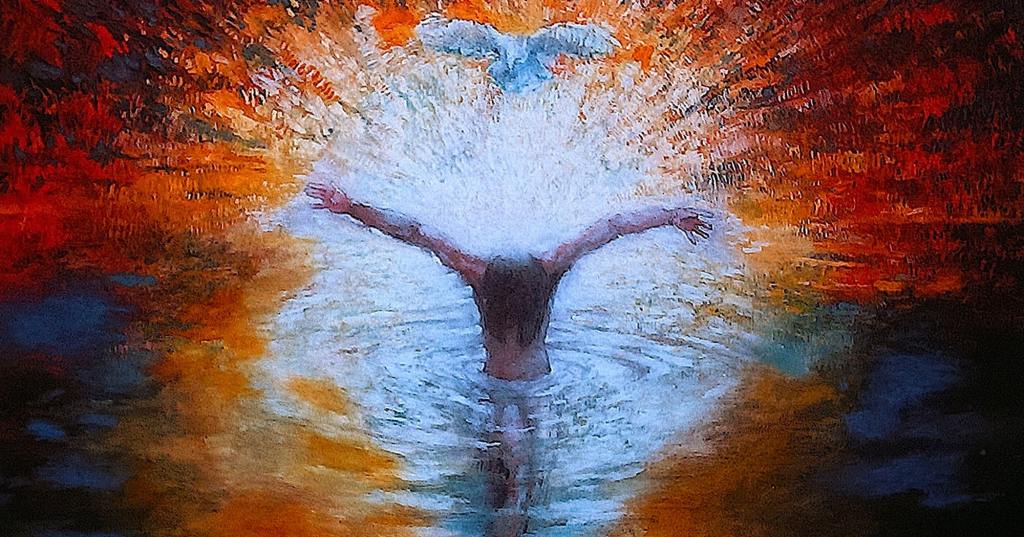
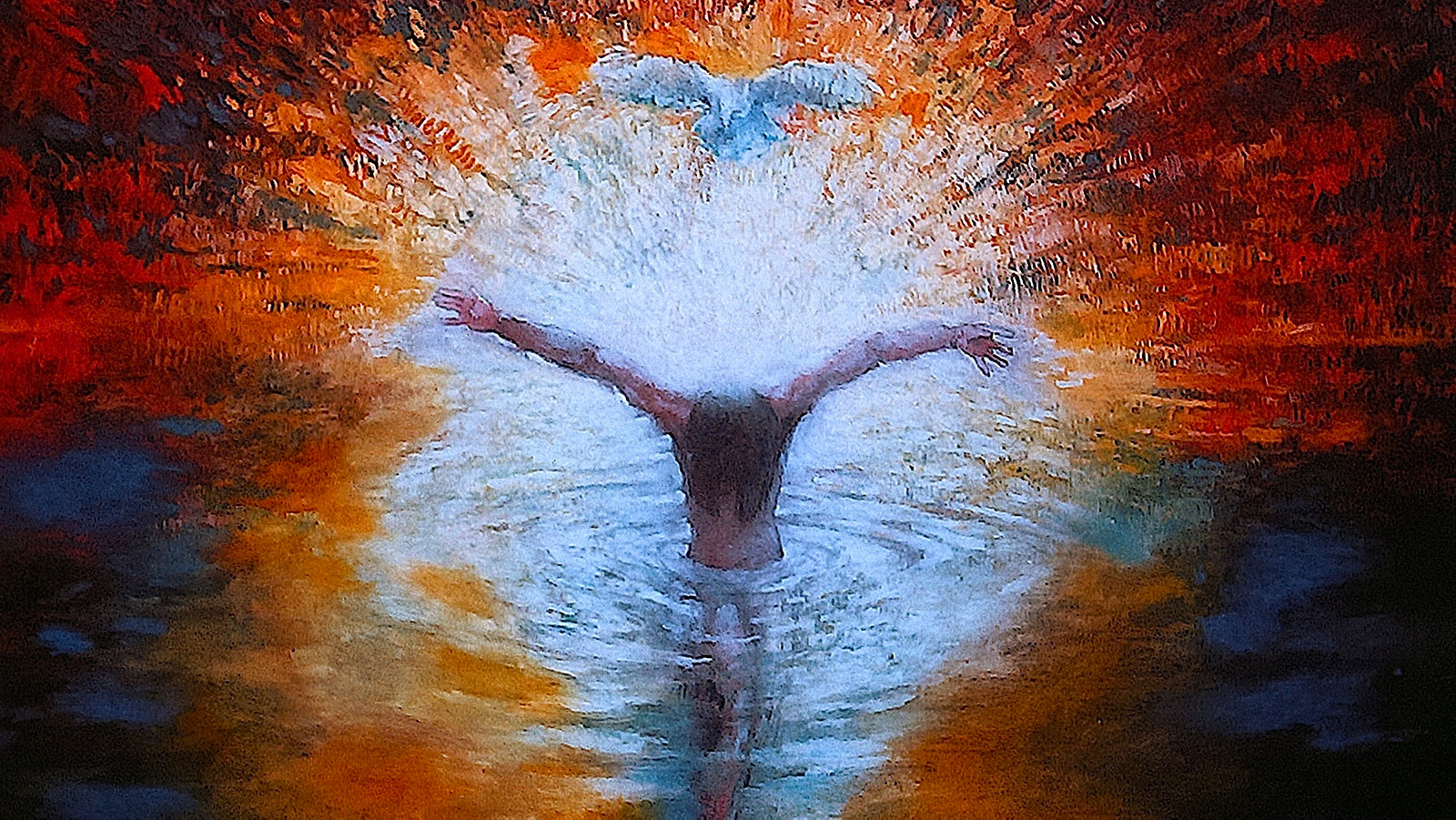
Today we commemorate and celebrate Jesus’ baptism by John in the river Jordan. Mark 1:10 tells us that “as Jesus was coming up out of the water” the Spirit descended “on him like a dove”. Jesus’ ministry starts with him being filled will the Spirit. Surely, if the Spirit is important for his life and ministry, the Spirit must be important for ours also.

Indeed, all of our readings for today speak about the work of the Spirit. Genesis 1:2 tells us that when God was creating the heavens and the earth, “the Spirit of God was hovering over the waters”. Holy Spirit was there, partnering with God in creation. And Psalm 29:3 echoes these words: “the voice of the Lord is over the waters … the Lord thunders over the mighty waters” – suggesting that the Spirit and the Lord are one and the same God. Holy Spirit is active in creation.

In Acts 19:1-7, Paul met up with some of John’s disciples and asks them if they received the Holy Spirit when they believed. They say they did not – indeed, they did not even know there was a Holy Spirit. Paul lays his hands on them and “the Holy Spirit came on them and they spoke in tongues and prophesied”. Much as we see in the story of Pentecost in Acts 2, Holy Spirit equips people for ministry.

Clearly, the Spirit is essential for creation or creativity and for ministry. Luke 4:1 tells us that after his baptism, Jesus was “full of the Holy Spirit” and that it was the Spirit who led him into the wilderness, where he was tempted. If Jesus needed to be filled with the Spirit, how much more do we need the filling of the Spirit? Paul is emphatic in Ephesians 5:18: “Be filled with the Spirit”.

Hopefully you are convinced that we need to be filled with the Spirit. If so, the question is ‘how?’ How are we to be filled with the Spirit?

Let me start by affirming that if you believe in Jesus – if you are a Christian – then Holy Spirit is already living in you. Paul makes this clear in 1 Corinthians 6:19: “Do you not know that your bodies are temples of the Holy Spirit, who is in you, whom you have received from God?” You cannot become a Christian without the working of the Spirit. So if you are a Christian, you already have the Spirit in you, whether you know it or not. Being filled with the Spirit then is something additional to this. (Remember that Jesus was already the Son of God when he was filled with the Spirit.)

How can we be filled with the Spirit? There is no formula for being filled with the Spirit. I offer some suggestions based on my own experience and the experiences I’ve heard from or seen in others:

  • Say a prayer asking Holy Spirit to fill you.
  • Ask someone to lay hands on you and pray for you to be filled with the Spirit.
  • Say a prayer in which you tell the Spirit that you surrender to the Spirit.
  • Bearing in mind that the Spirit is already in you, but that the Spirit might be shackled or chained, thus prevented from working fully, say a prayer in which you you unchain, unshackle and free-up the Spirit to work in you.
  • Identify specific areas of your life (e.g., your finances, marriage, mental health, sexuality) that you are keeping back from God and invite the Spirit to fill these areas of your life.
  • Do a walking prayer, saying “Holy Spirit fill me” as you breathe in and “I surrender to you” as you breathe out.
  • Or anything else that works for you…

I encourage you to seek the infilling of the Spirit. Not as a once-off thing, but as a regular thing. Being filled with the Spirit is not an event, but an ongoing way of life, in which we keep in step with the Spirit, like breathing. When we are filled with the Spirit, our faith will grow and flourish, our prayer life will deepen, we’ll more easily understand the Bible, and our ministry will strengthen and expand. This is what living in the Spirit is about.

Be filled with the Spirit!

Featured image from https://dg.imgix.net/why-was-jesus-baptized-en/landscape/why-was-jesus-baptized.jpg

The battle

Click here to listen to the audio recording of this 13-minute message. Or watch the YouTube video below. Or read the text summary after that.

Covid-19 has been spreading at an alarming rate in recent weeks. We have more new cases and more deaths than we had at the height of the first wave back in July and August 2020. And we hear of whole families infected with Covid and even dying of Covid. We ought to be greatly concerned about Covid. Let us think of Covid as the enemy of humanity and an agent of the devil. Covid does everything that is the antithesis of God and works against God’s vision for humanity.

We draw on Exodus 17:8-13 for today’s message:

The Amalekites came and attacked the Israelites at Rephidim. Moses said to Joshua, “Choose some of our men and go out to fight the Amalekites. Tomorrow I will stand on top of the hill with the staff of God in my hands.” So Joshua fought the Amalekites as Moses had ordered, and Moses, Aaron and Hur went to the top of the hill. As long as Moses held up his hands, the Israelites were winning, but whenever he lowered his hands, the Amalekites were winning. When Moses’ hands grew tired, they took a stone and put it under him and he sat on it. Aaron and Hur held his hands up—one on one side, one on the other—so that his hands remained steady till sunset. So Joshua overcame the Amalekite army with the sword.

Let us think of the Amalekites as Covid – our common enemy. Everyone is working to fight off this enemy:

Joshua and his soldiers are like those who are fighting Covid directly – frontline health workers, those developing vaccines and the President and his team.

Moses, together with Aaron and Hur, are up on the hilltop praying for Joshua and his team as they battle the enemy. Let us imagine that we are Moses, Aaron and Hur.

We can and ought to be praying against Covid. Prayer is not just a psychological thing that we do. It is real engagement with God and has a real impact on the real world. Prayer is hard – Moses struggles to keep his hands above his head holding the staff of God. We have to persist, to persevere in prayer.

And as Moses struggles, Aaron and Hur come alongside him. They help him to sit and then each help him hold up his arms, so that Moses can continue his work of prayer. Aaron and Hur work together to support Moses, who prays on behalf of Joshua.

In a similar way, we need each to do our part in supporting our collective efforts against Covid. These are quite simple: wear a mask, maintain physical distancing and avoid large gatherings. When we each do our part, we make a collective difference and contribute to the common good of all humanity.

And finally, let us take heart that God is present also in this collaborative effort: Aaron and Hur work to support Moses as he prays to God to enable Joshua and his team to fight off the enemy. There is no ‘let go and let God’ in this narrative. Each member of Israel had a role to play – each did their part. Together, working collaboratively, working in partnership with God, they were able to win the battle.

Dear friends, let us pray for God’s salvation and let us each do our part to support and protect each other, so that we win the battle against Covid.

Featured image from https://i.pinimg.com/originals/af/a1/53/afa153c86da28cdfcf52e0091fc0035e.jpg

Radical inclusion

Click here to listen to the audio recording of this 12-minute message. Or watch the video on Facebook (the message starts at about 29 minutes). Or read the narrative summary that follows.

Today we celebrate Epiphany – the revelation or revealing of Jesus Christ to the non-Jewish world, specifically, to the Magi. Traditionally, these were the three wise men or the three kings. The readings set for today (for Epiphany) tell the narrative of a great opening up (or revealing or understanding) of God’s salvation for all humankind.

We start in Isaiah with several prophecies of the nations (Gentiles, non-Jews) coming recognise the special call of Israel to be a light to the world. For example, Isaiah 59:19 says, “From the west, people will fear the name of the Lord, and from the rising of the sun [that is, from the east], they will revere his glory”. In Isaiah 60:3, we read, “Nations will come to your light and kings to the brightness of your dawn”. And Isaiah 60:6 seems to prophesy the coming of the Magi (the traditional ‘three kings’ or ‘wise men’), “All from Sheba will come, bearing gold and incense and proclaiming the praise of the Lord.”

In the times of the First Testament, God had chosen to work with the Jewish people. They were his chosen people – the people of the covenant. But throughout that Testament, we see references, like those in Isaiah, to Israel leading everyone towards God. They were to be a priestly nation who would mediate God to the world.

Then, in Matthew 2:1, we read, “After Jesus was born in Bethlehem … Magi from the east came to Jerusalem and asked, ‘Where is the one who has been born king of the Jews? We saw his star when it rose and have come to worship him’.” When they found Jesus, “they bowed down and worshipped him” and “presented him with gifts of gold, frankincense and myrrh” (Matthew 2:11), in fulfilment of the prophecy in Isaiah 60:6.

The importance of the Magi is twofold. First, they recognise Jesus as a king – not merely as a child. He was a person of great significance. And secondly, because they came from the east (probably somewhere in Persia or even further east) and were not Jewish, they represent the gentile nations. Their visit to Jesus and their recognition of him as King is the fulfilment of the First Testament prophecy, that the Messiah of the Jewish people would be a Messiah for all people. This is the epiphany – the revelation of Jesus to those outside of the Jewish faith.

Jesus’ ministry, as recorded in the Gospels, was primarily to the Jewish people. Jesus says as much (e.g., Matthew 10:5-6). However, there are numerous examples of Jesus reaching beyond the Jewish people to Gentiles. Still, the Good News that Jesus preached was primarily good news for Jews.

The outworking of the fulfilled prophecy comes with Paul and is explained very clearly in his letter to the Ephesians. Speaking to the Gentiles, Paul says “you were separate from Christ, excluded from citizenship in Israel and foreigners to the covenants of the promise, without hope and without God in the world” (Ephesians 2:12). Paul is reiterating the First Testament position, that only the Jewish people were God’s chosen.

But Paul then shares his “insight into the mystery of Christ, which was not made known to people in other generations as it has now been revealed by the Spirit of God’s holy apostles and prophets” (Ephesians 3:4-5). And what is this mystery? It is that “through the gospel the Gentiles are heirs together with Israel, members together of one body, and sharers together in the promise of Christ Jesus” (Ephesians 3:6).

Paul proclaims the great opening up of the Gospel message to all people, as was prophesied in the First Testament and according to the sign of the magi from the East. God’s chosen people are no longer only the Jewish nation, but anyone who believes in Jesus Christ. “In him and through faith in him, we may approach God, with freedom and confidence” (Ephesians 3:12). “The barrier, the dividing wall of hostility” (Ephesians 2:14) has been destroyed. The doors to the Kingdom of God have been flung wide open and all are welcome to enter!

What does this mean for us today? It means that our church doors must also be flung wide open so that all feel welcome to enter. There should be no barriers to people coming to Christ and coming to church. Every person, no matter who or what they are, should feel that they are welcome, loved and included when they meet us. We should be generous and inclusive.

If we are honest, we will admit that Christians can be some of the most judgemental, critical and exclusionary people on earth. And often also hypocrites – saying one thing but doing another. Christians frequently do not put into practice the open and inclusive Gospel that Jesus proclaimed, which was prophesied in the First Testament, and which we see unfolding throughout the Second Testament.

Jesus’ ministry was one of radical inclusion. He seems to go out of his way to embrace those who the world would regard as sinners and marginalised – prostitutes, tax collectors, Roman oppressors, lepers, demon possessed people, women, Samaritans, the dead and dying, and so on. Jesus repeatedly positions himself with those who one might think could not be the ‘chosen people’. He does this show, unequivocally, that the Gospel is a generous and inclusive message and that doors to the Kingdom of God are wide open.

And thanks be to God for that! Because this is what enables most of us – who are Gentile – to be included among God’s chosen people. Let us then walk in the footsteps of Jesus and of Paul, in the way we as individuals engage with people around us – always welcoming, always generous, warm, kind, tolerant, inclusive. And let us as a church – the parish of St Stephen – similarly be a church with wide open doors that welcomes anyone and everyone into the presence of God.

Featured image “Adoration of the Magi” by Albrecht Dürer (1504), from https://artsandculture.google.com/asset/adoration-of-the-magi/zwFGJLYuIszRRw?hl=en-GB