Transfiguration

Click here to listen to the audio of this 16-minute message. Or watch the video on Facebook here (the message starts at about 36 minutes – video and sound quality are unfortunately not great).

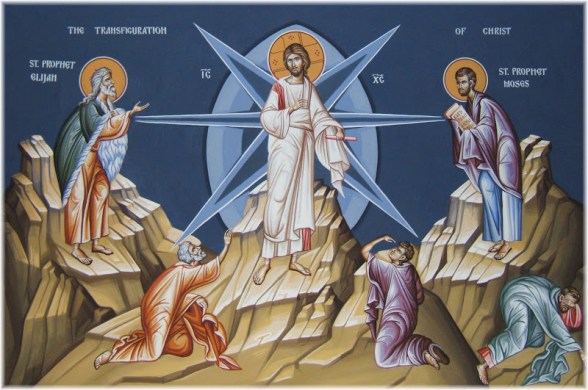
Today we celebrate and remember Jesus’ transfiguration, where he revealed his divine glory to Peter, James and John on the mountain top (Luke 9:28-36). We must remember that this moment was a transfiguration, not a transformation. A transformation implies that Jesus changes form, e.g., from ordinary human to divine being. But this not how we understand what happened on that mountain – there is no change of ‘form’ as if there are two Jesuses – one human and one divine. Instead, what changes is the ordering or configuration of Jesus – his divinity has been inside him since his conception. It was just set behind his humanity – what changed is the order what we see: his divinity comes to the fore for that short time. Hence, it is a transfiguration.

We have heard many sermons about what happens on the mountain and response of the disciples. I don’t want to repeat that today. Instead, I’d invite us to reflect on what it means for us, for our daily lives as Christians.

2 Corinthians 3:3-18 speaks of this event and contrasts it with the similar glory that Moses displayed after he had met with God on Mount Sinai (Exodus 34:29-35). Surely, the glory that Moses radiated was impressive. But Paul’s emphasizes that Moses’ glory was based in the old Covenant of the Law, which was written on tablets of stone, which was transient and which had now passed away. Instead, the glory in Paul’s time was based in the new Covenant of Christ and the Spirit of God, which are enduring and which are so much more glorious.

Paul goes on to emphasize that while Moses covered his face, because God’s glory that radiated off him made people afraid, we go around with our faces uncovered. He encourages us to be bold and let God’s glory be seen for what it is. And this glory is transformational (now this is the right word to use), in that it changes us from the inside out, into the image of Christ.

So, let’s cycle back to the question asked: What does the transfiguration mean for us, for our daily lives as Christians? Most importantly, we are urged to accept that the glory of God – through Christ and through Holy Spirit – resides within us. We might not feel it and we may not adequately reflect it in life; but it is a true reality. Put your hand on your chest and press it a bit – here is where the glory of God resides – within us, in our heart, as Paul writes, “written with the Spirit of the living God on tablets of human hearts” (2 Cor 3:3). And, so where we are, the glory of God is.

And this truth, even if we don’t embody it very well, can inspire us to be bold, to be holy and to be compassionate.

Featured image from https://sites.google.com/site/syrianorthodox/feasts-of-our-lord/transfiguration

St Stephen

Click here to listen to the audio recording of this 19-minute message. Or watch the video on Facebook (the message starts at about 25 minutes).

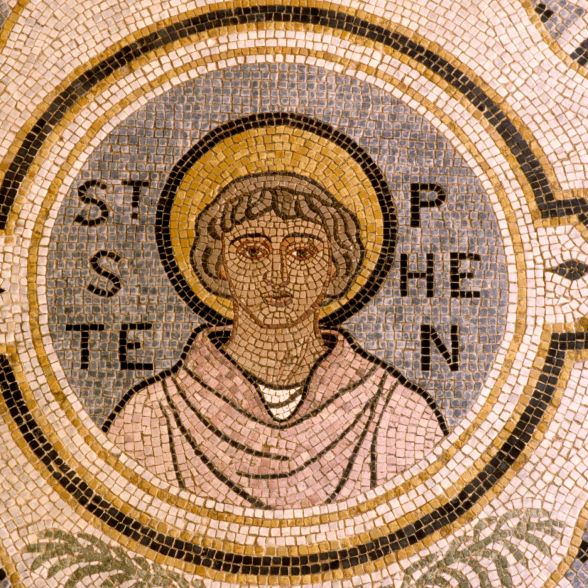
I am fortunate to belong to a church named after a great figure in the early church – St Stephen. He was one of the first second-generation leaders in the church (meaning people who came after Jesus’ ascension). Stephen fills up two chapters of Acts (chapters 6 & 7). The first person to become a leader after the first disciples was Matthias, who replaced Judas as the 12th disciple (Acts 1:23-26) – Matthias is not mentioned anywhere else in our Bible. Next, were seven deacons, who were appointed in Acts 6:5-6. Stephen is one of these seven, and the only to be discussed in any detail. Saul (who later becomes Paul) is introduced right at the end of the story about Stephen, as being present at Stephen’s stoning (Acts 7:58).

Stephen is described in some detail in the first verses of Acts 6, as being full of faith, full of the Holy Spirit, full of God’s grace, full of wisdom and full of power. He is also described as having “the face of an angel” (which might refer to a look of power and authority, more than pale cherub-like skin).

Stephen’s primary role as deacon was to take care of the widows in the early church. But he is described also as performing great signs and wonders and teaching authoritatively (as we see in his 50-verse sermon in Acts 7). Stephen was the first follower of Christ to die for his faith – the first Christian martyr. And he demonstrated his profound faith while being stoned to death and, like Jesus, forgave his murderers as he died. In many ways, Stephen exemplifies what Jesus says to his disciples in Matthew 10:17-22: “You will be hated by everyone because of me, but the one who stands firm to the end will be saved.”

While we are primarily followers of Christ, we are also all followers of St Stephen, particularly in the following ways:

  1. We should strive to be filled with the Spirit – filled with God – in the same way that Stephen was. He was saturated with power, grace and faith through the Spirit. Perhaps, before we even climb out of bed, we should ask God to fill us anew every morning.
  2. We should care for others, both within and without the church. Stephen’s primary role was to take care of those who were struggling. His calling was to serve the poor and vulnerable, hence we call him a ‘deacon’ (a servant). We similarly should be always alert to the opportunities to serve and care.
  3. We should be public about our faith. This does not mean forcing our beliefs or values on others, nor necessarily about preaching on street corners. But it does mean that people should know that we are followers of Christ – Christians – and that they should know this not only by what we say but also by what we do. Our lived lives should exemplify the values that Jesus showed during his earthly ministry.
  4. We should be steadfast in our faith, even under pressure. There is a saying, “The true flavour of a teabag only comes out in hot water.” Similarly, our faith is really revealed and proven when we go through hard times. In Stephen’s most pressured moment, he forgave, like Jesus forgave. He turned his eyes towards God and entrusted himself into God’s care.

What a great privilege it is to be a follower not only of Christ, but also of Stephen. His life reflects many of the qualities of Jesus that we appreciate and that we should emulate.

Featured image of St Stephen from https://www.learnreligions.com/saint-stephen-542519

Our Father

Click here to listen to the audio recording of this 20-minute message. Or watch the video recording on Facebook here (the message starts about 30 minutes into the service).

Today we read Jesus’ instruction to his disciples on how to pray (Luke 11:1-13). It is a rich and invaluable teaching. Prayer is not easy for many of us, and Jesus’ template for prayer is worth using. Today, we focus on two words from the Lord’s prayer: “Father” and “daily”.

Father

Jesus starts his prayer with “Father”. Not “Our Father”. It is an indicating of his intimacy with God the Father, and the invitation to us to be similarly intimate and close with God. It also speaks of an informality that we can have in our communication with God. We’ve not all have good experiences of fathering – referring to God as our ‘Father’ might not be comforting for everyone. But in this passage, Jesus emphasises the goodness of Father God.

In Luke 11:11-13, Jesus describes God as a good parent, who gives his children good things. He reminds us that even if we did not have good fathering and even if we (who are fathers) are not good fathers, we all have a mental picture of a ‘good and loving father’. We many not have experienced it ourselves, but what we do know what it is. Jesus emphasises in this passage that God lives us to our ideal of good fathering.

Colossians 2:13-14, another of today’s readings, also emphasises the good God, who takes away our sin, who wipes us clean, who accepts us in love.

And even in Genesis 18:23-25, also one of today’s readings, we see Abraham reminding God of who God is – righteous, loving, forgiving, patient, tolerant.

God is a good parent and we are invited to be intimate and informal with God in our prayer.

Daily

In Luke 11:3, Jesus prays, “Give us each day our daily bread”. We are encouraged to bring our every day needs to God – our need for bread, a staple of life. God is not interested only in big challenges and global issues; God is also interested in the daily struggles of life. We are invited to bring everything to God.

We’re also invited to come to God every day in prayer. This verse uses ‘day’ or ‘daily’ twice. The bread we ask for is daily bread. We do not buy it in bulk for the month – we buy it fresh each day – it is daily bread. And we come every day (‘give us this day’ or ‘give us each day’) to God to receive it. God invites to come daily to God to pray for today’s needs.

Later in this passage (Luke 11:9-10), Jesus invites to ask, to seek and to knock. He reassures us that we we do so, we will receive and find and the door will be opened. Although we have all had experiences of prayers not answered, Jesus encourages us to continue asking, seeking and knocking. We don’t need to be shy in coming to God with our needs.

Luke 11:5-8 also tells the story of a man who comes to his neighbour in the middle of the night asking to borrow some bread, as he has unexpected visitors. His neighbour is not interested in getting up so late at night to give him bread. But Jesus tells us that the persistence of the man will eventually get his neighbour out of bed. He encourages us to persist in prayer. My NIV uses the phrase “shameless audacity” to describe this persistence – just keep on knocking and knocking, keep engaging with God.

We see this shameless audacity in Abraham in Genesis 18:26-33, as he haggles with God for mercy on the people of Sodom. He starts with 50 righteous or innocent people, and negotiates God down to just 10. Actually, Abraham shows a great deal of trepidation and caution, as he recognises he’s bargaining with the Creator. But he persists and is indeed audacious in the way he negotiates with God for mercy.

Engaging the Father daily

In many ways, this is the crux of our readings for today. God wants us to engage with him, persistently, shamelessly, audaciously. He is our Father – it gives him joy when we engage him. And he invites and encourages us to come daily into his presence. There is nothing too big or too small, too shameful and terrible to bring to God. He is the good parent who loves to engage with us.

Father, give us each day our daily bread.

Featured image from https://www.catholicherald.com/wp-content/uploads/2022/03/mans-hands-in-prayer_WEB.jpg

You choose – one way or the other

Click here to listen to the audio recording of this 17-minute message. Or watch the video of the message on Facebook here (the message starts at 31 minutes).

The theme of our readings for today – particularly our Gospel reading – is “You choose – one way or another”. The readings are quite challenging and unsympathetic. Jesus is quite matter of fact about saying that it up to us to decide what we do.

Luke 9:51-62 presents four stories in rapid succession. In the first story, Jesus and the disciples are on their way to a Samaritan village. But the villages are not interested in meeting Jesus. The disciples are outraged and want to call down fire from heaven to wipe out the village. They’re really emotionally invested in the villagers being receptive to Jesus’ message and so feel anger that they are not receptive. But Jesus rebukes his disciples, not the villagers, and says they should go off to another village. It is like Jesus shrugs his shoulders or says ‘meh’ or ‘whatever’. His attitude seems to be that they are free to choose whether they want to engage him – free to choose one way or the other.

This gets reinforced with the three very short stories at the end of the chapter about three men, two of whom say they will follow Jesus and one whom Jesus calls. But each has some or other excuse about not following him right away. The reasons are reasonable and valid – a desire for some comfort, the need to bury one’s father or wanting to say goodbye to his family. These are hardly terrible crimes. But Jesus is quite unsympathetic – follow me or don’t follow me – you choose. To the last man, Jesus says, quite harshly, “No one who puts a hand to the plough and looks back is fit for service in the kingdom of God”.

We get a similar attitude, albeit in a different context, in 2 Kings 2:10, where Elisha is preparing to take over Elijah’s ministry. He asks Elijah for a double portion of his spirit. Rather presumptuous and ambitious, remembering that Elijah is arguably the second most important person in the First Testament (after Moses). Elijah’s response has a similar shrug to Jesus. He says, “It will be yours – otherwise, it will not.” This time is less about Elisha’s choice and more about God’s choice, and of course God does choose for Elisha. But there is still this shrug.

When we get to our third reading in Galatians 5, we get a softer response from Paul about these choices we’re called to make. Paul is more invested in trying to persuade us of the importance of following Christ. He exhorts us: “do not let yourself be enslaved” (v1); “So I say, live by the Spirit” (v16) and “Let us keep in step with the Spirit” (v25). And he provides some warnings about the consequences of not following Christ: “If you bite and devour each other, watch out or you will be destroyed by each other” (v15) and “I warn you, that those who live like this will not inherit the kingdom of God” (v21). And then he goes still further by listing for us the “acts of the flesh” (vv19-21) (sins that distance us from God), which he says are “obvious”, and the “fruit of the Spirit” (vv22-23) (behaviours and values that align us with God).

God is not begging us to follow him. He does not pressure us. He does not force us. Rather, God presents himself to us – here I am, I am God, I am the Son – and invites us to choose – one way or the other. We get to choose. And we mostly know what God wants for us. We mostly know God’s values, ethics and love. And we mostly know what God does not desire. We just have to choose whether we follow in God’s way or we don’t. It’s up to us to choose.

It is thus striking the extent to which we persist in doing the things God tells us not to do and to not do the things God wants us to do. This often plays out most strongly in our relationships with our loved ones.

The worst thing that can happen to us with God is not God’s wrath – at least then God is engaged with us. The worst thing is when God just moves on. That Samaritan village had such a remarkable opportunity to meet God in the flesh – and they said “no thanks”. And Jesus said, “cool” and moved on to the next village. How terrible it would be for us to have all these opportunities to know about God and to know God, and to throw it away because we repeatedly choose not to follow his path, but rather our own. We really owe it to ourselves to look critically and carefully at our behaviour and values, and interrogate to what extent they are aligned with God’s. Let us choose God, choose life.

Featured image of ‘the shrug emoji’ from https://influencermarketinghub.com/wp-content/uploads/2022/02/shutterstock_428654239-1024×768.jpg

He ascended into heaven

Today (Thursday 26 May 2022) is Ascension Day. It is 40 days after Easter and 10 days before Pentecost. On this day in history, Jesus met with his disciples and ascended to heaven, completing the cycle of his earthly ministry, started some 30 years before. Here is the account of this event in Acts 1:

In my former book, Theophilus, I wrote about all that Jesus began to do and to teach until the day he was taken up to heaven, after giving instructions through the Holy Spirit to the apostles he had chosen. After his suffering, he presented himself to them and gave many convincing proofs that he was alive. He appeared to them over a period of forty days and spoke about the kingdom of God. On one occasion, while he was eating with them, he gave them this command: ‘Do not leave Jerusalem, but wait for the gift my Father promised, which you have heard me speak about. For John baptised with water, but in a few days you will be baptised with the Holy Spirit.’

Then they gathered round him and asked him, ‘Lord, are you at this time going to restore the kingdom to Israel?’

He said to them: ‘It is not for you to know the times or dates the Father has set by his own authority. But you will receive power when the Holy Spirit comes on you; and you will be my witnesses in Jerusalem, and in all Judea and Samaria, and to the ends of the earth.’

After he said this, he was taken up before their very eyes, and a cloud hid him from their sight.

They were looking intently up into the sky as he was going, when suddenly two men dressed in white stood beside them. ‘Men of Galilee,’ they said, ‘why do you stand here looking into the sky? This same Jesus, who has been taken from you into heaven, will come back in the same way you have seen him go into heaven.’

Below is a short (5-minute) message reflecting on the meaning Christ’s ascension.

Extract from “The Ascension of Christ” by Rembrandt, 1636

Continuous God

Click here to listen to the audio recording of this 15-minute message. Or watch the video on Facebook here (the message starts at about 22 minutes into the video).

We live in a world that is fraught with challenges and unpredictabilities. We think of Russia’s war on Ukraine, the continued challenges of the people of Palestine and the various conflicts in Africa. We think in South Africa of increasing unemployment, rising inflation, the upcoming petrol price hike. We think of loadshedding and the ongoing challenges of Covid. We think of the water crisis in Nelson Mandela Bay and the devastation of the floods in KwaZulu-Natal. The world is unpredictable. Our lives are often unpredictable. Sometimes, we may feel disoriented and anxious because of the many challenges that we face at personal, national and global levels.

In these times, it is reassuring to recognise that while life may be unpredictable, God is consistent. God persists. God has always, continues to and will always engage with us. When life feels chaotic, we have a God we can rely on.

Today’s reading from John 14:23-27 is particularly strong in reassuring us of God’s continuity. Jesus starts in v23 with himself: “Anyone who loves me will obey my teaching.” And then he immediately continues, “My Father will love them.” Here is the first affirmation of consistency – between God the Son and God the Father. Jesus draws the immediate and strong link between himself, his Father and us – rooted in love – our love for Christ and the Father’s love for us. And he continues with these amazing words, “and we will come to them and make our home with them”. I love this use of ‘we’ and ‘our’ – here Jesus is referring to himself and his Father as operating together, as a partnership, and of coming dwell with us as a partnership. What a great reassurance of the continuity between the Father and the Son. And Jesus continues further, “These words you hear are not my own; they belong to the Father who sent me” – yet further reassurance of continuity and consistency between God the Father and God the Son.

Jesus then continues, introducing the Holy Spirit as “the Advocate, the Holy Spirit, whom the Father will send in my name”. In this short phrase we have Father, Son and Holy Spirit, collaborating together – the Father sends the Holy Spirit in the Son’s name. And the role of the Holy Spirit will be to “teach you all things and [to] remind you of everything I have said to you”. Here again, we have continuity and consistency – Holy Spirit does not start a new work in us, but rather continues the work of the Son, by reinforcing his teachings in us.

The result of all of this continuity from the Father of the Old Testament, the Son of the Gospels and the Spirit of the New Testament church is peace. Peace! Jesus says, “Peace I leave with you; my peace I give you. Do not let your hearts be troubled and do not be afraid.” We can breathe out, we can rest in God, we can trust that God has been consistently and persistently at work throughout history, from the creation until now and into the future. Do not be troubled. Do not be afraid. Be at peace.

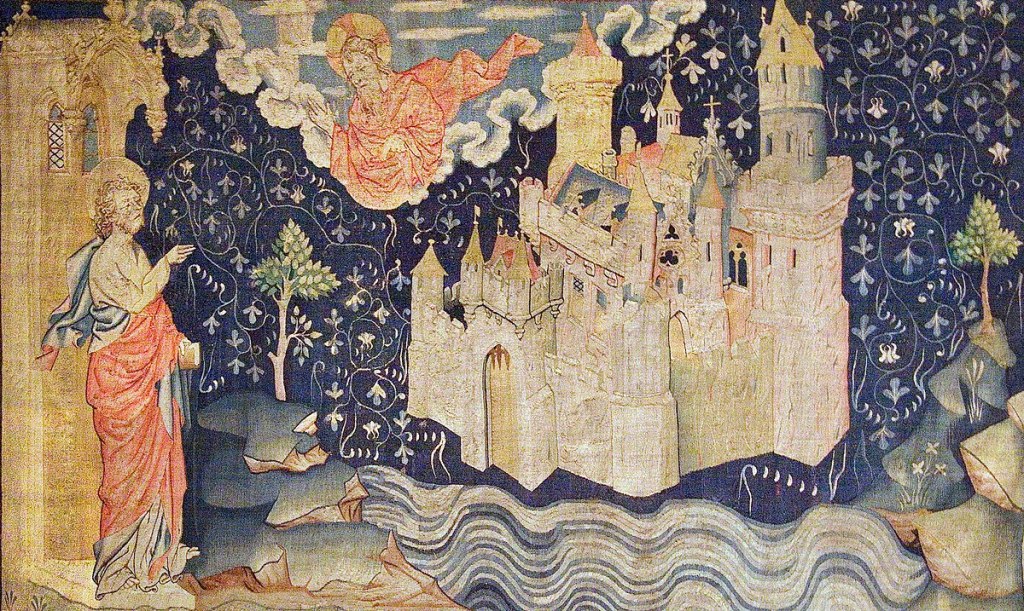
And these reassurances of God’s continuity extend into the future. Revelation 21:10 and 21:22-22:5 paint a compelling image of the heaven. John is taken by the Spirit – the same Spirit Jesus has spoken about in John’s Gospel – and sees the new Jerusalem, the Holy City coming down out of heaven from God. It is a glorious sight! There is no temple there, because God (the Father) and the Lamb (the Son) are its temple. God’s light shines out brilliantly. The gates of the city are always open. There is a river running through the city, with the water of life, and the tree of life, with leaves for the healing of the nations. We can see God’s face.

John’s vision is a deep reassurance of God’s continuity – what have seen in the Father throughout the first Testament, what we have seen confirmed in the life of the Son in the Gospels, and what we have been promised and experienced in the coming of Holy Spirit in the early Church and continuing until today, will continue into the future, until the day Christ returns.

We can rest deeply into the continuity of God, into God’s steadfast faithfulness and persistence. We can hold onto a God who is faithful, even when our own faith is frail or when life’s burdens overwhelm or depress us. We can hold fast to God’s continuity.

Featured image: John of Patmos watches the descent of New Jerusalem from God in a 14th-century tapestry (https://en.wikipedia.org/wiki/New_Jerusalem)

All who are thirsty

Click here to listen to the audio recording of this 18-minute message (followed by a 4-minute song). Or watch the video on Facebook here (the message starts at about 34 minutes).

From the dawn of time, God has had his arms outstretched to receive and embrace us. God has always been open and receptive to us. He always has been like this, he is like this today, and he will remain like his into the future. This is permanent posture of God. Arms open and looking towards you.

When we feel disconnected from God, can’t perceive or feel him, feel abandoned – it is not God who has turned away. It is we who have turned away. Sin is one of the main causes of us feeling cut off from God – sin is us turning away from God. But God has not moved – he is still there.

Luke 13:1-9 tells of people coming to Jesus saying that some people who had died horribly must have sinned terribly to suffer such a death. But Jesus challenges this, and says they were no worse than anyone else. And then he cautions those who said this: “Repent, else you too will perish!” He then tells the parable of a fruit tree that was unproductive. The owner wanted to cut it down, but the gardener interceded for is, saying he’s car for it for three years and see if it produced fruit: if so, good; if not, then cut it down. The parable is not particularly confident about the tree becoming fruitful and being saved. Sin is serious – it can lead to our deaths.

1 Corinthians 10:1-13 also speaks of sin. The people of Israel wandering through the desert for 40 years saw the most remarkable miracles – the plagues against the Egyptians, the parting of the Red Sea, water gushing from a rock, manna from heaven every morning, the pillars of fire and smoke and so on. Yet, they repeatedly turned from God and engaged in all kinds of sin. And many died as a result. Paul says these are warnings for us, of how NOT to live our lives. And he offers a bit of hope: that God will not let us be tempted beyond what we can bear and that there will always be an escape route.

These two readings focus on the real risks of sin causing us to be estranged from God. But I say again: God has not moved! He is still there! His arms are still open to us!

Listen to God’s words in Isaiah 55:1-3:

“Come, all you who are thirsty, come to the waters; and you who have no money, come, buy and eat! Come, buy wine and milk without money and without cost. Why spend money on what is not bread, and your labor on what does not satisfy? Listen, listen to me, and eat what is good, and you will delight in the richest of fare. Give ear and come to me; listen, that you may live. I will make an everlasting covenant with you, my faithful love promised to David.”

Hear these repeated words from God: Come, come, come. Listen, listen, give ear. Eat and drink. Free, without cost. Good, delight, richest, everlasting, faithful, love, promise. These are words of God who is always facing us, with his arms always outstretched. This is the invitation to come to him, to quench our thirst, to eat and rest.

Isaiah summarises for us (vv6-7):

Seek the LORD while he may be found; call on him while he is near. Let the wicked forsake their ways and the unrighteous their thoughts. Let them turn to the LORD, and he will have mercy on them, and to our God, for he will freely pardon.

And listen to David in Psalm 63:

You, God, are my God, earnestly I seek you; I thirst for you, my whole being longs for you, in a dry and parched land where there is no water. I have seen you in the sanctuary and beheld your power and your glory. Because your love is better than life, my lips will glorify you. I will praise you as long as I live, and in your name I will lift up my hands. I will be fully satisfied as with the richest of foods; with singing lips my mouth will praise you. On my bed I remember you; I think of you through the watches of the night. Because you are my help, I sing in the shadow of your wings. I cling to you; your right hand upholds me.

Again, hear David’s response to the God of love, the God with open arms, the God who is always present and always available.

I encourage you, if you are feeling burdened and challenged by life, or if you are feeling that God is remote, to come to our Lord, who is the fountain of life, who offers food and drink to refresh your soul, at no cost, with no conditions.

Featured image from: https://media.nationalgeographic.org/assets/photos/186/480/0e077d4d-9209-40d5-9fd5-4e51aeed7b37.jpg

On a mission

Click here to listen to the audio recording of this 15-minute message.

Luke 13:31-35 finds Jesus on God’s mission. He is busy “driving out demons and healing people today and tomorrow”; he desires to protect the people of Jerusalem: “how often I have longed to gather your children together, as a hen gathers her chicks under her wings”; and he desires to reach his goal – Jerusalem, where he will die.

But Jesus’ mission is fraught with obstacles!

For one thing, Jerusalem does not want to be join him – “you were not willing” to respond to his protection and care. And so, he will leave them alone – “your house is left to you desolate” – until Palm Sunday, when they will say, “Blessed is he who comes in the name of the Lord” as he enters Jerusalem (Luke 19:38).

And for another, “Herod wants to kill” him. Others also are conspiring against him. His days are numbered. But Jesus says that he is too busy with God’s mission to die now, and moreover, “no prophet can die outside of Jerusalem”, so Herod will get his way only later, when Jesus goes to Jerusalem. In the meantime, Herod must wait.

Jesus continues on God’s mission, despite all obstacles. He is focused and determined.

We also face obstacles as we live out our faith in this world, as we live our mission, the mission God has given us. It is not always easy to maintain our faith in our personal lives; and it is even less easy to maintain our faith in the challenges and complexities of the world we live in. We need to be more like Jesus: focused and determined.

Our readings today provide some helpful advice for us:

First, we can take hold of God’s covenant, God’s promises. In Genesis 15:8-9, God is assuring Abram of his blessing and to make him a great nation, but Abram is beset by challenges, not least of which is that he has no heir. Abram eventually says to God, “Sovereign Lord, how can I know that I shall gain possession of it [of the land]?” And God engages with Abram’s need for reassurance and promise. The Scripture says, “So the Lord said to him…” and we get the instructions for the covenant made between God and Abram. God offers this covenant promise in response to Abram’s need for reassurance. Similarly, we can ask God for reassurance. And we can rely on the many promises God has already made to us through his son in the Scriptures.

Second, we can take up Jesus’ offer of protection to “gather your children together, as a hen gathers her chicks under her wings” (Luke 13:34). This is such a beautiful image of Jesus as a mother hen, protecting her young ones, by sheltering them under her wings. Our reading from Psalm 27:5 speaks similarly: “For in the day of trouble he will keep me safe in his dwelling; he will hide me in the shelter of his sacred tent and set me high upon a rock”. Here again is a wonderful image of God’s protection within a holy tent, a tabernacle, where we will be safe from harm.

And third, we can be tenacious and determined in our mission, trusting in a trustworthy God. Philippians 4:1 encourages us: “Therefore, my brothers and sisters, you whom I love and long for, my joy and crown, stand firm in the Lord in this way, dear friends!” and Psalm 27:14 concludes, “Wait for the Lord; be strong and take heart and wait for the Lord”. Life is often hard, but we need to persevere.

Take hold of God’s promises,
seek shelter under God’s wings,
stand firm,
be strong,
take heart and
wait for the Lord.

Featured image from: https://gmtma.org/wp-content/uploads/2017/10/untitled-design.jpg?w=490

God’s self-revelation

Click here to listen to the audio recording of this 12-minute message. Or watch the video on Facebook here (the message starts at about 25 minutes).

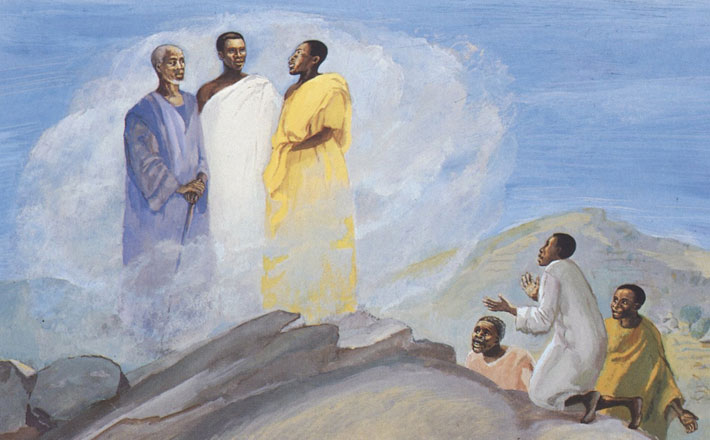
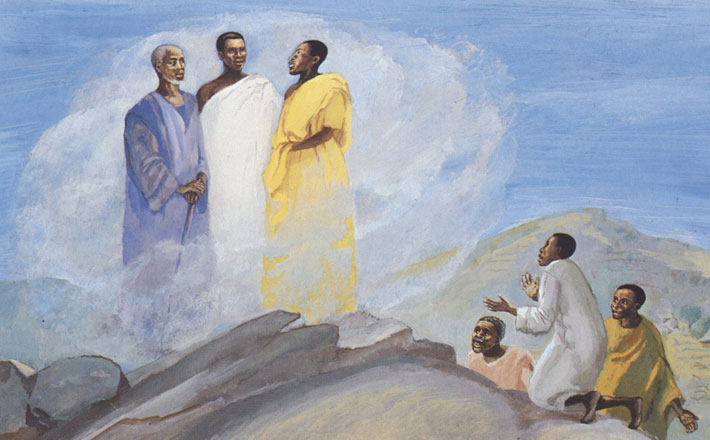
Today we celebrate the transfiguration (Luke 9:28-36), where Jesus reveals his divine nature to three of his disciples. This event, which in our church we celebrate with the colour white, falls after a period of ‘ordinary time’ in the church calendar, which we celebrate with green, and Lent, which we observe with purple. This celebration is thus well placed as a link between a period of ordinary growth in the church and period of intensive penitence and critical self-reflection.

Furthermore, the transfiguration is located in our church calendar almost exactly at the midpoint between Christmas (two months and two days ago) and Easter Sunday (10 days less than two months from now). Each of these events – the birth of Christ, the transfiguration of Christ and the resurrection of Christ – are moments of God’s self-reflection, or epiphanies. God shows God’s self for who God is, in these key moments in the life of Christ.

Christmas focuses on the incarnation of God the Son in the form of the human Jesus. It is God’s emptying of God’s self – the kenosis – in which God immerses God’s self into human life and comes to live among us as one of us. It is also a story of the birth of a child – of hope, of new life, of a baby. The Christmas self-revelation emphasises the light and life of God in our midst.

The transfiguration shows us that Jesus is more than ‘just’ a teacher, more than ‘just’ a healer or miracle worker. He is revealed in all his divine splendour, as the Son of God, even more, as God the Son. All the fullness of the Godhead dwells in Jesus. Most of the time it is hidden from sight. But in the transfiguration, Jesus kind-of drops his human skin and reveals his divine nature to Peter, James and John. The transfiguration self-revelation emphasises the power and divine majesty of God in our midst.

Easter focuses on the discipline and love of Jesus for his Father, and for humanity, leading him to walk a path that he knows will lead to his humiliation, suffering and ultimately, his death. He knows this is a path of suffering, but he also knows that it is a path towards the salvation of all of humanity. Jesus’ Easter resurrection is God’s self-revelation of profound and reckless love for humanity.

These revelations of God’s self – of who the triune God truly is – as our focus as we enter Lent. God is the child that brings life and light. God is the divine being, filled with power and majesty. And God is our saviour, filled with love and compassion. It is into this God, this Christ, that we immerse ourselves during the coming period of Lent.

Featured image: JESUS MAFA. Transfiguration, from Art in the Christian Tradition, a project of the Vanderbilt Divinity Library, Nashville, Tenn. https://www.workingpreacher.org/wp-content/uploads/2020/06/Mafa_Transfiguration_710.jpg

Life and Death

Click here to listen to the audio recording of this 17-minute message. Or watch a video of the message on Facebook here (the message starts at about 27 minutes).

The collect for today opens with the words, “Holy and righteous God, you set before us life and death”. This prayer sets the tone for today’s collection of readings, which are, literally, a matter of life and death. We are presented in the scriptures with two options – life and death – and invited to choose one. Let’s run through them swiftly together.

1 Corinthians 5:12-20. In this passage, Paul defends the importance of believing in the resurrection of the dead in general, and the resurrection of Christ in particular. If there is no resurrection, Paul argues, then there is no hope for us of a life after death. And if that is the case, our believing in Christ is to be pitied. Paul is impassioned in making his argument. You can hear, as you read, that this is for him, a make or break in the Christian faith – it is a matter of eternal life or eternal death.

Luke 6:17-26. Here, Jesus presents a series of blessings and woes, each comprising three verses. The blessings remind us of his beatitudes in Matthew 5, and speak of God’s favour on those who are vulnerable and marginalised, and those who suffer for the sake of Christ – they will be raised up. The woes are dire warnings against those who laud their wealth and power over others, who bask if their own accomplishments and who are self-sufficient – they will be brought low. Jesus is not afraid to divide the world into good and bad, blessed and cursed – it is a matter of life and death.

Jeremiah 17:5-10. Jeremiah echoes Jesus’ curses and woes. “Cursed is the one” he says, who trusts in human things and who turns away from God. That person will be like a dry shrub in a salty uninhabited wasteland. Jeremiah’s words here are clear and uncompromising. By contrast, “blessed is the one” who trust in God, for they will be like a tree, with its roots in a river, who is able to withstand challenges and be green and fruitful – it is a matter of life and death.

Psalm 1. The Psalmist replicates Jeremiah’s imagery of a “blessed one” who does not keep company with the wicked, but rather who spends time with God. This one is like a tree planted by a river. The ready water strengths and protects the tree, so that it is always fruitful. By contrast, the wicked are like chaff, who have no roots and blown away by the wind. Their way leads to destruction – it is a matter of life and death.

These four readings all say the same thing – there is a path of life and a path of death. The path of life involves maintaining fellowship with God and God’s people, and living in accordance with God’s values. The path of death involves relying on oneself, disregarding God and placing too much hope in how others perceive one. The consequences of these two paths are a matter of life and death.

All too often, we stray onto the path of death. Sometimes we do so quite consciously and deliberately – we turn from God and we choose to think or act in ways that we know are ungodly. Other times, we just stray there, quite unintentionally, as if drawn there. Roman Catholic theologians call this ‘original sin’ and Calvinists call it ‘total depravity’ or sometimes ‘pervasive depravity’. It relates to the fall of humanity in Genesis 3 – that our hearts, created by God for good, incline towards evil. If we are not watchful and careful, we all too easily drift onto the path of death, by turning from God towards sin.

We must be far more alert, awake and vigilant regarding our heart and our actions. We must be far more deliberate and intentional in what we choose. If we drift through life without thinking, we are at great risk of drifting onto the path of death. Rather, we need to be conscious and thoughtful about life. We must choose, repeatedly, even continuously, to follow the path of life, the path of blessing, the path of Christ.

Moses speaks strongly to his people about this shortly before they exit the wilderness. It is worth reading in full: Deuteronomy 30:15-20a:

See, I set before you today life and prosperity, death and destruction. For I command you today to love the LORD your God, to walk in obedience to him, and to keep his commands, decrees and laws; then you will live and increase, and the LORD your God will bless you in the land you are entering to possess. But if your heart turns away and you are not obedient, and if you are drawn away to bow down to other gods and worship them, I declare to you this day that you will certainly be destroyed. You will not live long in the land you are crossing the Jordan to enter and possess. This day I call the heavens and the earth as witnesses against you that I have set before you life and death, blessings and curses. Now choose life, so that you and your children may live and that you may love the LORD your God, listen to his voice, and hold fast to him. For the LORD is your life.

Now choose life!

Featured image from: https://blogs.gartner.com/hank-barnes/files/2013/04/fork-in-the-road.jpg