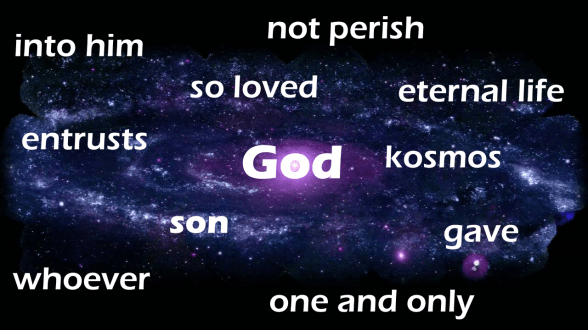
For God so loved

Click here to listen to the audio of this 13-minute message. Or watch the YouTube video below, or read the summary text thereafter.

John 3:16 may be the most recognisable and widely-known verse in the Christian Bible:

For God so loved the world that he gave his one and only Son, that whoever believes in him shall not perish but have eternal life. (NIV)

For God so loved the world, that he gave his only begotten Son, that whosoever believeth in him should not perish, but have everlasting life. (KJV)

Let’s break this verse down into its parts:

  • For God – It all starts with God, like in Genesis 1:1 “In the beginning, God…”
  • so loved – This is the first use of ‘love’ in John’s Gospel, and it becomes a central word in his writing. This points to the extent of God’s love – God loved so much – extravagant, risky, inclusive, radical, transformative, saturating!
  • the world (kosmos) – God’s love is radically inclusive. God loves the whole world. In Greek, the kosmos. There is no-one and no-thing that is beyond the extravagant love of God.
  • that he gave – Out of this infinite love, God gives. He gives his Son. But this is not a giving, like one might give someone a cracker – the cracker is passive and is merely given. Here, God gives his Son, who is active – the Son participates in the giving, chooses to be given, gives himself.
  • his one and only Son, – God the Father gives God the Son, enabled by God the Spirit. The Son is God’s one and only, God’s beloved, God’s own heart. This is the profound self-giving of God’s self to the world.
  • that whoever – Jesus has already said God loves “the world”, which is radically inclusive of the entire collective of creation. Now Jesus brings this inclusivity down to the individual – whoever or whosoever. The Son gives himself to every individual– to you Martha, to you Stephen, to you Bongani, to you…
  • believes in him – The Greek for ‘believe’ can equally be translated ‘trust’. Believe too easily becomes ‘cognitive assent’, too easily becomes affirming a list of propositional statements about the Son. But Jesus wants more than just this – he wants us to trust him, to put our trust in him, to entrust ourselves to him. The ‘in’ in Greek is actually ‘into’, so we can confidently say, “whoever entrusts themselves into him”.
  • should not perish – Although we will all die, sooner or later, we shall not all perish or be destroyed. We have little choice about dying, but we do have a choice about perishing.
  • but have everlasting life. – And that choice is Life, with a capital L. The everlastingness of Life is not just about it continuing for a long time (eternal), but also to the quality of the Life, which can be enjoyed at this very moment. Jesus offers us Life: Life everlasting, Life abundant, Life to the fullest, Life eternal, Life in relationship with God.

For God so loved the world that he gave his one and only Son, that whoever believes in him shall not perish but have eternal life.

2020.04.22_John316Featured background image of the Andromeda Galaxy, M31, from https://www.youtube.com/watch?v=HWxBTHVhc3I
Seeking Jesus

Click here to listen to the audio of this 11-minute message. Or watch the YouTube video below. Or read the summary text thereafter.

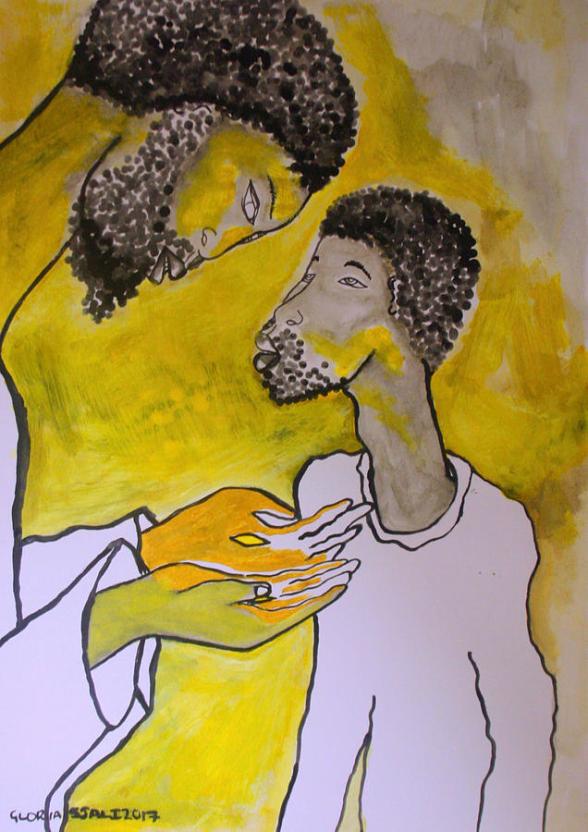
The story of Thomas’ encounter with the risen Jesus in John 20:24-29 is one of my favourites and Thomas is the disciple with whom I identity the most. Thomas is unfairly labelled a doubter. He did not doubt Jesus. He doubted his friends – the other disciples. He wanted to see and experience Jesus first hand. He was unwilling to take on a second-hand faith. He wanted to know Jesus for himself. And so Jesus appears to him and invites him to see and touch his hands and the hole in his side.

It seems Thomas does not in fact touch Jesus, but immediately experiences a surge of faith and cries out, “My Lord and my God!” In effect, he falls on his face and covers his eyes because he knows that he is in the presence of God the Son.

This reminds me of the story of Job, who was a man blessed by God, a man who had everything. For whatever reason, he then loses everything. He goes into a kind of ‘lockdown’, where he loses his possessions, his family, his health, his well-being, his freedom. Two of his friends join him in his despair and provide comfort for a few days and then engage in a lengthy debate with him to persuade him that his faith must be insufficient. God would not punish a righteous man – he must have done something wrong. But Job persists that he is righteous and wants to meet with God to present his case.

And then in Job 38, God appears and over the course of four chapters presents his credentials to Job, much as Jesus presented his credentials (the holes in his hands and side) to Thomas. God meets Job in his unhappiness and questioning.

In Job 42:1-6, Job’s response to encountering God is to throw himself down and cover his eyes – “I despise myself and repent in dust and ashes”. But before that he proclaims his faith: “My ears had heard of you, but now my eyes have seen you!” Job had had a second-hand faith – what he had heard from others or from the scriptures. But now, God had appeared to him in person, and his eyes had not see him. And recognises that he is in the presence of God the Father.

God eagerly desires to engage you in your faith, as he does me in mine. And God also eagerly desires to engage you in your doubt, as he does me in mine. God is not turned away by uncertainty, by questions, by doubt or by the need for ‘evidence’. Instead, God turns towards us and engages us. Let us continue to seek Jesus, for this is exactly what he wants from us: Seek him and you shall find him.

2020.04.19_thomas-sees-jesus-wounds-gloria-ssali

Featured image: ‘Thomas Sees Jesus Wounds’ by Gloria Ssali, https://fineartamerica.com/featured/thomas-sees-jesus-wounds-gloria-ssali.html

God’s great forgiveness

Click here to listen to the audio of this 6-minute message. Or watch the YouTube video below, or read the text that follows after that.

The Lord is Risen! He is Risen Indeed!! Alleluia!!!

During this past week, we have confronted the dark side of humanity and of ourselves. We have recognised that it is our sin – each of ours – that contributed to Christ’s death. Humanity, in its arrogance, attempted to murder God the Son! What greater sin can there be? One might imagine that a God of justice would wipe the earth clean.

Instead, God forgives humanity. God returns to us the very Son that we murdered! What greater forgiveness can there be? All the rest of our sins are caught up in God’s great forgiveness of this greatest of all sins. All God asks of us to acknowledge our sin – Father, I am sorry; please forgive me. God says “Yes!” to humanity. God says “Yes!” to maintaining and enabling fellowship with each of us.

Moreover, Christ’s triumph over death, he rising from the grave to new life, is God’s “Yes!” to life and “No!” to death. Particularly during the COVID-19 plague, which has already taken the lives of over 100,000 people, we are in need of this reassurance that God has already triumphed over death. COVID-19 will do its worst, but it will die, and humankind will live. God will triumph over death.

Almighty God,
this night explodes with the radiance of the risen Christ;
set us ablaze with the power of your love
and propel us into the world
to live and proclaim the gospel of the living Lord;
who lives and reigns with you and the Holy Spirit,
one God, now and for ever.
Amen

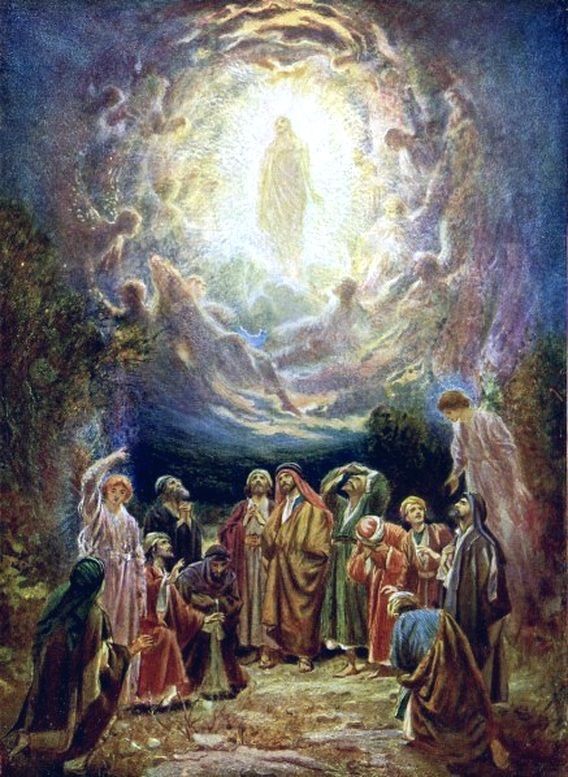
2020.04.12_El_Greco_-_The_Resurrection_-_WGA10530

Painting of The Resurrection, by El Greco, 1597-1600. From here.

Featured image: Resurrection of Christ, by Raphael, 1499–1502. From here.

Painting in the YouTube video: Resurrection of Christ, by Rottenhammer (1564–1625)


Waiting for God

Click here to listen to this 7-minute message. Or watch the YouTube video below, or read the text that follows.

The Saturday in Easter Weekend is one of the most peculiar days in the Bible and in the Christian Calendar. There has been a huge and distressing build-up to Good Friday. And then tomorrow, Easter Sunday, is a huge celebration of life over death. But the day in between seems to be a non-day. A day on which time is suspended and the universe holds its breath. Even the Gospel stories are almost entirely silent on this day:

  • John entirely skips the Saturday Sabbath, making no reference to it at all.
  • Luke tells us that the women “went home and … rested on the Sabbath in obedience to the commandment.”
  • Mark simply says, “When the Sabbath was over”.
  • Matthew is the only one to say something substantial about what happened on Holy Saturday. Matthew recounts that Chief Priests and Pharisees went to Pilate on Saturday, asking him to seal the tomb to prevent the disciples from hatching a hoax that Jesus had risen on the third day. Bizarrely, in doing so, they broke the Sabbath Law that was so important to them.

It seems the Gospel writers felt as we do that Saturday is a between-times in which time seems suspended. We wait with bated breath to see what God will do in response to our murder and execution of the Son of God. We wait to see if Jesus will rise on the third day as he promised. We wait to see if there is life after the death of the Messiah.

We wait: silent, hoping, praying, anticipating…

For this reason, I have taken to referring to this day as
Silent Saturday.

A prayer for today:

Lord Jesus, I wait in solidarity with you
and pray for your triumph over death. Amen

2020.04.11_Silent_SaturdayB

At the Foot of the Cross

Click here to listen to the audio recording of this 10-minute message. Or watch the YouTube video below, or read the text that follows.

It is sometimes easy (and more comfortable) to gloss over the death of Jesus on Good Friday. I grew up in a church that didn’t have a Good Friday service, and so for years I’d hop from the happiness of Palm Sunday to joy of Easter Sunday. For sure, on Easter Day, we’d get a gruesome account of Jesus death, but the sermon would end with “but he has risen from the dead, hallelujah”.

I believe that it is important and good for our faith to position ourselves with the disciples and particularly with Jesus’ mother Mary, who did not (like us) know the happy ending to the story. As they stood at the foot of the cross watching Jesus’ life ebb away on that Friday afternoon, they could not foresee his resurrection. Imagine the pain and horror they experienced, the utter loss of hope, the grief at seeing someone so beautiful and innocent dying in such a dreadful and slow way. Their hope for a better society was shattered and their own sense of having a part to play in the transformation of the world was in pieces.

And this experience persisted through Friday and Saturday until Easter Sunday.

During this time of crisis, they did what needed to be done. Joseph of Arimathea negotiated with the authorities to claim Jesus body, placed him in a tomb he owned and wrapped Jesus temporarily in a burial shroud. He sealed the tomb to protect Jesus body. The disciples and Jesus’ family went home to observe the sabbath and remained at home until dawn on Sunday, when they went back to prepare his body properly for burial. In their shock and dismay, they continued to do what needed to be done.

I encourage you to stay with it. To stay in the midst of the distress and the heaviness of Jesus death over the coming days.

2020.04.10_Good_Friday

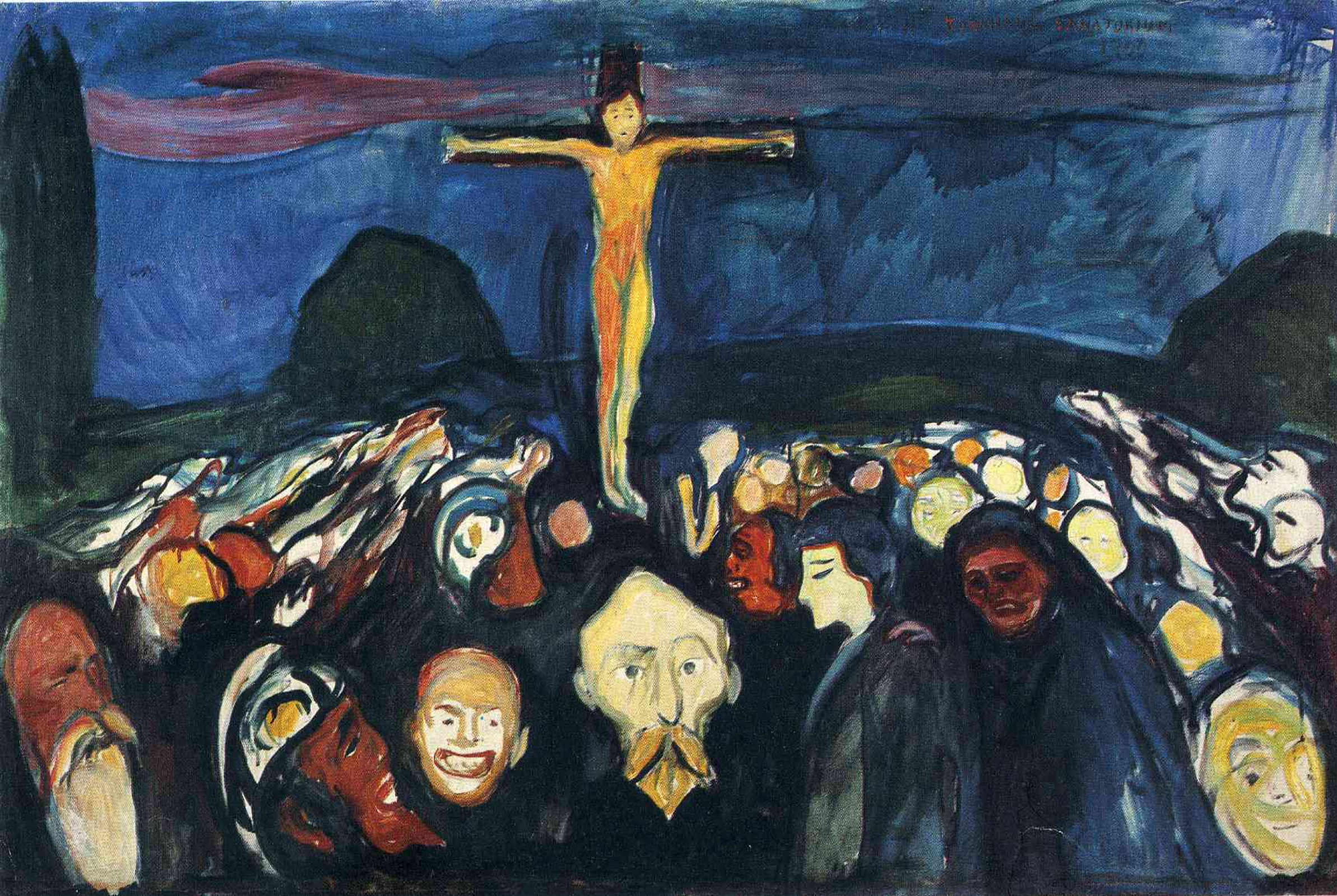
Featured image “Calvary” by Edward Munch (1900), from https://arthive.com/edvardmunch/works/269172~Calvary

The Great Love of Jesus

Click here to listen to this 7-minute message. Or watch the YouTube video below, or read the text that follows after that.

Today is Maundy Thursday, the first of a trio of days called the ‘Triduum’, which includes Maundy Thursday, Good Friday and Holy Saturday – the three days before Christ’s resurrection on Saturday. On Maundy Thursday evening we usually have a service that commemorates and celebrates two key events in Jesus’ life this day: the Last Supper and the washing of the disciples’ feet. These are two enormous demonstrations of the great, extravagant, generous love that Jesus has for all of humankind.

The Last Supper is a symbolic enactment of Jesus’ giving of himself to us – his body and his blood. He is about to pour himself out for humanity, and indeed for the cosmos. And so he takes and blesses bread and wine and gives them to his disciples as a metaphorical giving of himself to us, so that we have within us – which is why we consume the bread and wine – the presence of Christ.

During a Eucharist service, when I distribute the host – the body of Christ – I say the words, “Receive the body of Christ, broken for you, because he loves you.” I want people to experience that this bit of ‘bread’ is a tangible manifestation of Christ’s great love for them. Sometimes, I even press the host into the palm of their hand, until the person pushes back against me, to give an unmistakable physical experience of the presence of Jesus being pressed into their body.

The washing of the disciples’ feet speaks most clearly of Jesus’ servant attitude. He did not come to be glorified or worshiped or exalted. Rather, he came to serve. And this service is vividly demonstrated in his taking off his outer clothes, putting a towel around his waist and getting down on his knees to wash the feet of his followers. It shows again his self-giving and self-sacrificial love, and his willingness to give the whole of himself for our salvation.

In these two acts – the Last Supper and the foot washing – Jesus reminds you that he loves YOU. You who are reading this right now! Say your name out loud now ______________ and hear this message: God love you ______________ . He loves you profoundly and generously, utterly and unconditionally. Try to remember this during the rest of the day.

To help you remember, I suggest you periodically press your thumb into the palm of your other hand and think the words, “This is my body, broken for you, because I love you.”

Featured image from: https://baptistmag.org.nz/feet-washing/

Betraying Jesus

Click here to listen to this 6-minute message. Or watch the video below. Or read the brief summary below the video.

As we move through the days of Holy Week, the set readings become increasingly somber and serious. We are progressing closer and closer towards Jesus’ death on Good Friday. Today’s reading is John 13:21-32, which tells of Jesus’ betrayal by Judas. In verse 21, John writes,

Jesus was troubled in spirit and testified, “Very truly I tell you, one of you is going to betray me”.

The disciples immediately say to each other, “Surely not I! Who could he be referring to?” Jesus says,

“It is the one to whom I will give this piece of bread when I have dipped it in the dish.”

He dips the bread into a dish and hands it to Judas. I imagine Judas, who was indeed planning to betray Jesus, looking at the piece of dipped bread in Jesus’ hand and wondering what to do. I imagine his thoughts racing, prevaricating – do I or don’t I?

He takes the bread from Jesus and eats it. I chooses betrayal. And so, Jesus’ path to the cross is set in motion.

This passage challenges us to recognise that each of us is also complicit in Jesus’ betrayal. Judas acts on behalf of me and of you. Our sin does not have a be dramatic or public; it can include the little things that we do and also the things we neglect to do. We each have helped pave the way to the cross.

We are thus called to repentance during these days of Lent and particularly over the coming few days. Let us pray Psalm 51:

1 Have mercy on me, O God, according to your unfailing love;
according to your great compassion blot out my transgressions.
2 Wash away all my iniquity and cleanse me from my sin.
3 For I know my transgressions, and my sin is always before me.
4 Against you, you only, have I sinned and done what is evil in your sight;
so you are right in your verdict and justified when you judge.
5 Surely I was sinful at birth, sinful from the time my mother conceived me.
6 Yet you desired faithfulness even in the womb; you taught me wisdom in that secret place.
7 Cleanse me with hyssop, and I will be clean; wash me, and I will be whiter than snow.
8 Let me hear joy and gladness; let the bones you have crushed rejoice.
9 Hide your face from my sins and blot out all my iniquity.
10 Create in me a pure heart, O God, and renew a steadfast spirit within me.
11 Do not cast me from your presence or take your Holy Spirit from me.
12 Restore to me the joy of your salvation and grant me a willing spirit, to sustain me.
13 Then I will teach transgressors your ways, so that sinners will turn back to you.
14 Deliver me from the guilt of bloodshed, O God, you who are God my Savior,
and my tongue will sing of your righteousness.
15 Open my lips, Lord, and my mouth will declare your praise.
16 You do not delight in sacrifice, or I would bring it; you do not take pleasure in burnt offerings.
17 My sacrifice, O God, is a broken spirit; a broken and contrite heart you, God, will not despise.

Featured image from https://www.vegkitchen.com/

Seeing Jesus

John 12:21 tells us about a group of Greek seekers who come to Philip saying, “Sir, we would like to see Jesus”. And so begins a story of one person introducing another person to Jesus, in a chain of people seeking to see Jesus.

Click here to listen to the audio of this 5-minute message. Or watch the video below.


Fragrant Offering

Click here to listen to this 5-minute message. Or read the summary below or watch the video thereafter.

Today is the first Monday in Holy Week. The video below is a very brief (5-minute) reflection on our Gospel reading for today: John 12:1-11. Mary, the sister of Martha and Lazarus, anoints Jesus’ feet with an expensive perfume called Nard. Judas reprimands her for wasting money that should rather be given to the poor. But Jesus speaks up for her saying that she has done a good thing for Jesus, who will be with them for just a little while, while the poor will always be with us. This narrative reminds us of the need for all of us to pour ourselves out for others, like Mary did with her perfume and Jesus did with is life.

2020.04.06_nard

Featured image of Spikenard flowers from http://www.draganacmonastery.com/product/nard/

Following Jesus’ Example

Click here to listen to this 14-minute message. Or watch the video below. Or read the text after that.

Today is Palm Sunday. Many churches on this day will start their service outside with the blessing of palm crosses and then process around the church or community, shouting or singing: “Hosanna to the Son of David! Blessed is he who comes in the name of the Lord! Hosanna in the highest heaven!” (Matthew 21:1-11). This is commemorate Jesus’ triumphal entry into Jerusalem on the back of donkey or colt and people’s recognition that he is king or messiah.

And then some churches will also read the whole passion story (Matthew 26:14-27:66). This is a long reading that can take 20 or more minutes (click here to listen to a recording of the passion narrative, from Luke). The juxtaposition of these two stories – one of triumph and glory and the other of suffering and death – is a stark and shocking contrast.

In today’s message, I suggest three main lessons we can learn from Jesus’ experience of suffering and challenge in life:

  1. Jesus does not rush towards suffering. He does not revel in it. Christianity has tended to glorify suffering, often encouraging people (such as women in abusive marriages) to endure their suffering as their sharing in the suffering of Christ. However, Jesus is not a masochist. He does not relish or rush towards or celebrate suffering. During this passion week, he appears to appreciate the recognition of the crowd as he enters Jerusalem, he enjoys supper with his friends and he spends time in prayer with his Father – he enjoys life. Of course, we do suffer, and some suffer more than others. But Jesus does not appear to enjoy or celebrate suffering.
  2. However, Jesus also does not run away from or avoid suffering. Instead, he moves into difficult places, and in the passion narrative, he walks towards his inevitable suffering and death. Jesus is a realist. He is not naive. He does not avoid difficulty; instead, he faces the truth. And he speaks the truth, challenging injustice, exclusion and poverty. He calls people out when they lie. He champions integrity. He faces the world as it is, without sugar-coating anything.
  3. Yet, Jesus is an idealist. Despite knowing that he will soon die, he continues to believe that God can use his suffering and death for good. He persists in believing that God can redeem humanity and the cosmos. He insists that people can participate in this salvific work of God. He remains steadfastly optimistic, hopeful and confident about the future.

There are many people whose example we can follow during difficult times, including this time of the Coronavirus and the lockdown that many countries are experiencing. I think Jesus provides a good, balanced and sensible example for us. Blessings.

2020.04.05_Palm-Sunday-messages-and-quotes-1264981

Featured image from https://www.express.co.uk/life-style/life/1264981/palm-sunday-messages-best-quotes-greetings-to-mark-palm-sunday-2020