Jesus’ heart

Click here to listen to the audio of this 15-minute message. Or watch the YouTube video below, or read the short summary thereafter.

Today we focus on the Jesus’ feeding of the 5,000 in Matthew 14:13-21. This is the ONLY miracle story to appear in ALL four Gospel accounts. It is clearly an important story for the Gospel writers. Perhaps something about it exemplifies Jesus and his ministry.

Usually, we focus on the miracle of the feeding, but today I invite you to focus on what we learn about Jesus’ heart. And Jesus’ heart reflects God’s heart. Here are five important things we learn about Jesus, that are relevant for each of us today:

  1. Jesus feels. The story opens with Jesus hearing of the execution of John – his cousin, friend and prophet. And he feels distressed about John’s death, he feels emotions, his heart is soft and responsive. So he withdraws, privately to a solitary place. Jesus grieves and feels. He is not unmoved.
  2. Jesus’ heart goes out. Even though Jesus tries to get away to be alone, crowds of people – thousands of people – follow him on foot. And instead of being irritated with them, he has compassion on them, his heart goes out to them. As he sees us and our difficulties, his heart softens, his heart fills with care.
  3. Jesus heals. As his heart fills with compassion, Jesus moves into action and heals people of their illness. The Greek word for ‘ill’ in v14 is used nowhere else in the New Testament. It is best translated ‘wretchedness’, meaning unhappy, broken-hearted, poor, downtrodden, ill. Jesus makes people whole, he restores them.
  4. Jesus embraces. The disciples want to send the crowds away, as they sent away children, lepers and others who wanted to speak to Jesus. But Jesus refuses. Instead, he instructs the disciples to feed the crowds, and invites the people to sit down on the grass. Jesus is crowd-centred, other-centred, generous, inclusive.
  5. Jesus multiplies. Jesus takes the tiny supplies of 5 loaves and 2 fish, and multiplies them to feed thousands. He is able to see through the smallness of what we offer, to the enormous good that God can do through them. He has eyes of faith that sees the potential of the tiny to do great work.

As continue to grapple through Covid, and the many challenges it presents to us, let us look into, let us gaze upon the heart of Christ – he who feels, whose heart goes out, who heals, who embraces and includes, and who multiplies. This same Christ is present for us today. Let us look for him and sit down with him and be fed by him.

2020.08.02_Jesus_heart2

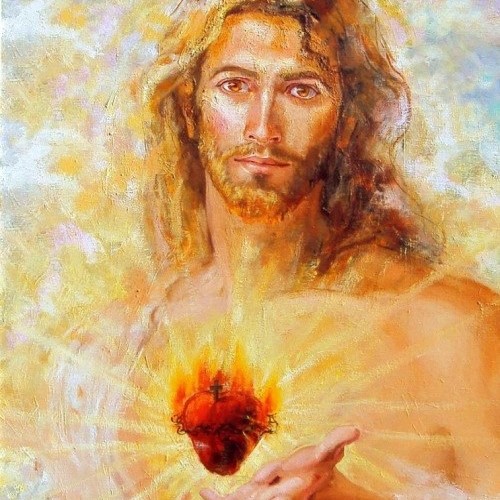
Featured image: Sacred Heart of Jesus by Joseph Fanelli (Oil on Linen) 1993 from here

In his joy

Click here to listen to the audio of this 5-minute message. Or watch the YouTube video below, or read the short summary thereafter.

This is the order Jesus gives for Christian life: we find the treasure, this fills us with joy, so we sell all our possessions (which are worth a fraction of the treasure), and we acquire (take ownership) of the treasure (Mat 13:44). The treasure is there at the start and the end; the joy is the immediate consequence of finding the treasure; and the sacrifice of possessions is really no sacrifice at all. This is the Christian life. Let’s find our joy in Christ!

Featured image from here.

What to do about evil

Click here to listen to the audio of this 22-minute message. Or watch the YouTube video below, or read the introductory text message after that.

Today’s message is from Matthew 13: 24-30, in which Jesus tells the parable of the weeds. It is followed, later in the chapter, by Jesus’ explanation of the parable (Matthew 13: 36-43). Preachers are generally expected to ‘have all the answers’ when they preach the Word of God, but in truth, preachers are just people like all other people.

The passage set for today is – for me – an exceptionally difficult passage, because (a) Jesus’ message seems to contradict his own consistent message through word and action and (b) Jesus appears to be telling us to do nothing about evil in our midst, but rather to leave it until the end of the age, the Day of judgement. If we were to live according to this passage, we would have allowed evil to flourish over the past 2000+ years since Jesus preached this message.

So what are we do with a message that seems fundamentally wrong. Was Jesus mistaken?

I encourage you listen to the audio recording or watch the video to see my grappling with the message and how I try to make sense of it. Evil in the world – and evil in our midst (our family, community, workplace, church, etc.) – is a serious matter and warrants our critical engagement and reflection.

Be audacious!

Click here to listen to the audio recording of this 12-minute message. Or watch the YouTube video below, or read the text summary after that.

In Matthew 10:7-14, Jesus sends out his 12 disciples on their first solo mission, and his instructions seem to be grounded in this message:

Be audacious!

Jesus is not saying, be arrogant, insolent, obnoxious, offensive, dogmatic or judgemental. But he is saying, be brave, be courageous, be reckless, jump in the deep end!

Here’s what we are to do:

  • We proclaim the good news that God is present in the midst of human life. God is near, right here, present, engaged.
  • We heal, cleanse, raise and cast out illnesses in all its manifestations, at both personal and social levels. Healing is, in Jesus’ understanding and practice, not only physical, but also relational and social.
  • We are generous in our investment in the lives of others – freely we have received, freely we give. We don’t hold back, we don’t over think, we don’t over risk manage.
  • We don’t take provisions with us, we don’t over plan, we don’t pamper ourselves. We simply go – a bit reckless.
  • We don’t take from the people we go to. We don’t go to enrich ourselves. We go to give.
  • We find people who are receptive to what we have to offer, and we spend time with them. And if people are not receptive, we just move on, shake the dust off our feet. It is almost blasé – if people want to listen, we talk with them; if they don’t, we don’t worry, we just move on.

Be audacious, be courageous, be reckless, be blasé. Don’t worry, don’t over plan, don’t over think. Jump in! Be brave!

Be audacious!

Feature image from here.

Come to me

Click here to listen to the audio of this 14-minute message. Or watch the YouTube video below, or read the text summary below.

Our reading today is Matthew 11:28-30

“Come to me, all you who are weary and burdened, and I will give you rest. Take my yoke upon you and learn from me, for I am gentle and humble in heart, and you will find rest for your souls. For my yoke is easy and my burden is light.”

It seems strange that Jesus’ solution to our feeling burdened is to offer us a yoke, which is a heavy wooden pole used to join two oxen together so they can plough fields. This does not sound like a relief! However, in v30, Jesus equates the yoke with the burden. The truth is, we are already yoked – yoked to and burdened by the world and its worries. What Jesus offers is to replace our own heavy yoke with his yoke, which is ‘easy’ and ‘light’.

A yoke connects two animals together, so that they can work in partnership with each other, as they walk through their work in the world. This is what Jesus offers us: to be yoked to him, in partnership, walking together as we journey through life’s challenges. The idea of working together with Christ, as a team, as partners, is quite remarkable.

The idea of working together, of walking together, leads us to the next point, which is to “learn from” Jesus. Not “learn about me” but “learn from me”. He invites us to see how he moves through the world and to learn from that. We learn from what he says – particularly in the Sermon on the Mount, in Matthew chapters 5-7, which came shortly before today’s reading. And we learn from how he behaves – how he interacts with those who are powerful and oppressive and those who are meek and humble. Chapter 11 speaks a great deal about these two groups. What better way to learn from a master, than to be yoked to them.

Jesus chooses to emphasise that we should learn from his gentleness and humility: “for I am gentle and humble in heart“. It is remarkable that God, the Son, the Second Person of the Trinity, who co-created the universe with the Father and the Spirit, chooses to describe himself as gentle and humble (or simple). His use of ‘in heart’ suggests that these qualities are essential to his being – they describe who he is, not merely how he acts. He is, deep in his being, gentle and humble. If God the Son chooses these qualities as essential to a description of himself, how much more should we not embody these same qualities of humility and gentleness.

The result of all this is that we will find rest for our soul. For those who are weary and burdened, soul-rest is very much what we need – rest, refreshment, deep peace. God promises us this frequently, e.g.

The Lord is my shepherd, I lack nothing. He makes me lie down in green pastures, he leads me beside quiet waters, he refreshes my soul. (Psalm 23:1-3)

The sovereign Lord says: I myself will tend my sheep. I will make them lie down. I will search for the lost. I will bring back the strays. I will bind up the injured. I will strengthen the weak… I will shepherd the flock with justice. (Ezekiel 34:15-16, with slight rephrasing)

This is the kind of rest that we get, when we put down our burden, and take on Christ’s yoke, and walk together with him.

Featured image by Yongsung Kim, from Pinterest.

Two songs that were running through my mind all the while I prepared today’s message:

Go before the Lord

Click here to listen to the audio recording of this 16-minute message. Or watch the YouTube video below, or read the summary of the message after that.

Today we celebrate the birth of John the Baptist, the story which is recounted in Luke 1. John is perhaps the most important character in the Gospel, after Jesus. He is the last of the prophets, and the one who prepares the way for the coming of Christ Jesus. Almost the entire chapter is devoted to the origins of John, before we learn about the birth of Jesus in chapter 2.

As we read this chapter, we see a large cast of characters: Zechariah, the angel Gabriel, Elizabeth, Mary, the foetus John, the foetus Jesus, Elizabeth’s neighbours and relatives, and, in the 80th verse, John himself growing to adulthood, filled with the Spirit, and preparing in the wilderness for ministry.

This narrative speaks about the working together in faith of several individuals, each in their own way, all with the common purpose of preparing the way for the Lord. Each person has to play their role for the story to work out and to prepare the way for the coming of the Messiah. John is officially the prophet who will prepare Jesus’ way, but all these other people were involved in preparing the way for John. Even Jesus, yet unborn, helped to prepare John for his ministry of preparing for Jesus.

We are still each called to help prepare the way for the Lord, or to prepare the way for someone else who will prepare the way for the Lord. To make this world the kind of place that Jesus would want to live in. To give expression to the Songs of Mary and Zechariah. To transform the world into the Kingdom of God.

We are, each in our own way, prophets of the most high, who will go on before the Lord to prepare the way for him.

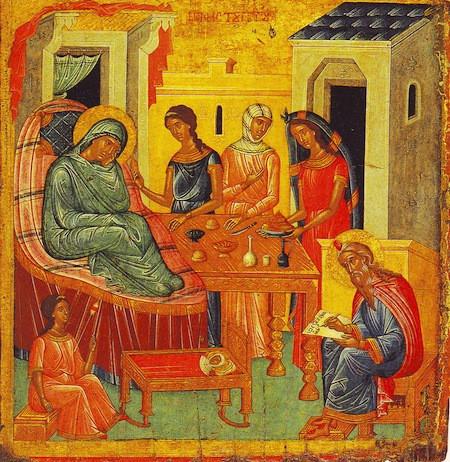
2020.06.24_Nativity_of_Saint_the_Baptist_icon

Featured image: 15th century Orthodox icon of the Nativity of Saint John the Baptist, Hermitage Museum, St Petersburg, Russia, from https://www.orthodoxmonasteryicons.com/products/nativity-of-john-the-baptist-icon

Why Jesus would say ‘Black Lives Matter’

Click here to listen to the audio of this 14-minute message. Or watch the YouTube video below, or read the very brief textual summary that follows.

I appreciate that this topic will be controversial for many. I really encourage you to watch this message please and not just read it, particularly if you find the title problematic. At least, just listen to what I have to say, even if you decide you don’t agree with it.

But, very briefly, the main points are:

  1. Jesus died for ALL of humanity – for the whole world – and would thus say, without equivocation, ‘All lives matter‘.
  2. But Jesus would also confront us, saying that we do not live our lives as if all lives mattered.
  3. Jesus’ ministry consistently and deliberately positions himself with those who are vulnerable, oppressed, poor, or marginalised: women, Samaritans, lepers, prostitutes, menstruating women, the dead.
  4. Throughout his ministry – throughout the Gospels – Jesus enacts the message that Black lives matter, Women’s lives matter, Immigrants’ lives matter, Children’s lives matter, etc.
  5. Jesus is not saying the lives of the poor matter more than other people’s lives; but that their lives do not matter less than other people’s lives.
  6. Jesus is sensitive to power differentials and deliberately chooses to stand with those who are disempowered and often against those who are powerful. The story of the woman caught in adultery is a good example.
  7. Jesus sometimes engages with the powerful, but does so in a way that helps them to recognise and challenge their privilege. The story of Zacchaeus is a good example example.
  8. Jesus’ ministry is consistently one of bringing down the powerful and raising up the powerless – a reversal of fortunes. Mary’s Magnificat is a good sermon on this.
  9. In the new heaven and the new earth, all lives will actually matter in people’s lives experience. But in today’s society, this is not true. Today, all lives are not equal and not equally valued. And in this times, Jesus would be saying: Women’s lives matter, Children’s lives matter, Immigrant lives matter, LGBTQI lives matter, Black lives matter.

The Triune God

Click here to listen to the audio of this 28-minute message. Or watch the YouTube video below.

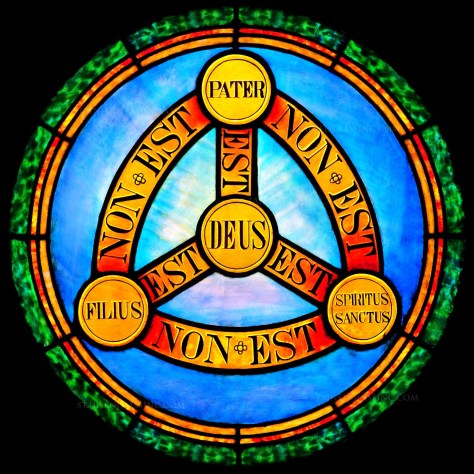
The first Sunday after Eastertide focuses on God as three-in-one (triune). This is a hard concept for us – the maths doesn’t work well. Yet, the relational God (or social trinity) is a vital theology for understanding God, our personal relationship with God and the implications of a relational God for the world. In this rather long message I try to explain and apply the social model of the trinity.

2020.06.07_Trinity

Featured image from https://www.stainedglassinc.com/window/12754/

In but not of the world

Click here to listen to the audio recording of this 9-minute message. Or watch the YouTube video below, or read the text that follows.

In his prayer for his disciples, shortly before his arrest and execution, Jesus speaks about our relationship with the world (John 17:13-19). He says four things in rapid succession:

  1. We are not of the world (we are not rooted in the world)
  2. We are not to be taken out of the world
  3. We are not of the world (we are not rooted in the world)
  4. We are sent into the world

These four prepositions – of, out, of and into – set up Jesus’ expectations of us as his disciples.

We are not to be rooted in or ‘of’ the world. Just as Jesus is not of the world – he did not originate here and is not rooted into the world – we also are not of the world. Instead, “our citizenship is in heaven” (Philippians 3:20).

But, as much as we may wish then to be taken up out of this world, Jesus is explicit, “My prayer is not that you take them out of the world.” Instead, he prays, “As you sent me into the world, I have sent them into the world.” And to guide us regarding our place in the world he prays that we “too may be truly sanctified.”

Our values, ideas, aspirations and truths should all be shaped by and rooted in God’s world – in heaven. But we are commissioned to work in this world, to influence it with God’s values, to shape it into some resembling the Kingdom of Heaven that Jesus proclaims, and to be somewhat set apart or separated from the world.

It is like our head is at the top of a long stick figure, in heaven, while our feet and hands and hearts are here on earth, working out God’s plan for the salvation of the world.

2020.05.27_A_CH3772

Featured image from a collection of ‘walking tree’ photos by Alejandro Chaskielberg at https://www.chaskielberg.com/portfolios/the-walking-trees

To be one

Click here to listen to the audio of this 26-minute message . Or watch the YouTube video below, or read the text summary that follows. (This is a longer than usual message, because the topic is rather difficult. I hope you will not be deterred by its length.)

John 17 presents Jesus’ “High Priestly Prayer”, which takes place just before Jesus’ arrest and execution. In it Jesus prays for himself, for his disciples, and then for all believers who are to come, including you and me. It is a beautiful prayer that reveals to us the heart of Jesus – well worth reading.

In this message, I focus on just four verses (11b, 20-23):

Holy Father, protect them [my disciples] by the power of your name, the name you gave me, so that they may be one as we are one … My prayer is not for them alone. I pray also for those who will believe in me through their message, that all of them may be one, Father, just as you are in me and I am in you. May they also be in us so that the world may believe that you have sent me. I have given them the glory that you gave me, that they may be one as we are one—I in them and you in me—so that they may be brought to complete unity. Then the world will know that you sent me and have loved them even as you have loved me.

A few thoughts on this passage:

  • Four times Jesus speaks about the oneness and unity of Christians. This can be regarded as the central theme of his prayer in John 17.
  • Verse 21 emphasises that our relationship with God (the vertical relationship) is primary and is the foundation of church unity (the horizontal relationship).
  • Verse 22 refers to “the glory that you gave me”. Scholars have long debated what this ‘glory’ refers to. There is good reason to think Jesus is here referring (again) to the Holy Spirit, who occupied much of the previous chapters.
  • Verses 21 and 23 refer to the world: that they may believe/know that God sent Jesus. The unity of Christians is not an end in itself, but the ground that produces the fruit of the world seeing God at work, thus of evangelism.
  • Verse 23 says that God loves the world as much as God loves the Son. This is a profound revelation of God’s extravagant love for the world, reminding us of John 3:16.

Despite Jesus’ marvellous vision and prayer for the unity of the Church, the sad reality is that the church is anything but unified. Denominations fracture and split; independent churches spring up constantly; even local parishes are disunified and in conflict. It does not appear that we are one as God the Father and the God the Son are one. A few thoughts on this:

  • Churches may diverge due to different practices, particularly around worship. Most Christians think about how Sunday services run and whether they like how we do things – whether we raise our hands, whether we have an organ or band, whether we use a set liturgy, whether the choir is up front or at the back, how long the sermons are, etc.
  • Given that Jesus emphasises our vertical relationship with God, and given that each relationship is different because each person is different, it seems to me that worship practices are not that important. It is probably better to attend a church where your relationship with God grows than to attend a church whose practices leave you cold.
  • Churches may diverge due to different doctrine. Some Christians may not worry or think too much about doctrine, but for many, doctrine – what we believe – is important. Churches split over their understanding of the role of Holy Spirit, over the gender of God, over the Trinity, over our sequencing of the end times.
  • We should think about and hold to certain beliefs – understanding of Truth was important in Jesus’ teachings, throughout the scriptures and to the early church. It should be important to us also. However, we should have the humility to recognise that our understanding Truth is flawed, limited, incomplete and quite possibly wrong. God knows the Truth; what we know as ‘truth’ is mere limited understanding, like peaking into a palace through a keyhole – we see just fragments of the riches within.
  • Currently the church is fracturing around our understanding of the place of LGBTQI+ people within the life of the church. In my own denomination – the Anglican communion – we have churches that see diverse human sexualities as anathema and others who see sexuality as unregulated by God. People’s feelings about sexuality run very deep and lead to pain exclusions of and judgmentalism towards LGBTQI+ people.
  • While many today have very strong feelings about these issues, Jesus did not. He had very strong feelings about love, about inclusion and about reaching out to those on the margins of society. He never talked about sexual orientation; but he talked incessantly about love. It is heartbreaking that the church should so forget how to love one another, when this is the central teaching of our Lord.

Many Christians are distressed at the proliferation of different churches. I’m not. In 1 Corinthians 12, Paul writes about the Body of Christ, the Church, and emphasises the diversity of the body and that diversity is good and necessary for the functioning of the whole. He gives particular emphasis to cherishing those parts of the body that people may regard as immodest, unpresentable, shameful. Paul stresses that in God’s eyes, these parts are as much necessary and beloved as those parts that people are happy to show off. Every part of the Body of Christ is necessary. Paul is emphasising how to maintain a sense of unity in the church together with all its diversity.

Let us not worry about the different churches, no matter how different they may be to us. Let us rather be sure to regard them as our sisters, our brothers, beloved by Christ and part of our own body.

2020.05.24-gless12

Featured image from https://ssnet.org/lessons/18d/less12.html