Mother of God

Click here to listen to the audio recording of this 11-minute message. Or watch the YouTube video below, or read the text summary that follows.

Today (25 March) we celebrate the Festival of the Annunciation to the Blessed Virgin Mary. Today is exactly nine months before Christmas Day, and on this day we celebrate the conception of Jesus in Mary’s womb. As it is written in Luke 1:30-33:

“Do not be afraid, Mary; you have found favor with God. You will conceive and give birth to a son, and you are to call him Jesus. He will be great and will be called the Son of the Most High. The Lord God will give him the throne of his father David, and he will reign over Jacob’s descendants forever; his kingdom will never end.”

While the Western (Catholic and Protestant) churches celebrate Christmas as the high point of the church calendar, the real miracle of Christmas takes place at the conception, nine months before. It is at this moment that God incarnates into human form. Mary is thus referred to as the ‘Mother of God’ or the Theotokos (or God bearer) because she carries and gives birth to God. It is not that she creates God! But rather that she bears God in her womb.

What is conceived in Mary is, from conception, a hybrid of human and divine natures in the one person of Jesus. This is a mystery, hard to fathom – the nature of Jesus Christ. But whatever it is, and however we understand Christ’s divine and human natures, it starts at his conception, not at his birth.

Let me suggest three reasons why this rather mysterious and mystical notion is important:

  1. The conception demonstrates the enormity of God’s emptying out of God’s self on behalf of humankind (which we read about in Philippians 2) – we refer to this emptying out as ‘kenosis’. Typically, we think of God’s kenosis in the birth of Christ, but really it is in his conception. God – the omnipotent, eternal, omnipresent and all powerful God – folds down into a single human cell, then an embryo and then a foetus. The willingness of God to become so small is quite overwhelming – God pouring out God’s self for humanity.
  2. The conception is a profound example of God’s choice to work in partnership with humans. We see this choice from the beginning of creation, when God entrusts creation to Adam and Eve. But here it is particularly profound. While others could assist in taking care of a newborn, only the mother can take care of an unborn. God the son was, during gestation, utterly and solely dependent on the young woman Mary. God was truly at the hands of this one person. God trusted her and entrusted God’s self to her.
  3. And, drawing on Eastern Orthodox theology, in the conception, God inserts God’s DNA (so to speak, metaphorically) into human DNA. In so doing, God begins to change and save human nature itself. For Orthodox Christians, the conception is the foundation of salvation, because the very fabric of human nature is infused with the presence of the divine, and God begins (or continues and deepens) the work saving not just individual humans, but the nature of humanity.

Let us not let this momentous day slip by unnoticed. Let us give thanks to God for his incarnation at the moment of conception. And let us give thanks to Mary for being willing to bear God in her womb.

Featured image of Theotokos from https://myocn.net/celebrating-theotokos-throughout-year/

Resurrection life

Click here to listen to the audio recording of this 12-minute message. Or watch the YouTube video. Or read the text summary below.

I am taking a funeral later today for a parishioner who died of Covid. I asked his wife if she would like to pick a Scripture reading that she or her husband liked, and she selected Acts 24:15. I was quite surprised! I’ve participated in many funerals over the years and can never recall this verse being used. But it is a very apt passage, as I hope you will see.

I admit that I worship the God of our ancestors as a follower of the Way, which they call a sect. I believe everything that is in accordance with the Law and that is written in the Prophets, and I have the same hope in God as these men themselves have, that there will be a resurrection of both the righteous and the wicked. So I strive always to keep my conscience clear before God and man. (Acts 24:14-16)

Paul was currently under house arrest due to charges laid against him by the Jewish leaders. This continues for a number of years under various Roman rulers, and eventually he is transferred to Rome, where he spends the rest of his life. So, in today’s passage, Paul is both defending himself and declaring his faith. He is giving a testimony of what he believes. And this has four elements:

  1. He is a follower of the Way, which is how people referred in those days to Christians. Christianity was known as ‘the Way’ and Christians as followers (of the Way).
  2. He believes in the First Testament scriptures (the Law and the Prophets). In this way, he regards the First Testament as part of a Christian bible.
  3. He hopes for the resurrection, as did some, but not all, Jewish people in that time.
  4. He strives to keep a clear conscience with God and people, that is, to be on good terms with everyone.

The centre of the passage, however, is the third point about the resurrection.

First, he says that he has hope there will be a resurrection. This hope implies that there is more to life than just this life. Some people then and today believe that this life is all there is, and when we die, that’s the end. Paul says instead that there is a life after this life, the resurrection life. And so, while this life will end, there will be continuation of life in the resurrection life. And this implies that what we do in this life has implications for the next life. Our pattern of living is shaped not only by a present morality, but also by a recognition that how we live now will shape how we live the next life.

Second, Paul says something unique here – that both the righteous and the wicked will be raised. This means we are raised for judgement. As Jesus says, to separate the sheep from the goats. And judgement determines our eternal future.

Therefore, Paul says, he strives always to keep a clear conscience before God and humanity. Because this life impacts the next life, what we do now impacts our life then, and therefore it is important that we maintain good relations with God and humanity.

How do we do that? Paul says two things. First, we are urged to follow the Way of Christ. To model ourselves on him, to learn from him, to shape our behaviour on him, to assimilate his values. Second, we are urged to believe the Scriptures. We may not always understand them, we may prefer some passages over others; but we do have to engage respectfully and thoughtfully with the Scriptures. It is all Spirit-breathed and useful for living out our faith. So, Paul emphasizes that both our beliefs and our behaviour are important for Christian living.

The Covid pandemic is confronting us with the fragility of life – how quickly it can be snuffed out, and how easily we can lose life, even if we are young. It reminds us how precious this present life is and how we need to use it fully to develop and live out our faith. Acts 24:14-16 encapsulates the heart of Paul’s faith. Let us listen to Paul and follow Christ’s Way.

Featured image from https://www.ministrymatters.com/preach/entry/8904/resurrection-and-suffering-saints

Filled with the Spirit

Click here to listen to the audio recording of this 13-minute message. Or watch the video of the message on Facebook video (the message starts at about 25 minutes). Or read the text summary below.

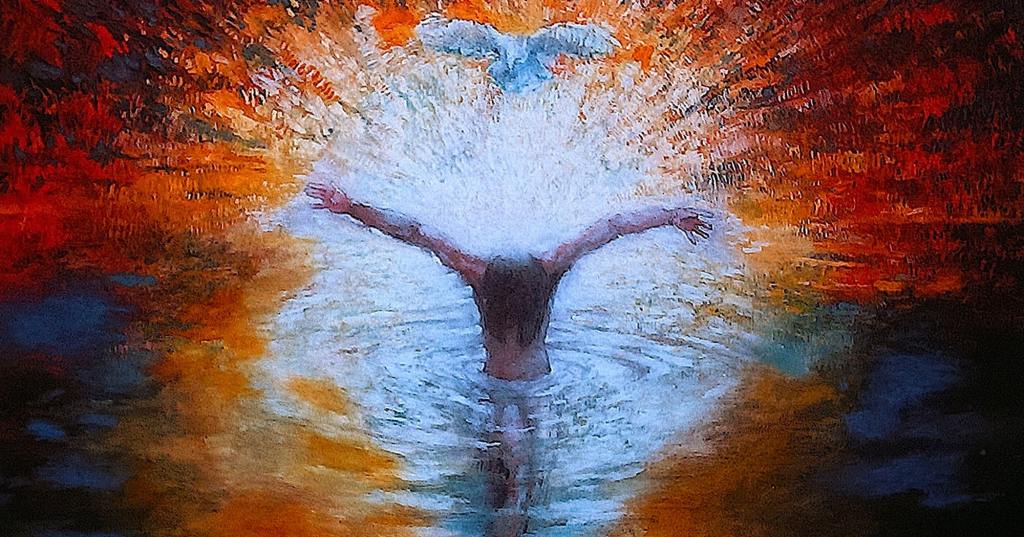
Today we commemorate and celebrate Jesus’ baptism by John in the river Jordan. Mark 1:10 tells us that “as Jesus was coming up out of the water” the Spirit descended “on him like a dove”. Jesus’ ministry starts with him being filled will the Spirit. Surely, if the Spirit is important for his life and ministry, the Spirit must be important for ours also.

Indeed, all of our readings for today speak about the work of the Spirit. Genesis 1:2 tells us that when God was creating the heavens and the earth, “the Spirit of God was hovering over the waters”. Holy Spirit was there, partnering with God in creation. And Psalm 29:3 echoes these words: “the voice of the Lord is over the waters … the Lord thunders over the mighty waters” – suggesting that the Spirit and the Lord are one and the same God. Holy Spirit is active in creation.

In Acts 19:1-7, Paul met up with some of John’s disciples and asks them if they received the Holy Spirit when they believed. They say they did not – indeed, they did not even know there was a Holy Spirit. Paul lays his hands on them and “the Holy Spirit came on them and they spoke in tongues and prophesied”. Much as we see in the story of Pentecost in Acts 2, Holy Spirit equips people for ministry.

Clearly, the Spirit is essential for creation or creativity and for ministry. Luke 4:1 tells us that after his baptism, Jesus was “full of the Holy Spirit” and that it was the Spirit who led him into the wilderness, where he was tempted. If Jesus needed to be filled with the Spirit, how much more do we need the filling of the Spirit? Paul is emphatic in Ephesians 5:18: “Be filled with the Spirit”.

Hopefully you are convinced that we need to be filled with the Spirit. If so, the question is ‘how?’ How are we to be filled with the Spirit?

Let me start by affirming that if you believe in Jesus – if you are a Christian – then Holy Spirit is already living in you. Paul makes this clear in 1 Corinthians 6:19: “Do you not know that your bodies are temples of the Holy Spirit, who is in you, whom you have received from God?” You cannot become a Christian without the working of the Spirit. So if you are a Christian, you already have the Spirit in you, whether you know it or not. Being filled with the Spirit then is something additional to this. (Remember that Jesus was already the Son of God when he was filled with the Spirit.)

How can we be filled with the Spirit? There is no formula for being filled with the Spirit. I offer some suggestions based on my own experience and the experiences I’ve heard from or seen in others:

  • Say a prayer asking Holy Spirit to fill you.
  • Ask someone to lay hands on you and pray for you to be filled with the Spirit.
  • Say a prayer in which you tell the Spirit that you surrender to the Spirit.
  • Bearing in mind that the Spirit is already in you, but that the Spirit might be shackled or chained, thus prevented from working fully, say a prayer in which you you unchain, unshackle and free-up the Spirit to work in you.
  • Identify specific areas of your life (e.g., your finances, marriage, mental health, sexuality) that you are keeping back from God and invite the Spirit to fill these areas of your life.
  • Do a walking prayer, saying “Holy Spirit fill me” as you breathe in and “I surrender to you” as you breathe out.
  • Or anything else that works for you…

I encourage you to seek the infilling of the Spirit. Not as a once-off thing, but as a regular thing. Being filled with the Spirit is not an event, but an ongoing way of life, in which we keep in step with the Spirit, like breathing. When we are filled with the Spirit, our faith will grow and flourish, our prayer life will deepen, we’ll more easily understand the Bible, and our ministry will strengthen and expand. This is what living in the Spirit is about.

Be filled with the Spirit!

Featured image from https://dg.imgix.net/why-was-jesus-baptized-en/landscape/why-was-jesus-baptized.jpg

To each one … for the common good

Click here to listen to the audio recording of this 6-minute message. Or watch the YouTube video below, or read the text summary after that.

1 Corinthians 12 is part of a longer narrative from Paul about the church. Chapter 12 focuses specifically on the gifts of Holy Spirit. This seems particularly apt for our focus this week on Stewarding our Communion (that is the fellowship of our church – see Sunday’s message on this topic). Verse 7 reads:

Now to each one the manifestation of the Spirit is given for the common good.

Paul then goes on to list a variety of spiritual gifts (wisdom, knowledge, healing, and so on). And he concludes his paragraph, saying that “All these are the works of one and the same Spirit, and he distributes them to each one, just as he determines.”

I want to make two quick, simple but vital points from verse 7:

  1. …to each one… Paul is clear here, and throughout this chapter, that EVERY ONE receives a gift from Holy Spirit. It is not just a privileged few, or those who are ordained, or those who have an up-front public ministry who have received a gift from the Spirit. It is EACH ONE. That includes you! You have received a gift – at least one, perhaps more – from Holy Spirit. You may not recognise it, but you have received it.
  2. …for the common good. The gifts are given to each one, but not for our own benefit. Rather, gifts are given for the collective – the common good – which I’ve been referring to as the COMMUNION. While gifts can be helpful in our personal spiritual life, their primary purpose is to build up the collective, to benefit all of us, to grow the church. When we horde the Spirit’s gift for ourselves, we are not stewarding it.

The challenge then is simple and direct:

  • What is your gift?
  • How are you putting it to work in the communion of the church?
Featured image from https://cdn.catholic.com/wp-content/uploads/AdobeStock_40379287-900×900.jpeg

The Triune God

Click here to listen to the audio of this 28-minute message. Or watch the YouTube video below.

The first Sunday after Eastertide focuses on God as three-in-one (triune). This is a hard concept for us – the maths doesn’t work well. Yet, the relational God (or social trinity) is a vital theology for understanding God, our personal relationship with God and the implications of a relational God for the world. In this rather long message I try to explain and apply the social model of the trinity.

2020.06.07_Trinity

Featured image from https://www.stainedglassinc.com/window/12754/

Barrier-breaking Spirit

Click here to listen to the audio of this 10-minute message. Or watch the YouTube video below or read the text summary after that.

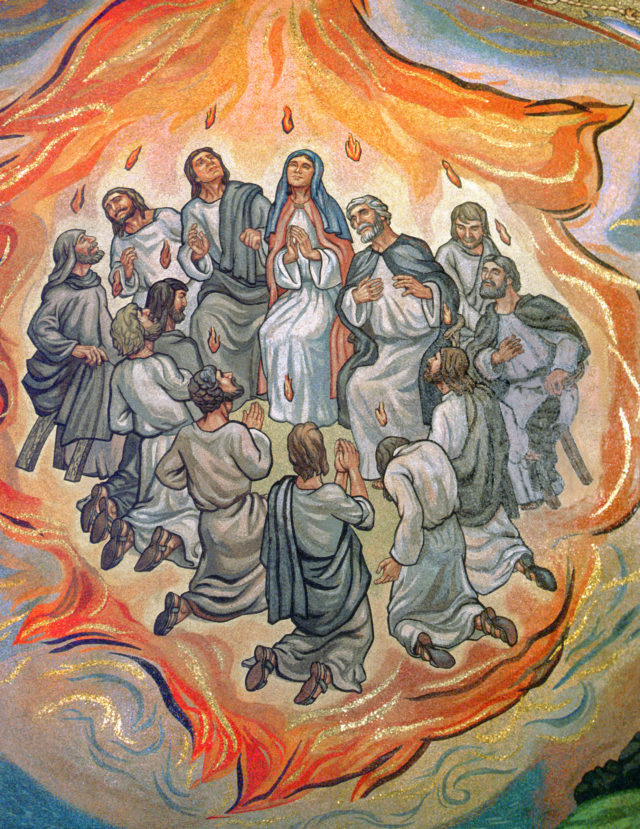
Pentecost occurs 50 days after Easter and 10 days after Jesus’ ascension. Acts 2:1-12 tells us that the disciples were meeting together in one place. “Suddenly”, writes Luke, “a sound like the blowing of a violent wind came from heaven and filled the whole house where they were sitting. They saw what seemed to be tongues of fire that separated and came to rest on each of them. All of them were filled with the Holy Spirit.”

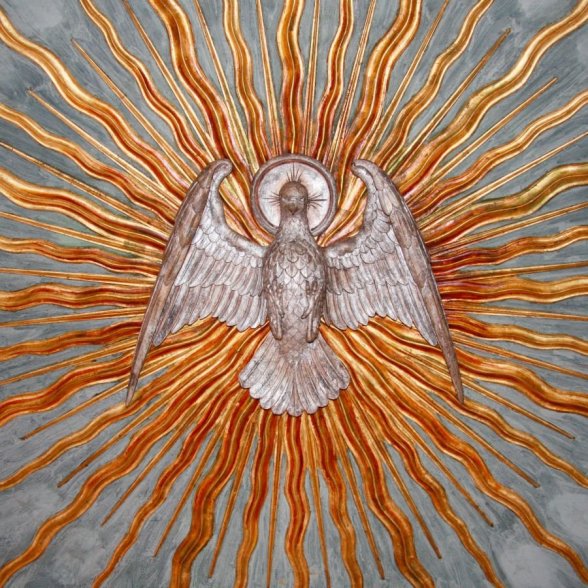
This remarkable story give us two of the three key images we have of Holy Spirit: Wind, Fire and the Dove (from Jesus’ baptism).

Filled with the Spirit, the disciples begin to speak in different languages. Now Jerusalem, as the spiritual hub for Jewish people, was full of Jewish people from all over the place, speaking many different languages. They were initially drawn by the commotion – presumably the sound of the violent wind, like a tornado in a room.

But then they were “bewildered” and “amazed” and “perplexed” because “each one heard their own language being spoken”. Of all the things that Holy Spirit could have done to inaugurate her ministry among humankind, she chose to enable the disciples to speak the Gospel message in languages that the disciples did not know, so that a racially and culturally diverse group of people could hear the Gospel in words that they could understand. This tells us that:

Central to the ministry of Holy Spirit is to break down barriers

Indeed, Holy Spirit is just continuing the ministry of Jesus. Jesus himself was constantly breaking down the barriers that divide people:

  • His incarnation, when the boundary between divine and human was traversed
  • His speaking with the Samaritan woman – breaking boundaries of ethnicity, religion and gender
  • His healing of woman who bleeding – breaking purity and gender boundaries
  • His healing of the Centurion’s daughter – breaking racial, class and power boundaries
  • His touching of the dead boy and raising him to life – breaking purity laws
  • His salvation of the whole world – breaking the power of sin and death

Paul’s letters are filled with similar references to the barrier-breaking work of Christ and thus also of his followers:

  • Galatians 3:28 tells us, “There is neither Jew nor Gentile, neither slave nor free, nor is there male and female, for you are all one in Christ Jesus.” These are the classical sociological categories of race, class and gender. Jesus breaks them all.
  • Ephesians 2:14 tells us, “For he [Jesus] himself is our peace, who has made the two groups [Jew and Gentile] one and has destroyed the barrier, the dividing wall of hostility”.
  • Ephesians 1:10 tells us that God’s ultimate will is “to bring unity to all things in heaven and on earth under Christ”.
  • And Colossians 1:20 tells us that God was pleased “through him [Christ] to reconcile to himself all things, whether things on earth or things in heaven, by making peace through his blood, shed on the cross”.

Just as Jesus’ ministry involved boundary-breaking, so too, Holy Spirit’s ministry is about boundary-breaking. And she continues this work as her first Act at Pentecost. And the rest of the Acts of the Apostles is a working out of what boundary-breaking ministry is all about.

If you are a follower of Christ – even if your faith feels thin and weak, even if you don’t feel gifted or confident – Holy Spirit lives in you. She has taken up residence in you. And she wants to continue to do this barrier-breaking ministry through you, so that all people and the whole of creation can be reconciled under Christ.

ARTWORK WITH BIBLE BY KELLY

Pentecost image found in the Cathedral Basilica of St. Louis, from http://thedialog.org/catechetical-corner/living-our-faith-pentecost-filled-with-the-spirit/

In but not of the world

Click here to listen to the audio recording of this 9-minute message. Or watch the YouTube video below, or read the text that follows.

In his prayer for his disciples, shortly before his arrest and execution, Jesus speaks about our relationship with the world (John 17:13-19). He says four things in rapid succession:

  1. We are not of the world (we are not rooted in the world)
  2. We are not to be taken out of the world
  3. We are not of the world (we are not rooted in the world)
  4. We are sent into the world

These four prepositions – of, out, of and into – set up Jesus’ expectations of us as his disciples.

We are not to be rooted in or ‘of’ the world. Just as Jesus is not of the world – he did not originate here and is not rooted into the world – we also are not of the world. Instead, “our citizenship is in heaven” (Philippians 3:20).

But, as much as we may wish then to be taken up out of this world, Jesus is explicit, “My prayer is not that you take them out of the world.” Instead, he prays, “As you sent me into the world, I have sent them into the world.” And to guide us regarding our place in the world he prays that we “too may be truly sanctified.”

Our values, ideas, aspirations and truths should all be shaped by and rooted in God’s world – in heaven. But we are commissioned to work in this world, to influence it with God’s values, to shape it into some resembling the Kingdom of Heaven that Jesus proclaims, and to be somewhat set apart or separated from the world.

It is like our head is at the top of a long stick figure, in heaven, while our feet and hands and hearts are here on earth, working out God’s plan for the salvation of the world.

2020.05.27_A_CH3772

Featured image from a collection of ‘walking tree’ photos by Alejandro Chaskielberg at https://www.chaskielberg.com/portfolios/the-walking-trees

Holy Spirit – Our true friend

Click here to listen to the audio of this 16-minute message. Or watch the YouTube below, or read the summary text thereafter.

Our reading for today (John 14:16-20) prepares us to celebrate Pentecost in two weeks’ time. Jesus teaches about Holy Spirit who will come and continue his work among us. We learn several important things about Holy Spirit from this brief passage, including:

  1. The Greek word ‘paraclete’ is directly translated as ‘the one called alongside’ or ‘the one called to come alongside’
  2. ‘Paraclete’ is translated in various ways: comforter, counsellor, advocate, encourager, etc.
  3. Frederick Dale Bruner (in his commentary on John) and Eugene Peterson (in his Bible translation, ‘The Message‘) translate paraclete as ‘friend’ or ‘true friend‘. A friend is one who draws alongside us, who comforts and encourages us, who challenges us, and who stands up (or advocates) for us when people trash-talk us.
  4. Jesus describes this true friend as a gift from God to us.
  5. Jesus describes Holy Spirit as another friend. By implication, Jesus is the disciples current friend; Holy Spirit will come as another friend. There is continuity between Jesus and Holy Spirit.
  6. Holy Spirit is a person, not a force or a thing. I try to give practical expression to this in my spiritual life in three main ways:
    • I drop the definite article ‘the’ from ‘the Holy Spirit’. Instead, I speak and think about ‘Holy Spirit’ as a name, like Jesus is a name. We don’t refer to Jesus as ‘the Jesus’ because Jesus is his name; we say ‘the Messiah’ because Messiah is a title of description. I use ‘Holy Spirit’ as a name, since we have no other name for him.
    • I use personal pronouns and avoid ever referring to Holy Spirit as ‘it’ or using ‘which’. These are impersonal, depersonalised words. I try to use the same words I use when speaking about Jesus or God the Father.
    • I refer to Holy Spirit as ‘she’. Not because I think of her as a woman, as female or as feminine. But because God is no more male than God is female. God transcends or incorporates all genders. Since we can’t refer (easily) to the Father or the Son with female pronouns, I choose to use female pronouns for Holy Spirit. If we could evolve the English language to be less gendered, we’d use gender-inclusive or gender-neutral language for God. (I appreciate that many will not appreciate or agree with me. That’s fine. We will learn a lot more about Holy Spirit on That Day.)
  7. We, unlike those who do not believe, can both see and know Holy Spirit. For everyone else, Spirit is invisible and unknowable. But for us who believe, she can be both seen and known. She dwells within each of us as individuals. And she takes up residence among us collectively, as communities of faith. We are united by Spirit, even when we are physically apart.

As we journey closer to Pentecost on 31 May 2020, let become increasingly mindful or receptive to the presence of Holy Spirit in our personal and collective lives and celebrate this precious gift that God has given us.

2020.05.17_HolySpirit_Hahlbohm

Featured image: ‘Holy Spirit’ by Danny Hahlbohm, http://www.inspired-art.com/gallery_9_10/Holy_Spirit.html


Who am I?

Click here to listen to this 23-minute message.

Today we ask the question, Who am I? Or more specifically, What is my identity as a Christian? This is the first of five themes in a series on stewardship, where we reflect on our role in taking care of God’s business in the world.

In this audio message, I make the following points:

  1. In John 15:1-10, the passage where Jesus says he is the vine and we are the branches, 11 times Jesus uses the term ‘remain’ (or ‘abide’ in the old Authorised Version): “Remain in me … and you will bear much fruit“. Here Jesus calls us to be rooted into him, to remain grafted into him. We recognise that without him, we can do nothing. So we depend on him.
  2. In the same passage, Jesus also speaks of remaining in us: “Remain in me as I remain in you“. This suggests an interdependence between God and us, in which God binds himself to humanity. We this most strongly evident in four moments in cosmic history: creation, covenant, incarnation and Pentecost. In each of these, God in some way limits himself or enters into agreement with humanity, binding himself and his work to us.
  3. Psalm 23 reminds us that God is both the source of our life (“The Lord is my shepherd, I lack nothing”) and its destination (“Surely your goodness and love will follow me all the days of my life, and I will dwell in the house of the Lord forever”). In John 14:6, Jesus similarly emphasises that he is the way and the truth and the life. In other words, he is everything – there is nothing in our lives that falls outside of our connection to Christ.
  4. Our interdependence with God is rooted in our relationship with God. Sometimes the church gives us rules or procedures or recipes we’re supposed to follow in our relationship with God. But this relationship is like any other relationship in our life. It is unique, personal and authentic. It is different for each of us, because, though God is the same person, each of us different, so his relationship to each of us different. God meets us right where we are. Whatever you find works for you in your relationship with God, do more of that.
  5. As much as our interdependence with God is rooted in our relationship with God, it is also rooted in our relationships with each other. God did not create a single person (Adam or Eve); God created a couple (two people in loving relationship with each other), and immediately mandated them to procreate and become a family. 1 Peter 2:9-10 similarly emphasises that we are a community of people in relationship with other people: “a chosen people, a royal priesthood, a holy nation, God’s special possession … the people of God”. So, we have to invest not only in ourselves and our relationship with God, but also in our relationships in the church (however you want to define that) and the work of the church.
  6. Finally, our readings today call for decisiveness. Moses, speaking just before the nation of Israel crosses into the promised land, calls them to a decision (Deuteronomy 30:19-20): “This day I … set before you life and death, blessings and curses. Now choose! Choose life! … For the Lord is your life”.

Image may contain: 1 person

This banner, hanging at St Stephen’s Anglican Church, Lyttleton, created by Eleanor Jappie.

Featured image from here.

Faith journey

Click here to listen to this 19-minute message..

How is your faith life? How are you doing in your relationship with God?

We are all on a journey of faith. Luke presents it to us like this in Luke 9:51-62 and Paul does so in Galatians 5:13-25. Journeys are typically not straight forward lines. They go up and down and round about. Journeys are messy. And our journey of faith is no different. My own journey looks more like a bowl of spaghetti than a box of spaghetti!

In this message, I unpack three facets of this journey from our two readings for today:

  1. Jesus is quite chilled about our journey. He adopts a ‘take it or leave it’ stance. He desires us to journey with him, but he will not force or coerce us.
  2. Jesus is quite demanding about our journey. He wants a total commitment from us. He has high expectations of us.
  3. Holy Spirit journeys with us, enabling us, strengthening and filling us. We are not on this journey alone. We live with, are led by and keep in step with the Spirit.

On this day, and during this coming week, I’d love you to reflect more deeply and deliberately on our faith journey with God.

2019.06.30.road

Featured image from here.