Today is Trinity Sunday and I provide a reflection on the notion of a triune God, drawing particularly on Proverbs 8, as well as Genesis 1 and Romans 5. The crux of it is that relationality is central to the being of God – the three-in-oneness of God. Therefore, the core of human life also is relationality. We need to invest in relationships, and we need to give particular attention to those relationships that are struggling or fragile.
Watch the video below of this 42-minute message. Yes, much longer than usual! I’m sorry about that, but it is – I think – worth the time, as a close reading of John 20:19-29 sheds to much light on Jesus’ character, his relationship with the disciples and his work as the Son of God. My notes are available below the video
Verses 19, 26 Both times Jesus “stood right in the middle of them”
Christ is the centre – not the priest, Bible, APB – only the person Christ
Christ-centred church
1, 19, 26 Easter Sunday morning – Jesus appears to Mary
Easter Sunday evening – Jesus appears in the upper room
Following Sunday (today) – Jesus appears again, to Thomas
19, 21, 26 Peace be with you – Shalom alechem x3
Easter Sunday – Christ made peace between us and God
Forgiveness of sins – done, paid for, wiped clean, forgotten, cast the deep
Everything is good. It’s all okay
Easter is the Great Forgiveness!
20 He showed them his hands and side
Emphasis on bodily resurrection, reconnected to his people
Not just some spiritual, esoteric thing
He is fully embodied, albeit with some unusual capacities
20 He could have come back healed, but doesn’t. Why?
His identification with us, solidarity with our pain & suffering
He remains the suffering servant of Isaiah 53 (4-5):
He took up our pain and bore our suffering. He was pierced for our transgressions, he was crushed for our iniquities, the punishment that brought us peace was on him, and by his wounds we are healed.
20 The disciples were overjoyed – full of joy
Joy (chara) & grace/gift (charis) – joy is a gift of God – because Jesus is back
21 “As the father has sent me, I am sending you”
We are to continue God’s work. We are sent, just as Christ was sent
Jn 3:16/7 “God so loved the world that he gave [sent] his one and only Son … For God did not send his Son to condemn the world, but to save it”
Every Christian is sent – not just clergy or evangelists
22 He breathed on them, “Receive the Holy Spirit”
Hebrew for spirit & breath are both? Ruach
Gen 1:2: Spirit of God hovering
22 Gen 2:7: “Then the Lord God formed a man from the dust of the ground and breathed into his nostrils the breath of life, and the man became a living being”
To receive Jesus’ breath & Holy Spirit is to be made a new living being
22 To receive Jesus’ breath & Holy Spirit is a grace/gift (charis)
As the Spirit/breath was active in the creation of earth and humanity
2 Cor 5:17: “If anyone is in Christ, they are a new creation. The old has passed away, the new has come.”
22 Holy Spirit poured out on Pentecost: Easter Season is from Easter Sunday to Pentecost
23Forgive anyone’s sin
The gift of HS is not so much miraculous signs, etc.
Instead the central commission – sending – is to forgive
And to warn that to not repent = no forgiveness
The Great Forgiveness!
24Thomas was not with the disciples when Jesus came.
Where was he? He should have been in church! We should be in church!
27 Touch, see
V20. Jesus showed them his hands and side.
Thomas wants what the others got – to see. But also to touch
Our Eucharist is a see and touch moment
– receive the body of Christ broken for you (not receive this bread)
– receive the blood of Christ (not receive this wine)
Not clear if Thomas did actually touch: “Thomas answered and said…”
Perhaps seeing and the invitation to touch was enough for him
27 Stop doubting and believe. Be a believer!!
Accept the small and periodic signs of God and believe into him
28My Lord and my God!
Hebrew: Yahweh & Elohim – names for God
Greek: Kyrie & Theos – names for God
The only place in the Gospels where Jesus is referred to as God – A profound statement of faith – perhaps the most
Below is a video of this 19-minute message about God’s persistence in offering salvation to each one of us.
Throughout the scriptures, God is reaching out to humanity with the offer of salvation. Isaiah 55 is filled with words of invitation from God. Joshua 5 links the liberation of the Israelites from slavery with the first Passover meal in the promised land. 2 Corinthians 5 has Paul telling us, that if anyone is in Christ, that person is a new creation – the old has gone, the new is here! And Luke 15 tells the remarkable story of the prodigal son – or perhaps it is the story of the forgiving father, who welcomes back his wayward son. The father runs down the road to embrace him and celebrate his return. The prodigal son is saved, thanks to the generosity of his father.
Today we celebrate Christ’s baptism, which inaugurates his ministry. John the Baptist had been preaching a Gospel of repentance for the forgiveness of sin, made tangible through baptism. And Jesus came to him to be baptised, even though Jesus was without sin.
As Jesus comes up out of the water, the heavens open and the Spirit of God descends on Jesus in the form of a dove, and the voice of God is heard saying, “You are my Son, whom I love; with you I am well pleased.” This is the only place in the Bible where Father, Son and Holy Spirit are tangibly present at the same time. This is an expression of the Epiphany, which is the season we’re currently in – Epiphany being all about God’s revelation of God’s self to the world. And this scene is certainly a great revelation of the triune God!
We could also think about this moment as an incarnation not only of Christ himself, but of all three persons of the Trinity – Jesus is there in the flesh, the Holy Spirit comes in bodily form like a dove, and God’s voice is audible to human ears (sound waves moving through the air). Father, Son and Spirit all materialise in the human world in that brief moment. This conveys the sense that the triune God works together for the salvation of humankind.
In our service, I invited three people to create a tableaux of the Father, the Spirit and the Son, similar to the paintings of Jesus’ baptism (see picture below). They are standing with their arms outstretched in love. This is an image of the triune God: three persons working in perfect harmony to pour out God’s love and salvation on humanity.
This expression of the triune God is flooded with love. Today’s first testament reading from Isaiah 43:1-7 contains these words from God: I created you, I have redeemed you, I have summoned you by name, I will be with you, I love you, I am with you, I will bring you, I will gather you, I formed you, I made you. And in Luke 3:22, we hear God saying, “You are my son, whom I love; with you I am well pleased”. We hear in these words the great enduring love that God has for his son and for us. And this is expressed through the incarnation and through the epiphany. It reminds us that love is the central characteristic of God – the foundation on which God engages within the triune Godhead and on which God engages with us.
We are encouraged, therefore, to rest into the great and generous love that God lavishes on us, which we see so clearly in the baptism of Christ.
From back to front: Father, Spirit, Son – replicating the painting below of Jesus’ baptismJuan Fernández Navarrete: The Baptism of Christ (c1567)
Today we celebrate St Stephen, after whom our church is named. It is our church’s patronal festival, our birthday.
Stephen was a young man, appointed a deacon in the early church. He appears only in Acts 6 and 7, but in those few pages, he makes a remarkable impression and impact. He is the first Christian martyr – stoned to death because he challenged the Jew people’s lack of faith in Jesus Christ.
While we walk primarily in the footsteps of Jesus Christ – he is God incarnate, our teacher and our Lord and saviour – we give heed also to the example of Stephen, and seek to continue his legacy in our parish community today.
Our readings centre on Acts, omitting Stephen’s long, but very impressive and persuasive sermon. This are supported by a reading from 2 Chronicles, where Zechariah (an earlier Zechariah – not the father of John the Baptist) is stoned to death for speaking God’s Word. Psalm 31, which includes the words that both Jesus and Stephen speak as they died. And John 6, which is the ordinary reading for today, from Jesus’ long sermon on the Bread of Life. I have tabulated these three people, because there are significant and meaningful similarities between them, that speak to all Christians, and especially those who are members of a church named after St Stephen:
Topic
Zechariah
Jesus
Stephen
Reading
2 Chronicles 24:17-22
John 6:24-35
Acts 6:8-10 & 7:54-60
Holy Spirit
Spirit of God came on him
Baptised by John and the Holy Spirit descended on him
Full of Holy Spirit, faith, grace and power
Care for the poor
–
Fed 5000 men (plus women and children) with bread and fish
Oversaw the daily distribution of food
Challenges with the people
They were chasing after other Gods
They just wanted food and miracles
Wanted quiet conformity with the past
Challenging the people
Why do you disobey the Lord’s commands?
Do not work for food that spoils
You stiff necked people! Your hearts are uncircumcised! You always resist the Holy Spirit! Was there ever a prophet your ancestors did not persecute?
Consequences for God’s messengers
Stoned to death
Crucified
Stoned to death
Their final words
May the Lord see this and call you to account.
Father, forgive them, for they know not what they are doing.
Lord, do not hold this sin against them.
Final prayer
–
Father, into your hands I commit my Spirit (in Luke)
Lord Jesus, receive my spirit (Psalm 31:5)
So, what do we take from this, and particularly from Stephen, into our daily lives?
We must take our faith seriously – it is costly, important and even worth dying for.
We must care for the poor, hungry and marginalised.
We must seek the infilling of Holy Spirit, who equips us for life and ministry.
We must seek after the things of God, and not after the things of this world.
We must forgive those who hurt even, even to death.
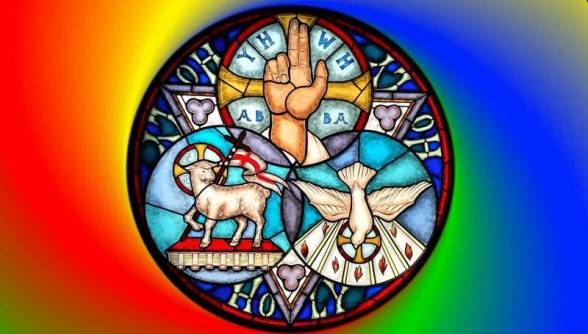
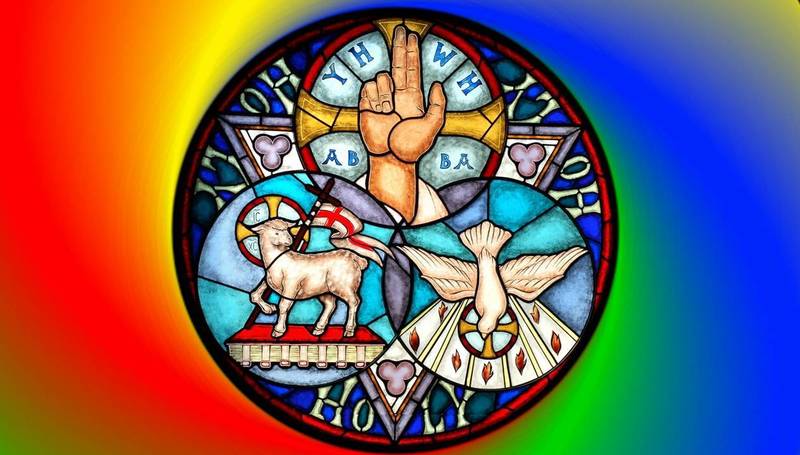
The Trinity (the three-in-one God) is a central belief for Christians, even though the term is not in the Bible and there are few explicit statements about a three-in-one God in the Bible. But there are hints and clues all over the place, e.g., in today’s readings with have:
God referring to God’s self as “us” in Isaiah 6:8,
Paul referring to God the Father, the Spirit and Christ as three distinct divine persons in Romans 8:12-17; and
Jesus speaking about the Spirit and God as two distinct divine persons in John 3:1-17.
Jews and Muslims share with us Christians the First Testament, and so it can be argued (though not all will agree) that we all worship the same God, whether by the name of Jehovah, Allah or God our Father. And all recognise Jesus as a significant person, though Jews see him as a Rabbi and Muslims as a Prophet, while we see him as God the Son. They do not recognise God as three-in-one; indeed, it sounds to them like we have three Gods. For Jews and Muslims, God is a single, male ruler – a King. They follow a pattern of a single line of authority, similar to how the military is structured. There is only One God.
For Christians, by contrast, God is plural, diverse and relational. But this plurality in the Godhead, however we might understand it, is characterised by harmony and concord. There is no conflict, competition or divergence in the triune Godhead. This is a very different conception of God.
Do we understand God’s three-in-oneness? Can we rationalise it and explain it? No, not really. It is hard enough to understand a single human being; how much harder is it to explain God, let alone a triune God! We can, should and do think about the Trinity – we theologise and theorise how God be both three and one. But ultimately, we do not find fully satisfying explanations and understandings. We often come up with analogies to explain God’s three-in-oneness: states of water, an egg, a clover, family, etc. But all of these lead us into one or other heresy about the nature of God.
We are well advised to discard all these analogies and simply gaze upon the mystery of the Godhead. We should apprehend God, not analyse or dissect God. All we can really conclude with any confidence is that God is inherently relational – there are relationships within the centre of the Godhead; relationships characterised by immense, enduring and steadfast love. Let us hold to this beautiful mystery.
So, God is not a monarch, but a cooperative, and that leads me to think about words starting with co- and com-
Community, communal, in common, companion, compassion, comradery
These co-/com- words emphasise the relational quality that is central to the being of God. And because these are central to who God is, they are central to the world that God has created. And they are central to how we live our lives. Everything that God does is relational and we are part of this relational mix. Our readings today provide important examples of this:
In Isaiah 6, God is surrounded by seraphim – heavenly beings, keeping God company. And God send Isaiah to go out as God’s spokesperson – God collaborates with Isaiah, as partners.
In Romans 8, we learn that we are adopted by God, heirs and sons of God, co-heirs (siblings) with Christ, and that we share in Christ’s suffering and also in Christ’s glory – there is a close sibling-like relationship between us and the Son of God.
In John 3, we learn that the Son came to save not just individuals, but indeed the whole world – God is interested in the human collective, not only in human individuals.
The key implication for us worshiping a triune, collective God is to develop collective thinking and behaving. Relationships are primary to God and primary to us.
Mary, the mother of Jesus, had a difficult start to her pregnancy – she was young (probably about 13) and unmarried (only betrothed). Many of us may have become parents in less than ideal circumstances, and so we can feel with her the challenges she faced, when the angel Gabriel comes and informs her that she will become the mother of Son of God (Luke 1:26-38).
In reflecting on this well-known passage, three things stand out for me afresh:
First, Mary had a community of people around her, who loved and supported her. First, Joseph, the man (probably a boy, really, aged perhaps 14 or 15) who she was engaged to. He could so easily have spurned her, but instead, he remains steadfast at her side and protects her from judgmental neighbours. He was accepting, loving and faithful in ways that are quite extraordinary. Although we know little about Joseph, he sounds like a great father.
In addition, Mary’s aunt, Elizabeth, and her husband Zechariah. They were very old and Elizabeth had not borne a child. They too were vital sources of support for Mary, and in the following passage we read about Mary’s visit to Elizabeth.
This human community of support is important for all of us. We all need people in our orbit who care, love, accept, cherish, nourish, empower, advocate, challenge and enable. We need this at home, and we need it in the church.
Second, Mary did not go from ‘zero to hero’ in one leap. She was ‘greatly troubled’ by Gabriel’s message, so much so that the angel had to reassure her: Do not be afraid, Mary. And after Gabriel’s pitch to her, Mary asks questions of Gabriel, “How will this be since I am a virgin?” Gabriel is fully willing to engage her uncertainty, her fear, her incredulity and her questions.
This is in contrast to Gabriel’s response to Zechariah, who in v18 says something similar to Gabriel: “How can I be sure of this? I am an old man and my white is well on in years.” Zechariah’s words are not unlike Mary’s, but Gabriel responds strongly, asserting his authority, and silencing Zechariah until after John’s birth.
After some discussion with Gabriel, Mary come to a place of acceptance, or rather of acquiescence, “I am the Lord’s servant. May your word to me be fulfilled.” I have selected the word ‘acquiescence’ because I think it best captures Mary’s initial response. Acquiescence can be defined as “the reluctant acceptance of something without protest.” It is almost a resignation, similar to the Arabic “Inshallah”, which means “if God wills”, and implies that if God wills, it will happen whether we want it to or not. We surrender to God’s will.
We need also to learn to hear God’s voice speaking into our lives, to engage with God about God’s will, and to make decisions to acquiesce to God’s will. In other words, to trust in God.
Third, this passage shows forth a long-held principle (dating back to Genesis 1) of God choosing to partner with humans. Almost always there is a co-working between God and people to accomplish God’s aims. In this passage (v31), we get a series of things Mary will do: You will conceive. You will give birth to a son. You are to call him Jesus. And (v32-33), we get a series of things God will do: Jesus will be great, Jesus will be called the Son of the Most High, God will give him the throne of his father David, Jesus will reign over Jacob’s descendants for ever, Jesus’ kingdom will never end.
This plan that Gabriel brings to Mary involves a partnership between Mary and God. Without the partnership, the plan is impossible. And so it is with much of God’s work in the world – God chooses to limit God’s self by working with imperfect and limited human beings. This is God’s modus operandi.
In conclusion, let us follow Mary’s example, and that of Joseph, Elizabeth and Zechariah, and partnering with each other and with God, to accomplish those things that God desires in this world.
The Annunciation, fresco by Fra Angelico, 1438–45, San Marco, Florence
Over the past two Sundays, our readings have directed us towards the conclusion that God wants the whole of us – for us to give ourselves utterly into God’s hands to do with us as God wills. We first got this from Jesus’ teachings in Matthew 10 (Hard Words) and second from Abraham’s willingness to sacrifice his son Isaac (Abraham’s Example). Typically, our inclination is to hold back and not surrender – relinquishing ourselves to God does not come naturally.
Today’s readings continue this theme but from a somewhat different perspective. They all point towards the roles of actors in a divine drama or play. We are the actors, and God is the Director. The play works out best when each actor does their part according to the directions of the Director. Since our Director is both competent and good, the drama of our lives can also be successful and good. But only if we as actors follow our Director’s directions.
Abraham is nearing death and wants his son Isaac to get married, but not to someone from the neighbouring communities, but rather from his home country.
His senior servant is called in to act on Abraham’s behalf – the servant is not named, but is the central actor in this chapter. The servant has charge over all of Abraham’s things. Abraham commissions him to go to his homeland and get a wife for his son, giving detailed instructions on what to do and not to do.
In vv12-14, the servant prays to the God of his master Abraham to make him successful and to show kindness to Abraham – remember that the Director is both competent and kind. In his prayer, the servant sets out a narrative of how he hopes things will go – that he speaks to a young woman, asking her for a drink, she offers him a drink and also offers water for his camels.
Rebekah then comes out, and the narrative plays out just as the servant had prayed (vv15-22).
The servant then asks if he can spend the night at her father’s house and it all works out. The servant gives thanks to God for “his kindness and faithfulness” to his master (v27).
Rebekah runs home and tells her family about the servant, and her brother Laban comes out to welcome him into their home. They take care of both the servant and his camels (vv28-33).
The servant then recounts to Laban and his family the whole story that we have already been told (vv34-49).
This is followed by various details of the negotiations that rapidly culminate in Rebekah agreeing to go immediately with the servant to get married to Isaac (vv50-61). They arrive back at Abraham’s home, Rebekah and Isaac meet and get married (vv62-67), in so doing continuing the lineage from Abraham to Jesus (as provided in Matthew 1).
In this narrative, the servant is an actor – an agent who behaves, speaks, makes decisions, impacts the world. He trusts in Abraham and in Abraham’s God, thereby carrying out the will of God. He relinquishes himself to God.
Rebekah is similarly an actor – she engages with the servant, shows hospitality to him and his animals, argues against her brothers about leaving immediately rather than later, and agrees to marry Isaac. She exercises power and agency in her life, in accordance with the will of God. She relinquishes herself to God.
In short, we have actors doing the will of God the Director.
The Psalms provided in the Lectionary typically provide a commentary on the First Testament reading and today is no exception. Psalm 45 presents us with three actors and a director.
v1 starts with “My heart … as I recite … my tongue.” Here is the Psalmist, writing in first person and also congratulating themselves on their skill as a Psalmist. The Psalmist is an actor – present and active in the creation of this Psalm.
vvv2-9 are addressed to ‘you’ – to the King. In the context of Genesis 24, we should think of the King as representing Isaac, though Isaac was not a King. The King/Isaac is also an Actor, because of how the Psalmist describes him, e.g., as defending truth, humility and justice.
vv10-12 are addressed to ‘daughter‘, the bride. She represents Rebekah and the Psalmist speaks directly to her (not just about her) making her an actor.
vv13-15 are a commentary, by the Psalmist, about the wedding and how wonderful it is.
v16 is directed again at the King – your sons, your fathers, you will make – confirming the King as an actor.
v17, finally, returns to the “I” (which we last heard in verse 1). In verse 1, the I referred to the Psalmist. It is possible that the I in v17 is also the Psalmist, but I think the claims that are made in v17 exceed the capacity and power of the Psalmist, and that here ‘I’ refers to the Director – to God. The Psalmist’s life is too short, but God can work “for ever and ever”. It is God who will perpetuate the memory of the king through all generations and across all nations.
Thus, God is revealed in the last verse of the Psalm to be the Director. Although the Psalmist has considerable power in writing the Psalm, ultimately, even the Psalmist is an actor in a larger play directed by God.
This passage from Romans is full of “I”. It seems obvious that Paul is here referring to himself, writing in first person, but it is possible that he is referring to ‘a person’ using ‘I’ as a shorthand, and there is debate among commentators on whether the ‘I’ is a Christian or an unconverted person. I don’t want to get into all that today. The key point for today is that there is a clear actor here, referred to as “I“, whoever that person may be.
What we see happening in this actor’s life is a grappling between a desire to be good and a tendency to do evil. We are given an insight into the heart of this person, grappling with their own brokenness. This reaches a climax in v24, “What a wretched man I am! Who will rescue me from this body that is subject to death?”
And then the Director steps in: “Thanks be to God, who delivers me through Jesus Christ our Lord!” Or arguably, two actors, but so in sync with each other, that they are truly one being or essence.
What we can take from Romans 7 is that in our grappling with ourselves, as we hope to become transformed into the image of Christ, God is directing. And God is competent and good – God will bring it to fruition in God’s good time. We must, in the meantime, play our part as actors who make repeated choices to act in accordance with God’s desire for and image of a redeemed humanity.
Lastly, we come to our Gospel reading. In the opening verses of this passage, Jesus seems to be saying that the people of this world think that they are directors (vv16-17):
“To what can I compare this generation? They are like children sitting in the marketplaces and calling out to others: ‘We played the pipe for you, and you did not dance; we sang a dirge, and you did not mourn’.”
They think they are puppeteers, who can direct others to do their bidding. But unlike God the Director, they are neither competent nor good. Instead, they are capricious and mean-spirited, as Jesus explains in vv18-19:
“For John came neither eating nor drinking, and they say, ‘He has a demon.’ The Son of Man came eating and drinking, and they say, ‘Here is a glutton and a drunkard, a friend of tax collectors and sinners.’ But wisdom is proved right by her deeds.”
In this last sentence of v19, Jesus reveals who the director is: Wisdom! Wisdom is the First Testament forerunner of Holy Spirit. The Spirit of God is the Director: wise, good and competent. It is by her deeds – her actions – that she is proved right.
In the rest of this passage (vv25-30) Jesus emphasises God as a good and kind director, who has our best interests at heart.
In summary, God does want all us, completely and utterly. It is when we follow his directions (i.e. when we are yoked to him) that we become true and full actors, free to play our part in his play.
Click here to listen to the audio recording of this 28-minute message. Or watch the video here on Facebook (the message starts about 25 minutes into the recording). Or read the text summary below.
Today (28 May – this post is going out a bit late – sorry) is Pentecost, where we celebrate the coming of the Holy Spirit of God. We talk a lot in church about God the Father and God the Son, but much less about God the Holy Spirit. So, today I thought to share 10 fun facts about Holy Spirit, so that we have a better understanding and appreciation of who s/he is. Let’s call it “Pneumatology 101”! Are you ready? Here we go!
Holy Spirit is the third person of the Trinity (along with the Father and Son) and therefore is God, as much as the Father and Son are God. Three persons in one being. The Spirit is as much God as the Father and Son are.
Holy Spirit is a person, as much as the Father and Son are persons. Theologically, we can debate what ‘person’ means in the Godhead. But, through our exposure to God the Father in the first Testament and God the Son in the Second Testament, we have no trouble thinking of Father and Son as persons. The same must apply to the Spirit, who is the third person of the Triune Godhead. This means we can talk with, relate to and pray to Holy Spirit, just as we pray to Father and Son. To help me think of the Spirit as a person, I drop the definite article ‘the’ and refer to the Spirit as ‘Holy Spirit’, as if that is their name, like Jesus is the Son’s name.
Holy Spirit is genderless, neither male nor female, gender neutral or gender fluid. God the Father is presented to us as a father, thus male. And God the son is presented to us as a son, as Jesus, a man, thus male. But Holy Spirit is not clearly presented with gender. It is as wrong to refer to Holy Spirit as ‘he’ as it is to refer to Spirit as ‘her’. Both are equally incorrect. All we can be sure of, is that Holy Spirit is not an ‘it’ – Holy Spirit is a person, not a power, force, wind, etc. They are a person. I choose to refer to Spirit as ‘her’, to recognise and emphasise that God is neither male nor female, or rather, that God incorporates both male and female. It helps to demasculinise my thinking about God.
Holy Spirit is active in creation – the Spirit was hovering above the waters of the deep in Genesis 1. And Holy Spirit is continually active in creating the world we live in (Psalm 104:30). Spirit is creative, artistic, extravagant, producing, making, bringing into being, empowering, enabling – all things creative.
Holy Spirit plays the key role in our sanctification. Jesus enables our salvation, but Spirit enables our becoming more and more Christlike as we journey through the ups and downs of life (1 Corinthians 6:11). Holy Spirit is the one who takes up residence on our hearts – in the temple of our body (1 Corinthians 6:19-20). She transforms us from the inside out, into the likeness of Christ.
Holy Spirit nurtures in us the Fruit of the Spirit (Galatians 5) – these are qualities of living that exemplify Christlikeness, thus the manifestation of sanctification.
Holy Spirit gives to every Christian one or more gifts – Gifts of the Holy Spirit (1 Corinthians 12). Some of these gifts appear quite ordinary (giving, mercy, helps, hospitality), while others appear quite supernatural (healing, prophecy, tongues, words of knowledge). But they are all Gifts of the Spirit, Spiritual Gifts, and thus all are supernatural gifts from God. And you have at least one.
Holy Spirit operates autonomously. She is not a cash machine that dispenses goodies on demand. She decides when and to whom to give what. 1 Corinthians 12:11 tells us that she gives gifts just as she determines. Numbers 11 has a story about 70 men selected by Moses to receive the Spirit of God; but two other men who were not selected receive the Spirit even more powerfully. Joshua is put out by this, but Moses stops him – the Spirit decides who gets what, when and how much.
Holy Spirit empowers the church for mission. She is interested in each of us as individuals, but her empowerment of us is for the work of the church. 1 Corinthians 12:7 tells us that gifts are given for the ‘common good’, not for personal edification. They are not for us ourselves and our own spiritual growth, but rather for us to serve more effectively in God’s mission to save the world.
And finally (not that there are only 10 characteristics of Holy Spirit!), Holy Spirit seems deeply committed to diversity. At Pentecost (Acts 2) many people, speaking many languages, from different parts of the world, receive the gift of tongues or hear the Gospel in their own languages – they are united in their diversity through the outpouring of Holy Spirit. Acts 2 continue continues to talk about diverse people, languages, gifts, men and women, young and old, rich and poor. Psalm 104, which speaks about Holy Spirit, emphasises the great diversity of animals in God’s creation.
It is my hope that these ideas, which you may agree with more or less, will stimulate your interest in Holy Spirit, learning more about her and getting to know her better.






 Reflections of God's Love