All who are thirsty

Click here to listen to the audio recording of this 18-minute message (followed by a 4-minute song). Or watch the video on Facebook here (the message starts at about 34 minutes).

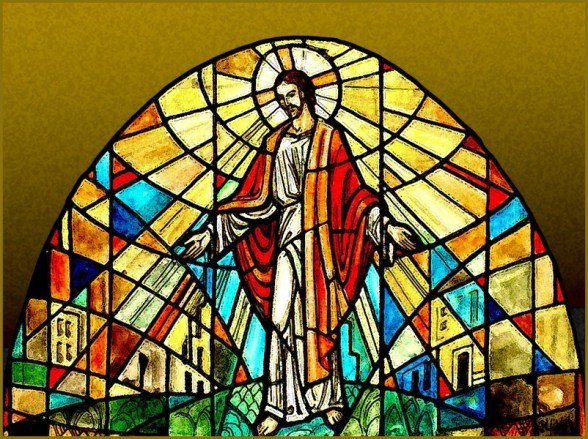
From the dawn of time, God has had his arms outstretched to receive and embrace us. God has always been open and receptive to us. He always has been like this, he is like this today, and he will remain like his into the future. This is permanent posture of God. Arms open and looking towards you.

When we feel disconnected from God, can’t perceive or feel him, feel abandoned – it is not God who has turned away. It is we who have turned away. Sin is one of the main causes of us feeling cut off from God – sin is us turning away from God. But God has not moved – he is still there.

Luke 13:1-9 tells of people coming to Jesus saying that some people who had died horribly must have sinned terribly to suffer such a death. But Jesus challenges this, and says they were no worse than anyone else. And then he cautions those who said this: “Repent, else you too will perish!” He then tells the parable of a fruit tree that was unproductive. The owner wanted to cut it down, but the gardener interceded for is, saying he’s car for it for three years and see if it produced fruit: if so, good; if not, then cut it down. The parable is not particularly confident about the tree becoming fruitful and being saved. Sin is serious – it can lead to our deaths.

1 Corinthians 10:1-13 also speaks of sin. The people of Israel wandering through the desert for 40 years saw the most remarkable miracles – the plagues against the Egyptians, the parting of the Red Sea, water gushing from a rock, manna from heaven every morning, the pillars of fire and smoke and so on. Yet, they repeatedly turned from God and engaged in all kinds of sin. And many died as a result. Paul says these are warnings for us, of how NOT to live our lives. And he offers a bit of hope: that God will not let us be tempted beyond what we can bear and that there will always be an escape route.

These two readings focus on the real risks of sin causing us to be estranged from God. But I say again: God has not moved! He is still there! His arms are still open to us!

Listen to God’s words in Isaiah 55:1-3:

“Come, all you who are thirsty, come to the waters; and you who have no money, come, buy and eat! Come, buy wine and milk without money and without cost. Why spend money on what is not bread, and your labor on what does not satisfy? Listen, listen to me, and eat what is good, and you will delight in the richest of fare. Give ear and come to me; listen, that you may live. I will make an everlasting covenant with you, my faithful love promised to David.”

Hear these repeated words from God: Come, come, come. Listen, listen, give ear. Eat and drink. Free, without cost. Good, delight, richest, everlasting, faithful, love, promise. These are words of God who is always facing us, with his arms always outstretched. This is the invitation to come to him, to quench our thirst, to eat and rest.

Isaiah summarises for us (vv6-7):

Seek the LORD while he may be found; call on him while he is near. Let the wicked forsake their ways and the unrighteous their thoughts. Let them turn to the LORD, and he will have mercy on them, and to our God, for he will freely pardon.

And listen to David in Psalm 63:

You, God, are my God, earnestly I seek you; I thirst for you, my whole being longs for you, in a dry and parched land where there is no water. I have seen you in the sanctuary and beheld your power and your glory. Because your love is better than life, my lips will glorify you. I will praise you as long as I live, and in your name I will lift up my hands. I will be fully satisfied as with the richest of foods; with singing lips my mouth will praise you. On my bed I remember you; I think of you through the watches of the night. Because you are my help, I sing in the shadow of your wings. I cling to you; your right hand upholds me.

Again, hear David’s response to the God of love, the God with open arms, the God who is always present and always available.

I encourage you, if you are feeling burdened and challenged by life, or if you are feeling that God is remote, to come to our Lord, who is the fountain of life, who offers food and drink to refresh your soul, at no cost, with no conditions.

Featured image from: https://media.nationalgeographic.org/assets/photos/186/480/0e077d4d-9209-40d5-9fd5-4e51aeed7b37.jpg

God’s self-revelation

Click here to listen to the audio recording of this 12-minute message. Or watch the video on Facebook here (the message starts at about 25 minutes).

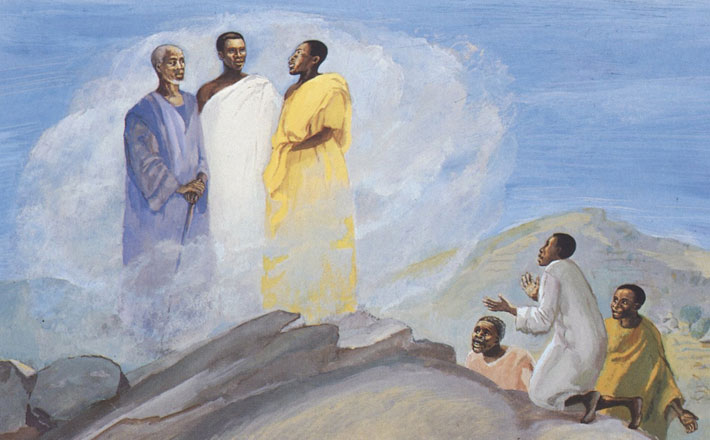
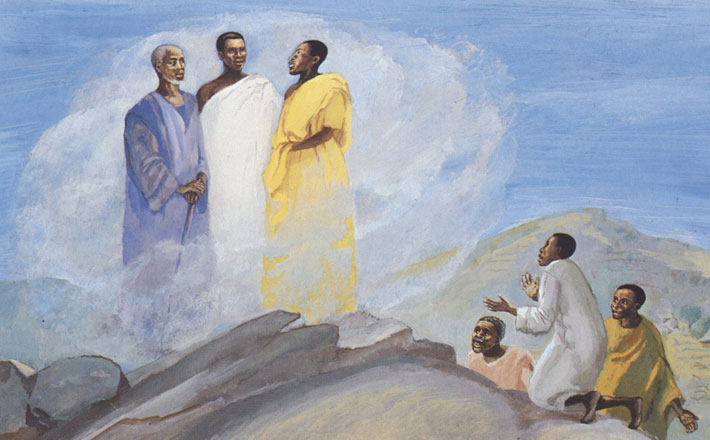
Today we celebrate the transfiguration (Luke 9:28-36), where Jesus reveals his divine nature to three of his disciples. This event, which in our church we celebrate with the colour white, falls after a period of ‘ordinary time’ in the church calendar, which we celebrate with green, and Lent, which we observe with purple. This celebration is thus well placed as a link between a period of ordinary growth in the church and period of intensive penitence and critical self-reflection.

Furthermore, the transfiguration is located in our church calendar almost exactly at the midpoint between Christmas (two months and two days ago) and Easter Sunday (10 days less than two months from now). Each of these events – the birth of Christ, the transfiguration of Christ and the resurrection of Christ – are moments of God’s self-reflection, or epiphanies. God shows God’s self for who God is, in these key moments in the life of Christ.

Christmas focuses on the incarnation of God the Son in the form of the human Jesus. It is God’s emptying of God’s self – the kenosis – in which God immerses God’s self into human life and comes to live among us as one of us. It is also a story of the birth of a child – of hope, of new life, of a baby. The Christmas self-revelation emphasises the light and life of God in our midst.

The transfiguration shows us that Jesus is more than ‘just’ a teacher, more than ‘just’ a healer or miracle worker. He is revealed in all his divine splendour, as the Son of God, even more, as God the Son. All the fullness of the Godhead dwells in Jesus. Most of the time it is hidden from sight. But in the transfiguration, Jesus kind-of drops his human skin and reveals his divine nature to Peter, James and John. The transfiguration self-revelation emphasises the power and divine majesty of God in our midst.

Easter focuses on the discipline and love of Jesus for his Father, and for humanity, leading him to walk a path that he knows will lead to his humiliation, suffering and ultimately, his death. He knows this is a path of suffering, but he also knows that it is a path towards the salvation of all of humanity. Jesus’ Easter resurrection is God’s self-revelation of profound and reckless love for humanity.

These revelations of God’s self – of who the triune God truly is – as our focus as we enter Lent. God is the child that brings life and light. God is the divine being, filled with power and majesty. And God is our saviour, filled with love and compassion. It is into this God, this Christ, that we immerse ourselves during the coming period of Lent.

Featured image: JESUS MAFA. Transfiguration, from Art in the Christian Tradition, a project of the Vanderbilt Divinity Library, Nashville, Tenn. https://www.workingpreacher.org/wp-content/uploads/2020/06/Mafa_Transfiguration_710.jpg

Let us gather again

Click here to listen to the audio recording of this 20-minute message. Or watch the video on Facebook here (the message starts at 27 minutes).

Jeremiah the prophet wrote and spoke during a time that included the exile of the Jewish people in Babylon, which started around 597 BC and lasted about 60 years. During that time, Jewish people were not badly treated in Babylon, but keenly felt how dislocated they were from the world they knew, from the city of Jerusalem and from the temple there. Babylon may have been relatively safe, but it was not home and left them feeling alienated, fragmented and cut off from their faith and fellowship. On the other hand, a return to Jerusalem was a fearsome thought. It was a long way away, many enemies were there who wished them harm, and because of the destruction of temple and the city walls, they felt ambivalent about what might await them.

Does any of this seem familiar for us living under Covid? Many feel exiled to their homes, which are safe (though truly only relatively safe) and familiar. The world out there seems dangerous and threatening. Church, on the other hand, may feel like another dangerous place, fraught with risk, even though, at our church, church is probably safer than home, shops and workplaces.

The result of the avoidance of church and becoming reclusive at home is that we feel dislocated from our faith community and (in many cases) from God. For Christians, like for people of other faith groups, gathering together with the people of faith in worship of God is vital to our well-being and health. We are made for fellowship. We are made for corporate worship. Church is not a luxury, but a necessity.

Jeremiah 30 and 31 are part a sequence that focuses on the restoration of Israel.

Chapter 30 opens with God’s promise that God will bring God’s people back and restore their home:

“The days are coming,” declares the Lord, “when I will bring my people Israel and Judah back from captivity and restore them to the land I gave their ancestors to possess,” says the Lord. (30:3)

Although they confront incurable illnesses, God will restore their health:

This is what the Lord says: ”Your wound is incurable, your injury beyond healing. There is no one to plead your cause, no remedy for your sore, no healing for you. … But I will restore you to health and heal your wounds,” declares the Lord. (30:12 & 17)

God will restore and cultivate a community of faith:

“I will restore the fortunes of Jacob’s tents and have compassion on his dwellings; the city will be rebuilt on her ruins ,and the palace will stand in its proper place. From them will come songs of thanksgiving and the sound of rejoicing. I will add to their numbers, and they will not be decreased; I will bring them honor, and they will not be disdained.” (30:18-19)

God will make them a people of God:

“So you will be my people, and I will be your God.” (30:22)

God affirms that God’s love for God’s people is eternal and steadfast. Even in the midst of adversity, even in exile or death, God’s love is certain:

“I have loved you with an everlasting love; I have drawn you with unfailing kindness.” (31:3)

God will gather the people of God, including those who are vulnerable, and restore them:

“See, I will bring them from the land of the north and gather them from the ends of the earth. Among them will be the blind and the lame, expectant mothers and women in labour; a great throng will return. They will come with weeping; they will pray as I bring them back. I will lead them beside streams of water on a level path where they will not stumble, because I am Israel’s father, and Ephraim is my firstborn son.” (31:8-9)

God will be the good shepherd, just as Jesus described himself as the Good Shepherd:

“He who scattered Israel will gather them and will watch over his flock like a shepherd.” (31:10)

There will be a bounty – an abundance, an excess of good things. And sorrow will be a thing of the past:

“They will come and shout for joy on the heights of Zion; they will rejoice in the bounty of the Lord—the grain, the new wine and the olive oil, the young of the flocks and herds. They will be like a well-watered garden, and they will sorrow no more.” (31:12)

And there will be a reversal of fortune, in which challenge and suffering will transform into abundance and joy:

“Then young women will dance and be glad, young men and old as well. I will turn their mourning into gladness; I will give them comfort and joy instead of sorrow. I will satisfy the priests with abundance, and my people will be filled with my bounty,” declares the Lord. (31:13-14)

Many of us have been living in exile – an exile imposed by Covid and the necessary lockdowns. For a time, this was necessary, to protect and preserve human life. But it has come at a cost. And that cost includes the loss of belonging to a community of faith. And with that loss easily comes a loss of faith itself – God seems remote.

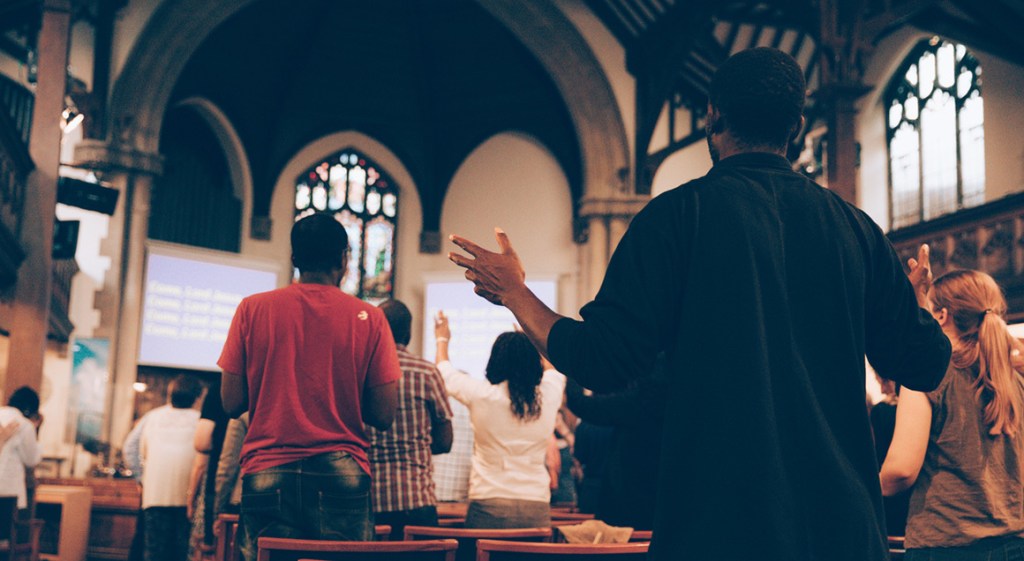
But this way of living, while necessary at a time and still necessary in some cases now, is not the Way of Life. There is a time to be restored to our Jerusalem, to our temple, to our community, to our home. It is time – now at the start of January 2022 – to resume our gathering with the people of faith – in person where possible, and online where not. Far too many people have drifted away from church entirely and given up meeting. We need to gather again. We need to become again a people of God, and experience God’s healing, God’s shepherding, God’s love, God’s bounty, God’s presence.

Let us commit in this year 2022 to gather in Christ’s name and in fellowship with one another.

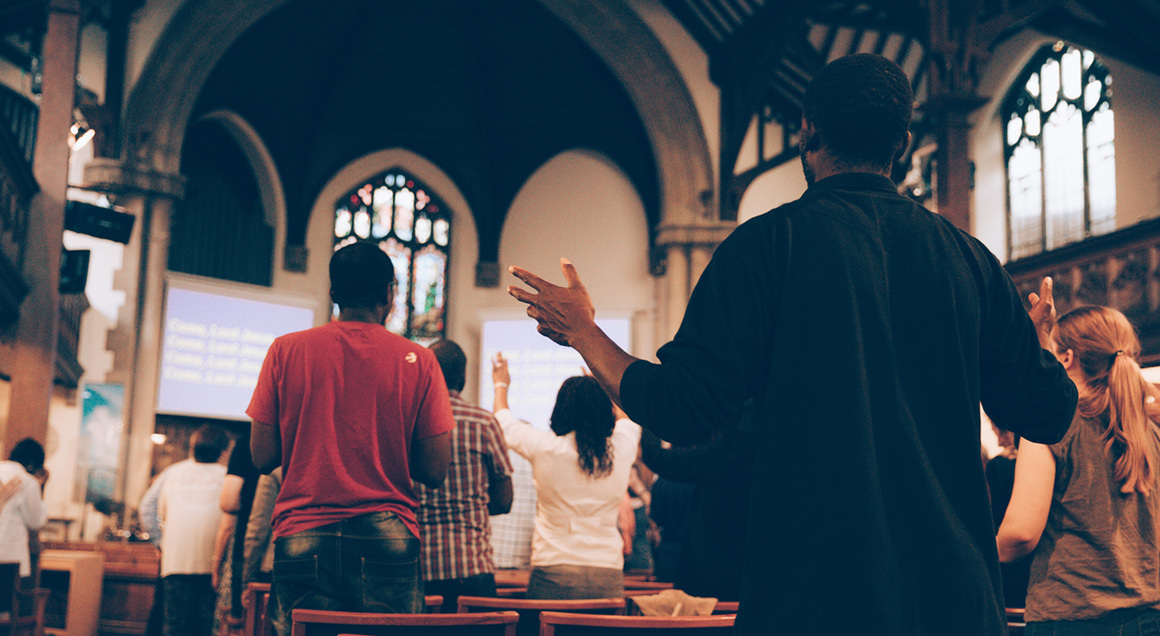
Featured image from: https://s3.us-east-1.amazonaws.com/gbod-assets/generic/Congregation-worshiping-in-church.jpg

Advent: Hope

Click here to listen to the audio recording of this 15-minute message. Or watch the video on Facebook here (the message starts at 42 minutes).

Last week we learned some Advent yoga – reaching back and seizing hold of the promises God made and fulfilled in Christ, which God has fulfilled, which feeds our faith; and reaching forward and grasping at the promises God has made that still will be fulfilled in Christ, which gives us hope. Today we focus forwards towards the hope of things yet to come. Central among this is Jesus’ second coming.

Our readings today (Malachi 3:1-4; Luke 1:68-79; Philippians 1:3-11 and Luke 3:1-6) all speak about the anticipation of Christ’s coming, including his second coming. Malachi (and Jesus) speaks about the second coming as being sudden, unexpected, which gives us a fright. We don’t know when to expect him. Malachi also says, when the Lord comes, the messenger we long for, the Son of Man, who will be able to stand? It will be daunting. (Though Jesus prays in Luke 21:36 that at the end times “you may be able to stand before the Son of Man”.)

Malachi, John the Baptist, Jesus and Paul all tell us we need to prepare for the coming of Christ. We must be ready. We must repent of our sins and receive God’s forgiveness, then we are made right God, and ready to receive Christ. Malachi speaks about purification – metal purified by fire and clothing cleansed with launderer’s soap.

There will be a sifting, a separation. Malachi calls it a sifting – of flour from chaff and sand and stones. Jesus speaks about it as a separation of sheep and goats, of pruning away and discarding unproductive branches off a fruit tree.

But it is not all challenge and judgement. It is also about hope. HOPE! The hope that comes through Jesus Christ and the great work he has done for us. Zechariah, praying over his new-born son, John (the Baptist), uses words of hope like: salvation, mercy, rescue, forgiveness, peace, covenant, righteousness, tender mercy, sunshine, rising sun. And Paul, writing to the Philippians, speaks of love that may abound more and more in knowledge and depth of insight.

Let us prepare for Christ’s return. And let us hope for what he will accomplish in and around us. Let us articulate and pray for what we hope for – our lives, our world as a better place, as redeemed and sanctified. Let us pray with hope for the world we desire God to make real for us.

Amen

I really love this song!
Featured image from https://revivalfellowship.nz/wp-content/uploads/2016/07/12_LUMO_Ascension_1920.jpg

Christ the King

Click here to listen to the audio recording of this 28-minute message. Or watch the video of the message on Facebook here (the message starts 28 minutes into the video). Or read the brief text summary below.

Today we celebrate the Feast of Christ the King. It is the last Sunday of the church calendar. Next Sunday, we start a new church year, beginning with Advent, as we prepare ourselves for the coming of Christ into the world. But the Feast of Christ the King is the culmination of everything we have done over the past year, and climaxes with a celebration of Jesus Christ as the King of Kings and Lord of Lords.

In both the first and second testaments, there are passages that describe Jesus as King and God the Father as King: Moses can see only the back of God, not God’s face in Exodus 33, Daniel see one like the Son of Man in Daniel 7, and Isaiah sees God (but does not describe God; only the seraphim) in Isaiah 6. In all cases, God is powerful, magnificent and awesome, beyond words. They went out of their minds at their experience of the greatness of God. We get similar hints of this in the second testament with Christ: Peter, James and John see Jesus transfigure before them, and are overwhelmed by Christ in his glory (Matthew 17, Mark 9 & Luke 9). Hebrews 1 tells us Jesus is the radiance of God’s glory and the exact representation of God’s being. And Revelation 1 describes John’s vision of Christ, including blazing eyes, feet like burning bronze and a double edged sword coming out of his mouth! John tells us that he feel at Jesus’ feet as though dead!

Our limited human minds cannot begin to comprehend or even see the full glory and magnificence of God as King.

And yet, in both testaments, God reveals God’s self most fully, not in such demonstrations of power, as much as in God’s love and concern for and solidarity with those who are vulnerable.

For example, both Psalms 146 and 147 present the magnificence of God, e.g., “He is the Maker of heaven and earth, the sea, and everything in them”; “The Lord reigns forever”; “Great is our Lord and mighty in power; his understanding has no limit” and “He hurls down his hail like pebbles. Who can withstand his icy blast?”

But interwoven with these references to the power of God the King, we get verses like the following: “He upholds the cause of the oppressed and gives food to the hungry. The Lord sets prisoners free, the Lord gives sight to the blind, the Lord lifts up those who are bowed down. The Lord watches over the foreigner and sustains the fatherless and the widow” in Psalm 146, while in Psalm 147: “The Lord gathers the exiles of Israel. He heals the broken-hearted and binds up their wounds. The Lord sustains the humble.”

The power and awesomeness of God is most fully revealed in God’s tender-heartedness, his compassion, his concern for the marginalised, his solidarity with the oppressed, and so on. And the most complete and full revelation of the heart of God is in the person of Christ, who is (as we read in Hebrews) the exact representation of God the Father. We think of Jesus, healing, touching, listening, seeing, walking, helping, weeping – all of these reveal the heart of Christ the King.

Our Gospel reading for today (John 18: 33-37) has Jesus talking with Pontius Pilate about Jesus as King. Jesus is persistently unwilling to refer to himself as a ‘king’ – twice he his pushed by Pilate: are you a king? And both times Jesus declines to answer directly. He is willing, though, to acknowledge that he has a kingdom (not of this world and from another place). I think he makes this concession, because a ‘kingdom’ emphasises the people who live in the kingdom more than the king of the kingdom. He is comfortable to speak about his people, the citizens his of kingdom, but not about his stature as ‘king’.

And in the end he says to Pilate, “You say I am a king”, in other words, you’re saying, not me. But, “in fact, the reasons I was born and came into the world [was not so much to be humanity’s king, but] to testify to the truth.” And what is truth? (as Pilate mockingly and cynically asks) The Truth is that God is, at the core and essence of God’s being, love. That is the ultimate truth of the Gospels and of God’s self revelation to humankind. That God is concerned for us and stands with us and fights for us and protects us and love us. This is Christ the King.

From https://timothysiburg.files.wordpress.com/2013/11/christ-the-king.jpg

Ignorance and ambition

Click here to listen to the audio recording of this 20-minute message. Or watch the video on Facebook (the message starts at 24 minutes).

James and John come to Jesus and ask him, “Teacher, we want you to do for us whatever we ask” (Mark 10:35-45). Such an audacious question! One can just imagine Jesus counting to ten. And perhaps looking at them and reminding himself that he really loves them. His response is so calm and measured: “What do you want me to do for you?”

Jesus responds to two main flaws in these two disciples: ignorance and ambition.

Ignorance

First, they are ignorant. Jesus says, “You don’t know what you are asking” – in other words, “You are ignorant in what you ask.” The disciples want to share in drinking the cup that Jesus will drink and in his baptism, without understanding that this is the cup of suffering in Gethsemane and the baptism is his death on the cross. They really have no idea what they are asking for, yet they are so caught up in their eagerness or self-importance, that they cannot see it.

We get something similar in Job 38:1-3, which we also read today. Job has been pitching for a confrontation with God for some chapters – he believes God is deeply mistaken in treating him so badly and wants to set the record straight. In the opening verses of chapter 38, God finally speaks to Job: “Who is this that obscures my plans with ignorant words?” (or “words without knowledge). “Brace yourself like a man [like a human, rather than like a God]; I will question you , and you shall answer me.” God then spends two chapters asking Job if he can do all the many things that God has done. In chapter 40:1-7, Job recognises his ignorance and says, “How can I reply to you? I put my hand over my mouth.” Yet, God is not done with him and goes at him for another two chapters.

The disciples, like Job, forget that they are human, not God; that their knowledge and capacity for understanding is limited, unlike God’s; and that they are therefore comparatively ignorant. Being ignorant is not a sin! We are just human, after all, and do not know everything. We cannot see across time and and space like God can. We cannot imagine multiple universes existing concurrently like God can. But there is a problem when we forget that we are just humans and fundamentally ignorant.

Ambition

In addition to being ignorant, James and John are ambitious – overly ambitious. They want to sit on Jesus’ left and right when he comes into his glory, that is, when he sits on his throne in heaven. Jesus quickly puts them in their place, saying “To sit at my right or left is not for me to grant.” If it is not Jesus to grant – Jesus, who is the Son of God, God the Son, the second person of the Trinity – how much more is not for the disciples to ask. “These places belong to those for whom they have been prepared” [by God the Father, we should assume].

He then goes on to speak to all the disciples about positions of power and authority. These are not fundamentally wrong or bad. Power is not intrinsically bad. However, he notes that there are some who lord their power over others, who exercise authority over others. These are people who want others to know and feel that they are the ones with power, while others are powerless and helpless. This is autocratic, oppressive and abusive power. This is the corruption of power. So Jesus says to the disciples, “Not so with you! Instead, whoever wants to become great among you must be your servant.” And he goes further to point out that even he himself – God the Son who he is – did not come to be served, but rather to serve and to die for us.

We learn about this also in Hebrews 5:7-10, where the writer emphasises that Jesus is obedient to his Father, and through that obedience, even to death, “he became the source of eternal salvation for all who obey him”. Jesus is the epitome of ultimate power that is sacrificed for the common good, even at his own expense. This is the inverse of ambition. Again, power is not wrong – Jesus was ultimately powerful. But power used for personal ambition is corrupt and harmful. It is not the way of Christ.

In short

Jesus (like his Father) is always willing to engage us with whatever questions, frustrations, angers, accusations we have for God. In none of the passages we read today, do we we Jesus or God spurning anyone. However, we are also well advised to recognise our ignorance and lack of understanding, in comparison with God’s infinite understanding; and to see to serve rather than to have power. In so doing, we get closer to God, more aligned to God, more immersed into the way of Christ. This is the path to salvation. This is the path to Christ.

Featured image from https://angelusnews.com/wp-content/uploads/2019/11/Kaczor_humility.jpg

Desperate times

Click here to listen to the audio recording of this 25-minute message. Or watch the video on Facebook here (the message starts at about 35 minutes – unfortunately the volume on the video is very soft).

There are times in our life when things are desperate. These two years of Covid, and the losses, restrictions and challenges it has brought us, have given us additional reasons to feel desperate. There are times when life is exceptionally hard and we feel that the world is pitted against us – that even God is pitted against us.

Psalm 22 knows something about this:

1 My God, my God, why have you forsaken me? Why are you so far from saving me, so far from my cries of anguish? 2 My God, I cry out by day, but you do not answer, by night, but I find no rest. 6 But I am a worm and not a man, scorned by everyone, despised by the people. 7 All who see me mock me; they hurl insults, shaking their heads. 8 “He trusts in the Lord,” they say, “let the Lord rescue him. Let him deliver him, since he delights in him.” 14 I am poured out like water, and all my bones are out of joint. My heart has turned to wax; it has melted within me. 15 My mouth is dried up like a potsherd, and my tongue sticks to the roof of my mouth; you lay me in the dust of death.

Jesus uses this Psalm to express his desperation and despair as he hangs dying on the cross. He feels God-forsaken, utterly desolate. Where is God in all of this? Why am I abandoned?

The Psalmist shows a flicker of faith – just a flicker, though:

9 Yet you brought me out of the womb; you made me trust in you, even at my mother’s breast. 10 From birth I was cast on you; from my mother’s womb you have been my God.

And he cries out with a desperate, but muted plea:

11 Do not be far from me, for trouble is near and there is no one to help.

Job knows something about desperate times, having lost everything, despite being a righteous man of deep faith. He loses everything – everything – and grapples to make sense of what feels like God’s abandonment of him. Instead of imploding in despair like the Psalmist above, Job explodes outwards in anger and wants to confront God (Job 23):

2 “Even today my complaint is bitter; his hand is heavy in spite of my groaning. 3 If only I knew where to find him; if only I could go to his dwelling! 4 I would state my case before him and fill my mouth with arguments. 5 I would find out what he would answer me, and consider what he would say to me.

Job pushes towards God, seeking confrontation, to put his case to God, to demand to know why God would let him struggle like this. Job is desperate, and his desperation evokes anger and outrage at God.

Yet God makes himself unfindable:

8 “But if I go to the east, he is not there; if I go to the west, I do not find him. 9 When he is at work in the north, I do not see him; when he turns to the south, I catch no glimpse of him.

How frustrating it is when the person we want to confront is unavailable, inaccessible. God disappears and Job is left both desperate and angry, with nowhere to vent his anger. And yet, Job is also afraid of God – God is dangerous, and a confrontation with God could be a disaster for Job:

13 “But he stands alone, and who can oppose him? He does whatever he pleases. 14 He carries out his decree against me, and many such plans he still has in store. 15 That is why I am terrified before him; when I think of all this, I fear him. 16 God has made my heart faint; the Almighty has terrified me.

In the end, Job does not offer up a muted plea like the Psalmist. Instead, he shakes his fist at God:

17 Yet I am not silenced by the darkness, by the thick darkness that covers my face.

23 “How hard it is for the rich to enter the kingdom of God! 24 … Children, how hard it is to enter the kingdom of God! 25 It is easier for a camel to go through the eye of a needle than for someone who is rich to enter the kingdom of God.”

The disciples also experience similar desperate times with Jesus. While we think and teach about Jesus as always available, receptive and loving, sometimes he is not. We know the story in Mark 10 of a young man who rushes up to Jesus, falling on his knees and asking what he must do to inherit eternal life. Jesus seems, from the get-go, to treat him harshly, eventually telling him to give away everything he has, and the young man is crestfallen and “went away sad”. Jesus then turns to the disciples and says:

The disciples are amazed and shocked – presumably at both Jesus’ response to the earnest young man and Jesus’ words about how impossible it is to saved. Peter cries out in desperation:

26 Who then can be saved? [and] 28 But we have left everything to follow you!

You can hear Peter’s despair. He has left everything – family, work, home, community, his place in society, everything – to follow Jesus, and now Jesus says that it is impossible for man to be saved and how hard it will be for anyone to be saved. It seems to Peter and the disciples that everything they have sacrificed is for nothing.

This is a low point for Peter. He hits rock bottom as it seems to him that he has lost everything. His sense of purpose is fracturing.

Sometimes, we find ourselves in similar places to the Psalmist, to Job and to Peter. Our world seems to be falling apart, the challenges of life pile up and seem unduly heavy, God seems to have abandoned us, where is he to be found?, we feel alone and desperate. It as this lowest point that transformation can come.

Peter missed something that Mark noticed. In Mark 10:21a, Mark writes, “Jesus looked at him [the rich young man] and love him.” Jesus looked at him and he loved him. Jesus looked at her and he loved her. Jesus looked at me and he loved me. Jesus looks at you and he loves you.

The writer of Hebrews helps us understand that a fundamental change occurs in the life of God, through Christ’s experience here on earth. Before the incarnation, God could see what human life was like, but could not feel what it was like. But with Jesus’ coming into this world in human form, God now knew first hard what human desperation feels like. Hebrews 4

14 Therefore, since we have a great high priest who has ascended into heaven, Jesus the Son of God, let us hold firmly to the faith we profess. 15 For we do not have a high priest who is unable to empathize with our weaknesses, but we have one who has been tempted in every way, just as we are—yet he did not sin.

And because Jesus understands fully what it is like to be human, and because he truly understands what it is like to be desperate, and because he loves us utterly and to the very end, the writer to the Hebrews invites us to come to God:

16 Let us then approach God’s throne of grace with confidence, so that we may receive mercy and find grace to help us in our time of need.

We can come to the throne of God, not with a muted plea, not with anger, not in desperation, but in confidence, knowing that at that throne we will find grace and mercy to help us in our time of need. We can be confident to wrestle with God, to plead with God, to challenge God, to lean into God. Because he love us and because he knows first hand how hard this life can be. Jesus (in Mark 10:29-31) does not promise an easy life – he promises both reward and persecution.

But he does promise that we can always have direct access to the throne of grace and mercy. Such is the love the Father has for us. God is always accessible, always nearby, always connected, always empathic, always in the midst of adversity with us.

Featured image from https://www.cdc.gov/nceh/features/hurricanepreparedness/index.html

Stewardship 4: A generously-giving church

Click here to listen to the audio recording of this 23-minute message. Or watch the video recording on Facebook (the message starts at about 27 minutes).

If you want to skip the sermon and just watch the unscripted enacted “parable of giving back to God” with 13-year-old Zachary, watch the video below. Zachary blew us all away with his 50/50 deal!

This is the fourth in our series on stewardship, in which we are concentrating on what it means to be a church – the church of Christ. In the first week, we reflected on what it means to be a God-focused (or Christ-centred) church. In week two, we reflected on being a people-driven church. Last week, we considered the role of the clergy in a people-driven, God-focused church: a clergy-supported church. And today, we consider what it means to be a generous church, or a generously giving church.

Can we accept the following core principle? Everything that exists was made by God, comes from God and belongs to God. Everything: the cosmos, the earth, the plants and animals, water and air, life itself, and we ourselves. You and me. Even the things we have made as humans originate with God – we made them from materials that come from God’s creation, using the intellect and the capacity for learning that God gave us, made by people, whom God created. Everything comes from God and belongs to God.

Including our money.

We may feel that we’ve earned our money, worked hard for it, deserve it and that it belongs to us. These are not untrue. But again, our capacity work, to learn to do our work and do it well, and the things we work with, and the self that is you who is doing the work – all of these were created by God, come from God and belong to God. Therefore, our money also is God’s. All of it.

It is a common misperception among Christians that our money belong to us, since we worked for it, earned it. This is neither true nor correct. We have to challenge this misperception many of us hold. This is vital to our being able to properly think about the money that we earn.

If we think of all the money we have as coming from God, then the small percentage of this money that we give to the work of God in and through the church, is really a blessing, because the large percentage of the money that we get to keep for our own use is a gift from God. A grace.

God invites us each to give proportionate to what we have. Traditionally, this would be ten percent of what you earn (gross or net – you decide). You could choose to give more than 10% or less than 10%, as you feel led. But having 10% in mind is a good point of departure to reflect critically on your attitude to and practice of giving.

The bottom line is that we – and you – have to give to God’s work.

It really is not optional. Everything you have is from God, and God expects you to give at least some small portion of that back to him. But God really doesn’t want you to do it grudgingly or sulkily, like a chore or unpleasant task. No! God loves a cheerful giver. God loves us to give out of gratitude for all we have already received from God, out of thankfulness, out of joy and out of the privilege to participate in God’s work in the world.

At our church, St Stephen’s Lyttelton, we’ll be doing our dedicated giving pledge next Sunday (3 October). During the coming week, give serious thought to how much of the money God has entrusted to you you will give back into God’s kingdom.

Featured image from https://news-ca.churchofjesuschrist.org/media/orig/tithing.jpg

Bread of Heaven (Part 5)

Click here to listen to the audio recording of this 25-minute message. Or watch the video on Facebook here (the message starts at 30 minutes). Or read the text summary below.

We complete our five-part series on the Bread of Heaven, this week focusing on John 6:56-69. Over the past four weeks, Jesus has been consistently redirecting us to himself and presenting himself to us as the source of life. Among other things, he has show that:

  • He cares about us.
  • He feeds us, meets our physical needs, abundantly.
  • He redirects us from earthly things to heavenly spiritual things.
  • He directs us towards himself.
  • He invites us repeatedly into a relationship with him.
  • He says he is the bread of life, come down from heaven
  • He invites us to feast on him.
  • He offers us and the world eternal life.

Now the question is: How will you respond to all this?

There are two sets of responses in our reading: the response of the larger group of Jesus’ disciples and then the response of the 12 disciples, voiced by Peter.

The response of Jesus’ disciples

Today’s reading indicates that Jesus’ teachings are hard – who can accept them? What is it about Jesus’ teaching in John 6 that is hard to accept, offensive? In part, it is his claim that he came down from heaven (John 6:42) and in part that he invites us to eat his flesh and drink his blood (John 6:52). On the one hand, he is too heavenly and on the other hand he is too earthly and fleshy. He is too high and too low!

Jesus responds to the first point by asking how they will feel when they see him ascending back into heaven (John 6:61-62). If his claim to have come down from heaven is hard to accept, how much more witnessing him ascending back into heaven! And he respond to the second point by saying they should forget about earthly flesh and concentrate on spiritual flesh and words, which are full of Spirit and life (John 6:63).

But, recognising that his teachings are hard to understand, Jesus acknowledges that some do not believe and some who believe will fall away. It is our choice whether or not we believe in him. Yet, it is important for us also to know that God the Father enables our faith, enables us to believe and even to accept hard, difficult teachings. Indeed, three times in this chapter, Jesus emphasises that it is the Father who inspires and enables our belief:

  • The Father gives us to Christ (John 6:37).
  • The Father draws us to Christ (John 6:44).
  • The Father enables us to come to Christ (John 6:65).

God is sovereign. God does the drawing of our hearts towards Jesus. We rely and depend on God to enable and inspire our faith. And so we pray to him when our faith frays.

Nevertheless, many of Jesus disciples turn away and leave him. God does not force them to stay or force them to believe. We have free well to listen to God’s call and to follow him. God may give, draw and enable our faith, but he does not coerce – we still choose.

The response of Peter

Finally, Jesus turns to the 12 disciples – they are not among those who turned away and left. He asks them, “You do not want to leave too, do you?” (John 6:67). The phrasing of the Greek implies a ‘no’ answer. Jesus is hoping that they will not join the others who have turned away.

Peter’s reply is wonderful:

“Lord, to whom shall we go? You have the words of eternal life!” (John 6:68) Peter knows the options out there, and concludes that they are all wanting. Even if Jesus’ teaching is hard to fathom, he can think of no better options. And besides, despite the difficult of Jesus’ teachings, he recognises that these are words of eternal life. Not words about eternal life, but the words of eternal life! Jesus very words are Life itself! As Jesus said earlier (v63), “the words I have spoken are full of the Spirit and of life.”

“We have come to believe to know that you are the Holy One of God.” (John 6:69) Here Peter describes a process – the same process that we have been following these past five weeks: there is a process (“we have come”) of learning to trust Jesus and to entrust ourselves into Jesus (“to believe”) that leads to knowledge about who Jesus is and what he means to us (“and to know that you are the Holy One of God”). There is a process of trusting Jesus that leads to us knowing him.

All of this (this entire chapter 6 in John’s Gospel) has been about drawing us closer into a trusting relationship with Jesus, redirecting us from the things of the world to himself, and learning to trust that he himself, as the bread that has come down from heaven, is the source of all the nourishment that we need, of life, of Spirit.

Again, the question is: How will you respond to all this?

Featured image of sourdough bread from https://www.independent.com/events/how-to-make-sourdough-bread/

Bread of Heaven (Part 4)

Click here to listen to the audio recording of this 27-minute message. Or watch the video on Facebook here (the message starts at 23 minutes). Today’s sermon is delivered by Gaba Tabane, a lay preacher at my church. Or read my text summary below.

We continue with our series on the Bread of Heaven, this week focusing on John 6:51-58. In today’s passage, Jesus dives into the deep end of his teaching so far, focusing squarely on himself as the bread of life, and calling us to eat of his flesh and drink of his blood. This is a difficult reading:

“Very truly I tell you, unless you eat the flesh of the Son of Man and drink his blood, you have no life in you. Whoever eats my flesh and drinks my blood has eternal life, and I will raise them up at the last day. For my flesh is real food and my blood is real drink. Whoever eats my flesh and drinks my blood remains in me, and I in them. Just as the living Father sent me and I live because of the Father, so the one who feeds on me will live because of me. This is the bread that came down from heaven. Your ancestors ate manna and died, but whoever feeds on this bread will live forever.”

Jesus appears to confront us this almost cannibalistic image to make intangible spiritual truths as tangible and tactile as possible, even to the point of being gross. He is speaking of the Eucharist (communion, Lord’s Supper, Holy Mass). He wants us to understand that we obtain eternal life by filling ourselves with his presence. By making him an essential part of ourselves. Thus, eating his flesh and drinking his blood is a metaphor or image to help us grasp how seriously he wants us to allow him to fill us up spiritually and diffuse through every cell of our body and every thought of our mind.

When we let Jesus into ourselves, we have life eternal in ourselves. But if we refuse to let him in, we have no life in us. This is what he says in verses 53 and 54. When we let him in, we will have deep, lasting life and we will be raised up again to new life on the last day. He says in verse 56 that when we allow him in, he will come make his home in us. The NIV says “you remain in me and I remain in you”, but this ‘remain’ means to ‘take up dwelling in’, to ‘make your home in’. Jesus dwells in us – in our body, in our mind, in our emotions, in our spirit.

Jesus says that his flesh is real food and his blood is real drink. Some churches think of the eucharist bread and wine as symbols of his body and blood. Others think of them as actual flesh and blood. Our church thinks of them as bread and wine that have been transformed in such a way that the real presence of Christ is present in them. They are real bread and wine, and also real flesh and blood – Jesus makes himself present and available to us in these elements, so that we can feast on him. Jesus says, at the last supper, “This is my body” and “This is my blood”, yet he is sitting right there, alive and without any loss of flesh or blood. So, this middle way between symbolism and transubstantiation is the most workable way of understanding his meaning. Jesus is genuinely and actually present in the bread and wine, but the bread and wine are still bread and wine, and yet far more than just that. We call this consubstantiation, which means both substances at the same time. This is a sacrament: “An outward and visible sign (baked bread) of inward and spiritual grace (bread from heaven), given by Christ as sure and certain means by which we receive that grace”.

Bruner (2012, p. 436-437) summarises his passage like this:

“Here it is; here I am; take a good look; this is it; the Great Heavenly Visit is now right here in front of you in this little space. You are very privileged to have access to this cosmic, once-in-a-lifetime event. You are looking straight at the meaning of life. This is what it is all about.”

Featured image of rye bread from https://dexam.co.uk/rye-bread