Today (Sunday 10 December) is the Second Sunday in Advent, a season in which we remember and celebrate Christ’s first coming into the work and prepare ourselves for his second coming into the world.
Two key themes emerge from our readings: repentance and redemption.
Central to our preparation for Christ’s coming is repentance of sin:
Mark 1 speaks of John’s ministry of a call to prepare for Christ’s coming, to a baptism of repentance of sin, and to confession,
Isaiah 40 speaks of the sins of the people of Israel,
Psalm 85 refers to our iniquity and sin, and warns us of God’s wrath and anger, and
2 Peter 3 calls us to repentance and warns of the possibility of us perishing.
Repentance is an important part of our lives as followers of Christ. The Greek word for repentance means to turn around – a 180 degree about turn. In repentance, we turn away from sin and towards God. It is a reorientation of ourselves in relation to God and sin. This is the most important work we can do during Advent, as we prepare for Christ.
Repentance leads to restoration. Through repentance, we are stored into our fellowship with God and experience the blessings of God in our lives:
Mark 1 speaks of John’s baptism of repentance leading to God’s forgiveness of our sins,
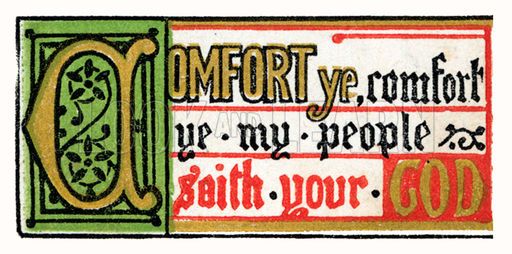
Isaiah 40 uses the most wonderful language, starting with “comfort, comfort my people”, tenderly, our hard service is complete, sin is paid for, valleys will be raised up and mountains made low, rough ground becomes levels and rugged places a plain, we all (humans) will see God’s glory and restoration, and God will tenderly gather, carry and lead us,
Psalm 85 says that God will restore us again and revive is again, That we will be together in righteousness and peace, that righteousness and peace will kiss, that faithfulness will spring up while righteousness will look down, and that God will give us what is good, and
2 Peter 3 speaks of God’s patience with us, of a new heaven and earth, of us becoming spotless, blameless and at peace with God, and that God’s patience means our salvation.
These wonderful words of restoration are the fruit of repentance. As we turn 180 degrees away from sin and towards God, something most of us have to do daily (even hourly or minutely!), God forgives and restores. This is the great gift of God’s son – Jesus comes into our world to forgive and restore.
Today’s reading is Matthew 20:1-16. It is the story about a landowner who hires people to work in his field, starting from early in the morning (perhaps 5am) until 5pm in the evening. He promises the first a denarius – a generous day’s wage; and he promises the later workers a ‘fair’ wage. He comes out himself even late in the day and asks people why they are standing around doing nothing, and they say, because no-one has hired them, and so he hires them, knowing that humans were created to work – God’s first commands to Adam and Eve are to work in the garden and take care of the earth. This is the first grace: we are invited to work with God.
Evening comes and the landowner calls the workers together and pays everyone the same – a denarius. The workers who started early are understandably unhappy. But this is not a story about labour and economics. It is a story about grace. God’s grace is abundantly given to all of us, whether we start early or late, whether we do much or little. Think of the thief on the cross beside Jesus in Luke 23 – he could do nothing on that cross, yet he entered into Christ’s paradise. The landowner asks the disgruntled workers if they are envious that he is generous – do you envy my grace? Grace if fundamentally unfair. This is the second grace: we ALL get what we do NOT deserve.
Fix your eyes on Jesus. Be amazed by grace.
Just last night, my wife Trina shared with me this video of ‘Amazing Grace’ sung differently by Dan Vasc. It fits so perfectly, I cannot help but conclude it was God’s prompting.
I am working in the United States from early August to early December, at the Appalachian State University in Boone, North Carolina. During this time, I will be sending out a short mid-week message. This is the message that went out 9 August. My apologies for posting it late here on my blog.
Matthew 15:21-28 is a story of Jesus’ encounter with a Samaritan woman. He looks into her heart and hears her deep faith and grants her her request. He ignores her demographic – female, Samaritan – and sees her true self. Jesus does the same with us. And expects us to do the same with others.
Over the past two Sundays, our readings have directed us towards the conclusion that God wants the whole of us – for us to give ourselves utterly into God’s hands to do with us as God wills. We first got this from Jesus’ teachings in Matthew 10 (Hard Words) and second from Abraham’s willingness to sacrifice his son Isaac (Abraham’s Example). Typically, our inclination is to hold back and not surrender – relinquishing ourselves to God does not come naturally.
Today’s readings continue this theme but from a somewhat different perspective. They all point towards the roles of actors in a divine drama or play. We are the actors, and God is the Director. The play works out best when each actor does their part according to the directions of the Director. Since our Director is both competent and good, the drama of our lives can also be successful and good. But only if we as actors follow our Director’s directions.
Abraham is nearing death and wants his son Isaac to get married, but not to someone from the neighbouring communities, but rather from his home country.
His senior servant is called in to act on Abraham’s behalf – the servant is not named, but is the central actor in this chapter. The servant has charge over all of Abraham’s things. Abraham commissions him to go to his homeland and get a wife for his son, giving detailed instructions on what to do and not to do.
In vv12-14, the servant prays to the God of his master Abraham to make him successful and to show kindness to Abraham – remember that the Director is both competent and kind. In his prayer, the servant sets out a narrative of how he hopes things will go – that he speaks to a young woman, asking her for a drink, she offers him a drink and also offers water for his camels.
Rebekah then comes out, and the narrative plays out just as the servant had prayed (vv15-22).
The servant then asks if he can spend the night at her father’s house and it all works out. The servant gives thanks to God for “his kindness and faithfulness” to his master (v27).
Rebekah runs home and tells her family about the servant, and her brother Laban comes out to welcome him into their home. They take care of both the servant and his camels (vv28-33).
The servant then recounts to Laban and his family the whole story that we have already been told (vv34-49).
This is followed by various details of the negotiations that rapidly culminate in Rebekah agreeing to go immediately with the servant to get married to Isaac (vv50-61). They arrive back at Abraham’s home, Rebekah and Isaac meet and get married (vv62-67), in so doing continuing the lineage from Abraham to Jesus (as provided in Matthew 1).
In this narrative, the servant is an actor – an agent who behaves, speaks, makes decisions, impacts the world. He trusts in Abraham and in Abraham’s God, thereby carrying out the will of God. He relinquishes himself to God.
Rebekah is similarly an actor – she engages with the servant, shows hospitality to him and his animals, argues against her brothers about leaving immediately rather than later, and agrees to marry Isaac. She exercises power and agency in her life, in accordance with the will of God. She relinquishes herself to God.
In short, we have actors doing the will of God the Director.
The Psalms provided in the Lectionary typically provide a commentary on the First Testament reading and today is no exception. Psalm 45 presents us with three actors and a director.
v1 starts with “My heart … as I recite … my tongue.” Here is the Psalmist, writing in first person and also congratulating themselves on their skill as a Psalmist. The Psalmist is an actor – present and active in the creation of this Psalm.
vvv2-9 are addressed to ‘you’ – to the King. In the context of Genesis 24, we should think of the King as representing Isaac, though Isaac was not a King. The King/Isaac is also an Actor, because of how the Psalmist describes him, e.g., as defending truth, humility and justice.
vv10-12 are addressed to ‘daughter‘, the bride. She represents Rebekah and the Psalmist speaks directly to her (not just about her) making her an actor.
vv13-15 are a commentary, by the Psalmist, about the wedding and how wonderful it is.
v16 is directed again at the King – your sons, your fathers, you will make – confirming the King as an actor.
v17, finally, returns to the “I” (which we last heard in verse 1). In verse 1, the I referred to the Psalmist. It is possible that the I in v17 is also the Psalmist, but I think the claims that are made in v17 exceed the capacity and power of the Psalmist, and that here ‘I’ refers to the Director – to God. The Psalmist’s life is too short, but God can work “for ever and ever”. It is God who will perpetuate the memory of the king through all generations and across all nations.
Thus, God is revealed in the last verse of the Psalm to be the Director. Although the Psalmist has considerable power in writing the Psalm, ultimately, even the Psalmist is an actor in a larger play directed by God.
This passage from Romans is full of “I”. It seems obvious that Paul is here referring to himself, writing in first person, but it is possible that he is referring to ‘a person’ using ‘I’ as a shorthand, and there is debate among commentators on whether the ‘I’ is a Christian or an unconverted person. I don’t want to get into all that today. The key point for today is that there is a clear actor here, referred to as “I“, whoever that person may be.
What we see happening in this actor’s life is a grappling between a desire to be good and a tendency to do evil. We are given an insight into the heart of this person, grappling with their own brokenness. This reaches a climax in v24, “What a wretched man I am! Who will rescue me from this body that is subject to death?”
And then the Director steps in: “Thanks be to God, who delivers me through Jesus Christ our Lord!” Or arguably, two actors, but so in sync with each other, that they are truly one being or essence.
What we can take from Romans 7 is that in our grappling with ourselves, as we hope to become transformed into the image of Christ, God is directing. And God is competent and good – God will bring it to fruition in God’s good time. We must, in the meantime, play our part as actors who make repeated choices to act in accordance with God’s desire for and image of a redeemed humanity.
Lastly, we come to our Gospel reading. In the opening verses of this passage, Jesus seems to be saying that the people of this world think that they are directors (vv16-17):
“To what can I compare this generation? They are like children sitting in the marketplaces and calling out to others: ‘We played the pipe for you, and you did not dance; we sang a dirge, and you did not mourn’.”
They think they are puppeteers, who can direct others to do their bidding. But unlike God the Director, they are neither competent nor good. Instead, they are capricious and mean-spirited, as Jesus explains in vv18-19:
“For John came neither eating nor drinking, and they say, ‘He has a demon.’ The Son of Man came eating and drinking, and they say, ‘Here is a glutton and a drunkard, a friend of tax collectors and sinners.’ But wisdom is proved right by her deeds.”
In this last sentence of v19, Jesus reveals who the director is: Wisdom! Wisdom is the First Testament forerunner of Holy Spirit. The Spirit of God is the Director: wise, good and competent. It is by her deeds – her actions – that she is proved right.
In the rest of this passage (vv25-30) Jesus emphasises God as a good and kind director, who has our best interests at heart.
In summary, God does want all us, completely and utterly. It is when we follow his directions (i.e. when we are yoked to him) that we become true and full actors, free to play our part in his play.
Click here to watch the video of this 28-minute message on Facebook (the message starts about 29 minutes into the recording). Note that this is an active sermon – worth watching, rather than just reading. I don’t have an audio recording of this message. Or read the text summary below.
Matthew 9 tells the story of Jesus calling Matthew: “As Jesus went on from there, he saw a man named Matthew sitting at the tax collector’s booth. “Follow me,” he told him, and Matthew got up and followed him.” And Genesis 12 tells the story of God calling Abram: “Go from your country, your people and your father’s household to the land I will show you.” Go! Follow me! These calls have nuclear power to move people – Matthew got up and followed Jesus, Abram packed and moved into the unknown.
Jesus is calling you and me today – Follow me! Go! – but to where? Where do we go? Where do we follow?
Matthew 9:16-17 gives us invaluable insights into what Jesus calls us to, in the metaphor of new wine in new wineskins:
“No one sews a patch of unshrunk cloth on an old garment, for the patch will pull away from the garment, making the tear worse. Neither do people pour new wine into old wineskins. If they do, the skins will burst; the wine will run out and the wineskins will be ruined. No, they pour new wine into new wineskins, and both are preserved.”
Although the metaphor is a bit obscure, at very least we can take from this that there are challenges in mixing the old and new. Jesus leans strongly in favour of the ‘new’ – new wine and new wineskins are what we’re after. A few verses earlier (v13) he gives another clue about where we are following him to, when he quotes Hosea, “I desire mercy, not sacrifice”. Mercy represents love for people, while sacrifice represents religion. Jesus is saying – indeed God is saying – I don’t want your religion, I want your love for people. This is the ‘new’ teaching – or rather an old teaching renewed – that Jesus gives us. And the whole of Matthew 9 illustrates this with examples.
Come along with me – follow me! – as we briefly consider the seven stories that illustrate following the new wine in Matthew 9:
The chapter opens with a paralysed man, brought to Jesus by his faith-filled friends. Jesus sees their faith and says, “Take heart, son; your sins are forgiven.” The teachers of the law are outraged by Jesus’ presumption of having authority to forgive sins – they’re not interested in the man, only in their theology. Jesus responds strongly and heals the man as evidence of his authority to proclaim forgiveness of sins. Jesus’ love for this physically and spiritually broken man takes precedence over the teachers’ petty theology.
In verses 10-13, Jesus attends a party hosted by Matthew, who is now following Jesus. Matthew’s friends are tax collectors and sinners – ‘bad people’. The Pharisees – another religious group – are disgusted and ask Jesus’ disciples, “Why does your teacher eat with tax collectors and sinners?” They are not concerned with the humanity of Matthew and his fallen friends – they are concerned only with religious piety and ‘rightness’. They dehumanise these broken people. Jesus confronts them, “It is not the healthy who need a doctor, but those who are ill… For I have not come to call he righteous, but sinners.” Jesus’ love for sinners, for bad people, takes priority over everything.
In verses 14-17, while still at the same dinner party, the disciples of John the Baptist come and ask Jesus, “How is that we and the Pharisees fast often, but your disciples do not fast?” Their use of ‘often’ (we fast often) betrays the religious pride. Their interest is in religious observance and spiritual discipline. But Jesus dismisses their concerns, asking “How can the guests of the bridegroom mourn while he is with them?” He has little interest in fasting or other religious piety – he is more interested in spending time engaging with people. It is in this immediate context that he speaks about new wine – he is not interested in religious and theological precision and rightness; he is much more interested in human relationships, fellowship, compassion and love.
In verses 20-22, while still at the same party, a synagogue leader tells Jesus that his daughter has died and asks if Jesus can come and help. Jesus leaves immediately, as his compassion for this young girls outweighs his fellowship with Matthew and his friends. On the way to the house, a woman who has been bleeding (menstruating) heavily for 12 years touches his cloak and is healed by Jesus’ power. Her faith is strong: “If I only touch his cloak, I will be healed.” Jesus stops and speaks with her, he proclaims healing and wholeness and salvation. We imagine he took hold of her hand as he lifted her up onto her feet. While in the other stories there are crowds of noisy people around, here there is silence. Men and women keep menstruation quiet and private – it is not public. And in those days, women were considered unclean during their period. For Jesus to engage, speak, touch her was to make him unclean. He didn’t care about that – he cared just for her.
Reaching the house of the synagogue leader, there is a noisy crowd outside. They mock Jesus when he says the girl is just sleeping. He goes up to her room and takes her by the hand. Touching a dead person makes one unclean, but Jesus doesn’t care about that – he cares only for the girl. She is revived and gets up.
Briefly, Jesus continues on his way and heals two blind people, “According to your faith let it be done to you”. He sternly warns them not to tell anyone about him healing them. He is not interested in recognition – he cares only about their sight.
And then he encounters a demon-possessed man (perhaps today a schizophrenic). He drives out the demon. The Pharisees cannot recognise Jesus’ compassion for this man’s wholeness and well-being; they say, “It is by the prince of demons that he drives out demons”.
Jesus quoted Hosea, “I desire mercy, not sacrifice”. Jesus tells about the new wine – his people-centred gospel of love and inclusion – that is incompatible with the old wineskins of religiosity, piety, self-righteousness. He is all about people: “I have not come to call the righteous, but sinners”.
So, as we follow Jesus, as we answer his call to ‘Go!’, we must put people before religion, relationships before theology, acceptance before judgement, inclusion before exclusion, love before judgment. This is the new wine of Jesus’ Gospel that should be poured into the new wineskins of our hearts and churches.
Click here to listen to a reading of the Passion of Christ according to St Matthew (26:14-27:66, from the New International Version) or click here to watch a video of this reading (the reading starts at about 26 minutes).
For centuries, Christians have combined the celebration of Palm Sunday with the reading of the Passion Story. I did not grow up in a church that did this. We had “Hallelujah’s” on Palm Sunday as Jesus rides triumphally into Jerusalem, and then “Christ is Risen Indeed” on Easter Sunday. In between, there was nothing. But our tradition is to set together these two sets of narratives to drive home the stark reality of how easily we humans can go from ‘Hallelujah!’ to ‘Crucify him!’ within days. The reading takes about 25 minutes. It is the only time each year that we read the entire Passion Story, and so well worth listening to or watching.
Over this Lenten period, we have focused on Jesus’ repeated command to love one another, to love each other, as he has loved us. In the first week, we focused on the ‘primacy of love’ – that this command is central to Jesus’ teaching, practice and expectations of us. Love is not just something Jesus does, it is who he is. Indeed, it is who God is! It is the essential identity of God, who has existed in loving fellowship within the Trinity, since before the beginning of time and space. And thus, love is to be the defining identity of ourselves, individually and collectively, as Christ’s followers.
In the second week, we unpacked the qualities of this love, things like sincerity, goodness, brotherliness, humility, gentleness, patience, bearing, forgiving, depth, sympathy, compassion, humility and hospitality. Many of these qualities suggest that we make ourselves smaller and less important, less dogmatic and opinionated, as we make space for others.
In the third week, we moved towards the dark side of love – what does the failure of love look like. We recognized that it is often when we are dogmatic, opinionated, rigid and arrogant that our behaviour and disposition towards others becomes unloving. In Jesus’ book, being ‘right’ is far less important than being good, kind, inclusive, generous and patient.
And then in the fourth week, last week, we reflected on love expressed as acceptance and unity. Acceptance implies being willing to make space for people who are different to us (in race, culture, gender, language, etc.) and with whom we have different views (on politics, theology, practises, etc.). Acceptance does not require us to agree, but to tolerate and listen to other ways of being. Unity implies that, even in the midst of difference, we work together as a unit towards common goals. In this, Christ is our head – he sets our path for us, and we, as bits of his body, cooperate towards his vision.
This week is the last week of our Lent programme, and we focus on loving encouragement. We are invited to think about how we build one another up in faith and competence and confidence, to each play our part in the body of Christ. It is about affirming each other. That affirmation often involves recognising what someone brings to our collective, appreciating it and encouraging its expression. It is also about recognising when someone is struggling with life and reach out to them with compassion, care and support.
Let’s start in Ezekiel 37 – the story of the valley of dry bones. The people of God are feeling dried up, dusty, hopeless, cut off, scorned and dead. It is then God’s breath that brings them to life. God twice says, “I will make breath enter you and you will come to life” (Ez 37: 5&6). But although the bones came together, “there was no breath in them.” And so God calls on Ezekiel to prophesy to the breath: “Come, breath, from the four winds and breathe into these slain, that they may live”. And Ezekiel writes, “So I prophesied as he commanded me, and breath entered them; and they came to life and stoop up on their feet” (Ez 37:9-10).
The Hebrew word for ‘breath’ is ruach, and can also be translated spirit. It’s the word used in Genesis 1:2, “The Spirit of God was hovering over the waters”. So this word ‘ruach’ can be mean’s God’s breath, our breath and the Holy Spirit – indeed all of these! It is God’s breath, with which he speaks, that enters the dry bones, empowered by the Holy Spirit, bringing them to life. Ruach brings the dead to life, brings them out of their graves!
Just as Jesus brings forth Lazarus from the grave, by his word, his breath, his ruach: “Lazarus! Come out!” (John 11:43). And out he came!
When we speak loving to each other, we are using our breath, and speaking with the Spirit of God who dwells in us – it is our ruach that can bring life to those around us. A kind, gentle, affirming, encouraging word can go along way to bring new life to someone who is feeling dried out.
Our psalm for today, Psalm 130, reads like the cry of those dead people in the valley of death in Ezekiel. You can imagine them crying out with these words, “Out of the depths I cry to you, Lord. Lord, hear my voice. Let your ears be attentive to my cry for mercy” (Psalm 130:1-2).
This Psalm speaks more to those who need encouragement, than to those who offer it. There is a call to those of us who are feeling dry and tired and dead to wait on God, to trust in God, to kindle some faith that there is forgiveness and mercy, hope and redemption. We need to call out to God: Lord, hear my voice! And in v5 we hear again the breath of God: “In his word I put my hope” – it is as God’s speak that we find our hope. When are needing encouragement, we need to allow ourselves to yearn for God, to turn to him for refreshment, to seek his life-giving spirit.
So, loving encouragement has two main sides: first, we are invited to be attentive to the needs of those sitting around us here in church and to speak words of life and encouragement to them. And second, when we are feeling dried up and frail, we need to speak up and call on God and on those around us for God’s Spirit, God’s love, God’s mercy, God’s restoration. In so doing, we stand in the light, love and breath of God – we are encompassed around by his Spirit, we receive life and find our place in the Body of Christ.
So, as we close today, let me read to you the words of encouragement that Paul speaks to the church in Thessalonica when they were feeling stuck in darkness: 1 Thes 5: 4-11, 14b-24:
But you, brothers and sisters, are not in darkness so that this day should surprise you like a thief. You are all children of the light and children of the day. We do not belong to the night or to the darkness. So then, let us not be like others, who are asleep, but let us be awake and sober. For those who sleep, sleep at night, and those who get drunk, get drunk at night. But since we belong to the day, let us be sober, putting on faith and love as a breastplate, and the hope of salvation as a helmet. For God did not appoint us to suffer wrath but to receive salvation through our Lord Jesus Christ. He died for us so that, whether we are awake or asleep, we may live together with him. Therefore encourage one another and build each other up, just as in fact you are doing. … And we urge you, brothers and sisters, …encourage the disheartened, help the weak, be patient with everyone. Make sure that nobody pays back wrong for wrong, but always strive to do what is good for each other and for everyone else. Rejoice always, pray continually, give thanks in all circumstances; for this is God’s will for you in Christ Jesus. Do not quench the Spirit. Do not treat prophecies with contempt but test them all; hold on to what is good, reject every kind of evil. May God himself, the God of peace, sanctify you through and through. May your whole spirit, soul and body be kept blameless at the coming of our Lord Jesus Christ. The one who calls you is faithful, and he will do it.
During this Lent 2023, we are reflecting on Christ’s repeated command to “love one another“. (Remember that ‘one another’ and ‘each other’ refers to our brothers and sisters in Christ, that is, our local and global congregation. This is not to say that we don’t need to love people outside the church! No!! But it is true that Jesus emphasises the love we have for one another within the church, because it is by this that people will know that we are his disciples and will become curious to find out more about this Jesus.)
This week we focus in on the many passages that describe this love that we have for one another as being characterised by acceptance and unity.
In John 17:20-26 Jesus emphasises this unity. In John 17, Jesus prays for his disciples and then for all believers, including us in the future who came to believe through their message. He prays “that all of them may be one”, and again “that they may be one”, and then clarifies that he’s praying that we (Christians) may be one “as we are one” – that is, as Christ and the Father are one. That is the quality of oneness that Jesus wants us to experience with each other! The same kind of oneness that the Father, Son and Spirit experience within the Holy Trinity. And so Jesus continues to pray “that they may be brought to complete unity” – not just any old unity, not just grudging agreement or apathetic compliance, but complete unity. Jesus has very high expectations for the kind of closeness and harmony he wants us to experience among each other in the church.
And he then says, “Then the world will know that you sent me and have loved them even as you have loved me.” Sjoe, that’s a big ‘THEN’! It means that our oneness, our unitedness, is a condition for our witness. In other words, if we are fractured, splintered, out of touch with each other, unloving and critical towards each other, all these things – then we cannot be Christ’s witness to the world. Remember what Jesus said just a few chapters earlier: “A new command I give you: Love one another. As I have loved you, so you must love one another. By this everyone will know that you are my disciples, if you love one another” (John 13:34-35). It cannot be clearer than that, can it? We have to be unified, we have to be one. It is Jesus’ core command.
So, how is the church doing? I leave you to reflect on how your own local church community is doing in relation to unity and oneness. But when we look more broadly at my denomination - the global Anglican Communion - like many denominations, eish, we are doing badly. Our church is on the brink of fracturing right now, over different views of sexuality and gender, and particularly over what defines a marriage. I think there is nothing wrong with different views on things - difference can be refreshing and difference is built into the New Testament image of the church (as we'll soon see). But when different views become hostile dogmatism, toxic judgement and name calling (like 'apostacy' and 'blasphemy' and 'heresy'), then we have totally lost what Jesus has called us to - to unity and oneness. Such dogmatic stances are a recipe for disaster.
But let us continue to unpack what the Scriptures have to say about love as acceptance and unity. In Ephesians 4:1-16, Paul picks up on Jesus’ words about the love that the Father has for him being in us, and that he may be in us just as the Father is in him. This is the language of interpenetration – that we are bound up together as one, as a body, where all the parts are interconnected. This image of the church as the Body of Christ is most fully developed in 1 Corinthians 12. This chapter is so well known that I’m not going to talk about it here, but it is a great chapter to read again in this context.
In Ephesians 4, though, Paul writes repeatedly about oneness. In verses 4-6 he uses ‘one’ seven times! “There is one body and one Spirit, just as you were called to one hope when you were called; one Lord, one faith, one baptism; one God and Father of all, who is over all and through all and in all.” (Those last words are again about interpenetration, aren’t they?) This oneness of the church community is strongly emphasised in Paul’s thinking.
But he quickly goes on to speak about the diversity of the church community: “So Christ himself gave the apostles, the prophets, the evangelists, the pastors and teachers, to equip his people for works of service” (Eph 4:11-12). Here we have extensive diversity – different gifts, abilities and roles – a kaleidoscope of difference.
Paul deftly hold these apparent opposites – oneness and diversity – together. In v12 he says that all these parts of the body are “held together by every supporting ligament”, that Christ “is the head” that helps us walk in the same direction” (v15), which enables the “the body of Christ [to] be build up until we all reach unity in the faith” (v12-13), that we must “make every effort to keep the unity of the Spirit through the bond of peace” (v3) and that this requires us to “be completely humble and gentle, patient, bearing with one another in love” (v2). All this language speaks of intention, commitment and effort towards unity – it won’t just fall out of the sky – we have to work at it. We have to work at love.
When it comes to the things of the church and to the witness of the church to the world, Jesus and Paul repeatedly emphasise both our diversity and our unity. But UNITY or ONENESS is always the overriding message. And LOVE is the key, essential and only strong-enough force to bridge the gap between unity and diversity. We must love one another, we must accept each other and be united, we must become one body, we must celebrate and accept differences – this is Christ’s repeated command: acceptance and unity.
This sermon is the first in a series of five on the Lent theme, “Love one another”. This theme is part of a larger theme on ‘Identity’, which our Diocese is focusing on this year – who are we as Christians, as the church? Within this broad theme of Identity, our parish is focusing on Jesus’ command to ‘Love one another’. And today, our particular focus is on the primacy of love.
Our Gospel reading for today (John 15: 1-17) has a strong emphasis on remaining in Christ as he remains in his Father and in us, and on remaining in Christ’s love, as he remains in his Father’s love. This passage ends with, “This is my command: Love each other!” (John 15:17). It echoes an earlier passage (John 13:34) where he says, “A new command I give you: love one another”. This is a repeat of his Great Commandment (Matthew 22, Mark 12 and Luke 13): to love God with all you have, and to love your neighbour as yourself.
About this Great Commandment, Jesus says, hang all the law and the prophets. Gal 5:14 echoes this, “The entire law Is summed up in a single command: love your neighbour as yourself.” And Romans 13:9 similarly says, All the commands and “whatever other command there may be are summed up in this one command: Love your neighbour as yourself. … Therefore love is the fulfilment of the law.” You can hear that this command is repeated again and again across the New Testament.
In addition to the command to love one another, there are dozens of other passages in the New Testament that speak about ‘one another’ or ‘each other’ and they all seem to refer to our relationships with people within the church – with other Christians, in the household of faith. There is supposed to be a special bond of love among Christians. As Jesus says in John 13:35, “By this [love that you have for one another], everyone will know that you are my disciples, if you love one another”. We are what Paul later describes as the Body of Christ in 1 Corinthians 23.
The big question is: Are we exemplifying this kind of love for one another here in our church?
This love that Jesus talks about incessantly is more than just behaviours; it is our very identity. Deut 6:6-9 unpacks how the great command of God, to love God with all your heart and with all your soul and with all your strength, is to become the very fabric of life: “The commandments that I give you today are to be on your hearts. Impress them on your children. Talk about them when you sit at home and why you walk along the road, when lie down and when you get up. Tie them as symbols on your hands and bind them on your foreheads. Write them on the doorframes of your houses and on your gates.”
You can hear from this how central the Great Commandment is to God. It is a summation of the entire law, because it is the primary value of God. In Jesus, the command to love each other is the summation of God’s revelation to humanity and his central and persistent message. This love for each other reflects the very heart of God. We are called to develop a culture of love – a pattern of living that is deeply embedded in our habitual practices as a community. Our love for one another here in the church should be so engrained that we barely think about it.
There is a lot of caring in this church, but I think we are not yet living up to Jesus’ example and expectations. During this Lent we want to immerse ourselves in this central teaching of Jesus and this central value of God. Let us become deliberately conscious and mindful of how we interact with each other, and purposefully work to be more loving and more caring towards each other.
Today’s set of compelling readings from Micah 6:8, Psalm 15:1-3, Matthew 5:3-10 and 1 Corinthians 1:27-28, point us to the heart of a God who is concerned for those who are marginalised, vilified and outcast. They also emphasise that our responsibility as Christians is to be merciful, kind, humble, inclusive and generous.
In light of these readings, today’s message addresses the complex and controversial topic of sexuality in the church, particularly homosexuality. This is a topic that has been long ignored and more recent has lead to deep divisions within the the church between those who are against and those who are for (or at least tolerant of) gay relationships. Many gay Christians feel deeply rejected by the church – not just for what they do sexually, but for who they are – for their very being, their humanity, which is experienced to be under attack by Christians and the church.
In today’s message, I endeavour to the following, which I encourage you to watch, listen to or read, using the links provided at the top of today’s blog.
Some clarification of terminologies, particularly the difference between gender identity (who I see myself as being in terms of gender – traditionally male or female) and sexuality (who I have sexually or romantically attracted to – traditionally heterosexual or homosexual). Both of these terms have become increasingly diverse and nuanced in recent years.
Developing an understanding of how the Scriptures were authored within particular historical and cultural contexts that differ vastly from contemporary society.
I address five broad points of discussion in this message:
The belief of many Christians that heterosexuality is God’s only legitimate sexual orientation. I’ll show that this is not true.
The belief of many Christians that the Bible does not anywhere say that gay relationships are okay. I’ll show that this is not entirely true.
The belief of many Christians that the Bible condemns homosexual relationships as an abomination. I’ll show that this is not true.
The point that among the numerous laws in the Bible, some Christians draw on preconceived cultural beliefs to justify their condemnation of homosexual relationships.
And the primary of love that is presented in Jesus Christ’s teachings and his example of radical inclusivity.
Based on the above discussion points, I draw 4 key conclusions:
In human relationships, God is most interested in the quality of our love.
God is not interested in the sex or gender of the person we love.
Marriage is sacred, a divine joining together, and must be protected.
Marriage (defined as a sacred joining together or union) is not restricted to a man and a woman.
And in light of this I hope that my parish and your church community would aspire to:
emulate Jesus’ example of radical inclusivity, diversity and love
create a church space where people of various sexual orientations feel welcome, accepted and loved
focus on and champion the quality of love in human relationships.
I do appreciate that the views of Christians on the subject of homosexuality vary widely, and that there are many that will view my understandings and interpretations of the Scriptures as false and heretical. Our views on this subject can be deeply divisive. Nevertheless, I take Jesus’ lived life (how he behaved with people he encountered) and Jesus’ spoken teachings about what is most important to God as the central guides to make sense of the rest of Scripture. He is God incarnate – he is the perfect reflection of who God is. He himself says, “Whoever has seen me has seen the Father” (John 14:9). I follow him.












 Reflections of God's Love