A long story of God’s salvation

Click here to listen to the audio recording of today’s 17-minute message. Or watch the video on Facebook here (the message starts at about 25 minutes). Or read the short summary below.

Our Old Testament readings over Lent provide us with highlighted of the long story of God’s salvation of humanity. I thought that today we should look at all of these readings – the five Old Testament Sunday Lent readings, and today’s New Testament reading.

I summarise the development of God’s work for salvation as follows:

  1. God’s unconditional covenant with humanity
    • Genesis 9 (God’s rainbow covenant)
    • ‘Covenant’ is mentioned seven times
    • God promises never to destroy humanity with a flood
    • The rainbow reminds God of this covenant God has made with us
    • This covenant is entirely God’s doing and initiative, and unconditional for all humanity
  2. God’s everlasting covenant, plus circumcision
    • Genesis 17 (God’s covenant of circumcision)
    • ‘Covenant’ is mentioned 10 times
    • In three of these God says the covenant is everlasting
    • However, now the covenant has conditions:
    • Abraham must walk before God faithfully and blamelessly (v1), and
    • Males must be circumcised.
    • Males who are not circumcised fall outside God’s covenant (v14)
  3. God’s external law, which humanity must obey
    • Exodus 20 (God’s 10 commandments)
    • God now sets external laws by which we must abide
    • Now the responsibility for maintaining a right relationship with God is entirely humanity’s
    • Paul’s problem with this approach is that we inevitably break the law and thus fall out of favour with God
    • The solution of the Law alienates us from God
  4. Punishment for sin, but grace for salvation
    • Numbers 21 (God’s bronze snake)
    • But now we see a shift in God’s engagement with humanity
    • Still, law is important, and those who sin were bitten by poisonous snakes
    • But God instructs Moses to make a bronze snake which is lifted up
    • Those who look to this snake are saved/healed
    • This is a sign of grace – we look to God and God saves
    • The is a foreshadowing of the cross – we look up to Jesus on the cross, who saves
  5. God’s internal law; God’s choice to forgive
    • Jeremiah 31 (God’s law written on our hearts)
    • God says he is now setting out a new law that replaces the old – we see God shifting
    • This new law is written in our hearts – not on tablets or paper
    • And God chooses to forgive, out of God’s own initiative (v34b)
  6. Christ wins once-for-all salvation through faith
    • Romans 2-4 (God’s salvation by grace through faith)
    • Now, after Christ, salvation is by grace – it is won by Christ for us
    • We can add nothing to the salvation he has made possible
    • God chooses to forgive us, and indeed has already forgiven us and our descendants already – this is grace (a free gift)
    • We receive this grace through faith – we simply open our hearts and receive what is already available to us
    • We don’t earn our salvation – Christ has already done that – we merely receive it

There are three summary messages from today’s teaching:

  1. God has always been working for our salvation, since the creation – and continues to do so today
  2. God’s ways of working with humanity shift over time – God is not a stone – God is a person who adjusts their style of interacting with us
  3. Christ has fully accomplished our salvation – we can and need add nothing to it – we are invited merely to receive it
Featured image from https://davidjeremiah.blog/wp-content/uploads/2018/04/an-assurance-of-salvation-verse-to-know-by-heart.jpg

My eyes have seen

Click here to listen to the audio recording of this 7-minute message. Or watch the YouTube video below.

Today we celebrate the festival of the presentation of our Lord at the temple, in Luke 2:22-40. For Simeon, encountering the infant Christ was the pinnacle of his life, and so he says, “Sovereign Lord, as you have promised, you may now dismiss your servant in peace, for my eyes have seen your salvation.” Seeing or encountering Christ is the high-point of our lives; everything else is a bonus, icing on the cake. Let us remember our first encounter with Christ, and put the rest of our life in perspective.

Featured image: “Simeon’s song of praise” by Arent de Gelder (1700-1710), from https://commons.wikimedia.org/wiki/File:Aert_de_Gelder_-_Het_loflied_van_Simeon.jpg

Acts of love

Click here to listen to the audio recording of this 19-minute message. Or watch the video recording on Facebook (the message starts at about 24 minutes).

Our readings for today speak about the balance between knowledge and action – between what we know in our heads and what we do with our bodies. What we’ll see is that in the Gospels, Psalms and Paul’s letters, actions are more important than knowledge. It is not the knowledge is unimportant – no! Knowledge is important. But acts of love are even more important. The hallmark of a Christian is not so much what they know as what they do.

In our Gospel reading for today (Mark 1:21-28) we read about Jesus first ministry. We read that Jesus went into the temple and was teaching. And people were amazed at the authority of his teaching. The people later conclude, “What is this? A new teaching – and with authority!” Clearly, Jesus’ teaching, based on his knowledge, is important.

However, only 1 verse describes him teaching, and we don’t know what he actually taught. But there are 4 verses describing is actions. While he was teaching a demon possessed man came and challenged Jesus. Jesus cases out the evil spirit and the man is made well. This act of love, this work of love, gathers more attention than his teaching. And the people conclude, “He even gives orders to impure spirits and they obey him.”

While both knowledge and actions are present in this Gospel passage, actions are far more detailed and compelling.

If we then turn to Psalm 111, we find a similar pattern. Verses 7 and 10 speak about God’s precepts. A precept is a general guideline or principle; not a ‘law’, which is far more specific and prescriptive. v7 says that God’s precepts are trustworthy and v10 that all who follow the Lord’s precepts have good understanding; it is the beginning of wisdom. Clearly, knowledge of God’s precepts is important.

However, 7 of the 10 verses speak about God’s works: the words of the Lord (v1), his deeds (v3), his wonders (v4), he provides food (v5), she showed his works (v6), the words of his hands (v7) and he provided redemption for his people (v9). Wow! So much attention is given to the actions of God. And these actions are described as being great, delightful, glorious, majestic, righteous, gracious, compassionate, powerful, faithful, just, holy and awesome! These are acts of love, and Psalm 111 is drenched in them.

While both knowledge and action are present in this Psalm, actions are far more prolific and compelling.

And finally, let’s look at 1 Corinthians 8, in which Paul provides some rather complex teaching about eating food offered to idols. I do not want us to get too bogged down in the specifics of the teaching, but rather to focus on what Paul says here about knowledge and action. In the opening verses, Paul says, “We all possess knowledge. But knowledge puffs up while love builds up.” This sentence is so direct and clear – knowledge makes us feel bigger and more important, while actions of love build up the community. And then he continues, “Those who think they know something do not yet know as they ought to know.” He cautions against over confidence in knowledge – that we may think we know a lot, but we may actually be wrong. And he continues again, “But whoever loves God is known by God”, though there is an alternate reading (in the footnote of the NIV), “But whoever loves truly knows.” Paul’s warning about knowledge is balanced with an emphasis on love. Acts of love are what are most important, says Paul.

In the rest of this passage Paul explains about eating food sacrificed to idols, and the crux of his argument is that acting on the basis of right knowledge rather than on loving consideration of the needs of others harms these other people. Indeed, Paul says that they are “destroyed by your knowledge” and that this is to “sin against them” and indeed to “sing against Christ” (vv11-12). And he concludes this passage saying that he would rather act against his own knowledge, to protect others from falling (v13).

In other words, what is most important is not for us to act on what we believe to be right, or even on what is actually right, but to act out of love for others, so as not to harm others. In summary, it is better to be kind than to be right.

All three passages today give us the same clear, strong and compelling message: Knowledge, while important, is not what is most important to God. What is most important to God, is that we act in love towards others.

What, then, will you do with this knowledge? How can you put into practice this precept, that loving actions towards others are more important than all the knowledge in the world?

Let me make one practical suggestion. Or rather, let me present this to you as a challenge and urge you to make a decision now to act on this. With the lockdown, churches have had to close their doors and we no longer see our sisters and brothers like we used to. This results in a fragmentation of the church community, and as a result, people may feel disconnected and alone, and their faith may wane.

I challenge you to identify two or three people who would normally have spoken to at church, but because you’ve not seen them for a while, you’ve not spoken with them. Give them a call or drop them a note. Reach out to them. Ask how they are doing. Ask if they need anything. Ask what you can do to support them. Show them the love of God. In so doing, we will work to build up our church community, the body of Christ.

Featured image from https://www.alovingcompany.com/wp-content/uploads/2013/02/iStock_000005355205Small3-e1362098423422.jpg

A life of love

Click here to listen to the audio recording of this 12-minute message. Or watch the YouTube video. Or read the text summary below.

Today is surely a watershed moment for the world: 20 January 2021, the end of Donald Trump’s administration. Whether or not one is an American, this change of administration will surely impact the world in one way or another.

This is not a sermon about America or American politics, however. Rather it is a sermon about what defines a Christian. When we look at the American right and left, who are so profoundly divided at this time, and yet who both comprise large numbers of Christians who believe that their politics is aligned with their Christian faith, we must ask, What does it mean to be a Christian? How can Christians, who follow the same book of teachings, be so polarised when it comes to their beliefs, practices and policies?

Perhaps one of the reasons is the weight that different groups of Christians give to different parts of the Bible. While we (are exhorted to) believe that “all Scripture [that is, the whole of the Bible] is God-breathed and is useful for teaching, rebuking, correcting and training in righteousness” (2 Timothy 3:16), if we base our Christian beliefs, practices and policies on the first Testament (the Old Testament) more than on the Gospels, or even on the rest of the second Testament more than on the Gospels, then something is wrong.

The Gospels present to us the very life, ministry and teaching of God the Son. These are not subsequent interpretations of Christ’s ministry, but Christ’s ministry itself. If we want to see God, we must look at his Son; and we get his Son in the Gospels. Jesus Christ’s life, as recorded in the Gospels, must be the template for Christian belief, practice and policy. And all the rest of the Bible must be interpreted through the Gospels.

Ironically, our reading today is not from the Gospels, but from Paul’s letter, where he writes about the central message we get from the Gospels: live a life of love.

Be kind and compassionate to one another, forgiving each other, just as in Christ God forgave you. Follow God’s example, therefore, as dearly loved children and live a life of love, just as Christ loved us and gave himself up for us as a fragrant offering and sacrifice to God. (Ephesians 4:32-5:2)

The life of a Christian must be rooted in love. This passage is not about love for other Christians, but love for all humanity. Paul emphasises the love that God had for us before we were saved – the love that led to God’s forgiveness of us and of Christ’s offering of himself as a sacrifice to God – these are about God’s love for us before we were saved, and thus the example is for how we love the whole world.

Love is the foundation of Christian life. Indeed, these verses are part of a larger passage which opens as follows:

So I tell you this, and insist on it in the Lord, that you must no longer live as the Gentiles do, in the futility of their thinking. They are darkened in their understanding and separated from the life of God because of the ignorance that is in them due to the hardening of their hearts. (Ephesians 4:17-18)

In other words, Paul sees this ‘life of love’ as constituting a fundamental difference between Christian life and non-Christian life. Our love for others is what is supposed to define us as Christians and differentiate us from everyone else. Indeed, Christ himself gives us this great command:

A new command I give you: Love one another. As I have loved you, so you must love one another. By this everyone will know that you are my disciples, if you love one another. (John 13:34-35)

This love for other people (and indeed for the whole of creation) is fundamental to what it means to be Christian. It is only after all this, that Paul then says, “But among you there must not be even a hint of sexual immorality” (Ephesians 5:3) and then goes on to talk about morality. Morality is important, but the life of love is even more important. When we place morality above love, we are out of step with Christ, who consistently placed love above everything else. If you are placing morality above love, you must go back to the Gospels and see how Jesus lived, what he said and how he related to people.

What is most important and definitive in the life of Christ is the life of love, which is a love that is radical and inclusive. It is this kind of love that is supposed to inform our beliefs (how we understand God, ourselves and the world), our practices (how we life our life moment by moment) and our policies (or politics).

We pray for the people of America and their new president. We pray for a drawing closer together of the American people, a reduction in polarisation and anger, and a greater rooting of life in the Gospel message of love for one another. And we pray also for ourselves and our nation, which has its own challenges.

Featured image from https://www.pinterest.co.uk/pin/17240411047269719/

Radical inclusion

Click here to listen to the audio recording of this 12-minute message. Or watch the video on Facebook (the message starts at about 29 minutes). Or read the narrative summary that follows.

Today we celebrate Epiphany – the revelation or revealing of Jesus Christ to the non-Jewish world, specifically, to the Magi. Traditionally, these were the three wise men or the three kings. The readings set for today (for Epiphany) tell the narrative of a great opening up (or revealing or understanding) of God’s salvation for all humankind.

We start in Isaiah with several prophecies of the nations (Gentiles, non-Jews) coming recognise the special call of Israel to be a light to the world. For example, Isaiah 59:19 says, “From the west, people will fear the name of the Lord, and from the rising of the sun [that is, from the east], they will revere his glory”. In Isaiah 60:3, we read, “Nations will come to your light and kings to the brightness of your dawn”. And Isaiah 60:6 seems to prophesy the coming of the Magi (the traditional ‘three kings’ or ‘wise men’), “All from Sheba will come, bearing gold and incense and proclaiming the praise of the Lord.”

In the times of the First Testament, God had chosen to work with the Jewish people. They were his chosen people – the people of the covenant. But throughout that Testament, we see references, like those in Isaiah, to Israel leading everyone towards God. They were to be a priestly nation who would mediate God to the world.

Then, in Matthew 2:1, we read, “After Jesus was born in Bethlehem … Magi from the east came to Jerusalem and asked, ‘Where is the one who has been born king of the Jews? We saw his star when it rose and have come to worship him’.” When they found Jesus, “they bowed down and worshipped him” and “presented him with gifts of gold, frankincense and myrrh” (Matthew 2:11), in fulfilment of the prophecy in Isaiah 60:6.

The importance of the Magi is twofold. First, they recognise Jesus as a king – not merely as a child. He was a person of great significance. And secondly, because they came from the east (probably somewhere in Persia or even further east) and were not Jewish, they represent the gentile nations. Their visit to Jesus and their recognition of him as King is the fulfilment of the First Testament prophecy, that the Messiah of the Jewish people would be a Messiah for all people. This is the epiphany – the revelation of Jesus to those outside of the Jewish faith.

Jesus’ ministry, as recorded in the Gospels, was primarily to the Jewish people. Jesus says as much (e.g., Matthew 10:5-6). However, there are numerous examples of Jesus reaching beyond the Jewish people to Gentiles. Still, the Good News that Jesus preached was primarily good news for Jews.

The outworking of the fulfilled prophecy comes with Paul and is explained very clearly in his letter to the Ephesians. Speaking to the Gentiles, Paul says “you were separate from Christ, excluded from citizenship in Israel and foreigners to the covenants of the promise, without hope and without God in the world” (Ephesians 2:12). Paul is reiterating the First Testament position, that only the Jewish people were God’s chosen.

But Paul then shares his “insight into the mystery of Christ, which was not made known to people in other generations as it has now been revealed by the Spirit of God’s holy apostles and prophets” (Ephesians 3:4-5). And what is this mystery? It is that “through the gospel the Gentiles are heirs together with Israel, members together of one body, and sharers together in the promise of Christ Jesus” (Ephesians 3:6).

Paul proclaims the great opening up of the Gospel message to all people, as was prophesied in the First Testament and according to the sign of the magi from the East. God’s chosen people are no longer only the Jewish nation, but anyone who believes in Jesus Christ. “In him and through faith in him, we may approach God, with freedom and confidence” (Ephesians 3:12). “The barrier, the dividing wall of hostility” (Ephesians 2:14) has been destroyed. The doors to the Kingdom of God have been flung wide open and all are welcome to enter!

What does this mean for us today? It means that our church doors must also be flung wide open so that all feel welcome to enter. There should be no barriers to people coming to Christ and coming to church. Every person, no matter who or what they are, should feel that they are welcome, loved and included when they meet us. We should be generous and inclusive.

If we are honest, we will admit that Christians can be some of the most judgemental, critical and exclusionary people on earth. And often also hypocrites – saying one thing but doing another. Christians frequently do not put into practice the open and inclusive Gospel that Jesus proclaimed, which was prophesied in the First Testament, and which we see unfolding throughout the Second Testament.

Jesus’ ministry was one of radical inclusion. He seems to go out of his way to embrace those who the world would regard as sinners and marginalised – prostitutes, tax collectors, Roman oppressors, lepers, demon possessed people, women, Samaritans, the dead and dying, and so on. Jesus repeatedly positions himself with those who one might think could not be the ‘chosen people’. He does this show, unequivocally, that the Gospel is a generous and inclusive message and that doors to the Kingdom of God are wide open.

And thanks be to God for that! Because this is what enables most of us – who are Gentile – to be included among God’s chosen people. Let us then walk in the footsteps of Jesus and of Paul, in the way we as individuals engage with people around us – always welcoming, always generous, warm, kind, tolerant, inclusive. And let us as a church – the parish of St Stephen – similarly be a church with wide open doors that welcomes anyone and everyone into the presence of God.

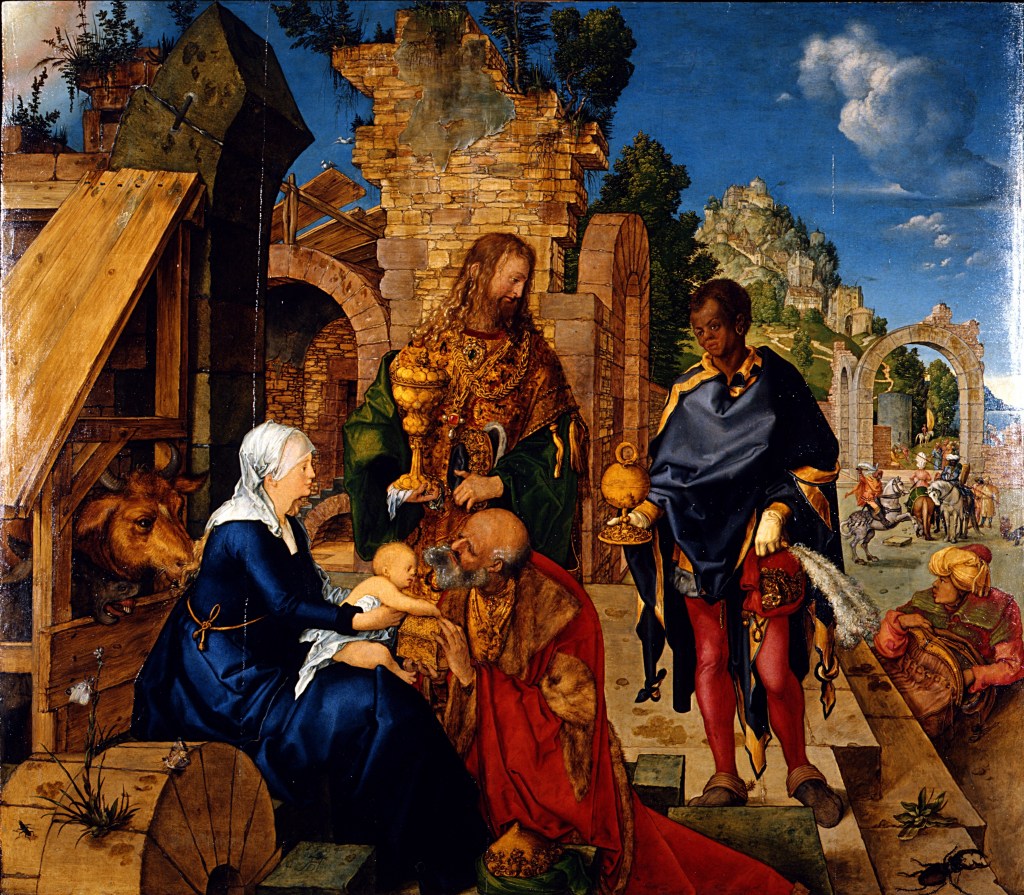
Featured image “Adoration of the Magi” by Albrecht Dürer (1504), from https://artsandculture.google.com/asset/adoration-of-the-magi/zwFGJLYuIszRRw?hl=en-GB

Emmanuel – God with us

During Advent (the four Sundays leading up to Christmas) we have been preparing ourselves for the coming of Christ into this world – God in human form – Emmanuel – God with us. Today, that advent – ‘the arrival of a notable person or thing’ – has come to fruition. We are not waiting for God to come to us; God is here with us. Christ is born!

I’m sharing two messages today – one that I preached last night, based on John 1, and one that I preached this morning, based on Luke 2. Both are about the coming of God into the world, but from different perspectives:

John presents to us the grand narrative about the coming of Christ into this world:

“In the beginning was the Word, and the Word was with God, and the Word was God … Through him all things were made … In him was life, and that life was the light of all humanity … The Word became flesh and made his dwelling among us … We have seen his glory!” (John 1:1-14)

Here we meet ‘The Word’ – the very Word of God, the thoughts of God, the knowledge of God, the power of God – who is the second person of the Trinity (Father, Son and Spirit). This Word is the foundation of the cosmos. He was there from before the beginning of time and space, working in partnership with Father and Spirit in the creation of everything that is. He is the very source of the fundamental elements of our existence: life and light – making all things possible.

And then, at a point in time and space, this Word transitioned from eternity, from infinity, from perfection, into this human world – the Word became flesh and “moved into our neighbourhood” (the Message). God became one of us, bringing life and light into our immediate vicinity. We could see him, touch him, speak with him.

God continues to live among us, in our neighbourhood. The Word made flesh. He makes his dwelling among us in this world.

And he makes his dwelling in you, in me, in every person who will allow him. Perhaps he has already set up his dwelling place – pitched his tent – in every person, and is just waiting for an invitation to move in. His space is there, ready and waiting, but just needing us to answer the knock on the door, the subtle invitation, the quiet whisper.

Luke presents to us a more domestic narrative about the coming of Christ into the world:

“Joseph went up from the town of Nazareth in Galilee to Bethlem to register with Mary who was pledged to be married to him and was expecting a child. While they were there, the time came for the baby to be born, and she gave birth to her firstborn, a son. She wrapped him in cloths and placed him in a manger, because there was no guest room available for them. And there were shepherds living out in the fields nearby, keeping watch over their flocks at night.” (Luke 2:1-20)

Luke presents the coming of Christ as a family story, set against the political landscape. Rome – a colonial oppressor in Israel – required everyone to travel to their home town for a census. Mary – a teenager – pregnant and as-yet unwed – travels with Joseph. But they are unable to find a place to stay, and settle into what may have been a barn or cave or a corner of a house, with the animals. And there she gave birth to her son, Jesus. Such a simple way to tell us that God the Son had just entered this world – ‘and she gave birth to her firstborn’. No fanfare, no witnesses, no family support, not even a decent place to stay. In that place, God came into this world.

And then it is to the shepherds that God reveals this good news. They’re out looking after their sheep and the sky fills with angels who sing out, “Glory to God in the highest heaven, and on earth peace to those on whom his favour rests”. It is these shepherds to go to visit Mary and Joseph and the infant Jesus. (The Maji appear in Matthew’s version and Mark and John don’t describe Jesus’ birth at all.)

We learn something of the humility of God from Luke’s narrative. It is mostly so underplayed. Only the shepherds see the angels, no-one else. In the first Testament, God is typically portrayed as great, awesome, powerful, the Creator of all. John’s narrative similarly presents us with ‘the Word’ – the cosmic Christ. But here we see God presented to us as a newborn – the most vulnerable and helpless of all humans, utterly dependent on his caregivers for his survival.

And we learn something of God’s willingness to work through the ordinary, and particularly through ‘the poor’ – those who are displaced, marginalised, labourers, homeless, hungry. We will see this again and again in Luke’s gospel particularly, but indeed in all the narratives about Jesus’ life and ministry. God leans towards those on the edges.

And so God is waiting to work in you and in me, to be born in us today. It doesn’t matter how old or young you are, how educated or illiterate you are, how gifted or ordinary you are, how powerful or weak you are, how well-adjusted or dysfunctional you are, how rich or poor you are. God wants to be born in you and to grow up in you.

And so, if you have been skirting the edges of a commitment to Jesus or if you have made a commitment to him but are iffy in how you live that out day-by-day, perhaps this Christmas is the time when you want to say YES to the Son of God, and to allow the Word to move into that tent that he has already pitched in your heart. Perhaps this Christmas is the moment when you say YES to the birth of Jesus in your heart, and when you say YES to nurturing him as he grows in you in wisdom and stature and in favour with God and people. Perhaps now is the time to say YES to God.

The Nativity, by Gari Melchers, from https://the-end-time.org/2018/12/10/jesus-was-not-born-in-a-stable-more-on-the-nativity-art-by-gari-melchers/

Reconciliation

Click here to listen to the audio recording of this 15-minute message. Or watch the YouTube video below. Or read the text summary that follows.

Today (16 December) in South Africa we celebrate Reconciliation Day, a day on which we remind ourselves of the great need for us to reconcile with each other, after generations and generations of racial oppression and exclusion. We still have a long way to go with this!

In 2 Corinthians 5:16-20, Paul writes at length about reconciliation. He explains that God has reconciled us to Godself; that God has been working all along to reconcile the whole of humanity – indeed, the whole of creation – to Godself; and that God has now entrusted this ministry of reconciliation to us:

So from now on we regard no one from a worldly point of view. Though we once regarded Christ in this way, we do so no longer. Therefore, if anyone is in Christ, the new creation has come: The old has gone, the new is here! All this is from God, who reconciled us to himself through Christ and gave us the ministry of reconciliation: that God was reconciling the world to himself in Christ, not counting people’s sins against them. And he has committed to us the message of reconciliation. We are therefore Christ’s ambassadors, as though God were making his appeal through us. We implore you on Christ’s behalf: Be reconciled to God.

Given that God has done so much to reconcile us to God’s self and given that we are given this great commission to carry out in Christ’s footsteps, how sad it is that there is still so much division among Christians! I do not refer only to divisions between denominations, but also divisions within a local parish, between members of the same local church. Such divisions are completely out of step with everything that God has been doing with humanity since the Fall. We are called to work for relational reconciliation among ourselves in the church.

Paul then goes on in Galatians 3:26-29 to emphasise that the work of Christ has been not only to towards relational reconciliation, but also towards structural or systemic reconciliation:

So in Christ Jesus you are all children of God through faith, for all of you who were baptized into Christ have clothed yourselves with Christ. There is neither Jew nor Gentile, neither slave nor free, nor is there male and female, for you are all one in Christ Jesus. If you belong to Christ, then you are Abraham’s seed, and heirs according to the promise.

These categories that Paul writes about – Jew/Gentile, slave/free, male/female – are the classic sociological topics of race, class and gender. These are the systemic and structural lines according to which most societies are still divided. Employment, poverty, inequality, social exclusion, crime, agency, violence, salaries and so on all run along the lines of race, class and gender – those very things that Paul says should have disappeared in Christ. Yet in the so-called ‘Christian world’, these lines run deep into the earth.

As followers of Christ, we are called to work to undermine and subvert and dismantle these lines. To stand up against racism, classism and sexism or patriarchy. Not to perpetuate them!

And Paul then goes still further in Ephesians 5:21 to emphasise that this reconciliation should be not only in church and the world, but also in our intimate relationships. Within our households, we need to work towards domestic reconciliation and harmony:

Submit to one another out of reverence for Christ.

Such a simple verse! Christians tend to emphasise the next line (wives submit to your husbands), but Paul’s headline for this passage is that we all must submit to each other: husbands to their wives, wives to their husbands, children to their parents and parents to their children. When we are all submitting to each other, out of reverence for Christ, who has reconciled us to God, we will be united and harmonious. Mutual submission to one another builds reconciliation, dismantles inequality and fosters unity.

Let us reflect deeply on the reconciliation that God has already worked for us between us and God, and in grateful response to that, work for relational, structural and domestic reconciliation.

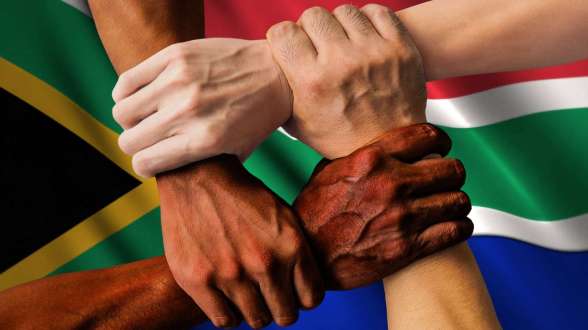
Featured image from: https://www.thesouthafrican.com/news/day-of-reconciliation-24-years-democracy-south-africa-reconciled/

Click here to listen to a previous sermon, from 2016, on this same theme, but from a different angle.

Rest

Click here to listen to the audio recording of this 8-minute message. Or watch the YouTube video. Or read the text summary after that.

As we come towards the end of 2020, many of us are feeling quite exhausted and worn down. COVID-19 has placed tremendous pressure on us and caused great damage to our world.

In Matthew 11:28-30, Jesus says,

Come to me, all you who are weary and burdened, and I will give you rest. Take my yoke upon you and learn from me, for I am gentle and humble in heart, and you will find rest for your souls. For my yoke is easy and my burden is light.

Come to Jesus. Put down your burdens. Rest. Ease into him. Destress. Unwind. Relax. Unwind. Settle down. Restore. Recover. Heal.

Featured image from: https://theconversation.com/curious-kids-how-was-the-ocean-formed-where-did-all-the-water-come-from-98382

Kindness

Click here to listen to the audio recording of this 9-minute message. Or watch the YouTube video. Or read the text summary afterwards.

We live in a world that seems to be increasingly self-centred, selfish, self-serving, self-obsessed. A world that seems often harsh, intolerant, judgmental, hostile and exclusionary. We are seeing a growth in nationalism – people putting their country’s needs first and subordinating or even rejecting the needs of the global community. Perhaps the world has always been this way. But it seems to me to be a growing trend over the past several years.

What do we as Christians do in such context?

When we want to know how to be behave in the world, the best place to go is to the Gospel narratives, to see how Jesus behaved. And to hear how Jesus spoke – not just his teachings, but what he said to people informally and how he spoke to and engaged with people.

In Matthew 15 we find the story of Jesus feeding the four thousand with a few fish and loaves of bread. The story starts with Jesus healing people of a wide array of afflictions, leaving the crowds amazed. But in the middle of this story is a profound verse that ties the entire story together:

Jesus called his disciples to him and said, “I have compassion for these people; they have already been with me three days and have nothing to eat. I do not want to send them away hungry, or they may collapse on the way.” 

What we see here in Jesus is kindness. He is kind. We could say ‘compassionate’ and that would be correct. But ‘kind’ is a much simpler, shorter word. It is the word a child is likely to use.

If we scan through the pages of the Gospels, we will see more and more examples of Jesus being kind. He is thoughtful, considerate, sensitive, responsive, engaged, attentive, slow, open, willing, touchy, generous. in a word: kind.

Psalm 23 is also a set reading for today: The Lord is my shepherd. The shepherd also is kind. Indeed, there are numerous passages in the first and second testaments about shepherds who care for and protect their sheep, who seek lost sheep, who bind up and heal injured sheep, who fight off wild animals. These images of shepherding are images of kindness.

Jesus was kind – let us be kind.

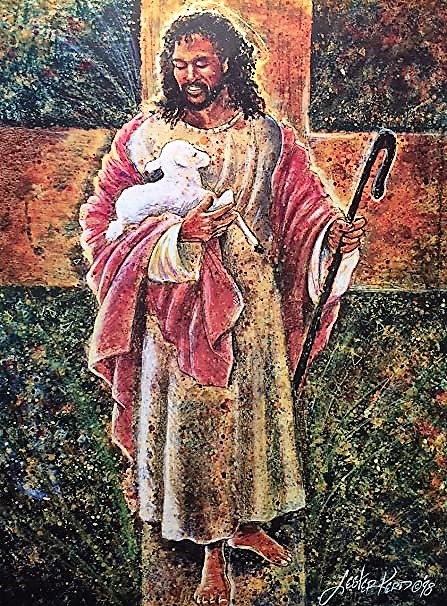
Painting by Lester Kern,
from https://www.amazon.com/He-Walks-Me-Religious-Unframed/dp/B011O9Q2MA

Rend the heavens and come down

Click here to listen to the audio recording of this 17-minute message. Or watch the Facebook video (the sermon starts at about 24:30). Or read the text summary that follows below.

Today is the first Sunday in Advent, a season in which we look forward to the coming of Christ into the world – historically 2,000 years ago (which we celebrate at Christmas), in this very moment (Christ is continually coming into the world) and one day in the near or distant future (when Christ comes again). Today we reflect on the last of these – Jesus’ second coming.

Our reading is Isaiah 64:1-9, which opens with these powerful words, “Oh, that you would rend the heavens and come down!” While this sounds like a joyful call for Christ to return, the passage is filled with caution and a call for critical self-reflection.

Let me summarise the flow of thought. Initially, there is a call for Christ to come down, to make the mountains tremble, to set fire to the world, to cause the nations to quake and to make his name known to his enemies. This passage seems to work from the assumption that there are clear enemies of God, and implicitly that we are in the right:

Oh, that you would rend the heavens and come down, that the mountains would tremble before you! As when fire sets twigs ablaze and causes water to boil, come down to make your name known to your enemies and cause the nations to quake before you! For when you did awesome things that we did not expect, you came down, and the mountains trembled before you. (Isaiah 64:1-3)

Second, there is a similarly smug and self-satisfied view that God is inevitably on our side – that we are right, and everyone else is wrong, because we wait for Christ, we gladly do right, and we remember his ways. There is a complacency that we are right and thus God is for us – a complacency that easy slides into arrogance – an arrogance that easily slides into hatred and judgement of everyone else:

Since ancient times no-one has heard, no ear has perceived, no eye has seen any God besides you, who acts on behalf of those who wait for him. You come to the help of those who gladly do right, who remember your ways. (Isaiah 64:4-5a)

But third, it seems that Isaiah pauses and reflects. He becomes self-critical, as he writes, “But…” That ‘but’ initiates a series of recognitions that there is little difference between ‘us’ and ‘them’. He faces up to our continued sin, our uncleanness, that even the best we do is like filthy rags, that we are shrivelled like a leaf, that the wind of our sins will sweep us away, and that we neglect to call on God’s name or to strive towards him. Isaiah recognises that, as a result, God hides his face from us and gives us over to our sin. And so he says, “How then can we be saved?”:

But when we continued to sin against them, you were angry. How then can we be saved? All of us have become like one who is unclean, and all our righteous acts are like filthy rags; we all shrivel up like a leaf, and like the wind our sins sweep us away. No-one calls on your name or strives to lay hold of you; for you have hidden your face from us and have given us over to our sins. (Isaiah 64:5b-7)

And then, out of this stepping down, stepping back, looking within, critically self-reflecting, challenging himself and his religious community, Isaiah comes to some important realisations. He starts the next passage with, “Yet”, signalling that he has recognised something new. He discovers afresh that God is our father and we all are his children. That God is the potter and we are but clay in his hands. That God is merciful and does not store up anger against his children. That God sees us as we pray. And that we all are God’s people, all the work of his hand.

This last line is perhaps the most the important of all – having started by dividing the world into right and wrong, good and bad, saved and lost; and then realising that we also are wrong, bad and lost – he realises that God is for everyone. God desires to save everyone. God longs to reconcile with all of us. And that we can be reconciled only through the work of Christ, not by us being ‘more right’ than anyone else:

Yet you, LORD, are our Father. We are the clay, you are the potter; we are all the work of your hand. Do not be angry beyond measure, LORD; do not remember our sins for ever. Oh, look upon us we pray, for we are all your people. (Isaiah 64:8-9)

As much as we long for Christ to return – for the rending of the heavens and the coming down of Christ – let us recognise that we are little different from anyone else. We are as dependent on Christ for our salvation as anyone else, because we are as sinful as anyone else. That when we become smug about our salvation or about how spiritual or righteous we think we are, we are actually moving away from God, not towards him.

And so let us be cautious, humble, critically self-reflective and watchful. As Jesus says at the end of Mark 13:24-37,

“What I say to you, I say to everyone: ‘Watch!'”

Featured image from https://wp-media.patheos.com/blogs/sites/333/2019/12/aurora-borealis-69221_640.jpg