John the Baptist is arguably the second most important person in the New Testament – second only to Jesus. He was the last of the First Covenant prophets – prophesying about the coming Messiah. Once Jesus arrived, John’s ministry, and that of all the prophets in the First Testament, had reached fulfillment.
Curiously, in John 1:6-35, John the Baptist (or the writer of the Gospel according to the John) repeatedly speaks to who John is NOT, rather than to who John IS. In total, there are five negative declarations in this passage, suggesting a humility on the part of John and a clear understanding of his role, as the forerunner and preparer for the Messiah. John is not the light (8), not the Messiah (20), not Elijah (21), not the Prophet (21) (even though that is really what he is), and not worthy to untie the sandals of the Messiah (27). Strong negative statements about who he is NOT.
Alongside these are three affirmations of who John IS, only one of which he voices himself: he is a witness to testify concerning the light (7), he is a witness to the light (8) and he is the voice of one calling in the wilderness, ‘Make straight the way for the Lord’ (23), even though this last is John quoting Isaiah. John makes not independent statements of himself in his own words.
John’s negations and lack of affirmations about his pivotal role and place in the Christian story suggest great humility and that the focus of all his efforts is on Jesus, the Messiah, the promised Son of God. His life purpose is to point to Christ.
This is confirmed in John’s testimony about Jesus, which includes him sharing that he himself did not recognise Jesus (31), but that he saw the Spirit of God descend upon him and remain on him (33).
And so John points us to Jesus: “Look, the Lamb of God, who takes away the sin of the world! This is the one I meant…” (29) and the next day, “Look, the Lamb of God!” (35). This is the role of the Prophet – to witness to his experience of Jesus and to point us to Jesus. He is the pointer.
Our role, as Christians today, at the end of 2023, is to take up John’s prophetic role, by pointing to Jesus, as John did. Through our lives, our actions, our words and our values, we are (for better or worse) God’s prophets, pointing the way to Christ.
How do we do this? Our readings provide suggestions:
Isaiah 61 suggests we do so by sharing good news to the poor, binding up the broken hearted, proclaiming freedom to captives, comforting those who mourn, providing for those who grieve, restoring places long devastated, standing up for justice, and standing against robbery and wrong doing. All of these prophetic actions are located in the world – they all speak to the social justice that characterises the Kingdom of God.
Mary’s song in Luke 1:46-55 echoes some of Isaiah’s sentiments: extending mercy, lifting up the humble, and filling the hungry with good things. But Mary’s vision of her son, the Messiah, also includes some strong prophetic words: scattering the proud and sending the rich away empty.
And 1 Thessalonians 5:16-22 focuses on more obviously ‘spiritual’ actions: to rejoice always, pray continually, give thanks in all circumstances, hold to the good and reject evil.
It is all of these actions – standing up for social justice, speaking out against injustice and evil, and ensuring a robust spiritual life – that serve as a prophetic voice in the world today. This is perhaps the most important thing for us as Christians to be doing in the world – pointing the way to the Messiah.
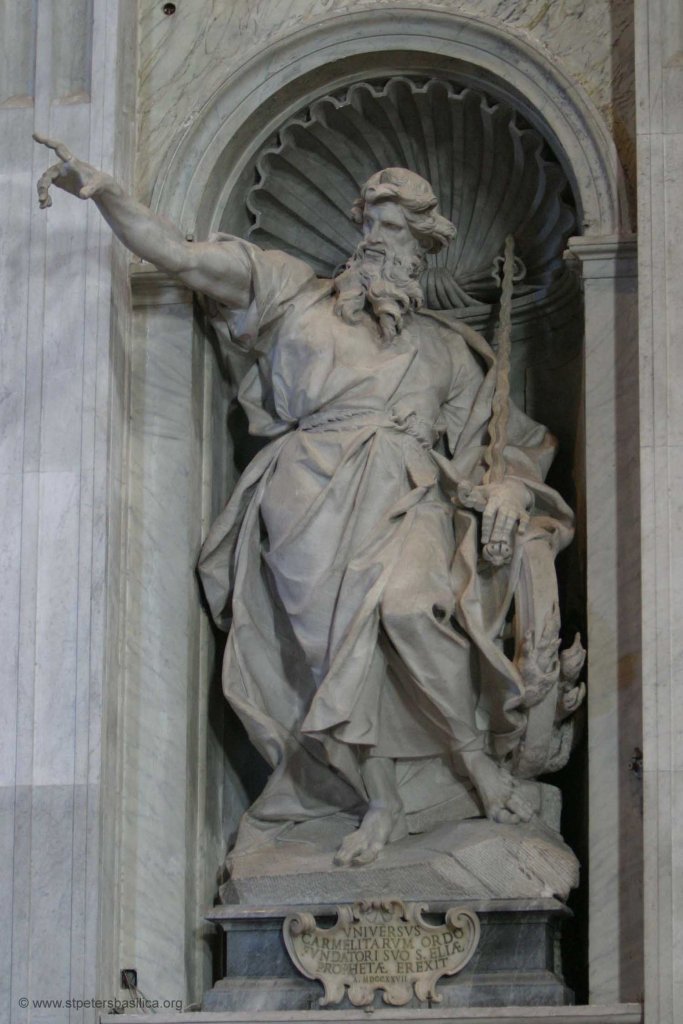
Statue of Elijah pointing, by Agostino Cornacchini (1727) at St Peter’s Basilica, Vatican City
Today (Sunday 10 December) is the Second Sunday in Advent, a season in which we remember and celebrate Christ’s first coming into the work and prepare ourselves for his second coming into the world.
Two key themes emerge from our readings: repentance and redemption.
Central to our preparation for Christ’s coming is repentance of sin:
Mark 1 speaks of John’s ministry of a call to prepare for Christ’s coming, to a baptism of repentance of sin, and to confession,
Isaiah 40 speaks of the sins of the people of Israel,
Psalm 85 refers to our iniquity and sin, and warns us of God’s wrath and anger, and
2 Peter 3 calls us to repentance and warns of the possibility of us perishing.
Repentance is an important part of our lives as followers of Christ. The Greek word for repentance means to turn around – a 180 degree about turn. In repentance, we turn away from sin and towards God. It is a reorientation of ourselves in relation to God and sin. This is the most important work we can do during Advent, as we prepare for Christ.
Repentance leads to restoration. Through repentance, we are stored into our fellowship with God and experience the blessings of God in our lives:
Mark 1 speaks of John’s baptism of repentance leading to God’s forgiveness of our sins,
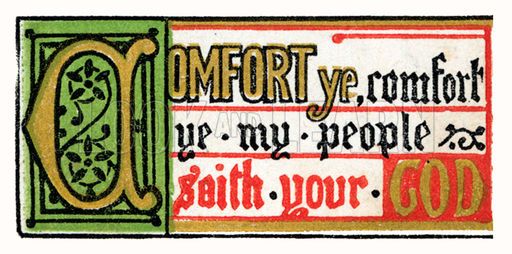
Isaiah 40 uses the most wonderful language, starting with “comfort, comfort my people”, tenderly, our hard service is complete, sin is paid for, valleys will be raised up and mountains made low, rough ground becomes levels and rugged places a plain, we all (humans) will see God’s glory and restoration, and God will tenderly gather, carry and lead us,
Psalm 85 says that God will restore us again and revive is again, That we will be together in righteousness and peace, that righteousness and peace will kiss, that faithfulness will spring up while righteousness will look down, and that God will give us what is good, and
2 Peter 3 speaks of God’s patience with us, of a new heaven and earth, of us becoming spotless, blameless and at peace with God, and that God’s patience means our salvation.
These wonderful words of restoration are the fruit of repentance. As we turn 180 degrees away from sin and towards God, something most of us have to do daily (even hourly or minutely!), God forgives and restores. This is the great gift of God’s son – Jesus comes into our world to forgive and restore.
Today’s reading is Matthew 20:1-16. It is the story about a landowner who hires people to work in his field, starting from early in the morning (perhaps 5am) until 5pm in the evening. He promises the first a denarius – a generous day’s wage; and he promises the later workers a ‘fair’ wage. He comes out himself even late in the day and asks people why they are standing around doing nothing, and they say, because no-one has hired them, and so he hires them, knowing that humans were created to work – God’s first commands to Adam and Eve are to work in the garden and take care of the earth. This is the first grace: we are invited to work with God.
Evening comes and the landowner calls the workers together and pays everyone the same – a denarius. The workers who started early are understandably unhappy. But this is not a story about labour and economics. It is a story about grace. God’s grace is abundantly given to all of us, whether we start early or late, whether we do much or little. Think of the thief on the cross beside Jesus in Luke 23 – he could do nothing on that cross, yet he entered into Christ’s paradise. The landowner asks the disgruntled workers if they are envious that he is generous – do you envy my grace? Grace if fundamentally unfair. This is the second grace: we ALL get what we do NOT deserve.
Fix your eyes on Jesus. Be amazed by grace.
Just last night, my wife Trina shared with me this video of ‘Amazing Grace’ sung differently by Dan Vasc. It fits so perfectly, I cannot help but conclude it was God’s prompting.
Today’s Gospel reading is from Matthew 18:15-20. It speaks about Jesus’ call for us to be engaged with one another, and particularly about church discipline. But in this short 7-minute message, I invite a focus on two key points.
First, that Jesus wants us to be meaningfully engaged with each other in the church and to speak into each other’s lives. In other words, to care about each other.
Second, that what we do in this life has eternal consequences. Our caring engagement with others can bind them in ongoing sin or difficulties, or loose them through forgiveness and reconciliation.
We are urged to engage with one another, to be honest with one another and to pray for and with one another. I hope you will find this short message both encouraging and challenging.
(This video was recorded just outside my front door in Boone, North Carolina, with the mountain “Howards Knob” in the background. This message originally went out on 16 August 2023.)
I am working in the United States from early August to early December, at the Appalachian State University in Boone, North Carolina. During this time, I will be sending out a short mid-week message. This is the message that went out 9 August. My apologies for posting it late here on my blog.
Matthew 15:21-28 is a story of Jesus’ encounter with a Samaritan woman. He looks into her heart and hears her deep faith and grants her her request. He ignores her demographic – female, Samaritan – and sees her true self. Jesus does the same with us. And expects us to do the same with others.
Psalm 119:105 is a key text for Christian living: “Your word is a lamp for my feet, and a light on my path.” Not only does this verse point us to Scripture – the Word of God – as the source of light in life, but it also tells us something important about how God reveals Godself to us: in small increments.
We think of a lamp or light as a torch, providing a beam of light to shine up a path to see ahead to where we’re going. But the lamp the Psalmist writes about creates just a puddle of light around us – enough to see only the next step. To translate this verse into contemporary times, think of pointing your flashlight down at your feet rather than beaming ahead several meters.
Today’s world is premised on knowing the future and planning strategically and systematically. This is not bad – I do this all the time. But it is not the way God engages with humanity. God points us to a destination but typically does not provide us with the steps.
Let’s look, for example, at the story of Abraham and his descendants. In Genesis 12, God promises that he will make Abraham into a great nation and a blessing to all people. This promise is renewed several times over Abraham’s life. But he has his first child, Isaac, only around the age of 100 years! That’s a long time to wait for the most critical next step to becoming a great nation.
Then Isaac married only at age 40 and had his first son, Esau, at 60. And after Esau sold his birthright to Jacob, Jacob only had his first son, Reuben, at around 80 years. (Making up for lost time, Jacob had his other 11 sons within about half as many years!)
The point here is that there was little sign of God’s promise fulfilled across three generations from God’s promise to Abraham, covering perhaps 200 years. Where are the descents as many as stars in the sky and sand on the seashores? Abraham was given a destination, but he saw only a few steps of this over a very long time. Yet, throughout this time, Abraham was renowned for his deep faith that God was working out God’s purposes in him.
My journey to ordination is not as dramatic as Abraham’s, but it too was long in coming. I became a Christian at age 16, in 1984. Soon after, I began to feel a calling to become a minister. Though it persisted, I ignored it for nearly 20 years. In 2004, the call appeared again with an irresistible insistence. The following year, I started my BTh at TEEC and was licensed to preach. 12 years later, after much adversity, I was ordained deacon and the next year priest. Three years later, in 2021, I was appointed Rector at St Stephen’s. In total, the journey took around 35 years. That’s quite a long time to be journeying towards the fulfilment of a call to pastor a congregation. I knew the destination, but God took God’s good time to make it happen.
Jesus’ parable in Matthew 13 about the seeds sown in different soils tells a similar story. The fruitful crop emerged from seeds scattered on good earth. These seeds had to grow deep roots in healthy, nutritious soil to produce an abundant harvest. It takes time. Plant radishes if you want something quick, though most of us don’t like how they taste! Those who grow fruit trees or olives will know that farming is a long-term investment.
The lesson from these three readings (Genesis, Psalms and Matthew) seems to be that while we may have insight into God’s will for us, for our destination, the path from here to there is often long and opaque. We have to trust God – to trust his Word – that he will do what he says. But we should not expect quick answers.
Romans 8 reminds us that our minds must be governed by the Spirit and that we live in the realm of the Spirit. We do not live on the internet superhighway. We live our lives in the eternal life space of God. And that means being patient and faithful while God takes God’s good time to work out God’s purpose in our lives.
And so, dear ones, as we surrender the whole of ourselves to God, I encourage you to be patient with God and to have faith in God. Give God the space to do what God does best. Remember that the Lord says, “I know the plans I have for you, plans to prosper you and not to harm you, plans to give you hope and a future” (Jeremiah 29:11).
Over the past two Sundays, our readings have directed us towards the conclusion that God wants the whole of us – for us to give ourselves utterly into God’s hands to do with us as God wills. We first got this from Jesus’ teachings in Matthew 10 (Hard Words) and second from Abraham’s willingness to sacrifice his son Isaac (Abraham’s Example). Typically, our inclination is to hold back and not surrender – relinquishing ourselves to God does not come naturally.
Today’s readings continue this theme but from a somewhat different perspective. They all point towards the roles of actors in a divine drama or play. We are the actors, and God is the Director. The play works out best when each actor does their part according to the directions of the Director. Since our Director is both competent and good, the drama of our lives can also be successful and good. But only if we as actors follow our Director’s directions.
Abraham is nearing death and wants his son Isaac to get married, but not to someone from the neighbouring communities, but rather from his home country.
His senior servant is called in to act on Abraham’s behalf – the servant is not named, but is the central actor in this chapter. The servant has charge over all of Abraham’s things. Abraham commissions him to go to his homeland and get a wife for his son, giving detailed instructions on what to do and not to do.
In vv12-14, the servant prays to the God of his master Abraham to make him successful and to show kindness to Abraham – remember that the Director is both competent and kind. In his prayer, the servant sets out a narrative of how he hopes things will go – that he speaks to a young woman, asking her for a drink, she offers him a drink and also offers water for his camels.
Rebekah then comes out, and the narrative plays out just as the servant had prayed (vv15-22).
The servant then asks if he can spend the night at her father’s house and it all works out. The servant gives thanks to God for “his kindness and faithfulness” to his master (v27).
Rebekah runs home and tells her family about the servant, and her brother Laban comes out to welcome him into their home. They take care of both the servant and his camels (vv28-33).
The servant then recounts to Laban and his family the whole story that we have already been told (vv34-49).
This is followed by various details of the negotiations that rapidly culminate in Rebekah agreeing to go immediately with the servant to get married to Isaac (vv50-61). They arrive back at Abraham’s home, Rebekah and Isaac meet and get married (vv62-67), in so doing continuing the lineage from Abraham to Jesus (as provided in Matthew 1).
In this narrative, the servant is an actor – an agent who behaves, speaks, makes decisions, impacts the world. He trusts in Abraham and in Abraham’s God, thereby carrying out the will of God. He relinquishes himself to God.
Rebekah is similarly an actor – she engages with the servant, shows hospitality to him and his animals, argues against her brothers about leaving immediately rather than later, and agrees to marry Isaac. She exercises power and agency in her life, in accordance with the will of God. She relinquishes herself to God.
In short, we have actors doing the will of God the Director.
The Psalms provided in the Lectionary typically provide a commentary on the First Testament reading and today is no exception. Psalm 45 presents us with three actors and a director.
v1 starts with “My heart … as I recite … my tongue.” Here is the Psalmist, writing in first person and also congratulating themselves on their skill as a Psalmist. The Psalmist is an actor – present and active in the creation of this Psalm.
vvv2-9 are addressed to ‘you’ – to the King. In the context of Genesis 24, we should think of the King as representing Isaac, though Isaac was not a King. The King/Isaac is also an Actor, because of how the Psalmist describes him, e.g., as defending truth, humility and justice.
vv10-12 are addressed to ‘daughter‘, the bride. She represents Rebekah and the Psalmist speaks directly to her (not just about her) making her an actor.
vv13-15 are a commentary, by the Psalmist, about the wedding and how wonderful it is.
v16 is directed again at the King – your sons, your fathers, you will make – confirming the King as an actor.
v17, finally, returns to the “I” (which we last heard in verse 1). In verse 1, the I referred to the Psalmist. It is possible that the I in v17 is also the Psalmist, but I think the claims that are made in v17 exceed the capacity and power of the Psalmist, and that here ‘I’ refers to the Director – to God. The Psalmist’s life is too short, but God can work “for ever and ever”. It is God who will perpetuate the memory of the king through all generations and across all nations.
Thus, God is revealed in the last verse of the Psalm to be the Director. Although the Psalmist has considerable power in writing the Psalm, ultimately, even the Psalmist is an actor in a larger play directed by God.
This passage from Romans is full of “I”. It seems obvious that Paul is here referring to himself, writing in first person, but it is possible that he is referring to ‘a person’ using ‘I’ as a shorthand, and there is debate among commentators on whether the ‘I’ is a Christian or an unconverted person. I don’t want to get into all that today. The key point for today is that there is a clear actor here, referred to as “I“, whoever that person may be.
What we see happening in this actor’s life is a grappling between a desire to be good and a tendency to do evil. We are given an insight into the heart of this person, grappling with their own brokenness. This reaches a climax in v24, “What a wretched man I am! Who will rescue me from this body that is subject to death?”
And then the Director steps in: “Thanks be to God, who delivers me through Jesus Christ our Lord!” Or arguably, two actors, but so in sync with each other, that they are truly one being or essence.
What we can take from Romans 7 is that in our grappling with ourselves, as we hope to become transformed into the image of Christ, God is directing. And God is competent and good – God will bring it to fruition in God’s good time. We must, in the meantime, play our part as actors who make repeated choices to act in accordance with God’s desire for and image of a redeemed humanity.
Lastly, we come to our Gospel reading. In the opening verses of this passage, Jesus seems to be saying that the people of this world think that they are directors (vv16-17):
“To what can I compare this generation? They are like children sitting in the marketplaces and calling out to others: ‘We played the pipe for you, and you did not dance; we sang a dirge, and you did not mourn’.”
They think they are puppeteers, who can direct others to do their bidding. But unlike God the Director, they are neither competent nor good. Instead, they are capricious and mean-spirited, as Jesus explains in vv18-19:
“For John came neither eating nor drinking, and they say, ‘He has a demon.’ The Son of Man came eating and drinking, and they say, ‘Here is a glutton and a drunkard, a friend of tax collectors and sinners.’ But wisdom is proved right by her deeds.”
In this last sentence of v19, Jesus reveals who the director is: Wisdom! Wisdom is the First Testament forerunner of Holy Spirit. The Spirit of God is the Director: wise, good and competent. It is by her deeds – her actions – that she is proved right.
In the rest of this passage (vv25-30) Jesus emphasises God as a good and kind director, who has our best interests at heart.
In summary, God does want all us, completely and utterly. It is when we follow his directions (i.e. when we are yoked to him) that we become true and full actors, free to play our part in his play.
37 Anyone who loves their father or mother more than me is not worthy of me; anyone who loves their son or daughter more than me is not worthy of me; 38 whoever does not take up their cross and follow me is not worthy of me.
Despite these words, the take-home message from last week was (1) that God loves us deeply and with great attention to the detail of our lives, and (2) that God wants the whole of us and not just small pieces of us.
Genesis 22:1-18, our reading for today, illustrates what we spoke about last time. Abraham gets an unthinkable instruction from God:
“Take your son, your only son, whom you love—Isaac—and go to the region of Moriah. Sacrifice him there as a burnt offering on a mountain I will show you.”
I wonder what we would do if we got such an instruction from God. Honestly, I would say ‘no’. Just, ‘no’.
We must remember, though, that we know much more about God’s character today than Abraham did. God only began revealing himself to the world in Genesis 12, when he selected Abraham to be his ambassador and to bring God’s blessings to all nations. Abraham was just getting to know God and had little to go on 10 chapters later. But we have the rest of the entire First Testament, plus the Gospels and all the writings of the early church. We have a much greater grasp of who God is and what God would or would not demand of us.
Still, Abraham is committed and so obeys God’s command. He and his only son Isaac start the journey towards Isaac’s sacrifice. Isaac may be a child, but he’s not stupid. He notices that everything for the sacrifice is there except the lamb. Where is the lamb? he asks his father. And Abraham answers, God will provide.
They continue on to the site God had selected. Abraham establishes the altar, lays his son on the wood, and gets ready to kill him with a knife before burning his body as a sacrifice to God. In that final moment, God stops him and affirms his faith. And provides a ram (not just a lamb) to be sacrificed in Isaac’s place. And God renews his original promise to Abraham in Genesis 12 in Genesis 22:15-18.
It is in many ways an unthinkable, dreadful story!
The only real comparison is Jesus’ death on the cross – also a sacrifice on our behalf. But there are major differences between Jesus’ sacrifice and Isaac’s. Jesus was a full and equal partner with God the Father and God the Spirit in working out the plan for his sacrifice of himself on the cross. Jesus went in knowing what he was doing and fully agreeing to it. And he knew the outcome it would produce. Isaac, on the other hand, was kept in the dark about all of this.
I said to my congregation in the sermon that if they believe God is instructing them sacrifice a member of their family, they should come and talk with me first. Seriously! This narrative in Genesis 22 is not the norm.
But it does illustrate the kind of whole-hearted and willing-to-go-to-the-very-end commitment that Jesus spoke about in Matthew 10 last week. Sometimes, God does call us to do something unimaginable, extraordinary, risky, and extravagant. And often, that is precisely what we should do. God does want our whole selves – every piece of us.
The context of today’s Gospel reading (Matthew 10:24-39) is persecution – Jesus’ warning to his disciples that they will be persecuted (vv 16 & 22):
I am sending you out like sheep among the wolves… You will be hated by everyone because of me…
And so we read this passage section by section and listen to what God is saying to us through the Word:
24 The student is not above the teacher, nor a servant above his master. 25 It is enough for students to be like their teachers, and servants like their masters. If the head of the house has been called Beelzebul, how much more the members of his household!
We are described as Jesus’ servants or slaves and as Jesus’ students. What happens to him will happen to us. How he is treated, so shall we be treated. If he is called Beelzebul (the devil), so shall we. But there is also hope in these lines: hope that we can become like our teacher and master; and hope that we upgrade from students and servants to members of his household.
26 So do not be afraid of them, for there is nothing concealed that will not be disclosed, or hidden that will not be made known. 27 What I tell you in the dark, speak in the daylight; what is whispered in your ear, proclaim from the roofs.
Who is it that we need not be afraid of? Surely not the people in the previous verses? No, I think most likely is it the ‘they’ referred to in verse 19, “But when they arrest you, do not worry about what to say or how to say it.”
These verses present 4 contrasts between what happens in private (concealed, hidden, in the dark, in the ear) and what is done publicly (disclosed, made known, in the daylight, from the rooftops). We are encouraged to be bold!
28 Do not be afraid of those who kill the body but cannot kill the soul. Rather, be afraid of the One who can destroy both soul and body in hell.
Here we get the second reassurance to not be afraid. ‘Those who kill the body’ refers to those people who persecute – many Christians in the early church were persecuted and killed. But instead, be afraid of the one who can destroy the soul. I’ve often thought that meant the devil, but commentators argue that the devil does not have the power to destroy souls – only God has that power. So, if we are going to be afraid of anyone, we should be afraid of (or rather, we should fear) God.
29 Are not two sparrows sold for a penny? Yet not one of them will fall to the ground outside your Father’s care (or will or knowledge). 30 And even the very hairs of your head are all numbered. 31 So don’t be afraid; you are worth more than many sparrows.
Verse 29 contrasts the cheapness of sparrows with God’s concern for their death. The last word of verse 29 has multiple meanings, but ‘care’ seems most appropriate in context – God cares about even the cheap little sparrows. He directs his attention towards even them. He does not, however, save them from dying – they do die. But he is present with and caring for them, as they die.
Verse 30 emphasises God’s interest in the smallest details of our lives, even the number of hairs on our head. It is trivial, but God knows such details. Again, he does not stop our hair from falling out! But he does keep count.
Verse 31 gives us the third “don’t be afraid”. Because sparrows – small as they are – are loved by God. How much more are we then loved by God.
32 Whoever acknowledges me before others, I will also acknowledge before my Father in heaven.
33 But whoever disowns me before others, I will disown before my Father in heaven.
These two verses provide a parallel response from us to Christ: if we acknowledge him, he’ll acknowledge us. If we disown him, he’ll disown us. These are blunt words, but honest and direct.
34 Do not suppose that I have come to bring peace to the earth. I did not come to bring peace, but a sword. 35 For I have come to turn “a man against his father, a daughter against her mother, a daughter-in-law against her mother-in-law— 36 a man’s enemies will be the members of his own household”. (Micah 7:6)
Jesus preaches love consistently, but then we get these verses about the violence within families. In truth, faith can fracture families. Nations go to war over religion. And so do families.
37 Anyone who loves their father or mother more than me is not worthy of me; anyone who loves their son or daughter more than me is not worthy of me; 38 whoever does not take up their cross and follow me is not worthy of me.
This triptych of “is not worthy of me” is among the most chilling words uttered by Jesus. They seem so out of character. A punch in the belly. His emphasis is on his requirement for our total allegiance.
39 Whoever finds their life will lose it, and whoever loses their life for my sake will find it.
We must lose ourselves in Christ. That is the path to finding ourselves.
So, as we we wrap this difficult passage, there are two take-home messages:
First, God knows and loves us – we are members of his household, valued, known and cared for.
Second, God expects everything of us – he wants our utter commitment.
Click here to watch the video of this 28-minute message on Facebook (the message starts about 29 minutes into the recording). Note that this is an active sermon – worth watching, rather than just reading. I don’t have an audio recording of this message. Or read the text summary below.
Matthew 9 tells the story of Jesus calling Matthew: “As Jesus went on from there, he saw a man named Matthew sitting at the tax collector’s booth. “Follow me,” he told him, and Matthew got up and followed him.” And Genesis 12 tells the story of God calling Abram: “Go from your country, your people and your father’s household to the land I will show you.” Go! Follow me! These calls have nuclear power to move people – Matthew got up and followed Jesus, Abram packed and moved into the unknown.
Jesus is calling you and me today – Follow me! Go! – but to where? Where do we go? Where do we follow?
Matthew 9:16-17 gives us invaluable insights into what Jesus calls us to, in the metaphor of new wine in new wineskins:
“No one sews a patch of unshrunk cloth on an old garment, for the patch will pull away from the garment, making the tear worse. Neither do people pour new wine into old wineskins. If they do, the skins will burst; the wine will run out and the wineskins will be ruined. No, they pour new wine into new wineskins, and both are preserved.”
Although the metaphor is a bit obscure, at very least we can take from this that there are challenges in mixing the old and new. Jesus leans strongly in favour of the ‘new’ – new wine and new wineskins are what we’re after. A few verses earlier (v13) he gives another clue about where we are following him to, when he quotes Hosea, “I desire mercy, not sacrifice”. Mercy represents love for people, while sacrifice represents religion. Jesus is saying – indeed God is saying – I don’t want your religion, I want your love for people. This is the ‘new’ teaching – or rather an old teaching renewed – that Jesus gives us. And the whole of Matthew 9 illustrates this with examples.
Come along with me – follow me! – as we briefly consider the seven stories that illustrate following the new wine in Matthew 9:
The chapter opens with a paralysed man, brought to Jesus by his faith-filled friends. Jesus sees their faith and says, “Take heart, son; your sins are forgiven.” The teachers of the law are outraged by Jesus’ presumption of having authority to forgive sins – they’re not interested in the man, only in their theology. Jesus responds strongly and heals the man as evidence of his authority to proclaim forgiveness of sins. Jesus’ love for this physically and spiritually broken man takes precedence over the teachers’ petty theology.
In verses 10-13, Jesus attends a party hosted by Matthew, who is now following Jesus. Matthew’s friends are tax collectors and sinners – ‘bad people’. The Pharisees – another religious group – are disgusted and ask Jesus’ disciples, “Why does your teacher eat with tax collectors and sinners?” They are not concerned with the humanity of Matthew and his fallen friends – they are concerned only with religious piety and ‘rightness’. They dehumanise these broken people. Jesus confronts them, “It is not the healthy who need a doctor, but those who are ill… For I have not come to call he righteous, but sinners.” Jesus’ love for sinners, for bad people, takes priority over everything.
In verses 14-17, while still at the same dinner party, the disciples of John the Baptist come and ask Jesus, “How is that we and the Pharisees fast often, but your disciples do not fast?” Their use of ‘often’ (we fast often) betrays the religious pride. Their interest is in religious observance and spiritual discipline. But Jesus dismisses their concerns, asking “How can the guests of the bridegroom mourn while he is with them?” He has little interest in fasting or other religious piety – he is more interested in spending time engaging with people. It is in this immediate context that he speaks about new wine – he is not interested in religious and theological precision and rightness; he is much more interested in human relationships, fellowship, compassion and love.
In verses 20-22, while still at the same party, a synagogue leader tells Jesus that his daughter has died and asks if Jesus can come and help. Jesus leaves immediately, as his compassion for this young girls outweighs his fellowship with Matthew and his friends. On the way to the house, a woman who has been bleeding (menstruating) heavily for 12 years touches his cloak and is healed by Jesus’ power. Her faith is strong: “If I only touch his cloak, I will be healed.” Jesus stops and speaks with her, he proclaims healing and wholeness and salvation. We imagine he took hold of her hand as he lifted her up onto her feet. While in the other stories there are crowds of noisy people around, here there is silence. Men and women keep menstruation quiet and private – it is not public. And in those days, women were considered unclean during their period. For Jesus to engage, speak, touch her was to make him unclean. He didn’t care about that – he cared just for her.
Reaching the house of the synagogue leader, there is a noisy crowd outside. They mock Jesus when he says the girl is just sleeping. He goes up to her room and takes her by the hand. Touching a dead person makes one unclean, but Jesus doesn’t care about that – he cares only for the girl. She is revived and gets up.
Briefly, Jesus continues on his way and heals two blind people, “According to your faith let it be done to you”. He sternly warns them not to tell anyone about him healing them. He is not interested in recognition – he cares only about their sight.
And then he encounters a demon-possessed man (perhaps today a schizophrenic). He drives out the demon. The Pharisees cannot recognise Jesus’ compassion for this man’s wholeness and well-being; they say, “It is by the prince of demons that he drives out demons”.
Jesus quoted Hosea, “I desire mercy, not sacrifice”. Jesus tells about the new wine – his people-centred gospel of love and inclusion – that is incompatible with the old wineskins of religiosity, piety, self-righteousness. He is all about people: “I have not come to call the righteous, but sinners”.
So, as we follow Jesus, as we answer his call to ‘Go!’, we must put people before religion, relationships before theology, acceptance before judgement, inclusion before exclusion, love before judgment. This is the new wine of Jesus’ Gospel that should be poured into the new wineskins of our hearts and churches.