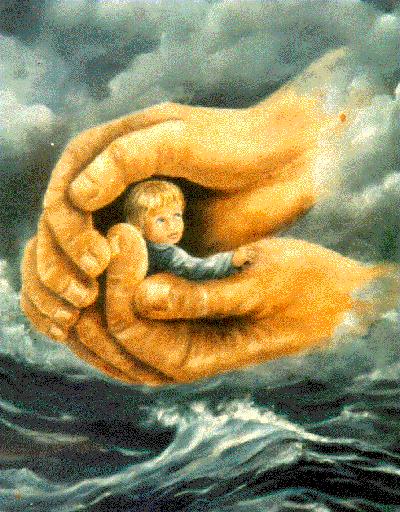
I encourage you to listen to this message. I have the strongest sense that this may be a Word from God for you. It is from Psalm 31:21-22
Praise be to the Lord, for he showed me the wonders of his love when I was in a city under siege. In my alarm I said, “I am cut off from your sight!” Yet you heard my cry for mercy when I called to you for help.
Matthew 9:35-10:8 sets us on a path of discipleship in which we have the opportunity to participate in God’s work in building the Kingdom of Heaven or the Kingdom of God. Jesus’ message is “the good news of the kingdom”, which includes personal salvation as well as a transformation of the world in which we live. It shows God’s interest in the whole of human life, from the individual through to the societal.
But while the harvest is plentiful, the workers are few. Jesus calls the disciples to pray for workers who can participate with God in building the kingdom of Heaven. You are that worker! As am I! We pray regularly, “Thy Kingdom come, thy will be done, on earth as it is in heaven”. And we are the answer to that prayer.
And then in Matthew 10:1 & 5, we read that Jesus:
“Called his twelve disciples to him” – the calling is individual and collective. He calls you and he calls me, and he calls all of his followers, the church.
“Gave them authority” – Jesus authorises them to do God’s work in building the kingdom
“Sent out” the disciples – he sends them out to do his work.
We are called, authorised and sent!
Jesus instructs them to proclaim this message: “The kingdom of heaven has come near”. The kingdom is near because Christ is near; and Christ is near, because he dwells in the hearts of his followers.
What does this look like in practice? Matthew lists four things that the disciples do. These are the same things Jesus has been doing. And Jesus does them not to show off his power, but to demonstrate the heart of God – God’s loving heart for humankind. These are:
The ill are healed. This is about making people whole, and relieving pain and distress.
The dead are raised. This points us forward to the resurrection of Christ, who becomes the first of the the many who will be raised to new life in Christ.
Those with leprosy are cleansed. Leprosy was not just an illness, but also a social condition that lead to profound social exclusion and rejection. Cleansing or purification from the disease would lead to re-entry into the community, thus social restoration and integration.
Demons are driven out. Demons oppress people, holding them in bondage. When they are driven out, people are liberated from oppression. This links to Jesus’ manifesto (Luke 4:18), where he proclaims freedom for prisoners and sets the oppressed free. In this way, oppressive power in human relationships is overcome.
The proclamation of the Kingdom being near, and the evidence of this in these four acts of service, show that God is interested in wholeness, life, social integration and liberation from oppression. These are all facets of salvation and all manifestations of God’s presence.
It is to this that we are called in this present time, a time when there is much fracturing of social relationships, much oppression, much brokenness.
We do this work out of a fullness of gratitude for what God has already done for us. “Freely you have received; freely give” (Matthew 10:8b).
I appreciate that this topic will be controversial for many. I really encourage you to watch this message please and not just read it, particularly if you find the title problematic. At least, just listen to what I have to say, even if you decide you don’t agree with it.
But, very briefly, the main points are:
Jesus died for ALL of humanity – for the whole world – and would thus say, without equivocation, ‘All lives matter‘.
But Jesus would also confront us, saying that we do not live our lives as if all lives mattered.
Jesus’ ministry consistently and deliberately positions himself with those who are vulnerable, oppressed, poor, or marginalised: women, Samaritans, lepers, prostitutes, menstruating women, the dead.
Throughout his ministry – throughout the Gospels – Jesus enacts the message that Black lives matter, Women’s lives matter, Immigrants’ lives matter, Children’s lives matter, etc.
Jesus is not saying the lives of the poor matter more than other people’s lives; but that their lives do not matter less than other people’s lives.
In the new heaven and the new earth, all lives will actually matter in people’s lives experience. But in today’s society, this is not true. Today, all lives are not equal and not equally valued. And in this times, Jesus would be saying: Women’s lives matter, Children’s lives matter, Immigrant lives matter, LGBTQI lives matter, Black lives matter.
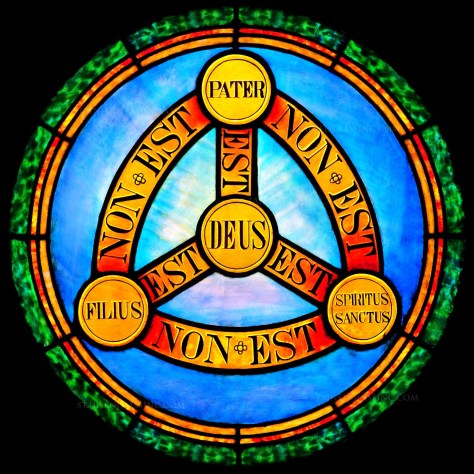
The first Sunday after Eastertide focuses on God as three-in-one (triune). This is a hard concept for us – the maths doesn’t work well. Yet, the relational God (or social trinity) is a vital theology for understanding God, our personal relationship with God and the implications of a relational God for the world. In this rather long message I try to explain and apply the social model of the trinity.
“If the world hates you, keep in mind that it hated me first.If you belonged to the world, it would love you as its own. As it is, you do not belong to the world, but I have chosen you out of the world. That is why the world hates you.”
Jesus acknowledges that sometimes the world will hate us for our faith and teaches two things about this:
He comforts us by sharing that the world hated him first, so we’re in good company, we’re not alone, we’re not the first.
He explains that the world hates us because we don’t belong to the world, we don’t conform. The word ‘belong’ is what he uses in John 17:16, where he says “They are not of the world, even as I am not of it.” The Greek for ‘belong’ or ‘of’ is ‘up out of’, like a plant or a tree grows up and out of the ground. Jesus is saying that we do not come up out of the world, and that this can lead to tension with the world – that the world hates us when we speak the Truth of God.
Our capacity to speak the Truth of God requires us to have a kind of spiritual and moral compass that shows us the Truth of God. A compass that helps us discern the mind of God.
The verse just before our passage (John 15:17) reads:
This is my command: Love one another.
And this verse is the tail end of a longer passage about the vine and branches, in which Jesus calls us to ‘remain’ rooted in him and in his love (John 15:1-17). So our understanding of the world hating us is the context of loving others and remaining in the love of Christ and thus of God. This love – the command to love – is the frame around our experience of being hated by the world.
On the basis of that, I suggest two learnings about our relationship with the world and its possible hatred of us:
First, Jesus calls us to be thoughtful about HOW we speak to the world. Our words need to be saturated in the love of God. In truth, the Church has often been – and continues today often to be – hateful in the way it speaks to the world. Even if what Christians and the church says is True, it is often said in a hateful, unloving, judgemental, diminishing way. This is the not the way of Christ. Jesus was challenging and direct, but he was never hateful in the way he spoke. We need to model our way of engaging the world on Jesus.
Second, WHAT we speak out on is also important. It is not only about how we speak, but also about what we speak. Let’s return to the metaphor of the compass. A compass points to the magnetic north, but this is not the True north. In fact, they are about 500km apart – similar, but not the same. We need to ensure that our words point to the True north, not the some off-centre north.
How do we know what to speak up for and what to speak out against? How do we know what is True? Again, we must look to Jesus. In Jesus’ ministry, he almost always spoke up for sinners and marginalised people, and out against those in power. We seldom hear Jesus speaking out against sinners and marginalised peoples. And the people Jesus usually speaks out against are the powerful – the powerful of the world and of politics and the powerful of the church.
Christians today have tended to invert this, speaking up for the rich and powerful, and against those who sin and those who are marginalised. They have lost their True North. They are not following in the way of Christ. They are not remaining in Christ and not adhering to his command to love one another.
We must go back to the Gospels and model our lives on Christ, in the ways he spoke truth to power, on the issues that he spoke up for and on the issues he spoke out against.
Pentecost occurs 50 days after Easter and 10 days after Jesus’ ascension. Acts 2:1-12 tells us that the disciples were meeting together in one place. “Suddenly”, writes Luke, “a sound like the blowing of a violent wind came from heaven and filled the whole house where they were sitting. They saw what seemed to be tongues of fire that separated and came to rest on each of them. All of them were filled with the Holy Spirit.”
This remarkable story give us two of the three key images we have of Holy Spirit: Wind, Fire and the Dove (from Jesus’ baptism).
Filled with the Spirit, the disciples begin to speak in different languages. Now Jerusalem, as the spiritual hub for Jewish people, was full of Jewish people from all over the place, speaking many different languages. They were initially drawn by the commotion – presumably the sound of the violent wind, like a tornado in a room.
But then they were “bewildered” and “amazed” and “perplexed” because “each one heard their own language being spoken”. Of all the things that Holy Spirit could have done to inaugurate her ministry among humankind, she chose to enable the disciples to speak the Gospel message in languages that the disciples did not know, so that a racially and culturally diverse group of people could hear the Gospel in words that they could understand. This tells us that:
Central to the ministry of Holy Spirit is to break down barriers
Indeed, Holy Spirit is just continuing the ministry of Jesus. Jesus himself was constantly breaking down the barriers that divide people:
His incarnation, when the boundary between divine and human was traversed
His speaking with the Samaritan woman – breaking boundaries of ethnicity, religion and gender
His healing of woman who bleeding – breaking purity and gender boundaries
His healing of the Centurion’s daughter – breaking racial, class and power boundaries
His touching of the dead boy and raising him to life – breaking purity laws
His salvation of the whole world – breaking the power of sin and death
Paul’s letters are filled with similar references to the barrier-breaking work of Christ and thus also of his followers:
Galatians 3:28 tells us, “There is neither Jew nor Gentile, neither slave nor free, nor is there male and female, for you are all one in Christ Jesus.” These are the classical sociological categories of race, class and gender. Jesus breaks them all.
Ephesians 2:14 tells us, “For he [Jesus] himself is our peace, who has made the two groups [Jew and Gentile] one and has destroyed the barrier, the dividing wall of hostility”.
Ephesians 1:10 tells us that God’s ultimate will is “to bring unity to all things in heaven and on earth under Christ”.
And Colossians 1:20 tells us that God was pleased “through him [Christ] to reconcile to himself all things, whether things on earth or things in heaven, by making peace through his blood, shed on the cross”.
Just as Jesus’ ministry involved boundary-breaking, so too, Holy Spirit’s ministry is about boundary-breaking. And she continues this work as her first Act at Pentecost. And the rest of the Acts of the Apostles is a working out of what boundary-breaking ministry is all about.
If you are a follower of Christ – even if your faith feels thin and weak, even if you don’t feel gifted or confident – Holy Spirit lives in you. She has taken up residence in you. And she wants to continue to do this barrier-breaking ministry through you, so that all people and the whole of creation can be reconciled under Christ.
In his prayer for his disciples, shortly before his arrest and execution, Jesus speaks about our relationship with the world (John 17:13-19). He says four things in rapid succession:
We are not of the world (we are not rooted in the world)
We are not to be taken out of the world
We are not of the world (we are not rooted in the world)
We are sent into the world
These four prepositions – of, out, of and into – set up Jesus’ expectations of us as his disciples.
We are not to be rooted in or ‘of’ the world. Just as Jesus is not of the world – he did not originate here and is not rooted into the world – we also are not of the world. Instead, “our citizenship is in heaven” (Philippians 3:20).
But, as much as we may wish then to be taken up out of this world, Jesus is explicit, “My prayer is not that you take them out of the world.” Instead, he prays, “As you sent me into the world, I have sent them into the world.” And to guide us regarding our place in the world he prays that we “too may be truly sanctified.”
Our values, ideas, aspirations and truths should all be shaped by and rooted in God’s world – in heaven. But we are commissioned to work in this world, to influence it with God’s values, to shape it into some resembling the Kingdom of Heaven that Jesus proclaims, and to be somewhat set apart or separated from the world.
It is like our head is at the top of a long stick figure, in heaven, while our feet and hands and hearts are here on earth, working out God’s plan for the salvation of the world.
Click here to listen to the audio of this 26-minute message . Or watch the YouTube video below, or read the text summary that follows. (This is a longer than usual message, because the topic is rather difficult. I hope you will not be deterred by its length.)
John 17 presents Jesus’ “High Priestly Prayer”, which takes place just before Jesus’ arrest and execution. In it Jesus prays for himself, for his disciples, and then for all believers who are to come, including you and me. It is a beautiful prayer that reveals to us the heart of Jesus – well worth reading.
In this message, I focus on just four verses (11b, 20-23):
Holy Father, protect them [my disciples] by the power of your name, the name you gave me, so that they may be one as we are one … My prayer is not for them alone. I pray also for those who will believe in me through their message,that all of them may be one, Father, just as you are in me and I am in you. May they also be in us so that the world may believe that you have sent me.I have given them the glory that you gave me, that they may be one as we are one—I in them and you in me—so that they may be brought to complete unity. Then the world will know that you sent me and have loved them even as you have loved me.
A few thoughts on this passage:
Four times Jesus speaks about the oneness and unity of Christians. This can be regarded as the central theme of his prayer in John 17.
Verse 21 emphasises that our relationship with God (the vertical relationship) is primary and is the foundation of church unity (the horizontal relationship).
Verse 22 refers to “the glory that you gave me”. Scholars have long debated what this ‘glory’ refers to. There is good reason to think Jesus is here referring (again) to the Holy Spirit, who occupied much of the previous chapters.
Verses 21 and 23 refer to the world: that they may believe/know that God sent Jesus. The unity of Christians is not an end in itself, but the ground that produces the fruit of the world seeing God at work, thus of evangelism.
Verse 23 says that God loves the world as much as God loves the Son. This is a profound revelation of God’s extravagant love for the world, reminding us of John 3:16.
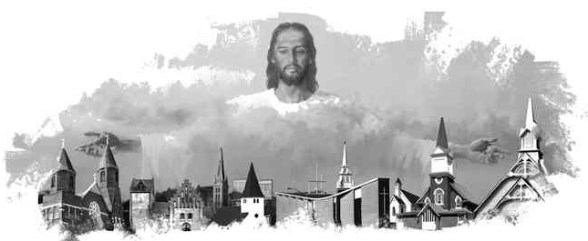
Despite Jesus’ marvellous vision and prayer for the unity of the Church, the sad reality is that the church is anything but unified. Denominations fracture and split; independent churches spring up constantly; even local parishes are disunified and in conflict. It does not appear that we are one as God the Father and the God the Son are one. A few thoughts on this:
Churches may diverge due to different practices, particularly around worship. Most Christians think about how Sunday services run and whether they like how we do things – whether we raise our hands, whether we have an organ or band, whether we use a set liturgy, whether the choir is up front or at the back, how long the sermons are, etc.
Given that Jesus emphasises our vertical relationship with God, and given that each relationship is different because each person is different, it seems to me that worship practices are not that important. It is probably better to attend a church where your relationship with God grows than to attend a church whose practices leave you cold.
Churches may diverge due to different doctrine. Some Christians may not worry or think too much about doctrine, but for many, doctrine – what we believe – is important. Churches split over their understanding of the role of Holy Spirit, over the gender of God, over the Trinity, over our sequencing of the end times.
We should think about and hold to certain beliefs – understanding of Truth was important in Jesus’ teachings, throughout the scriptures and to the early church. It should be important to us also. However, we should have the humility to recognise that our understanding Truth is flawed, limited, incomplete and quite possibly wrong. God knows the Truth; what we know as ‘truth’ is mere limited understanding, like peaking into a palace through a keyhole – we see just fragments of the riches within.
Currently the church is fracturing around our understanding of the place of LGBTQI+ people within the life of the church. In my own denomination – the Anglican communion – we have churches that see diverse human sexualities as anathema and others who see sexuality as unregulated by God. People’s feelings about sexuality run very deep and lead to pain exclusions of and judgmentalism towards LGBTQI+ people.
While many today have very strong feelings about these issues, Jesus did not. He had very strong feelings about love, about inclusion and about reaching out to those on the margins of society. He never talked about sexual orientation; but he talked incessantly about love. It is heartbreaking that the church should so forget how to love one another, when this is the central teaching of our Lord.
Many Christians are distressed at the proliferation of different churches. I’m not. In 1 Corinthians 12, Paul writes about the Body of Christ, the Church, and emphasises the diversity of the body and that diversity is good and necessary for the functioning of the whole. He gives particular emphasis to cherishing those parts of the body that people may regard as immodest, unpresentable, shameful. Paul stresses that in God’s eyes, these parts are as much necessary and beloved as those parts that people are happy to show off. Every part of the Body of Christ is necessary. Paul is emphasising how to maintain a sense of unity in the church together with all its diversity.
Let us not worry about the different churches, no matter how different they may be to us. Let us rather be sure to regard them as our sisters, our brothers, beloved by Christ and part of our own body.
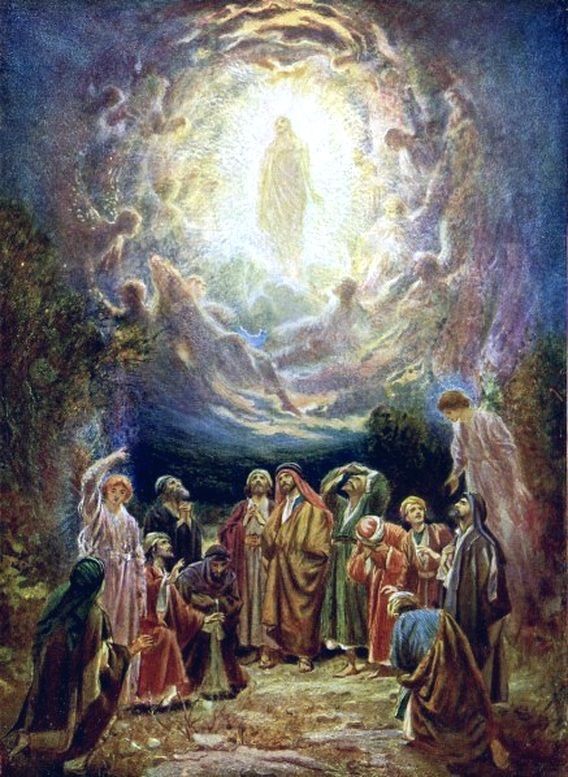
Ascension day is one of those days that Christians can easily miss – it takes place mid-week (on a Thursday) and is not a public holiday in most countries. And many would be hard pressed to give a good account of why the ascension is important. Fortunately, there are several online blogs that speak to the meaning of Christ’s ascension, e.g.,
But I find that the reasons many give are really descriptions of what Jesus does after his ascension – such as sitting at God’s right hand and sending Holy Spirit to us – rather than explanations of the ascension itself. Luke includes a narrative of the ascension both at the end of his Gospel narrative (Luke 24:50-51) and at the start of his sequel about the Apostles (Acts 1:9-10). Clearly, Luke thought the ascension was important.
Let me offer a way of thinking about the theological and practical significance of the ascension.
Let’s go back to the incarnation. In the incarnation God inserted God’s self into human nature at the conception. We can almost thinking that God integrated divine DNA into human DNA to create a new entity – a God-man – Jesus Christ. Orthodox theologians see the incarnation as central to salvation. God redeems and transforms human nature. (Click here to listen to a sermon where I set out the centrality of the incarnation in more detail.)
Let me suggest that in the ascension there is a similar but inverse process. As Jesus ascends to the Father, and as the triune God (Father, Son and Holy Spirit) is reunited in the ascension, God the Son brings with him some aspect of human nature, including his body, which is woven into the being of God.
What is the evidence for this? Perhaps most importantly, Luke emphasises in both narratives that Jesus ascended bodily, much as he rose bodily. When Jesus rises from dead, he rises with his body – he does not leave it behind and rise as a spiritual being. Of course, his body has been transformed – it has both physical and spiritual qualities. But the BODY is important. We affirm this in the Apostle’s Creed: “I believe … in the resurrection of the body”.
So too, in the ascension, Jesus rises with his body – he does not slough off his body, to release his spirit, which rises up to heaven. He ascends with his body. The disciples are described as “looking intently up into the sky as he was going” (Acts 1:10). It seems certain that Jesus physically rose up into the sky until he disappeared in the clouds.
Let me suggest, cautiously, that before the incarnation God did not have first-hand experience of what it is like to be a human being. God is spirit; God transcends time and space. But in the incarnation, God becomes a human being, with all of its limitations. God the Son experiences the joys and the pain of being human. He experiences friendship. He experiences betrayal, torture and death. When God the Son ascends bodily, these experiences are woven into the being of the triune God. God no longer just imagines what human life is like; God now truly and experientially knows what it is like to be human, with all its ups and down.
What this theology offers us in our daily life, is a deep assurance that God really knows what human life is like and what suffering feels like. God is not watching ‘from a distance’ (as Bette Midler so nicely sings). Rather, God is deeply immersed in our human experiences. So, when you are going through dark times, we can be sure that God is fully present with us in the darkness, experiencing them with us, sharing our pain and distress.
God is immediately available and fully experiences all we go through.
Our reading for today (John 14:16-20) prepares us to celebrate Pentecost in two weeks’ time. Jesus teaches about Holy Spirit who will come and continue his work among us. We learn several important things about Holy Spirit from this brief passage, including:
The Greek word ‘paraclete’ is directly translated as ‘the one called alongside’ or ‘the one called to come alongside’
‘Paraclete’ is translated in various ways: comforter, counsellor, advocate, encourager, etc.
Frederick Dale Bruner (in his commentary on John) and Eugene Peterson (in his Bible translation, ‘The Message‘) translate paraclete as ‘friend’ or ‘true friend‘. A friend is one who draws alongside us, who comforts and encourages us, who challenges us, and who stands up (or advocates) for us when people trash-talk us.
Jesus describes this true friend as a gift from God to us.
Jesus describes Holy Spirit as another friend. By implication, Jesus is the disciples current friend; Holy Spirit will come as another friend. There is continuity between Jesus and Holy Spirit.
Holy Spirit is a person, not a force or a thing. I try to give practical expression to this in my spiritual life in three main ways:
I drop the definite article ‘the’ from ‘the Holy Spirit’. Instead, I speak and think about ‘Holy Spirit’ as a name, like Jesus is a name. We don’t refer to Jesus as ‘the Jesus’ because Jesus is his name; we say ‘the Messiah’ because Messiah is a title of description. I use ‘Holy Spirit’ as a name, since we have no other name for him.
I use personal pronouns and avoid ever referring to Holy Spirit as ‘it’ or using ‘which’. These are impersonal, depersonalised words. I try to use the same words I use when speaking about Jesus or God the Father.
I refer to Holy Spirit as ‘she’. Not because I think of her as a woman, as female or as feminine. But because God is no more male than God is female. God transcends or incorporates all genders. Since we can’t refer (easily) to the Father or the Son with female pronouns, I choose to use female pronouns for Holy Spirit. If we could evolve the English language to be less gendered, we’d use gender-inclusive or gender-neutral language for God. (I appreciate that many will not appreciate or agree with me. That’s fine. We will learn a lot more about Holy Spirit on That Day.)
We, unlike those who do not believe, can both see and know Holy Spirit. For everyone else, Spirit is invisible and unknowable. But for us who believe, she can be both seen and known. She dwells within each of us as individuals. And she takes up residence among us collectively, as communities of faith. We are united by Spirit, even when we are physically apart.
As we journey closer to Pentecost on 31 May 2020, let become increasingly mindful or receptive to the presence of Holy Spirit in our personal and collective lives and celebrate this precious gift that God has given us.









 Reflections of God's Love