Healthy church

Click here to listen to the audio recording of this 30-minute message (yes, again a bit longer than usual). Or watch the video here on Facebook (the message starts 24 minutes into the recording). Or read the text summary below.

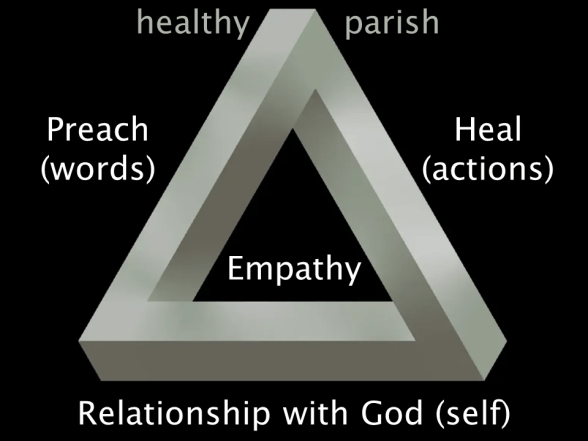
This sermon (preached a week ago on 4 February 2024) is about a healthy parish – what makes for healthy parish life. It emerges, in part, in light of various churches failing to uphold core values around clergy integrity and sexual relations. A model for a healthy church is presented, based on the readings that were set for today in the Revised Common Lectionary, viz. Isaiah 40:21-31, Psalm 147:1-11, 1 Corinthians 9:6-23 and Mark 1:29-39.

Jesus is always our model for everything to do with Christian living, including corporate or collective Christian living – the church. This model is influenced by the readings above and also by how Jesus lived his life, related to God and people, and exercised his ministry.

1. Personal relationship with God

The foundation of a healthy church – and the foundation the triangle above – is each member’s personal relationship with God. Our collective well-being rests on the aggregate of each individual person’s health relationship with God. In Mark 1:35, Jesus leaves his ministry to spend time in his personal relationship with God – he does so repeatedly, even though there are so many people waiting for his healing ministry and teaching. If a personal relationship with God is important to Jesus – who is God, the second person of the Holy Trinity – how much more important should it be to each of us.

When you fly on an airplane, you will be told that, in the event of cabin decompression, oxygen masks will drop down from above your seat. And you will be told to put your OWN mask on FIRST, before helping others (including your children). This is an apt illustration of the need for each of us to see to our personal relationship with God. I, as priest, must ensure the robustness and depth of my relationship with God.

2. Preach words

In 1 Cor 9:16-18, Paul refers to his preaching as central and as God-given. In Mark 1:38-39, Jesus says he needs to go to other villages to “preach there also”. He goes on to say, “That is why I have come”. Preaching words is important to build people’s faith.

But for a health church, I suggest we translate preaching as our words. Too often our words are harsh, judgmental, critical and gossipy. Such words break down, alienate, diminish and harm. There is no place for such words in a healthy church.

Our words should heal and create. Psalm 147:4 says, God “determines the number of stars and calls them each by name”, while Isaiah 40:26 reiterates, “Lift up your eyes and look to the heavens: who created all these? He who brings out the starry host one by one and calls forth each of them by name. … not one of them is missing”. These verses indicate how the words of God bring stars into being, as he names and calls them. Similarly, our words – whether good or bad – can call things into being.

Therefore, our words should be deliberately encouraging, edifying, building up, loving. Last year, we spent the whole of Lent reflecting on Jesus’ command to “love one another”, where we teased this out in detail.

3. Heal through actions

Mark 1:29-34 and 39 say, “…[Jesus] went to her, took her hand and helped her us. The fever left her … Jesus healed many who had various diseases. He also drove out many demons … So he travelled throughout Galilee … driving out demons.” Isaiah 40:29-31 says, “He gives strength to the weary and increases the power of the weak. Even youths grow tired and weary, and young men stumble and fall, but those who hope in the Lord will renew their strength. They will soar on wings like eagles; they will run and not grow weary, they will walk and not be faint.” Psalm 147: 2-3, 8-9, says, “The Lord builds up Jerusalem; the gathers the exiles of Israel. He heals the broken-hearted and binds up their wounds. … He covers the sky with clouds; he supplies the earth with rain and makes grass grow on the hills. He provides food for the cattle and for the young ravens when they call.”

These words are all of healing actions. How we behave impacts the health of a church. When we exclude, abandon or just do nothing, we harm the church. We break it down and weaken it. Rather, we should engage in actions that build up a health community. We can do this by simply showing up, instead of being absent. And through simple acts, like cooking a family a meal when they’re going through a hard time, giving someone a call or sending them a message, helping to clean up. In our tradition, we share the peace during the service – we can make sure we greet all the people around us, instead of rushing off to chat with our friends and ignoring a visitor.

4. Empathy

I have placed ’empathy’ at the centre of the graphic of a healthy church, even though the word ’empathy’ does not appear in the Bible. But the concept is there, for example in 1 Corinthians 9:19-23, Paul writes:

19 Though I am free and belong to no one, I have made myself a slave to everyone, to win as many as possible. 20 To the Jews I became like a Jew, to win the Jews. To those under the law I became like one under the law (though I myself am not under the law), so as to win those under the law. 21 To those not having the law I became like one not having the law (though I am not free from God’s law but am under Christ’s law), so as to win those not having the law. 22 To the weak I became weak, to win the weak. I have become all things to all people so that by all possible means I might save some. 23 I do all this for the sake of the gospel, that I may share in its blessings.

Here Paul steps into the shoes of others, in order to understand them from inside, in order to share the Gospel in a way that makes sense to them. This effort to feel with others is core to empathy.

We see this profoundly in Jesus. Until Jesus was conceived, God had no first-hand understanding of what being human was like. God was not a man, and didn’t have personal experience of being human. But when Jesus incarnated in Mary’s womb and was born like any other human, God got a first-hand experience of being human – God discovered empathy for the human condition.

Too often, however, we jump to negative conclusions, without first exercising empathy. We assume the worst of people, rather than considering other less judgmental reasons for their behaviour. For example, if we don’t see someone for a few weeks we assume they have lost their faith or reneged on their responsibilities, when in fact they might be ill. Instead, let us rather assume the best – if we’re going to make an factless assumption, let’s make a positive one rather than a negative one, until the facts suggest otherwise.

A church that is grounded in personal relationships with God, that speak and act in ways that build up and encourage, and that chooses to empathise with each other, is likely to be a healthy community. This is the kind of community or body that God desires for us. It takes some effort on each person’s part. Working together, we can build a healthy church centred on God.

The Prophet (Advent 3)

Click here to listen to the audio recording of this 18-minute message. Or watch the video here on Facebook (the message starts about 25 minutes into the recording). Or read the text summary below.

John the Baptist is arguably the second most important person in the New Testament – second only to Jesus. He was the last of the First Covenant prophets – prophesying about the coming Messiah. Once Jesus arrived, John’s ministry, and that of all the prophets in the First Testament, had reached fulfillment.

Curiously, in John 1:6-35, John the Baptist (or the writer of the Gospel according to the John) repeatedly speaks to who John is NOT, rather than to who John IS. In total, there are five negative declarations in this passage, suggesting a humility on the part of John and a clear understanding of his role, as the forerunner and preparer for the Messiah. John is not the light (8), not the Messiah (20), not Elijah (21), not the Prophet (21) (even though that is really what he is), and not worthy to untie the sandals of the Messiah (27). Strong negative statements about who he is NOT.

Alongside these are three affirmations of who John IS, only one of which he voices himself: he is a witness to testify concerning the light (7), he is a witness to the light (8) and he is the voice of one calling in the wilderness, ‘Make straight the way for the Lord’ (23), even though this last is John quoting Isaiah. John makes not independent statements of himself in his own words.

John’s negations and lack of affirmations about his pivotal role and place in the Christian story suggest great humility and that the focus of all his efforts is on Jesus, the Messiah, the promised Son of God. His life purpose is to point to Christ.

This is confirmed in John’s testimony about Jesus, which includes him sharing that he himself did not recognise Jesus (31), but that he saw the Spirit of God descend upon him and remain on him (33).

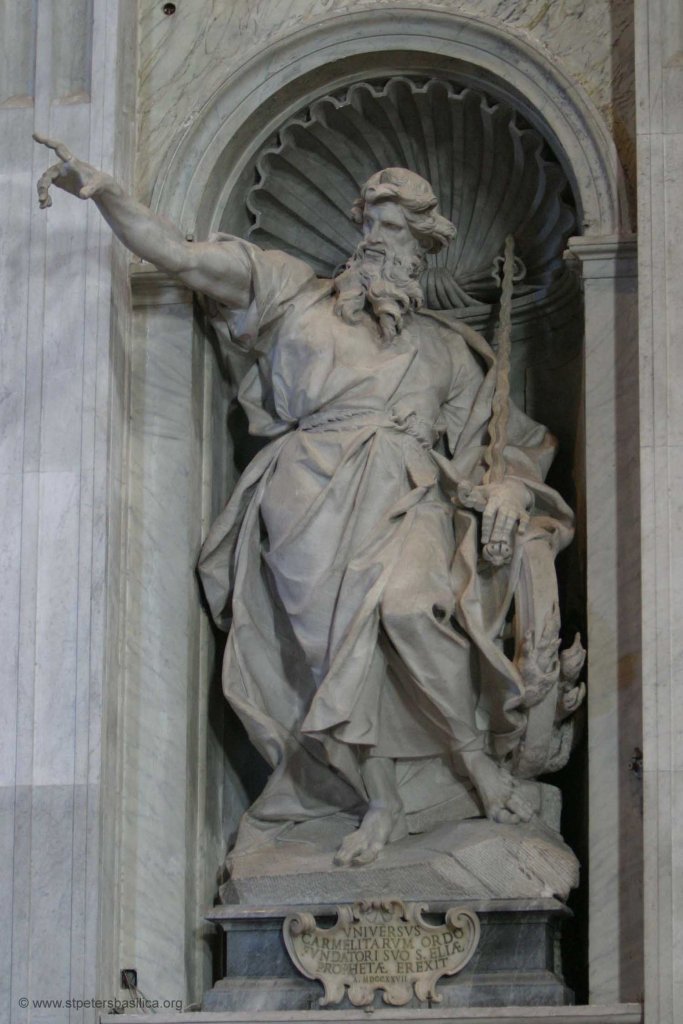
And so John points us to Jesus: “Look, the Lamb of God, who takes away the sin of the world! This is the one I meant…” (29) and the next day, “Look, the Lamb of God!” (35). This is the role of the Prophet – to witness to his experience of Jesus and to point us to Jesus. He is the pointer.

Our role, as Christians today, at the end of 2023, is to take up John’s prophetic role, by pointing to Jesus, as John did. Through our lives, our actions, our words and our values, we are (for better or worse) God’s prophets, pointing the way to Christ.

How do we do this? Our readings provide suggestions:

Isaiah 61 suggests we do so by sharing good news to the poor, binding up the broken hearted, proclaiming freedom to captives, comforting those who mourn, providing for those who grieve, restoring places long devastated, standing up for justice, and standing against robbery and wrong doing. All of these prophetic actions are located in the world – they all speak to the social justice that characterises the Kingdom of God.

Mary’s song in Luke 1:46-55 echoes some of Isaiah’s sentiments: extending mercy, lifting up the humble, and filling the hungry with good things. But Mary’s vision of her son, the Messiah, also includes some strong prophetic words: scattering the proud and sending the rich away empty.

And 1 Thessalonians 5:16-22 focuses on more obviously ‘spiritual’ actions: to rejoice always, pray continually, give thanks in all circumstances, hold to the good and reject evil.

It is all of these actions – standing up for social justice, speaking out against injustice and evil, and ensuring a robust spiritual life – that serve as a prophetic voice in the world today. This is perhaps the most important thing for us as Christians to be doing in the world – pointing the way to the Messiah.

Statue of Elijah pointing, by Agostino Cornacchini (1727) at St Peter’s Basilica, Vatican City

Continuous God

Click here to listen to the audio recording of this 15-minute message. Or watch the video on Facebook here (the message starts at about 22 minutes into the video).

We live in a world that is fraught with challenges and unpredictabilities. We think of Russia’s war on Ukraine, the continued challenges of the people of Palestine and the various conflicts in Africa. We think in South Africa of increasing unemployment, rising inflation, the upcoming petrol price hike. We think of loadshedding and the ongoing challenges of Covid. We think of the water crisis in Nelson Mandela Bay and the devastation of the floods in KwaZulu-Natal. The world is unpredictable. Our lives are often unpredictable. Sometimes, we may feel disoriented and anxious because of the many challenges that we face at personal, national and global levels.

In these times, it is reassuring to recognise that while life may be unpredictable, God is consistent. God persists. God has always, continues to and will always engage with us. When life feels chaotic, we have a God we can rely on.

Today’s reading from John 14:23-27 is particularly strong in reassuring us of God’s continuity. Jesus starts in v23 with himself: “Anyone who loves me will obey my teaching.” And then he immediately continues, “My Father will love them.” Here is the first affirmation of consistency – between God the Son and God the Father. Jesus draws the immediate and strong link between himself, his Father and us – rooted in love – our love for Christ and the Father’s love for us. And he continues with these amazing words, “and we will come to them and make our home with them”. I love this use of ‘we’ and ‘our’ – here Jesus is referring to himself and his Father as operating together, as a partnership, and of coming dwell with us as a partnership. What a great reassurance of the continuity between the Father and the Son. And Jesus continues further, “These words you hear are not my own; they belong to the Father who sent me” – yet further reassurance of continuity and consistency between God the Father and God the Son.

Jesus then continues, introducing the Holy Spirit as “the Advocate, the Holy Spirit, whom the Father will send in my name”. In this short phrase we have Father, Son and Holy Spirit, collaborating together – the Father sends the Holy Spirit in the Son’s name. And the role of the Holy Spirit will be to “teach you all things and [to] remind you of everything I have said to you”. Here again, we have continuity and consistency – Holy Spirit does not start a new work in us, but rather continues the work of the Son, by reinforcing his teachings in us.

The result of all of this continuity from the Father of the Old Testament, the Son of the Gospels and the Spirit of the New Testament church is peace. Peace! Jesus says, “Peace I leave with you; my peace I give you. Do not let your hearts be troubled and do not be afraid.” We can breathe out, we can rest in God, we can trust that God has been consistently and persistently at work throughout history, from the creation until now and into the future. Do not be troubled. Do not be afraid. Be at peace.

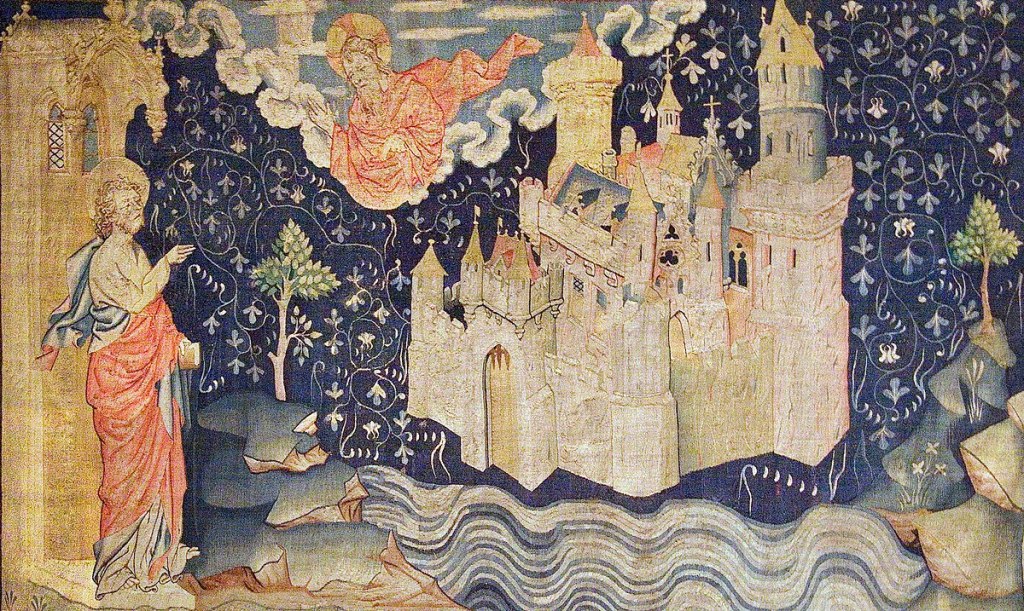
And these reassurances of God’s continuity extend into the future. Revelation 21:10 and 21:22-22:5 paint a compelling image of the heaven. John is taken by the Spirit – the same Spirit Jesus has spoken about in John’s Gospel – and sees the new Jerusalem, the Holy City coming down out of heaven from God. It is a glorious sight! There is no temple there, because God (the Father) and the Lamb (the Son) are its temple. God’s light shines out brilliantly. The gates of the city are always open. There is a river running through the city, with the water of life, and the tree of life, with leaves for the healing of the nations. We can see God’s face.

John’s vision is a deep reassurance of God’s continuity – what have seen in the Father throughout the first Testament, what we have seen confirmed in the life of the Son in the Gospels, and what we have been promised and experienced in the coming of Holy Spirit in the early Church and continuing until today, will continue into the future, until the day Christ returns.

We can rest deeply into the continuity of God, into God’s steadfast faithfulness and persistence. We can hold onto a God who is faithful, even when our own faith is frail or when life’s burdens overwhelm or depress us. We can hold fast to God’s continuity.

Featured image: John of Patmos watches the descent of New Jerusalem from God in a 14th-century tapestry (https://en.wikipedia.org/wiki/New_Jerusalem)

Desperate times

Click here to listen to the audio recording of this 25-minute message. Or watch the video on Facebook here (the message starts at about 35 minutes – unfortunately the volume on the video is very soft).

There are times in our life when things are desperate. These two years of Covid, and the losses, restrictions and challenges it has brought us, have given us additional reasons to feel desperate. There are times when life is exceptionally hard and we feel that the world is pitted against us – that even God is pitted against us.

Psalm 22 knows something about this:

1 My God, my God, why have you forsaken me? Why are you so far from saving me, so far from my cries of anguish? 2 My God, I cry out by day, but you do not answer, by night, but I find no rest. 6 But I am a worm and not a man, scorned by everyone, despised by the people. 7 All who see me mock me; they hurl insults, shaking their heads. 8 “He trusts in the Lord,” they say, “let the Lord rescue him. Let him deliver him, since he delights in him.” 14 I am poured out like water, and all my bones are out of joint. My heart has turned to wax; it has melted within me. 15 My mouth is dried up like a potsherd, and my tongue sticks to the roof of my mouth; you lay me in the dust of death.

Jesus uses this Psalm to express his desperation and despair as he hangs dying on the cross. He feels God-forsaken, utterly desolate. Where is God in all of this? Why am I abandoned?

The Psalmist shows a flicker of faith – just a flicker, though:

9 Yet you brought me out of the womb; you made me trust in you, even at my mother’s breast. 10 From birth I was cast on you; from my mother’s womb you have been my God.

And he cries out with a desperate, but muted plea:

11 Do not be far from me, for trouble is near and there is no one to help.

Job knows something about desperate times, having lost everything, despite being a righteous man of deep faith. He loses everything – everything – and grapples to make sense of what feels like God’s abandonment of him. Instead of imploding in despair like the Psalmist above, Job explodes outwards in anger and wants to confront God (Job 23):

2 “Even today my complaint is bitter; his hand is heavy in spite of my groaning. 3 If only I knew where to find him; if only I could go to his dwelling! 4 I would state my case before him and fill my mouth with arguments. 5 I would find out what he would answer me, and consider what he would say to me.

Job pushes towards God, seeking confrontation, to put his case to God, to demand to know why God would let him struggle like this. Job is desperate, and his desperation evokes anger and outrage at God.

Yet God makes himself unfindable:

8 “But if I go to the east, he is not there; if I go to the west, I do not find him. 9 When he is at work in the north, I do not see him; when he turns to the south, I catch no glimpse of him.

How frustrating it is when the person we want to confront is unavailable, inaccessible. God disappears and Job is left both desperate and angry, with nowhere to vent his anger. And yet, Job is also afraid of God – God is dangerous, and a confrontation with God could be a disaster for Job:

13 “But he stands alone, and who can oppose him? He does whatever he pleases. 14 He carries out his decree against me, and many such plans he still has in store. 15 That is why I am terrified before him; when I think of all this, I fear him. 16 God has made my heart faint; the Almighty has terrified me.

In the end, Job does not offer up a muted plea like the Psalmist. Instead, he shakes his fist at God:

17 Yet I am not silenced by the darkness, by the thick darkness that covers my face.

23 “How hard it is for the rich to enter the kingdom of God! 24 … Children, how hard it is to enter the kingdom of God! 25 It is easier for a camel to go through the eye of a needle than for someone who is rich to enter the kingdom of God.”

The disciples also experience similar desperate times with Jesus. While we think and teach about Jesus as always available, receptive and loving, sometimes he is not. We know the story in Mark 10 of a young man who rushes up to Jesus, falling on his knees and asking what he must do to inherit eternal life. Jesus seems, from the get-go, to treat him harshly, eventually telling him to give away everything he has, and the young man is crestfallen and “went away sad”. Jesus then turns to the disciples and says:

The disciples are amazed and shocked – presumably at both Jesus’ response to the earnest young man and Jesus’ words about how impossible it is to saved. Peter cries out in desperation:

26 Who then can be saved? [and] 28 But we have left everything to follow you!

You can hear Peter’s despair. He has left everything – family, work, home, community, his place in society, everything – to follow Jesus, and now Jesus says that it is impossible for man to be saved and how hard it will be for anyone to be saved. It seems to Peter and the disciples that everything they have sacrificed is for nothing.

This is a low point for Peter. He hits rock bottom as it seems to him that he has lost everything. His sense of purpose is fracturing.

Sometimes, we find ourselves in similar places to the Psalmist, to Job and to Peter. Our world seems to be falling apart, the challenges of life pile up and seem unduly heavy, God seems to have abandoned us, where is he to be found?, we feel alone and desperate. It as this lowest point that transformation can come.

Peter missed something that Mark noticed. In Mark 10:21a, Mark writes, “Jesus looked at him [the rich young man] and love him.” Jesus looked at him and he loved him. Jesus looked at her and he loved her. Jesus looked at me and he loved me. Jesus looks at you and he loves you.

The writer of Hebrews helps us understand that a fundamental change occurs in the life of God, through Christ’s experience here on earth. Before the incarnation, God could see what human life was like, but could not feel what it was like. But with Jesus’ coming into this world in human form, God now knew first hard what human desperation feels like. Hebrews 4

14 Therefore, since we have a great high priest who has ascended into heaven, Jesus the Son of God, let us hold firmly to the faith we profess. 15 For we do not have a high priest who is unable to empathize with our weaknesses, but we have one who has been tempted in every way, just as we are—yet he did not sin.

And because Jesus understands fully what it is like to be human, and because he truly understands what it is like to be desperate, and because he loves us utterly and to the very end, the writer to the Hebrews invites us to come to God:

16 Let us then approach God’s throne of grace with confidence, so that we may receive mercy and find grace to help us in our time of need.

We can come to the throne of God, not with a muted plea, not with anger, not in desperation, but in confidence, knowing that at that throne we will find grace and mercy to help us in our time of need. We can be confident to wrestle with God, to plead with God, to challenge God, to lean into God. Because he love us and because he knows first hand how hard this life can be. Jesus (in Mark 10:29-31) does not promise an easy life – he promises both reward and persecution.

But he does promise that we can always have direct access to the throne of grace and mercy. Such is the love the Father has for us. God is always accessible, always nearby, always connected, always empathic, always in the midst of adversity with us.

Featured image from https://www.cdc.gov/nceh/features/hurricanepreparedness/index.html

One with God

Click here to listen to the audio recording of this 6-minute message. Or watch the YouTube video below.

In John 5, Jesus is accused of considering himself “equal with God”. And in his response (in verses 19-23), instead of defending himself, Jesus actually confirms the charge:

Jesus gave them this answer: “Very truly I tell you, the Son can do nothing by himself; he can do only what he sees his Father doing, because whatever the Father does the Son also does. For the Father loves the Son and shows him all he does. Yes, and he will show him even greater works than these, so that you will be amazed. For just as the Father raises the dead and gives them life, even so the Son gives life to whom he is pleased to give it. Moreover, the Father judges no one, but has entrusted all judgment to the Son, that all may honor the Son just as they honor the Father. Whoever does not honor the Son does not honor the Father, who sent him.

Jesus considers himself one with God – he and his father are one. They are equal, one being, even though he clearly shows that they are not the same person – for example, the Father does not judge; that role is given to the Son. But there is a closeness and alignment of purpose and desire between Father and Son (and also Holy Spirit) that leads us to the doctrine of the Trinity.

Given close unity between Father and Son, we also should strive to be one with God – to act in accordance with God’s will, to align our desires and intentions with God’s, to adopt as our own God’s values and priorities. Jesus is our example for all life. Let us become one with God.

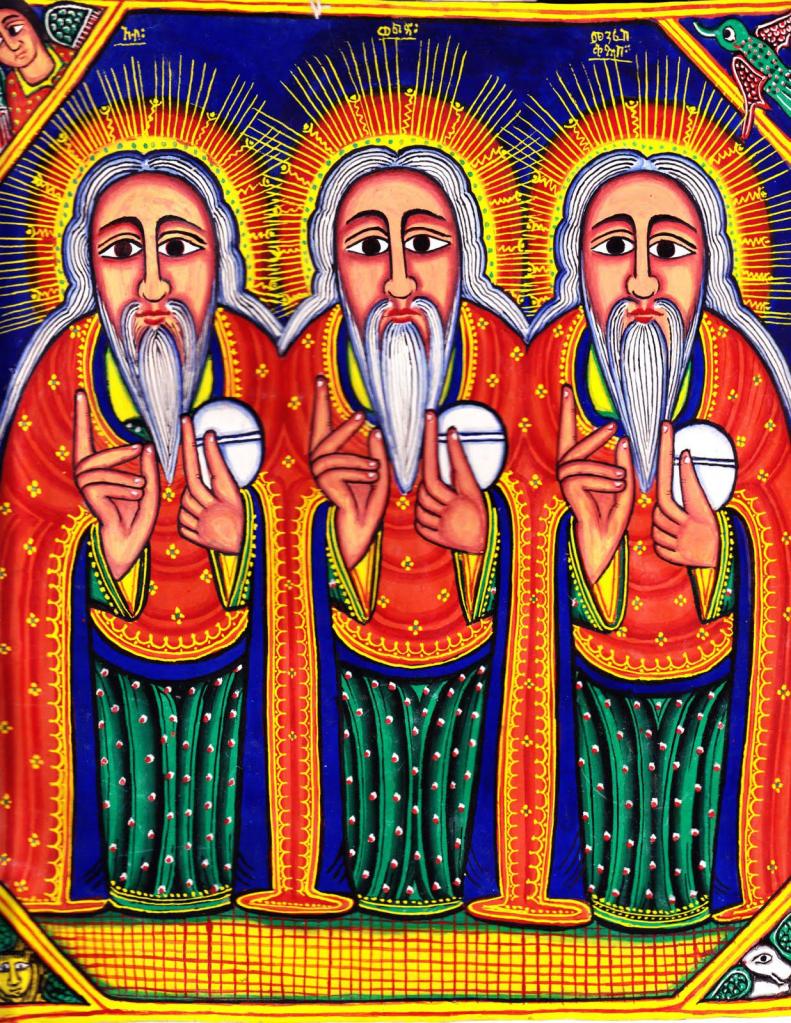
Featured image of an Ethiopian icon of the Trinity
from https://www.reddit.com/r/OrthodoxChristianity/comments/jgjbqe/ethiopian_orthodox_icon_of_the_holy_trinity/

God works with young people too

Click here to listen to this 20-minute message.

Today is the first Sunday in Youth Month (June), and our church decided that ‘the youth’ (i.e. teenagers) would attend grown-up church for the month, rather than the usual youth church. Youth will be participating more actively in the services this month – welcoming new comers, serving as sides persons, reading the scriptures and leading prayers. And on June 17th, a teenager will preach.

So this sermon is intended to kick off Youth Month by addressing the question of the place of young people in God’s work in the world, in the Kingdom of God. All too often,  grown-ups tend to think of teenagers as being ‘adults-in-waiting’ (something scholars call ‘waithood‘). We have high expectations of who they must become, but low expectations of what they can offer now, and create little opportunity for them to act now. But, I argue, this is not what we see in the way God relates to young people in the Bible.

Drawing on the story of God calling Samuel when he was a boy (probably about 12 years old) in 1 Samuel 3:1-11, I show how God intentionally sidelined a grown-up priest (Eli) to rather engage with Samuel. God calls Samuel FOUR times in the night! During a time when the voice of God was rarely heard. AND God appears to Samuel in physical form (a ‘theophany’), which is also rare in the Old Testament narrative.  And then God gives a momentous message to Samuel, about God’s judgement on Eli, who is Samuel’s master.

In this story, we see God engaging fully with a young person, and making that young person central to God’s mission in the world. It is no accident. God selected a youngster to do this pivotal work. Samuel was about the same age as Jesus was when he left his parents to sit in the temple and engage the Jewish leaders (Luke 2:41-52).

Another narrative is found in Mark 2:23-3:6, a passage ostensibly about Jesus’ teachings on Sabbath law. I suggest that in this narrative, we Jesus acting in a typically adolescent way! (Remember that Jesus, being around 30 years old, was himself a youth, according to the South Africa definition of youth as ages 14-35.) In the first part of this narrative, Jesus and his disciples are walking, harvesting and carrying – all against the Sabbath law. Jesus’ response when challenged is a first century “Whatever” that is typical of modern teens. And then he heals a man, not because the man is in danger (his hand had probably been shriveled for many years, and was not in any immanent danger that warranted an ’emerging healing’ on the Sabbath), but to make a point. He wants to show his disregard for the Sabbath laws that had become a millstone around people’s necks.

In this second story, we see Jesus valuing a typically adolescent attitude: a healthy disregard for tradition and authority. Teenagers want to know why we do things the way we do them. What’s the point? Why is different not acceptable? Who says? We know that God appears to value such a questioning stance, because Jesus himself acts it out.

Teenagers are not grown-ups in waiting. They are already people. They’re just young people. God loves them enormously, extravagantly, intensely. God wants to engage with them, be in communication with them, listen to and talk to them. God wants them to partner in God’s work in the world, in God’s Kingdom. God sees them as full people, who have much to contribute. We, parents, grandparents, aunts and uncles, need to create some space for God to work with these young people.

Good Morning, Holy Spirit!

Click here to listen to this 18-minute message.

Today is Pentecost Sunday, when we celebrate the outpouring of the Holy Spirit on the early church, 50 days after Easter. Holy Spirit is a person we talk about far too infrequently, so today I seize the opportunity to talk about him (or her) in greater detail. In this message, I answer two question: Who is Holy Spirit? and What does Holy Spirit do in our lives? I draw on three great readings about the Spirit, viz. John 15:26-16:15; Romans 8:9-11, 22-27; and Acts 2:1-21.

Regarding the first question, my answer is in three parts:

  1. Holy Spirit is the third person of the Trinity (or the triune God) – as much God as Jesus and the Father are God.
  2. Holy Spirit is a person (not a force, or presence, or love) – as much a person as Jesus and the Father are persons.
  3. Holy Spirit is active in numerous ways in our present lives and in the lived-experience of our faith, thus very much to be incorporated into our faith life.

Regarding the second question, I give two answers, briefly:

  1. Holy Spirit dwells within us, and is thus present in the body and heart of every believer, working to align our spirit with the risen Christ, and helping us in living out our faith.
  2. Holy Spirit empowers and equips Christians for living and speaking out our faith in the world, through equipping us with gifts and strengths, and growing our confidence.

I hope that you will find this an accessible explanation of Holy Spirit. It was preached at our family service – half of those present were children and youth.

May you experience a rising of the Holy Spirit in your heart this Pentecost.

Blessings
Adrian

Resurrection Church

Click her to listen to this 25-minute message.

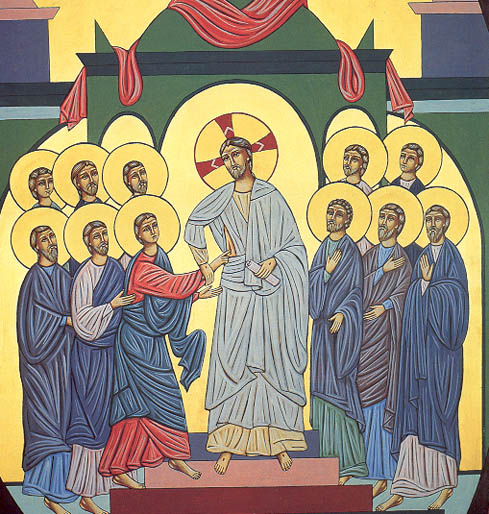
On the evening of that first Easter Sunday, Jesus appeared to the disciples (excluding Judas and Thomas) in the upper room, where he showed them his wounded hands and feet. John describes this in John 20:19-23. This narrative is followed by the story of Jesus’ engagement with Thomas. And John ends the chapter with a reflection on his version of the Gospel – that he has selected from the numerous stories about Jesus these few, whose purpose it to facilitate our belief in Jesus, so that we may enjoy the fullness of Life.

John’s purpose in the John 20 narrative is to guide the church towards the end of the first century to be a resurrection church – a church that is centred on the risen Christ, empowered by Holy Spirit and focused on Christ’s work of forgiveness and reconciliation. But this is hard when you are 60 or more years away from the living Christ Jesus. Because of this distance in time (most of the eye witnesses had passed on) John’s message is of particular relevance for us who live two thousand years distant.

This is quite a long sermon for me and our parish – sorry about that! But I hope it moves quite briskly and provides some food for thought about a fascinating and rich passage in the Gospel narrative. To assist with the denseness of the message, I provided my congregation with a slip of paper with the nine points (yes, nine!) written down. Here they are:

  1. This is the start of Sunday worship for Christians – resurrection Sunday.
  2. Jesus’ body is still physical, but also transformed – it does not conform to the laws of nature.
  3. Christ stands in the middle of us, and is the centre focus of Christian life and worship.
  4. Jesus’ presence bring peace (Shalom) and is his central message.
  5. Jesus’ transformed body retains the wounds in his hands and side, and are assimilated into the triune Godhead at the ascension, so that there is now woundedness within the being of God.
  6. Jesus commissions his disciples (including us) to be his presence in the world – when people see us, they should see Christ.
  7. Jesus imparts Holy Spirit to us – we have Holy Spirit in us, not as power and gifts, but as the relational presence of God within us.
  8. We are given the ministry of forgiveness, which Paul calls the ministry of reconciliation.
  9. All of this culminates in a statement of faith – a creed – ‘My Lord and my God’.

When the World goes Mad

Click here to listen to this 16-minute message.

Sometimes, the world seems to be going mad. On the morning of the day I preached this sermon, two terrorist attacks in Brussels left 31 or so people dead. IS claimed responsibility. Attacks like these, like the multiple attacks in Paris in 2015, make us afraid and want to withdraw from the world. Fear sets in. Muslims and Arabs seem dangerous. The world seems a threatening place.

In South Africa, we face increasingly racialised discourse, from all sides of the political and racial spectrum. Some people are calling for doing away with reconciliation and an increasing emphasis on racial identity and distinctiveness. These conversations elicit fear and uncertainty, prompting us to withdraw from each other into our safe comfort zones.

Jesus also experienced a world going mad. As religious leaders becoming increasingly threatened by him, his actions and his popularity, they set up traps to discredit and marginalise him. They plot to kill him. Indeed, they succeed in murdering him.

But through all this madness, Jesus does not withdraw, he is not cowed by fear, he does not avoid. Instead, Jesus continues to engage, to move towards, to step across boundaries. From where does he get this confidence in the face of considerable odds? He gets it from a confidence that his authority comes from heaven, from God. He knows that he is living out God’s will for him – to reconcile all things together within God’s family.

And so he remains steadfast. As we also need to remain steadfast. To not be cowed or afraid or marginalised. But to continue to live out the faith that we have inherited. A faith that hopes and trusts in a powerful God. A faith that engages and connects. A faith that steps across boundaries and embraces. A faith that loves.

Mark 11:27-33

Being God’s Beloved: Talk 5: God’s Love Revealed Through The Cross

This is the fifth and final talk in the series on “Being God’s Beloved”, presented at St Martin’s Anglican Church, Irene, South Africa, on 9 April 2014. We conclude the talks by focusing on the Cross and Resurrection, and the way in which the sequence of events over the Easter weekend reveals God’s love to us.

Click here to open the video from YouTube