Christ, our centre

Click here to listen to the audio recording of this 21-minute message. Or watch the video here on Facebook (the message starts 35 minutes into the recording). Or read the text summary below.

Today is the fifth and last Sunday that we spend in John chapter 6. It has been a long and challenging 5 weeks. Next week, we go back to our journey through Mark’s gospel.

The setting of much of John 6, from after the feeding of the 5000 and Jesus walking on the water, is in a synagogue in Capernaum. In v59 we read, “Jesus said this while teaching the synagogue of Capernaum.” So, where did this teaching start? It started in v26, where, in the two verses before we read, that the crowds “got into the boats and went to Capernaum in search of Jesus. When they found him on the other side of the lake [in Capernaum], they asked him ‘Rabbi, when did you get here?'” and so the long teaching on the bread of life starts. John 6:25-71 all takes place in the synagogue at Capernaum.

This is not coincidental. While we can find Christ anywhere, he chooses to meet us in synagogues, in churches, in the midst of the people of God. We read this in John 18:20, where, before the high priest, Jesus says, “I always taught in the synagogues or at the temple, where all the Jews come together. I said nothing in secret.” Here is Jesus affirming that he consistently taught in the centre of the synagogues, in the midst of God’s people. And in Matthew 18:20, Jesus says, “For when two or three gather in my name, there I am with them” or ‘in the midst of them’. (I have to smile at the similarity between John 18:20 and Matthew 18:20!) And in most Anglican churches, we read the Gospel in the centre of the church, not from the front, because Christ, the Word, is central to the people of God. The Word is in the midst of us.

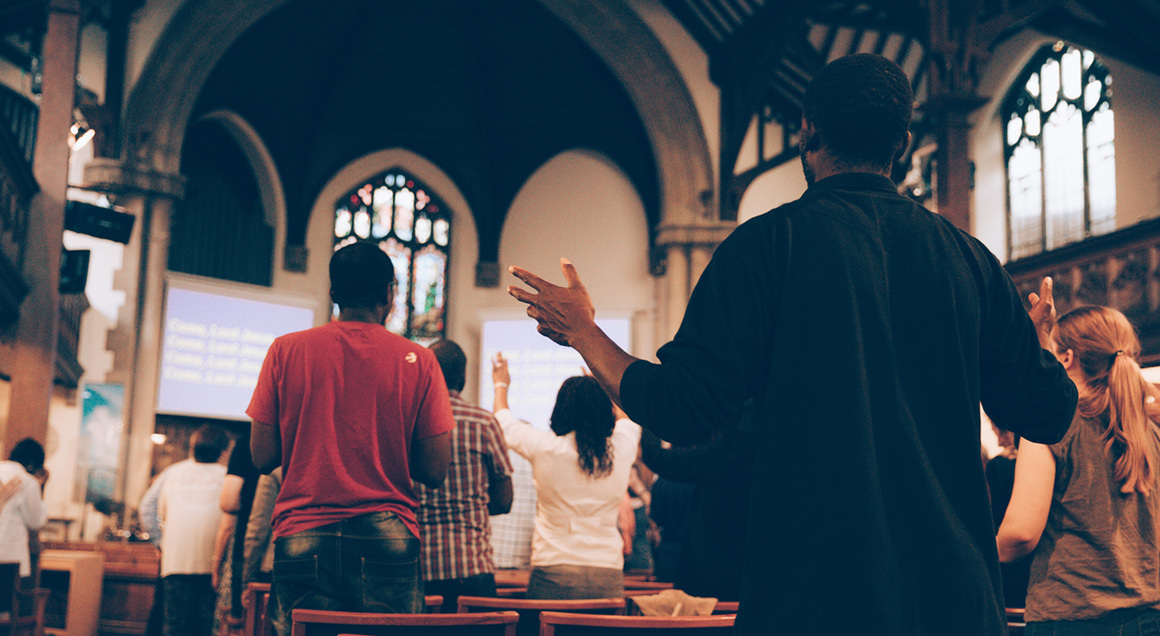
Christ is our centre, and we congregate around him.

But, Jesus’ word is hard. Last week, we chewed through a difficult passage about eating Jesus’ flesh and drinking his blood. His teaching is challenging and hard to understand. As a result, MANY of his disciples or followers fell away and left. They could not swallow his message. It was easier – so they thought – to move on and find an easier teaching elsewhere.

Jesus seems disappointed and sad at their leaving, because he turns to his 12 disciples, and says to them, rather than asking them, “You don’t want to leave too, do you.” He hopes and trusts that his people will remain with him.

Jesus’ himself says in v63, “The words I have spoken to you – they are full of the Spirit and and of life!” One thinks of God’s Word ringing out in Genesis 1, calling the universe into being through his word. And we think of John 1, “In the beginning was the Word, and the Word was with God, and the Word was God. He was with God in the beginning.” Christ does not merely speak words; he IS The Word!

And the 12 disciples know and understand this, because they have spent so much time sitting with Christ in their midst. And so Peter says, “Lord, to whom shall we go? YOU have the words of eternal life. We have come to believe and to know that you are the Holy One of God.” Jesus, as the Word of God that creates the world and as the Bread that comes down from heaven and gives life to the world, we feast on his word and bread. We hear the Gospel preached and we participate in the Eucharist. It is here, in this church community, that we find divine food, life and hope.

We must remain clustered around the centre, where Christ is. Let us not drift away to the edges, and then slip out into the darkness. We need to remain in the centre, where Christ, our light and life is. We need to remain in the centre and our church friends need to remain in the centre. Let us not drift away. And let us call back those who have. For Jesus has Spirit and Life – away from the centre, we are cold and lost.

https://i0.wp.com/www.shawnthebaptist.org/images/2018/01/JesusTeaching.jpg
It is significant that in many synagogues, the ‘pulpit’ from where the Torah is read, sung and preached and from where prayers are led, is in the centre of the synagogue, not in the front. https://qph.cf2.quoracdn.net/main-qimg-ea0d9bbe25c33626ee12b4dc33db5383-lq

Sabbath church

Click here to listen to the audio recording of this 25-minute message. Or watch the video here on Facebook (the message starts 22 minutes into the recording). Or read the text summary below.

Genesis 2:2-3 institutes the Sabbath (or Shabbat or Shabbos). Most Christians celebrate this on Sunday, while Jews and some Christians (e.g., Seventh Day Adventists) observe it on Saturday (or from sunset on Friday to sunset on Saturday). Muslims have a holy day on Friday, called Jumu’ah, and will pray at noon at the mosque (or wherever they are, if there is no accessible mosque), though it is not a day of rest. For Christians, then, the Sabbath is intended to be a day of rest. And it is traditionally when we spend time in God’s house with God’s people.

In the evangelical Bible church where I came to faith in my teens, the Sabbath was a very holy day. We were expected to come to both the morning and evening services (which I routinely did), and also the early morning Bible study (which I did). And we were not allowed to work (no home work or office work, no shopping, no parties, etc.), which I also conformed to. In my family, Sunday was also the day we all relaxed. Dad would do a braai (barbecue), always burning the outside of the meat to charcoal! We’d have ice cream for pudding, play in the pool, watch Dad watching motor racing on the TV, reading the Sunday paper, sleeping. Although I am not fixed on Sabbath prohibitions anymore, I still feel guilty stopping at the shops on the way home from church – sometimes I’ll take off my dog collar and put on a t-shirt, to go incognito – a guilty remnant of my rule-based Christian formation.

In today’s Gospel reading (Mark 2:23-3:6), Jesus flaunts the strict Jewish Sabbath laws of his time: he and his disciples (1) travel, (2) harvest, and (3) eat, and in the following passage, Jesus (4) heals a man with a shrivelled hand. This behaviour of Jesus – to flaunt Jewish laws in favour of human relationships and well-being – is typical of Jesus’ ministry, and contributed to his murder.

Jesus, however, challenges the Sabbath laws. He draws on a story from Samuel (not actually about the Sabbath) to argue that Jesus, like David, broke rules about giving food to his companions. It is as if Jesus is saying, “Chill! It’s not that important. Relax. My disciples were hungry, so I’m fine with them reaping and eating some grain.” He says to the Pharisees, “The Sabbath was made for humans, not humans for the Sabbath” (Mark 2:27). Jesus always prioritises people over rules, even when this is deeply offensive to other people who prioritise rules over people.

Jesus does the same in the following healing story. Here he juxtaposes goodness with evil, and saving life with murder – which is lawful on the Sabbath? Perhaps the correct answer was that none of these were lawful, but the Pharisees remain silent. They were not willing to recognise that there is a continuum between evil to good, between dying and healing. They applied their rules rigidly. This angers Jesus: “He looked around at them in anger, deeply distressed at their stubborn hearts” (Mark 3:5).

This wordless response of Jesus is vital to our faith – Jesus always prioritises people over rules. Rules are important for civilisation and harmony, but when rules dehumanise people, they must be challenged. And so Jesus provocatively and flagrantly heals the man in front of the Pharisees, who immediately start plotting his death.

The Sabbath, then, is God’s gift to humankind. In the Ten Commandments in Exodus 20:8-11, God says via Moses:

“Remember the Sabbath day by keeping it holy. Six days you shall labor and do all your work, 10 but the seventh day is a sabbath to the LORD your God. On it you shall not do any work, neither you, nor your son or daughter, nor your male or female servant, nor your animals, nor any foreigner residing in your towns. 11 For in six days the LORD made the heavens and the earth, the sea, and all that is in them, but he rested on the seventh day. Therefore the LORD blessed the Sabbath day and made it holy.

God knows us. God created us. God knows what we need. God knows we need down-time. Psalm 139 reveals this intimate knowledge that God has for each of us:

1 You have searched me, Lord, and you know me. 2 You know when I sit and when I rise; you perceive my thoughts from afar. 3 You discern my going out and my lying down; you are familiar with all my ways. 4 Before a word is on my tongue you, Lord, know it completely. 5 You hem me in behind and before, and you lay your hand upon me. … 13 For you created my inmost being; you knit me together in my mother’s womb. 14 I praise you because I am fearfully and wonderfully made; your works are wonderful, I know that full well. 15 My frame was not hidden from you when I was made in the secret place, when I was woven together in the depths of the earth. 16 Your eyes saw my unformed body; all the days ordained for me were written in your book before one of them came to be.

2 Corinthians 4:7 also has important insight for us: “But we have this treasure in jars of clay, to show that the surpassing power belongs to God and not to us.” We are the jars of clay – fragile vessels, easily shattered. God is the treasure, the surpassing power, the light, the life, the potential, the very Spirit of God. God chooses to dwell in these fragile vessels that we are.

All of this brings us back to the Sabbath. Without getting legalistic about Sabbath rules, can we agree that spending time with God is good for us? Can we agree that prayer, both personal and collective, is good for us? That singing together is good for us? That hearing the Word of God read in public is good for us? Can we agree that hearing the Word of God explained and applied to our lives is good for us? That spending a little time chatting with other Christians over a cup of tea of coffee is good for us? That leaving the dishes in the sink for another 15 minutes to spend time in fellowship is good for us? Can we agree that being at church as a family is good for us? That participating in the Eucharist – receiving the signs of Christ’s exceptional love for us – is good for us? That being reminded every week that Christ dwells within us and wants us to walk in step with him is good for us?

Surely the answer to all these questions must be YES?!

Come to church! Even if you are tired. Even if you don’t like your minister. Even if you don’t like some people at church. Even if there are things you disagree with. Even if you have other work that needs to be done. Even if you come without your family because they are not interested.

Put yourself into a place where God can bless you. Come with an expectant heart. Open your heart to God’s Spirit. Look for the good in your church. Forgive your church for its lacks and failures. Come to church!

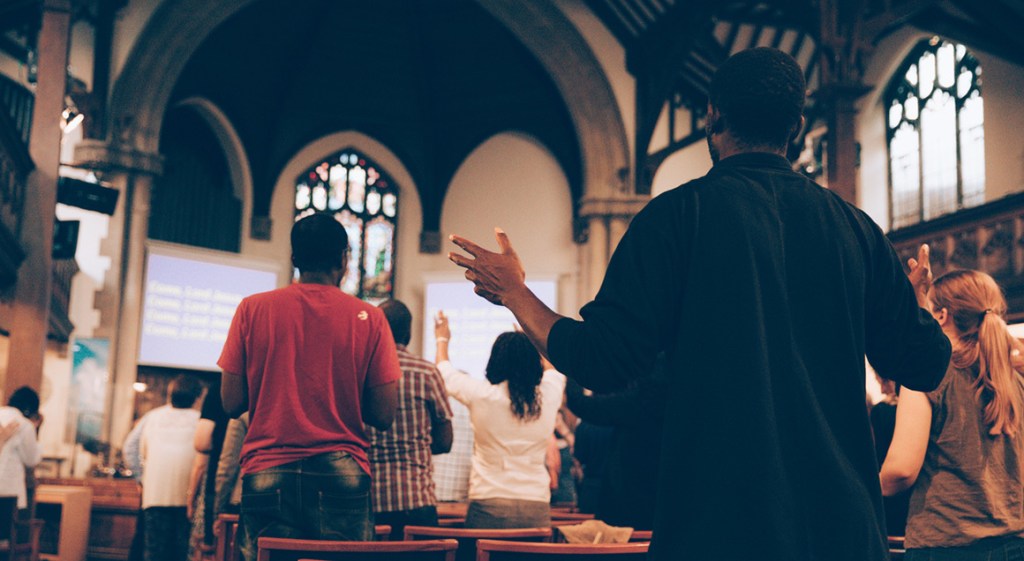
Featured image from https://img.freepik.com/premium-photo/church-congregation-christian-gospel-singers-raising-praise-lord-jesus-christ_829699-356.jpg

Healthy church

Click here to listen to the audio recording of this 30-minute message (yes, again a bit longer than usual). Or watch the video here on Facebook (the message starts 24 minutes into the recording). Or read the text summary below.

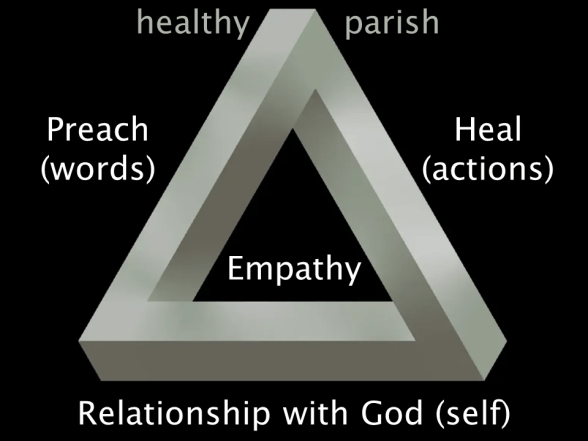
This sermon (preached a week ago on 4 February 2024) is about a healthy parish – what makes for healthy parish life. It emerges, in part, in light of various churches failing to uphold core values around clergy integrity and sexual relations. A model for a healthy church is presented, based on the readings that were set for today in the Revised Common Lectionary, viz. Isaiah 40:21-31, Psalm 147:1-11, 1 Corinthians 9:6-23 and Mark 1:29-39.

Jesus is always our model for everything to do with Christian living, including corporate or collective Christian living – the church. This model is influenced by the readings above and also by how Jesus lived his life, related to God and people, and exercised his ministry.

1. Personal relationship with God

The foundation of a healthy church – and the foundation the triangle above – is each member’s personal relationship with God. Our collective well-being rests on the aggregate of each individual person’s health relationship with God. In Mark 1:35, Jesus leaves his ministry to spend time in his personal relationship with God – he does so repeatedly, even though there are so many people waiting for his healing ministry and teaching. If a personal relationship with God is important to Jesus – who is God, the second person of the Holy Trinity – how much more important should it be to each of us.

When you fly on an airplane, you will be told that, in the event of cabin decompression, oxygen masks will drop down from above your seat. And you will be told to put your OWN mask on FIRST, before helping others (including your children). This is an apt illustration of the need for each of us to see to our personal relationship with God. I, as priest, must ensure the robustness and depth of my relationship with God.

2. Preach words

In 1 Cor 9:16-18, Paul refers to his preaching as central and as God-given. In Mark 1:38-39, Jesus says he needs to go to other villages to “preach there also”. He goes on to say, “That is why I have come”. Preaching words is important to build people’s faith.

But for a health church, I suggest we translate preaching as our words. Too often our words are harsh, judgmental, critical and gossipy. Such words break down, alienate, diminish and harm. There is no place for such words in a healthy church.

Our words should heal and create. Psalm 147:4 says, God “determines the number of stars and calls them each by name”, while Isaiah 40:26 reiterates, “Lift up your eyes and look to the heavens: who created all these? He who brings out the starry host one by one and calls forth each of them by name. … not one of them is missing”. These verses indicate how the words of God bring stars into being, as he names and calls them. Similarly, our words – whether good or bad – can call things into being.

Therefore, our words should be deliberately encouraging, edifying, building up, loving. Last year, we spent the whole of Lent reflecting on Jesus’ command to “love one another”, where we teased this out in detail.

3. Heal through actions

Mark 1:29-34 and 39 say, “…[Jesus] went to her, took her hand and helped her us. The fever left her … Jesus healed many who had various diseases. He also drove out many demons … So he travelled throughout Galilee … driving out demons.” Isaiah 40:29-31 says, “He gives strength to the weary and increases the power of the weak. Even youths grow tired and weary, and young men stumble and fall, but those who hope in the Lord will renew their strength. They will soar on wings like eagles; they will run and not grow weary, they will walk and not be faint.” Psalm 147: 2-3, 8-9, says, “The Lord builds up Jerusalem; the gathers the exiles of Israel. He heals the broken-hearted and binds up their wounds. … He covers the sky with clouds; he supplies the earth with rain and makes grass grow on the hills. He provides food for the cattle and for the young ravens when they call.”

These words are all of healing actions. How we behave impacts the health of a church. When we exclude, abandon or just do nothing, we harm the church. We break it down and weaken it. Rather, we should engage in actions that build up a health community. We can do this by simply showing up, instead of being absent. And through simple acts, like cooking a family a meal when they’re going through a hard time, giving someone a call or sending them a message, helping to clean up. In our tradition, we share the peace during the service – we can make sure we greet all the people around us, instead of rushing off to chat with our friends and ignoring a visitor.

4. Empathy

I have placed ’empathy’ at the centre of the graphic of a healthy church, even though the word ’empathy’ does not appear in the Bible. But the concept is there, for example in 1 Corinthians 9:19-23, Paul writes:

19 Though I am free and belong to no one, I have made myself a slave to everyone, to win as many as possible. 20 To the Jews I became like a Jew, to win the Jews. To those under the law I became like one under the law (though I myself am not under the law), so as to win those under the law. 21 To those not having the law I became like one not having the law (though I am not free from God’s law but am under Christ’s law), so as to win those not having the law. 22 To the weak I became weak, to win the weak. I have become all things to all people so that by all possible means I might save some. 23 I do all this for the sake of the gospel, that I may share in its blessings.

Here Paul steps into the shoes of others, in order to understand them from inside, in order to share the Gospel in a way that makes sense to them. This effort to feel with others is core to empathy.

We see this profoundly in Jesus. Until Jesus was conceived, God had no first-hand understanding of what being human was like. God was not a man, and didn’t have personal experience of being human. But when Jesus incarnated in Mary’s womb and was born like any other human, God got a first-hand experience of being human – God discovered empathy for the human condition.

Too often, however, we jump to negative conclusions, without first exercising empathy. We assume the worst of people, rather than considering other less judgmental reasons for their behaviour. For example, if we don’t see someone for a few weeks we assume they have lost their faith or reneged on their responsibilities, when in fact they might be ill. Instead, let us rather assume the best – if we’re going to make an factless assumption, let’s make a positive one rather than a negative one, until the facts suggest otherwise.

A church that is grounded in personal relationships with God, that speak and act in ways that build up and encourage, and that chooses to empathise with each other, is likely to be a healthy community. This is the kind of community or body that God desires for us. It takes some effort on each person’s part. Working together, we can build a healthy church centred on God.

God, the Bible, the Church and Sexuality

Click here to listen to the audio recording of this 34-minute message. Or watch the video of the message here on Facebook (the message starts about 23 minutes into the recording). Or download my fairly detailed sermon notes (not a full-text transcript) in MS Word.

Today’s set of compelling readings from Micah 6:8, Psalm 15:1-3, Matthew 5:3-10 and 1 Corinthians 1:27-28, point us to the heart of a God who is concerned for those who are marginalised, vilified and outcast. They also emphasise that our responsibility as Christians is to be merciful, kind, humble, inclusive and generous.

In light of these readings, today’s message addresses the complex and controversial topic of sexuality in the church, particularly homosexuality. This is a topic that has been long ignored and more recent has lead to deep divisions within the the church between those who are against and those who are for (or at least tolerant of) gay relationships. Many gay Christians feel deeply rejected by the church – not just for what they do sexually, but for who they are – for their very being, their humanity, which is experienced to be under attack by Christians and the church.

In today’s message, I endeavour to the following, which I encourage you to watch, listen to or read, using the links provided at the top of today’s blog.

  • Some clarification of terminologies, particularly the difference between gender identity (who I see myself as being in terms of gender – traditionally male or female) and sexuality (who I have sexually or romantically attracted to – traditionally heterosexual or homosexual). Both of these terms have become increasingly diverse and nuanced in recent years.
  • Developing an understanding of how the Scriptures were authored within particular historical and cultural contexts that differ vastly from contemporary society.
  • I address five broad points of discussion in this message:
    • The belief of many Christians that heterosexuality is God’s only legitimate sexual orientation. I’ll show that this is not true.
    • The belief of many Christians that the Bible does not anywhere say that gay relationships are okay. I’ll show that this is not entirely true.
    • The belief of many Christians that the Bible condemns homosexual relationships as an abomination. I’ll show that this is not true.
    • The point that among the numerous laws in the Bible, some Christians draw on preconceived cultural beliefs to justify their condemnation of homosexual relationships.
    • And the primary of love that is presented in Jesus Christ’s teachings and his example of radical inclusivity.
  • Based on the above discussion points, I draw 4 key conclusions:
    • In human relationships, God is most interested in the quality of our love.
    • God is not interested in the sex or gender of the person we love.
    • Marriage is sacred, a divine joining together, and must be protected.
    • Marriage (defined as a sacred joining together or union) is not restricted to a man and a woman.
  • And in light of this I hope that my parish and your church community would aspire to:
    • emulate Jesus’ example of radical inclusivity, diversity and love
    • create a church space where people of various sexual orientations feel welcome, accepted and loved
    • focus on and champion the quality of love in human relationships.

I do appreciate that the views of Christians on the subject of homosexuality vary widely, and that there are many that will view my understandings and interpretations of the Scriptures as false and heretical. Our views on this subject can be deeply divisive. Nevertheless, I take Jesus’ lived life (how he behaved with people he encountered) and Jesus’ spoken teachings about what is most important to God as the central guides to make sense of the rest of Scripture. He is God incarnate – he is the perfect reflection of who God is. He himself says, “Whoever has seen me has seen the Father” (John 14:9). I follow him.

Invited to follow

Click here to listen to the audio recording of this 22-minute message. Unfortunately the video livestreaming did not work today, so we have only the audio version of this message.

One of the foci of the Bible is on the past. Lots of references to ‘remember’ – remember when I brought you out of Egypt, remember when I led you into the promised land, remember Abraham and Jacob, remember where you came from, etc. Our region focused on ‘remembrance’ last year (2022). In our parish, and perhaps in your church also, there are good things to remember and also bad things to remember. Churches are seldom always happy all the time – we go through ups and downs, storms and rainbows. This is certainly true in my church.

Our readings today speak of such troubled times. 1 Cor 1:10-18 speaks about divisions and quarrels in the Corinthian church, with members aligning with different leaders and sowing descension between between them. And Isaiah 9:1-7 similarly speaks of darkness, oppression, a bar across one’s shoulders, distress, gloom and defeat. And later Isaiah 58 speaks of the yoke of oppression. There are many hard times in most churches. Some of this might be hidden from many members of a church, but when you look closely, there it is.

We want something better! For 2023, we want a better experience of church. And so, our region this year is focusing on ‘identity’ in 2023. The question to answer is, “Who are we?” What are we about? What’s important to us? What characterises us? Sometimes we say nice things about our identity, but don’t actually live the out. We need to walk our talk. At the start of last year, our parish did some strategic planning about identity and came up with values like being Christ-centred, generous, united, a family/community, a sense of belonging, caring and so on.

Back to Isaiah 9:1-7 where we read about some of these ideas: light, overcoming oppression, the shattering of the yoke, peace, justice and righteousness. And Psalm 27 – what a magnificent and uplifting Psalm!! – speaks about light, salvation, dwelling in God’s home, sheltered by God, seeking God’s grace and (my favourite line), “to gaze on the beauty of the Lord”.

Actually, at this point in the sermon, I went to sit with the congregation and joined them in looking forward into the sanctuary. I invited them to imagine God standing up there in the front and us just gazing on him. We spend some minutes doing just what. What a wonderful experience it was to sit quietly in God’s gracious presence and to just be and to feel his love.

And then we come to Matthew 4:18-23, about Jesus’ calling of the brothers Simon Peter and Andrew, and the other brothers James and John, sons of Zebedee. They were all fishermen, out on the Sea of Galilee catching fish. Jesus stands on the water’s edge and calls them, “Hey you! Follow me! With me you’ll catch people instead of fish! Come!” No hesitation from any of them! None!! Peter and Andrew: “At once they left their nets and followed him.” James and John: “Immediately they left the boat and their father and followed him.”

It’s incredible really. Jesus was not well known at that point. He had no followers, no reputation, no means, nothing. But something in his call must have been so compelling that without a second thought they all left their livelihood, their families, their community and followed Jesus, and remained faithful disciples until they died.

At this point in the sermon, I went around the church touching people on their shoulder and calling them, “Jesus is calling you to follow him… He wants you to partner with him… He wants you to work alongside him.”

This invitation is incredible. God’s modus operandi, from Genesis 1, has always been to work in partnership with people. He could do everything and anything himself without us. But he chooses and desires to work in partnership with us. What a mind-blowing opportunity – to work alongside God, to be a co-worker with and partner of God.

This is what we want to do more of in our parish this year. This is who our identity is. We want to be a church that partners with God in accomplishing God’s goals and living out God’s values. As a start, we want to become an increasingly caring and compassionate church. We want to see each other, know each other, reach out to and support each other, take care of and care for each other. Jesus says that when people see how we love each other within the church, then they will know that we are his disciples and will be drawn to him. So, that’s our main churches main programme for the first half of 2023 – to strengthen our capacity to care. We will do this through two main initiatives. First, during Lent, which start in a couple of weeks, we will focus our teaching on caring for and loving one another, and after Easter, we will run a series of short training sessions on how to be a better, more attentive, more caring friend – not a counsellor or therapist, but a good friend.

In this way, we will be responding to Jesus’ invitation to follow him and build our identity as people after Jesus’ heart.

Calling of the Apostles Peter and Andrew, Lorenzo Veneziano, 1370; Staatliche Museum, Berlin. From https://www.praytellblog.com//wp-content/uploads/2017/11/15_Lorenzo_Veneziano_Calling_of_the_Apostles_Peter_and_Andrew._1370_Staatliche_Museen_Berlin..jpg

Revealing God to the world

Click here to listen to the audio recording of this 21-minute message. Or watch the video of the message on Facebook here (message starts at about 28 minutes).

We are in the season of Epiphany – epiphany meaning, God’s revelation of God’s self to the world.

John 2:1-11 tells the story of Jesus’ first miracle according to John: turning water into wine in Cana. I unpack this under three headings:

  1. Gifting. In this story, Jesus seems, perhaps, uncertain about his gifts. But his mother, Mary, is much more certain. She prompts Jesus to do something about the wedding banquet running out of wine. And even though Jesus is reluctant to get involved, she tells the servants to “do whatever he tells you”. She has confidence in Jesus, she recognised his gifting, and she prompts him to exercise his gifts.
  2. Common good. You’d think Jesus’ first miracle would be spectacular. A extraordinary miracle would help establish his brand as the Messiah. But instead, his first miracle, while exceptional (he made around 600l of choice wine), was rather everyday and ordinary – common. He addressed the rather domestic needs of a couple who had just got married. I really love Jesus for this miracle for the common good – it reminds us that he is interested in and willing to intervene in our daily lives.
  3. God’s revelation. John concludes this passage in v11 by saying, “What Jesus did here in Cana of Galilee was the first of the signs through which he revealed his glory; and his disciples believed in him.” God’s glory is revealed through this miracle – the epiphany! And as a result of that, his disciples believed in him.

As Jesus exercised his gifting, for the common good, God was revealed and people believed.

1 Corinthians 12:1-11 tells us about the gifts of the Spirit, and is part of a larger chapter about the church – the body of Christ – being made up of many parts, each of which is vitally important to the whole. I unpack this under the same three headings:

  1. Gifting. Paul tells us that Holy Spirit gives a gift or gifts to every believer. Every Christian receives one or more gifts, Gifts of the Spirit, according to the good judgement of Holy Spirit. Whether we recognise our gifts or not, whether we recognise them as gifts of the Spirit or just natural talents, we have gifts from Holy Spirit. People often don’t recognise their gifts – often others recognise them first, like Mary did with Jesus. In those cases, we may need to prompt someone else to recognise their gift.
  2. Common good. Paul tells us that the gifts are given not for personal use and benefit, but for building up the common good. Here ‘common’ refers not to the ordinary, but to the ‘collective’. The gifts are for the benefit of the community of believers, and indeed for the world. They are not intended to benefit us, but rather to help us benefit others. The only way we can contribute to the common or collective good is to exercise the gifts we have.
  3. God’s revelation. As we exercise the Gifts of the Spirit, God is revealed and people can come to believe in God. Our exercising of our gifts reveals the character and values of God, and shows people who God is and what interests and concerns God, and that reveals God and can draw people to God. We, as the collective – the church – need to reveal God, and we do this best when we exercise the gifts God the Spirit has given us.

And so, when we recognise, accept and exercise our gifts, we contribute to the good of the collective, and God is revealed to the world and people may come to believe.

Featured image from https://media.swncdn.com/cms/CCOM/67388-gettyimages-ipopba-gifts.1200w.tn.jpg

Let us gather again

Click here to listen to the audio recording of this 20-minute message. Or watch the video on Facebook here (the message starts at 27 minutes).

Jeremiah the prophet wrote and spoke during a time that included the exile of the Jewish people in Babylon, which started around 597 BC and lasted about 60 years. During that time, Jewish people were not badly treated in Babylon, but keenly felt how dislocated they were from the world they knew, from the city of Jerusalem and from the temple there. Babylon may have been relatively safe, but it was not home and left them feeling alienated, fragmented and cut off from their faith and fellowship. On the other hand, a return to Jerusalem was a fearsome thought. It was a long way away, many enemies were there who wished them harm, and because of the destruction of temple and the city walls, they felt ambivalent about what might await them.

Does any of this seem familiar for us living under Covid? Many feel exiled to their homes, which are safe (though truly only relatively safe) and familiar. The world out there seems dangerous and threatening. Church, on the other hand, may feel like another dangerous place, fraught with risk, even though, at our church, church is probably safer than home, shops and workplaces.

The result of the avoidance of church and becoming reclusive at home is that we feel dislocated from our faith community and (in many cases) from God. For Christians, like for people of other faith groups, gathering together with the people of faith in worship of God is vital to our well-being and health. We are made for fellowship. We are made for corporate worship. Church is not a luxury, but a necessity.

Jeremiah 30 and 31 are part a sequence that focuses on the restoration of Israel.

Chapter 30 opens with God’s promise that God will bring God’s people back and restore their home:

“The days are coming,” declares the Lord, “when I will bring my people Israel and Judah back from captivity and restore them to the land I gave their ancestors to possess,” says the Lord. (30:3)

Although they confront incurable illnesses, God will restore their health:

This is what the Lord says: ”Your wound is incurable, your injury beyond healing. There is no one to plead your cause, no remedy for your sore, no healing for you. … But I will restore you to health and heal your wounds,” declares the Lord. (30:12 & 17)

God will restore and cultivate a community of faith:

“I will restore the fortunes of Jacob’s tents and have compassion on his dwellings; the city will be rebuilt on her ruins ,and the palace will stand in its proper place. From them will come songs of thanksgiving and the sound of rejoicing. I will add to their numbers, and they will not be decreased; I will bring them honor, and they will not be disdained.” (30:18-19)

God will make them a people of God:

“So you will be my people, and I will be your God.” (30:22)

God affirms that God’s love for God’s people is eternal and steadfast. Even in the midst of adversity, even in exile or death, God’s love is certain:

“I have loved you with an everlasting love; I have drawn you with unfailing kindness.” (31:3)

God will gather the people of God, including those who are vulnerable, and restore them:

“See, I will bring them from the land of the north and gather them from the ends of the earth. Among them will be the blind and the lame, expectant mothers and women in labour; a great throng will return. They will come with weeping; they will pray as I bring them back. I will lead them beside streams of water on a level path where they will not stumble, because I am Israel’s father, and Ephraim is my firstborn son.” (31:8-9)

God will be the good shepherd, just as Jesus described himself as the Good Shepherd:

“He who scattered Israel will gather them and will watch over his flock like a shepherd.” (31:10)

There will be a bounty – an abundance, an excess of good things. And sorrow will be a thing of the past:

“They will come and shout for joy on the heights of Zion; they will rejoice in the bounty of the Lord—the grain, the new wine and the olive oil, the young of the flocks and herds. They will be like a well-watered garden, and they will sorrow no more.” (31:12)

And there will be a reversal of fortune, in which challenge and suffering will transform into abundance and joy:

“Then young women will dance and be glad, young men and old as well. I will turn their mourning into gladness; I will give them comfort and joy instead of sorrow. I will satisfy the priests with abundance, and my people will be filled with my bounty,” declares the Lord. (31:13-14)

Many of us have been living in exile – an exile imposed by Covid and the necessary lockdowns. For a time, this was necessary, to protect and preserve human life. But it has come at a cost. And that cost includes the loss of belonging to a community of faith. And with that loss easily comes a loss of faith itself – God seems remote.

But this way of living, while necessary at a time and still necessary in some cases now, is not the Way of Life. There is a time to be restored to our Jerusalem, to our temple, to our community, to our home. It is time – now at the start of January 2022 – to resume our gathering with the people of faith – in person where possible, and online where not. Far too many people have drifted away from church entirely and given up meeting. We need to gather again. We need to become again a people of God, and experience God’s healing, God’s shepherding, God’s love, God’s bounty, God’s presence.

Let us commit in this year 2022 to gather in Christ’s name and in fellowship with one another.

Featured image from: https://s3.us-east-1.amazonaws.com/gbod-assets/generic/Congregation-worshiping-in-church.jpg

Stewardship 2: A people-driven church

Click here to listen to the audio recording of this 18-minute message. Or watch the video recording on Facebook (the message starts at 41 minutes).

This is the second in our series on stewardship, in which we are concentrating on what it means to be a church – the church of Christ. Last week, we reflected on what it means to be a God-focused (or Christ-centred) church. Today, we reflect on being a people-driven church.

What is a church?

Imagine a congregation that is without a minister. Will they still be ‘a church’? Yes, for sure! A community of the faithful, even if they are just a few, is a ‘church’.

Now imagine a minister without a congregation. Perhaps even a minister with a church building. Will she or he still be ‘a church’? No, they won’t. A single person, even a minister, does not constitute a church. They will be simply a Christian person in fellowship with God.

Fundamentally, ‘the church’ is defined by its people. It is the people who constitute a ‘church’, not the minister or priest. All too often, however, ministers think that they are the church. And all too often, parishioners thing the minister is the church. We here this particularly when parishioners use phrases like, “We’re here to support our priest” or “Our pastor will decide what we should do”.

Priesthood of all believers

1 Peter 2:4-10 provides us with solid teaching on what it means to be church, particular versus 4-5 and 9-10. Here Peter describes the church with the following images:

  • you are like living stones
  • you are being built into a spiritual house (or a temple of the Spirit)
  • you are a holy priesthood
  • you offer spiritual sacrifices acceptable to God through Jesus Christ
  • you are a chosen people
  • you are a royal priesthood
  • you are a holy nation
  • you are God’s special possession
  • you are to declare the praises of him who called you out of darkness into his wonderful light
  • you are the people of God (though previously you were not a people of God)
  • you have received mercy (though once you had not received mercy)

Martin Luther summarised this as “the priesthood of all believers”, drawing on the phrases ‘holy priesthood’ and ‘royal priesthood’ above. In the first Testament, priests were appointed to mediate between the Jewish people and God. They offered prayers and sacrifices on behalf of the people. Only the High Priest could enter the Holy of Holies. Only priests could engage God, not the people.

But with the coming of Jesus, who became our great High Priest (Hebrews 4:14-16), we have direct access to God through Christ. Jesus opened a direct pathway for all Christians to God. The writer of Hebrews says therefore, “Let us then approach God’s throne of grace with confidence.” Jesus is the only one mediate between Christians and God – no priest can or should try to do this.

Moreover, we, collectively – all the people of God – the whole church – are called to mediate God to the rest of humanity, but witnessing to Jesus Christ. This is mission, and it is the mission of every believer.

One body of Christ

And so, we the church are called to be one people, one body, the body of Christ. Diverse for sure. But united in our shared relationship with God. There is thus no male nor female, no black nor white, no rich nor poor, no South African nor foreigner, no educated nor uneducated, no young nor old, no priest nor parishioner. We are all part of the Body of Christ (1 Corinthians 12:27) – every single one of us – and every part is vitally important – and every part must do its part.

Therefore, I say, a church is all about its people and must be driven by its people. We must be a people-driven church. It is all about YOU, not about the minister (we’ll talk about the role of the minister next week). Church is not like watching a movie, where you recline in a comfy chair with popcorn and cooldrink, while watching other professionals act things out on a screen. No! You are the actors and you must play your part in life and work of the church. It is all about you! You are the church. You drive the church.

Featured image from https://i.international.la-croix.com/0x0/prod/uploads/news/2020/04/1587575852.jpg

What kind of people are we?

Click here to listen to the audio of this 18-minute message (best sound quality). Or watch the video on Facebook (the sermon starts at 25 minutes). Or read the text summary below.

Today, the central question I am asking is, What kind of people are we?

Or phrased differently, What kind of people ought we to be?

John the Baptist was the last in the line of First Testament prophets. He, like those who came before him, pointed the way to Messiah, the Christ, who appeared as Jesus of Nazareth. Mark 1:1-8 introduces John to us, telling that he came as a messenger in advance of the coming of Jesus, the Son of God, to prepare the way for the Lord.

John did this preparation by preaching a baptism of repentance for the forgiveness of sins. This was his clear message. And instead of pointing to himself or puffing himself up, he continually pointed to the one who was still to come, saying:

After me comes the one more powerful than I, the straps of whose sandals I am not worthy to stoop down and untie. I baptize you with water, but he will baptize you with the Holy Spirit. (Mark 1:7-8)

When John was a new-born, his father Zechariah said much the same about him in Luke 1:67-79. After eight verses about the coming Messiah, Zechariah finally gets to his own son, and in just four verses proclaims his mission:

And you, my child, will be called a prophet of the Most High; for you will go on before the Lord to prepare the way for him, to give his people the knowledge of salvation through the forgiveness of their sins, because of the tender mercy of our God, by which the rising sun will come to us from heaven to shine on those living in darkness and in the shadow of death, to guide our feet into the path of peace. (Luke 1:76-79)

And all of this was prophesied hundreds of years before by Isaiah in chapter 40:1-5. where he says:

Comfort, comfort my people, says your God. Speak tenderly to Jerusalem, and proclaim to her that her hard service has been completed, that her sin has been paid for, that she has received from the LORD’s hand double for all her sins. A voice of one calling: “In the wilderness prepare the way for the LORD; make straight in the desert a highway for our God. Every valley shall be raised up, every mountain and hill made low; the rough ground shall become level, the rugged places a plain. And the glory of the LORD will be revealed, and all people will see it together. For the mouth of the LORD has spoken.” (Isaiah 40:1-5)

All of these passages have this in common:

John prepared the way for the coming of Jesus by preaching repentance, forgiveness and comfort

John came, Jesus followed and John died. And then Jesus died, rose again and ascended to heaven.

We are now waiting for him to return. And while we wait:

We are to prepare the way for the second coming of Jesus by preaching repentance, forgiveness and comfort

So, as we prepare for Jesus’ return, we need to consider who we are pointing to and what message we are proclaiming through our actions and words. In 2 Peter 3:11, Peter asks this penetrating question, “What kind of people ought you to be?” He asks this in the context of second coming of Christ Jesus. Given that he is coming back soon,

What kind of people ought we to be?

We at my parish, St Stephens in Lyttelton, South Africa, are currently conducting a survey among our parishioners about what kind of church we are and what kind of church we aspire to be. One of the questions we asked was, “What qualities, values or characteristics you would like St Stephen’s to embody?” We’re still busy with the survey, but here is what we’ve learned so far:

  • God focus:
    • Focus on God, honour God’s commandments, serve God
    • Prayer, spirituality, faith, hope, wisdom
  • Relational focus:
    • Love, care, kindness, compassion, tolerance
    • Friendliness, companionship, good relationships
    • Sense of community, collaboration
    • Honesty, authenticity
    • Equality for all
    • Family values

These qualities, values or characteristics align well with Paul’s encouragement in Philippians 4:8:

Whatever is true, whatever is noble, whatever is right, whatever is pure, whatever is lovely, whatever is admirable—if anything is excellent or praiseworthy—think about such things.

A church that embodied these kinds of values and qualities would surely be a church people would want to attend, and would surely help to prepare the way for the Lord’s return, and would surely be pleasing to God.

Let us be this kind of church!

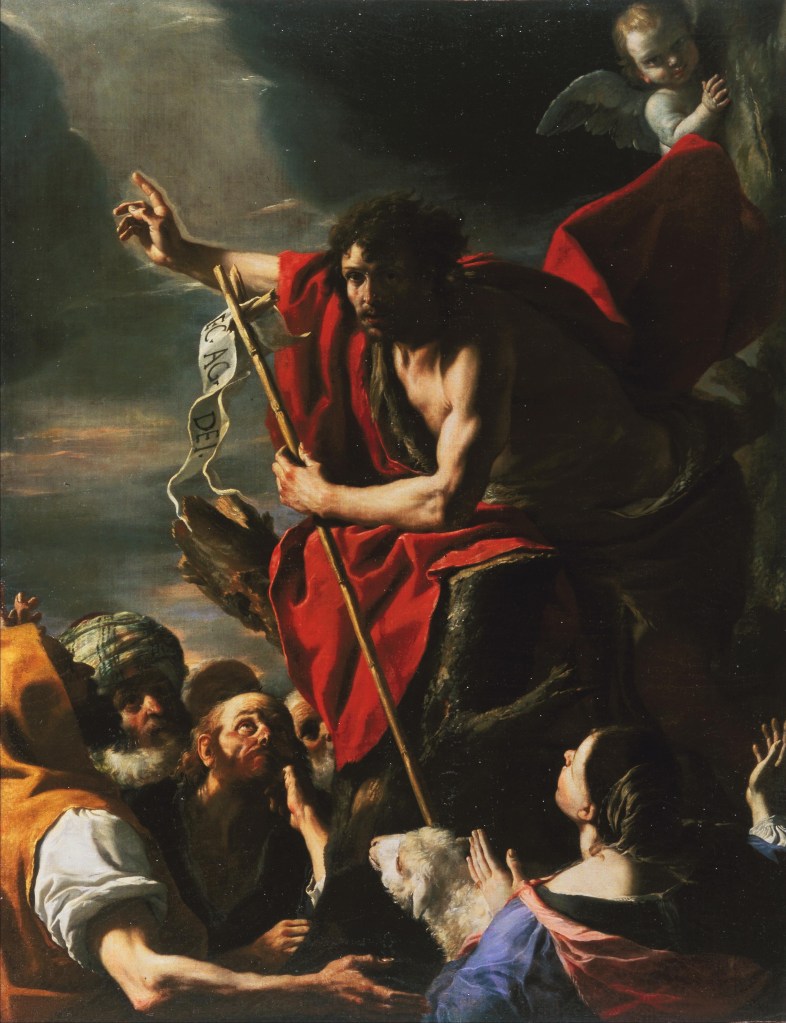
Featured image: St. John the Baptist Preaching, c. 1665, by Mattia Preti

Making church work

Click here to listen to the audio recording of this 14-minute message. Or watch the YouTube video below. Or read the text summary after that.

St James wrote only one letter that is included in our Bible – a letter to all the churches. James is not one for subtlety. He pulls no punches. He says things as he sees them. His goal is to build up the church, and he is quite willing to challenge us to do so.

So, today’s message is an “if the shoe fits” message. If what I say today fits you or your church, put on the shoe. If it doesn’t, treat it as merely an interesting teaching or pass the shoe on to someone at another church who might need it.

In chapter 4, James provides a series of cautions and advice to churches that are experiencing internal troubles. And out of that I wish to draw three words of advice:

  1. First, examine yourself. In the opening three verses, James asks, “What causes fights and quarrels among you?” And his answer is that it is things within ourselves – our own discontent, own own illicit desires, our own wrong motives. We have to start by critically examining ourselves, looking into a mirror that does not show us as we’d like to see ourselves, but that reveals our shadow side – our inner being. In short, deal with yourself first.
  2. Second, submit to and focus on God. In verses 7-10, James calls us to turn away from ourselves and towards God. The primary purpose of coming to church is God. Fellowship with each other is vitally important, but follows after fellowship with God. When we take our eyes off Christ, we inevitably begin to devour each other and we put our souls in peril. We are to humble ourselves before God, to submit ourselves to God – these are words that speak of our recognition of how much we need God.
  3. Third, stop breaking each other down. In verses 11-12, James says that when we slander or speak against our sisters and brothers in the church, we are breaking the second of Jesus’ Great Commandments – love your neighbour as yourself. James asks, “But you? Who are you to judge your neighbour?” There may well be individuals in a church who are harming the church – members and leaders of the church – and of course they must be challenged on this. But James cautions about judging, slandering and breaking down our sisters and brothers, turning against one another – it is not good for the church.

We need to be part of God’s solution for the church. We do NOT want to be part of the problem, working against God’s solution for the church.

If the shoe fits, put it on.

Featured image from: https://www.xpastor.org/strategy/leadership/the-hidden-sources-of-church-conflict/