Watch the 22-minute video of this 18-minute sermon and 4-minute song.
Sickness and trouble in life are sometimes a result of problems in our relationship with God. This is often true and often not true – sometimes sickness and trouble just arrives, even when (perhaps even especially when) our relationship with God is good. But when things are going wrong in life, when we struggle with illness, it is wise to reflect on where we are in our relationship with God.
Today’s message draws from Psalm 32, an extract of which I include below:
1 Blessed is the one whose transgressions are forgiven, whose sins are covered. 2 Blessed is the one whose sin the Lord does not count against them and in whose spirit is no deceit.
3 When I kept silent, my bones wasted away through my groaning all day long. 4 For day and night your hand was heavy on me; my strength was sapped as in the heat of summer.
5 Then I acknowledged my sin to you and did not cover up my iniquity. I said, “I will confess my transgressions to the Lord.” And you forgave the guilt of my sin.
6 Therefore let all the faithful pray to you while you may be found; surely the rising of the mighty waters will not reach them. 7 You are my hiding place; you will protect me from trouble and surround me with songs of deliverance.
8 I will instruct you and teach you in the way you should go; I will counsel you with my loving eye on you.
In the video message I talk through the message of this Psalm, drawing on the beautiful insights of Walter Brueggeman’s “The message of the Psalms: A theological commentary”.
Watch the video below of this 42-minute message. Yes, much longer than usual! I’m sorry about that, but it is – I think – worth the time, as a close reading of John 20:19-29 sheds to much light on Jesus’ character, his relationship with the disciples and his work as the Son of God. My notes are available below the video
Verses 19, 26 Both times Jesus “stood right in the middle of them”
Christ is the centre – not the priest, Bible, APB – only the person Christ
Christ-centred church
1, 19, 26 Easter Sunday morning – Jesus appears to Mary
Easter Sunday evening – Jesus appears in the upper room
Following Sunday (today) – Jesus appears again, to Thomas
19, 21, 26 Peace be with you – Shalom alechem x3
Easter Sunday – Christ made peace between us and God
Forgiveness of sins – done, paid for, wiped clean, forgotten, cast the deep
Everything is good. It’s all okay
Easter is the Great Forgiveness!
20 He showed them his hands and side
Emphasis on bodily resurrection, reconnected to his people
Not just some spiritual, esoteric thing
He is fully embodied, albeit with some unusual capacities
20 He could have come back healed, but doesn’t. Why?
His identification with us, solidarity with our pain & suffering
He remains the suffering servant of Isaiah 53 (4-5):
He took up our pain and bore our suffering. He was pierced for our transgressions, he was crushed for our iniquities, the punishment that brought us peace was on him, and by his wounds we are healed.
20 The disciples were overjoyed – full of joy
Joy (chara) & grace/gift (charis) – joy is a gift of God – because Jesus is back
21 “As the father has sent me, I am sending you”
We are to continue God’s work. We are sent, just as Christ was sent
Jn 3:16/7 “God so loved the world that he gave [sent] his one and only Son … For God did not send his Son to condemn the world, but to save it”
Every Christian is sent – not just clergy or evangelists
22 He breathed on them, “Receive the Holy Spirit”
Hebrew for spirit & breath are both? Ruach
Gen 1:2: Spirit of God hovering
22 Gen 2:7: “Then the Lord God formed a man from the dust of the ground and breathed into his nostrils the breath of life, and the man became a living being”
To receive Jesus’ breath & Holy Spirit is to be made a new living being
22 To receive Jesus’ breath & Holy Spirit is a grace/gift (charis)
As the Spirit/breath was active in the creation of earth and humanity
2 Cor 5:17: “If anyone is in Christ, they are a new creation. The old has passed away, the new has come.”
22 Holy Spirit poured out on Pentecost: Easter Season is from Easter Sunday to Pentecost
23Forgive anyone’s sin
The gift of HS is not so much miraculous signs, etc.
Instead the central commission – sending – is to forgive
And to warn that to not repent = no forgiveness
The Great Forgiveness!
24Thomas was not with the disciples when Jesus came.
Where was he? He should have been in church! We should be in church!
27 Touch, see
V20. Jesus showed them his hands and side.
Thomas wants what the others got – to see. But also to touch
Our Eucharist is a see and touch moment
– receive the body of Christ broken for you (not receive this bread)
– receive the blood of Christ (not receive this wine)
Not clear if Thomas did actually touch: “Thomas answered and said…”
Perhaps seeing and the invitation to touch was enough for him
27 Stop doubting and believe. Be a believer!!
Accept the small and periodic signs of God and believe into him
28My Lord and my God!
Hebrew: Yahweh & Elohim – names for God
Greek: Kyrie & Theos – names for God
The only place in the Gospels where Jesus is referred to as God – A profound statement of faith – perhaps the most
This Easter Sunday message centres on the idea that a most important fruit of the Easter story is that God’s forgiveness is extended and stretched to its limit, thereby including every sin imaginable. It is all already paid and cleared, cast into the deep. The return of Christ to humanity, after we so brutally murdered him, is the evidence of God’s extreme and great forgiveness. There could be no greater crime or violence against God. That God returns his son to us on Easter morning is a sign of God’s radical forgiveness. This great act of forgiveness for the murder of Christ is like a great whirlwind that catches up not only this sin, but all of our other sins also. They are all caught up in the one extra-ordinary and unprecedented act of forgiveness, and done with. And so, when we sin – as we will – we can know for sure that we can come to God, to sincerely ask his forgiveness, and to be sure that he will forgive and indeed has already, long ago done so.
(We love the screams and laughs of the children throughout this sermon. Jesus welcome children around him, while he was teaching. Certainly, they would have been as noisy as these ones were. Many were here to be baptised. Others were just full of beans!)
Today is the last Sunday in Advent, a few days before Christmas. During this Advent season, we’ve been reflecting on Christ’s coming into the world, both 2000 years ago and one day in the future. We’ve also reflected on John the Baptist, and the prophets before him, who prophesied Christ’s coming in the past and his coming again one day. And we’ve reflected on Christ’s birth in our hearts this Christmas, 2024.
Today, as we bring Advent to a close, we read about Mary’s and Elizabeth’s pregnancies, and about what they and the prophets thought about the kind of person the Messiah would be. Although he came as an infant, he was set to turn the world upside down. God’s emerging into humanity was a profound change for the universe – disruptive, outrageous and exciting. Watch the 18-minute video of today’s message, and let’s be challenged by the readings from Micah 5, Hebrews 10 and Luke 1.
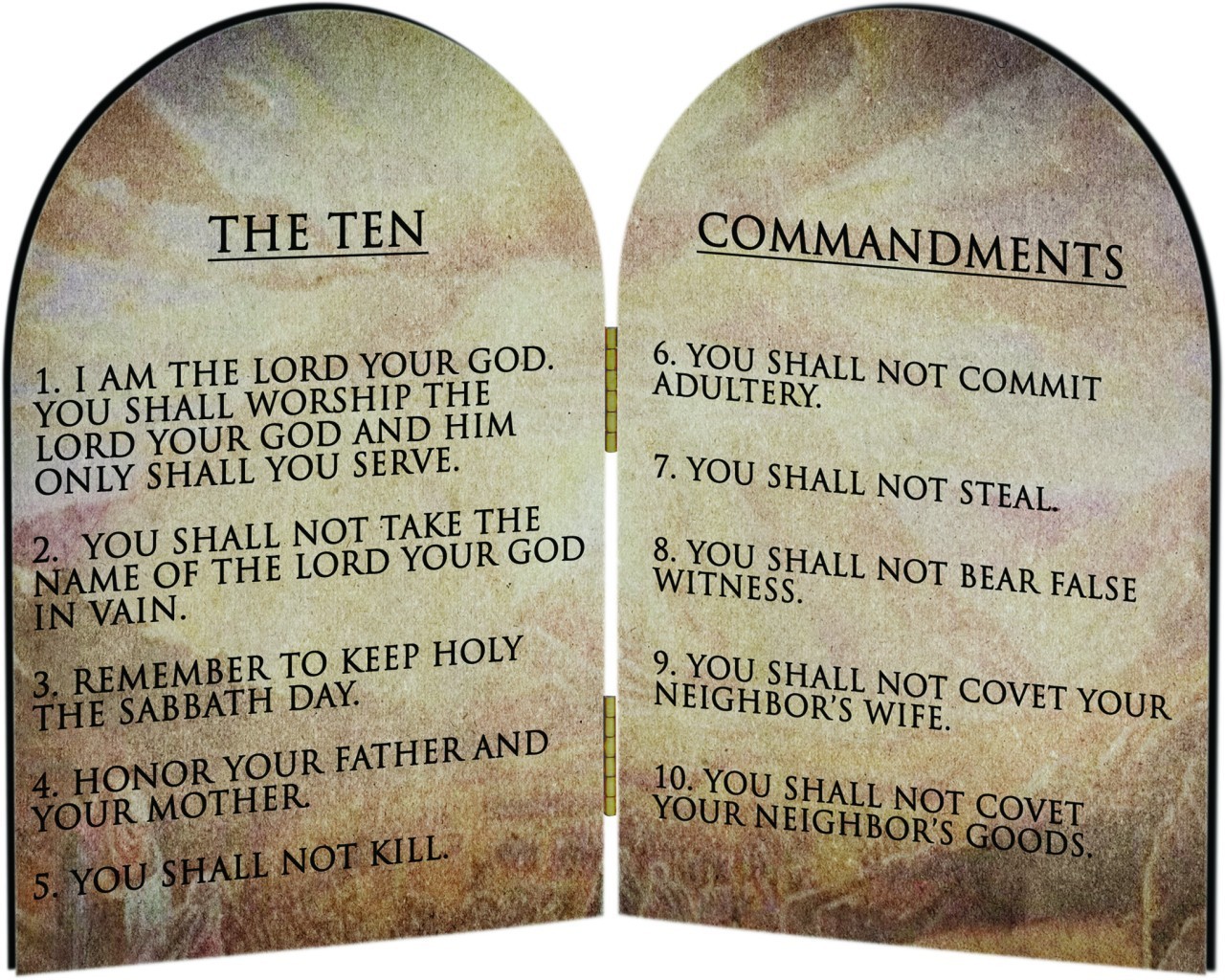
Today, we focus on the Decalogue, or Ten Commandments, from Exodus 20:1-17. In the church where I became a Christian, a reformed evangelical church, we had the Decalogue up on the walls at the front of the church – they were presented as the most important verses of Scripture and central to our faith.
Four of the commands are about our relationship with God – essentially, it is supposed to be an exclusive relationship (“no other Gods but me”) – a 100% commitment to God, to Yahweh. And six of the commands are about our relationships with people – essentially, they are supposed to be ethical relationships – we are to treat people well.
In the First Testament, the Decalogue was written on stone tablets, but the very finger of God. But the later prophets, Ezekiel (11:19 & 36:26) and Jeremiah (31:33), wrote about having hearts of flesh instead of hearts of stone, and of God writing God’s law on our hearts.
We see this fleshy version of the Decalogue most powerfully in Christ’s incarnation – God come to dwell among us in human form. And Jesus, when asked about the Decalogue, distills them into just two: Love God and love your neighbour. These align well with what I wrote about – to be exclusive with God and ethical with people. But what is particularly emphasised in Jesus’ summary, and not obvious from the Decalogue, is love. (In Exodus 20, love appears only in verse 6, as an explanation of God’s jealous love for God’s people.)
If I were still at the church where I became a Christian, I’d be advocating for removing the Decalogue – the First Covenant Law – and replacing it with Jesus’ Great Commandment – the distillation of the Second Covenant, which is rooted in freedom and love.
That brings us to our gospel reading for today (John 2:13-22), where Jesus clears out the template. In Matthew, Mark and Luke, this story is narrated during Holy Week, on or after Palm Sunday, and as being the trigger for Jesus’ arrest and crucifixion. It is the culmination of Jesus’ offensiveness to the Jewish priests and leaders. But in John’s gospel, it comes as Jesus’ second act, right at the start of his ministry – following immediately on the wedding at Cana. The wedding story, with its extravagant and exceptional wine, is a story of freedom, generosity and abundance – the abundant life that John writes about so much. While the clearing of the template story is about God’s demand for our exclusivity and ethics.
Here, at the start of his ministry, Jesus acts out the requirements of the Great Commandment. Firstly, God’s house is being used in unholy ways. The things of God (the animal sacrifices) are being sold and bought. There is no place for such unGodly things in the very house of God. The exclusive relationship with God that is required by the Decalogue and by the Great Commandment, is being violated. And in addition, the people – the worshippers – are being exploited, having to pay to exchange currencies, to purchase animals for sacrifice. This is not ethical, not loving.
Jesus clears the template as a demonstration of the Great Commandment – Love God, Love your neighbour!
These standards that Jesus sets for us are impossibly high. I, certainly, fail again and again at these two seemingly simple commands. I stray from my exclusive relationship with God, and I fail to love others as myself.
Thanks be to God, Jesus bridges the gap between the high ideals and our broken efforts. He connects us to God, and his faithfulness transcends our fickleness. He strength transcends our frailty. He maintains the bond of fellowship between us and God and each other, even when we inevitably fail.
And so, as we continue our pilgrimage through Lent, let us continue to turn back to Jesus, and recommit ourselves to the Great Commandment: love God, love others or be exclusive with God and ethical with others.
James and John come to Jesus and ask him, “Teacher, we want you to do for us whatever we ask” (Mark 10:35-45). Such an audacious question! One can just imagine Jesus counting to ten. And perhaps looking at them and reminding himself that he really loves them. His response is so calm and measured: “What do you want me to do for you?”
Jesus responds to two main flaws in these two disciples: ignorance and ambition.
Ignorance
First, they are ignorant. Jesus says, “You don’t know what you are asking” – in other words, “You are ignorant in what you ask.” The disciples want to share in drinking the cup that Jesus will drink and in his baptism, without understanding that this is the cup of suffering in Gethsemane and the baptism is his death on the cross. They really have no idea what they are asking for, yet they are so caught up in their eagerness or self-importance, that they cannot see it.
We get something similar in Job 38:1-3, which we also read today. Job has been pitching for a confrontation with God for some chapters – he believes God is deeply mistaken in treating him so badly and wants to set the record straight. In the opening verses of chapter 38, God finally speaks to Job: “Who is this that obscures my plans with ignorant words?” (or “words without knowledge). “Brace yourself like a man [like a human, rather than like a God]; I will question you , and you shall answer me.” God then spends two chapters asking Job if he can do all the many things that God has done. In chapter 40:1-7, Job recognises his ignorance and says, “How can I reply to you? I put my hand over my mouth.” Yet, God is not done with him and goes at him for another two chapters.
The disciples, like Job, forget that they are human, not God; that their knowledge and capacity for understanding is limited, unlike God’s; and that they are therefore comparatively ignorant. Being ignorant is not a sin! We are just human, after all, and do not know everything. We cannot see across time and and space like God can. We cannot imagine multiple universes existing concurrently like God can. But there is a problem when we forget that we are just humans and fundamentally ignorant.
Ambition
In addition to being ignorant, James and John are ambitious – overly ambitious. They want to sit on Jesus’ left and right when he comes into his glory, that is, when he sits on his throne in heaven. Jesus quickly puts them in their place, saying “To sit at my right or left is not for me to grant.” If it is not Jesus to grant – Jesus, who is the Son of God, God the Son, the second person of the Trinity – how much more is not for the disciples to ask. “These places belong to those for whom they have been prepared” [by God the Father, we should assume].
He then goes on to speak to all the disciples about positions of power and authority. These are not fundamentally wrong or bad. Power is not intrinsically bad. However, he notes that there are some who lord their power over others, who exercise authority over others. These are people who want others to know and feel that they are the ones with power, while others are powerless and helpless. This is autocratic, oppressive and abusive power. This is the corruption of power. So Jesus says to the disciples, “Not so with you! Instead, whoever wants to become great among you must be your servant.” And he goes further to point out that even he himself – God the Son who he is – did not come to be served, but rather to serve and to die for us.
We learn about this also in Hebrews 5:7-10, where the writer emphasises that Jesus is obedient to his Father, and through that obedience, even to death, “he became the source of eternal salvation for all who obey him”. Jesus is the epitome of ultimate power that is sacrificed for the common good, even at his own expense. This is the inverse of ambition. Again, power is not wrong – Jesus was ultimately powerful. But power used for personal ambition is corrupt and harmful. It is not the way of Christ.
In short
Jesus (like his Father) is always willing to engage us with whatever questions, frustrations, angers, accusations we have for God. In none of the passages we read today, do we we Jesus or God spurning anyone. However, we are also well advised to recognise our ignorance and lack of understanding, in comparison with God’s infinite understanding; and to see to serve rather than to have power. In so doing, we get closer to God, more aligned to God, more immersed into the way of Christ. This is the path to salvation. This is the path to Christ.
Our Gospel and New Testament readings today are nicely synchronised.
Mark 7:1-23 has Jesus telling us that we are not defiled by disregard of human customs nor by what we put into our bodies (though he is talking here about religious purity (see verses 1-8 for context), not about drugs, alcohol, sugar, etc.), but rather by what comes out of our hearts and mouths (sexual immorality, theft, envy, arrogance and so on). He emphasises that it is what comes out of our mouths that is important, not what we put into our mouths.
Jesus criticises the religious leaders of his time for for emphasising human norms of behaviour and forsaking the command of God. And what is the command of God? Simple. To love God and to love our neighbour. These are the most important things in life – more important than any other command. Human rules about how to behave, what to eat, how to eat and so on, are irrelevant when it comes to our standing before God. What is important is what is in our hearts and how this comes out in our attitudes, words and actions. What should be in our hearts and what should manifest in our lived lives is LOVE – love for God and love for others.
James seems to have remembered this teaching from Jesus and picks it up in his letter, James 1:19-27, where James says that we should be quick to listen to others and to the Word of God (these are the things we should quickly allow in) but that we should be slow to speak and slow to anger (speaking and anger are things we should be slow to put out).
Being quick to listen means to be open and receptive to people around us, to make time for them, to be interested in and concerned for them. Our default response to people should always be to slow down and listen, listen with care, listen carefully, and listen with love. And we should also be quick to listen to the word of God – to the scriptures – which he says is “planted in us” (v21) like a tree, that can take root and grow and produce fruit. And the fruit of this Word/tree is our attitudes, words and actions – these should emerge out of the Word that we have allowed to grow in us, out of the love of God in our hearts.
On the other hand, James cautions us that we should be slow to speak and slow to anger. He is clearly speaking about our relationships with other people – in v27 he says that the religion that God wants (accepts as pure and faultless) is for us to to look after widows and orphans in distress (that is, to take care of those who are vulnerable) and keep ourselves from being polluted by the world (that is, not to conform to human customs and worldly norms of behaviour).
James speaks particularly about the tongue, which he says we must “keep a tight reign on”, like a wild horse that is ready to bolt. He actually speaks at length about the dangers of the tongue in chapter 3, where he says, “The tongue also is a fire, a world of evil among the parts of the body. It corrupts the whole body, sets the whole course of one’s life on fire, and is itself set on fire by hell.” We have to watch (and yes, even censor) our words, because they are more powerful than we think – whether they are words of healing and restoration or words of criticism and judgement.
Rather, says James, we should be slow to speak and slow to anger. This reminds me of how God is often described in the scriptures, as a “compassionate and gracious God, slow to anger, abounding in love and faithfulness” (e.g., Psalm 86:15). We should be like God – quick to love and slow to anger.
There has been a shift in the world since the election of Donald Trump in 2016. He and his followers shifted social norms about how we use words. Speaking out whatever we think about people, and saying it bluntly and without regard for kindness or niceness has become a new norm. The attitude of not self-censoring and saying whatever one wants has been valorised – made into a virtue. We think we have a right to say whatever we want and that any kind of consideration of how our words might impact someone else is just a form of bleeding-heart leftism, political correctness or a sinister censorship of our right to free thought.
But no! This is completely out of alignment with the example and teaching of Christ and of his disciples! For Jesus, love and consideration for others is THE highest command (along with loving God) and checking what comes out of heart and mouths is clear in Jesus’ teaching in Mark 7. James takes up Jesus’ teaching and unpacks it even more, with strong warnings about reining in (i.e. censoring) our tongues. Just read James 3 and see for yourself.
The path of the Christ-follower involves being full of love, quick to listen, slow to speak, abounding in love and desiring to build up others. Our words matter. This is the way of Christ.
Towards the end of John’s Gospel, Jesus prays for his disciples, “My prayer is not that you take them out of the world but that you protect them from the evil one” (John 17:15). It seems that Jesus wants his disciples to be immersed in the world. Indeed, he reinforces this in verse 18, when he prays, “As you sent me into the world, I have sent them into the world”, with his double use of “into the world”. Christians, therefore, cannot stand apart from the world. We need to be invested in and participate in the world.
But in his prayer, Jesus also prays that we may be protected “from the evil one”. I suggest that he is praying that we don’t get co-opted into the ways and values of the world, whose master is the evil one. Jesus wants us in the world, but not of the world; active in the world, but not colluding with the values of the world, that is, the values of Satan.
It reminds us of the Lord’s Prayer, where Jesus prays both “thy kingdom come on earth as in heaven” and “deliver us from evil”.
John 8:2-11 provides us with an example of how Jesus implements this. A woman who was caught in the act of adultery is brought to Jesus by a group of men (teachers of the law and Pharisees). We don’t hear about the man who was engaged in adultery with her, which already tells us something is not right. They want Jesus’ opinion on what should be done. Jesus doodles in the dust – we’re not sure what he is writing. Perhaps he is weighing up the sins of the woman and the sins of each of the men.
When he stands up it is clear from his responses to the men (“Let any one of you who is without sin be the first to throw a stone at her”) and the woman (“Go now and leave your life of sin”) that both the men and the women were sinful. Jesus then appears to lift up and suspend their sin – it is something they have in common – all are sinners. And what is left once their sin is lifted away?
A massive power differential. The men, as a group, as leaders and as men in a patriarchal society, have far greater power than the woman, as an individual and as a woman in a patriarchal society. The degrees of power between them are enormously disparate.
In light of that, Jesus opts to stand with the woman. He stands in solidarity with the one who is less powerful, more marginalised, more poor. This is Jesus’ pattern throughout his ministry. Scholars have come to call this Jesus’ “option for the poor“, because he repeatedly opts to stand with the poor. Not because they are less sinful than anyone else, but because they are less powerful, more vulnerable.
In the world right now, we are deeply disturbed by the escalating violence in the Middle East, between Palestine and Israel. This is a fraught situation, with a long history going back decades and even centuries. There are no easy answers. And whatever one says, one may be judged to be wrong. Nevertheless, let us attempt to apply Jesus’ method to this situation.
Both Israel and Palestine (and Hamas) have used and are currently using violence against each other. Each side blames the other for their use of violence, making it hard or even impossible to say who started it. Let us, then, like Jesus recognise that both sides use violence and lift or suspend that, for now. Not for ever, just for now. What is left once violence is lifted away?
A massive power differential. Israel, compared to Palestine, is wealthy, has powerful allies, has large amounts of land, has tremendous resources to protect itself. Palestine is impoverished, lacking in infrastructure, with very little access to the world, with few powerful allies and with increasingly little land and freedom. The degrees of power between them are enormously disparate.
In light of that, where would Jesus stand? He would stand in solidarity with the one who is less powerful, more marginalised, more poor. He would stand with Palestine. Not because Palestine is less sinful than Israel, but because they are less powerful, more vulnerable. This is Jesus’ option for the poor. He opts to stand with the poor.
And so we too should stand with the poor and not collude with the evil one who would prefer us to stand with the powerful. While it is good to pray for peace in that region of the world, it is better to pray for justice. Once the violence stops, the problems that fuel the violence will still not be resolved. These problems have existed for decades. They are fundamentally about justice for Palestine. Let us pray for justice for Palestine that leads to peace with Israel.
1 John 1:1 – 2:2 provides a remarkable account of sin in the life of the Christian. John’s point of departure is that God is light, which comes up also in the opening chapter of John’s Gospel. In 1 John 1:5, John affirms that because God is light, no darkness can exist in or around him at all. The consequence of this is that if we are walking a path of darkness – in other words, a path of sin – then we cannot be in God’s light, because darkness cannot exist in the light. (In the message I provide an explanation of how darkness disappears in light, and apply this to John’s account in 1:6.
However, the reality for Christians is that we do sin, as John says in v 8 (If we claim to be without sin, we deceive ourselves) and v 10 (If we claim we have not sinned, we make God out to be a liar). Clearly, in John’s mind and experience, sin is inevitably part of the life of the Christian. And merely claiming that we are without sin is to sin! We deceive not only ourselves, but also God. So the question is not whether you or I sin, but rather what sin(s) we are committing. What is important is to at least acknowledge that we sin, to own it, to be honest about it.
But even though John sees sin as inevitable for Christians, he does also say that we should not sin: “My dear children, I write this to you so that you will not sin” (2:1). There is an expectation that we ought to be sinning, since (as we saw before) sin cannot exist within God’s light. How then to we resolve this conundrum?
Jesus Christ is solution to this challenge. His incarnation, life, ministry, teaching, death, resurrection and ascension together create a solution for our inevitable sin. His blood purifies us from sin (1:7). If we confess our sin, God will (because God is faithful and justice) forgive us and purify us (1:9). And Jesus will serve as our advocate, speaking on our behalf with God the Father, atoning for our sins, and indeed the sin of all humanity (2:1-2). Everything we have focused on over the past weeks, since Ash Wednesday, has been laying the foundation for this understanding: the great salvation work of Christ on behalf of all of humankind.
In summary, John gives three steps for a Christian response to sin:
Try hard not to sin! Avoid stepping out of the light into the darkness.
When to you do (inevitably) sin, be honest about it. Don’t pretend like you’re not sinning. But also don’t beat yourself up about it. We are all sinners!
When you sin, stepping into the shadow and the path of darkness, turn as quickly as you can back towards Christ, the Light and Life of the world. Say you’re sorry. Ask for his forgiveness and accept it. Go back to step 1 and repeat (many times).











 Reflections of God's Love