Encountering the risen Christ

Watch the video below of this 42-minute message. Yes, much longer than usual! I’m sorry about that, but it is – I think – worth the time, as a close reading of John 20:19-29 sheds to much light on Jesus’ character, his relationship with the disciples and his work as the Son of God. My notes are available below the video

Verses 19, 26    Both times Jesus “stood right in the middle of them”

Christ is the centre – not the priest, Bible, APB – only the person Christ

Christ-centred church

1, 19, 26               Easter Sunday morning – Jesus appears to Mary

Easter Sunday evening – Jesus appears in the upper room

Following Sunday (today) – Jesus appears again, to Thomas

19, 21, 26             Peace be with you – Shalom alechem x3

Easter Sunday – Christ made peace between us and God

Forgiveness of sins – done, paid for, wiped clean, forgotten, cast the deep

Everything is good. It’s all okay

Easter is the Great Forgiveness!

20           He showed them his hands and side

Emphasis on bodily resurrection, reconnected to his people

Not just some spiritual, esoteric thing

He is fully embodied, albeit with some unusual capacities

20           He could have come back healed, but doesn’t. Why?

His identification with us, solidarity with our pain & suffering

He remains the suffering servant of Isaiah 53 (4-5):

He took up our pain and bore our suffering. He was pierced for our transgressions, he was crushed for our iniquities, the punishment that brought us peace was on him, and by his wounds we are healed.

20           The disciples were overjoyed – full of joy

Joy (chara) & grace/gift (charis) – joy is a gift of God – because Jesus is back

21           “As the father has sent me, I am sending you”

We are to continue God’s work. We are sent, just as Christ was sent

Jn 3:16/7 “God so loved the world that he gave [sent] his one and only Son … For God did not send his Son to condemn the world, but to save it”

Every Christian is sent – not just clergy or evangelists

22           He breathed on them, “Receive the Holy Spirit

Hebrew for spirit & breath are both? Ruach

Gen 1:2: Spirit of God hovering

22           Gen 2:7: “Then the Lord God formed a man from the dust of the ground and breathed into his nostrils the breath of life, and the man became a living being”

To receive Jesus’ breath & Holy Spirit is to be made a new living being

22           To receive Jesus’ breath & Holy Spirit is a grace/gift (charis)

As the Spirit/breath was active in the creation of earth and humanity

2 Cor 5:17: “If anyone is in Christ, they are a new creation. The old has passed away, the new has come.”

22           Holy Spirit poured out on Pentecost: Easter Season is from Easter Sunday to Pentecost

23           Forgive anyone’s sin

The gift of HS is not so much miraculous signs, etc.

Instead the central commission – sending – is to forgive

And to warn that to not repent = no forgiveness

The Great Forgiveness!

24           Thomas was not with the disciples when Jesus came.

Where was he? He should have been in church! We should be in church!

27           Touch, see

V20. Jesus showed them his hands and side.

Thomas wants what the others got – to see. But also to touch

Our Eucharist is a see and touch moment

– receive the body of Christ broken for you (not receive this bread)

– receive the blood of Christ (not receive this wine)

Not clear if Thomas did actually touch: “Thomas answered and said…”

Perhaps seeing and the invitation to touch was enough for him

27           Stop doubting and believe. Be a believer!!

Accept the small and periodic signs of God and believe into him

28           My Lord and my God!

Hebrew: Yahweh & Elohim – names for God

Greek: Kyrie & Theos – names for God

The only place in the Gospels where Jesus is referred to as God – A profound statement of faith – perhaps the most

Jesus’ leadership

Click below to watch the video of this message on Jesus’ style of leadership, preached on Maundy Thursday, 17 April 2025, drawing on the reading from John 13:1-17. Jesus’ leadership is all about partnerships, delegation, setting an example, serving, and humility. All this, terribly out of sync with most modern leadership styles.

World upside down

Today is the last Sunday in Advent, a few days before Christmas. During this Advent season, we’ve been reflecting on Christ’s coming into the world, both 2000 years ago and one day in the future. We’ve also reflected on John the Baptist, and the prophets before him, who prophesied Christ’s coming in the past and his coming again one day. And we’ve reflected on Christ’s birth in our hearts this Christmas, 2024.

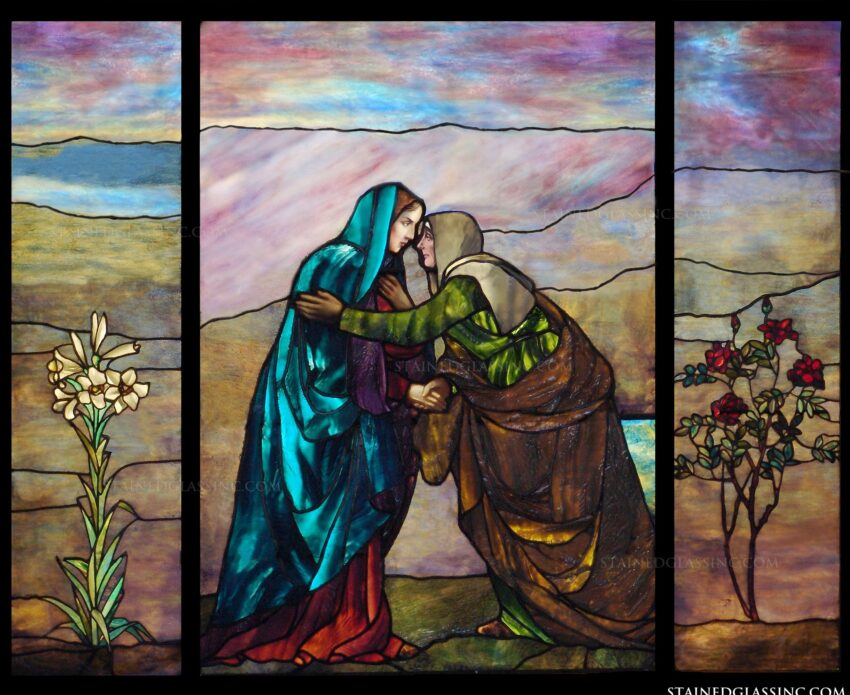
Today, as we bring Advent to a close, we read about Mary’s and Elizabeth’s pregnancies, and about what they and the prophets thought about the kind of person the Messiah would be. Although he came as an infant, he was set to turn the world upside down. God’s emerging into humanity was a profound change for the universe – disruptive, outrageous and exciting. Watch the 18-minute video of today’s message, and let’s be challenged by the readings from Micah 5, Hebrews 10 and Luke 1.

Stained glass of Mary and Elisabeth from https://www.copperhillchurch.us/2022/12/16/mary-and-elizabeth/

Be grateful, be kind

Click here to listen to the audio recording of this 16-minute message. Or watch the video here on Facebook (the message starts 27 minutes into the recording). Or read the text summary below.

Our readings today urge us to be mindful – to think about what we think about, and about what we feel, say and do. We are invited to not simply react instinctively, but to consider how we react. Our thoughts and reactions impact ourselves and others, whether we are mindful or thoughtless, whether we are grateful or thankless, whether we are kind or harmful. We are urged to be grateful and kind.

In John 6:41-51, the people who had just had the blessing of being part of the Jesus’ feeding of the 5,000 (men, plus women and children) with fish and bread. You’d think they’d be grateful, but no, they were not. And then Jesus counsels them to not settle for bread that goes stale and moldy, but rather to seek after the Bread from heaven, that never spoils, but endures to eternal life (6:27). He even shares with them that God has sent him as the true bread from heaven and that he gives life to the world.

Still, they grumble and mutter. They remember him growing up in his family and cannot imagine that he could be the bread from heaven. “How can he now say, ‘I came down from heaven?'” Thankless they are! And Jesus chastises them: “Stop grumbling among yourselves!” One senses Jesus’ growing frustration, not only with how earth-bound they are (bread is more valuable to them than God the Son), but also with their unwillingness to see him for who he is.

And so he repeats “Very truly I tell you, the one who believes has eternal life.” And, “I am the bread of life.” And, “Your ancestors ate the manna in the wilderness, yet they died.” And, “But here is the bread that comes down from heaven, which anyone may eat and not die.” How much clearer can he be! You can hear his exasperation with these ungrateful and close-minded people. And so he repeats, “I am the living bread that came down from heaven. Whoever eats this bread will live forever.” And in case they still don’t get it (which they don’t!), he concludes, “This bread is my flesh! I will give it for the life of the world!”

And how do they respond? They “began to argue sharply among themselves.” Eish, the frustration of Jesus that we should be so mindless and so thankless. Here he is, offering us eternal life, right in our midst, and all we do is grumble, moan and argue.

Jesus calls us to a spirit of gratitude – to be grateful that the bread from heaven has come down into our midst, and to cast aside regular bread and instead feast on this heavenly bread that leads us to eternal life.

Paul, in the closing verses of Ephesians 4, similarly calls the Ephesians (whom he profoundly blessed in Ephesians 1 – you can catch my sermon on that here) to be kind to one another. Having been blessed with God’s greatest and most enduring and satisfying gifts (much as Jesus does in John 6), Paul calls us to be kind and considerate to each other. He calls us to set aside falsehood, anger, theft, laziness, unwholesome talk, grieving the Holy Spirit, bitterness, rage, anger, brawling, slander and malice. It’s quite a list!

And instead, Paul calls us to speak truthfully, not to let the sun go down without resolving our anger, to work, to do something useful, to share with those in need, to speak helpful words, to build other up according to their needs, to be kind, to be compassionate, to forgive others, to live a life of love, to follow God’s example.

Paul calls us to be kind – to be considerate, thoughtful, sensitive and helpful to other people, in just the same way that Jesus is with us – since Jesus loved us and gave himself up for us as a fragrant offering and sacrifice to God.

This message – be grateful, be kind – may seem twee and insincere and lefty. But it is core to Jesus’ message, and therefore core to the message of apostles, like Paul, and therefore core to my message as a pastor today, and should therefore be core to how you live your own life.

Of course, we fail. Some of you will have experience me being ungrateful and unkind. I and we can do better. Thankfully, though, we have a God who knows that we fail, and who has already been kind, loving and forgiving of us. We simply come back to him, say we’re sorry, ask for forgiveness, and pray for strength and grace to do better: to be grateful and to be kind. Amen.

St Stephen

Click here to listen to the audio recording of this 20-minute message. Or watch the video here on Facebook (the message starts 25 minutes into the recording). Or read the text summary below.

Today we celebrate St Stephen, after whom our church is named. It is our church’s patronal festival, our birthday.

Stephen was a young man, appointed a deacon in the early church. He appears only in Acts 6 and 7, but in those few pages, he makes a remarkable impression and impact. He is the first Christian martyr – stoned to death because he challenged the Jew people’s lack of faith in Jesus Christ.

While we walk primarily in the footsteps of Jesus Christ – he is God incarnate, our teacher and our Lord and saviour – we give heed also to the example of Stephen, and seek to continue his legacy in our parish community today.

Our readings centre on Acts, omitting Stephen’s long, but very impressive and persuasive sermon. This are supported by a reading from 2 Chronicles, where Zechariah (an earlier Zechariah – not the father of John the Baptist) is stoned to death for speaking God’s Word. Psalm 31, which includes the words that both Jesus and Stephen speak as they died. And John 6, which is the ordinary reading for today, from Jesus’ long sermon on the Bread of Life. I have tabulated these three people, because there are significant and meaningful similarities between them, that speak to all Christians, and especially those who are members of a church named after St Stephen:

TopicZechariahJesusStephen
Reading2 Chronicles 24:17-22John 6:24-35Acts 6:8-10 & 7:54-60
Holy SpiritSpirit of God came on himBaptised by John and the Holy Spirit descended on himFull of Holy Spirit, faith, grace and power
Care for the poorFed 5000 men (plus women and children) with bread and fishOversaw the daily distribution of food
Challenges with the peopleThey were chasing after other GodsThey just wanted food and miraclesWanted quiet conformity with the past
Challenging the peopleWhy do you disobey the Lord’s commands?Do not work for food that spoilsYou stiff necked people! Your hearts are uncircumcised! You always resist the Holy Spirit! Was there ever a prophet your ancestors did not persecute?
Consequences for God’s messengersStoned to deathCrucifiedStoned to death
Their final wordsMay the Lord see this and call you to account.Father, forgive them, for they know not what they are doing.Lord, do not hold this sin against them.
Final prayerFather, into your hands I commit my Spirit (in Luke)Lord Jesus, receive my spirit (Psalm 31:5)

So, what do we take from this, and particularly from Stephen, into our daily lives?

  1. We must take our faith seriously – it is costly, important and even worth dying for.
  2. We must care for the poor, hungry and marginalised.
  3. We must seek the infilling of Holy Spirit, who equips us for life and ministry.
  4. We must seek after the things of God, and not after the things of this world.
  5. We must forgive those who hurt even, even to death.
  6. We must entrust ourselves to God – He has got us!

St Stephen the protomartyr. Icon by Theophili

Chosen

Click here to listen to the audio recording of this 16-minute message. Or watch the video here on Facebook (the message starts 32 minutes into the recording). Or read the text summary below.

Our First Testament readings today (2 Samuel 7 and Psalm 89) speak of the chosenness of King David and by extension of the Jewish people, the people of Israel. God affirms that he gives a place of safety to the people of Israel and that David’s throne and kingdom are forever.

Two days ago (19 July 2024), the UN’s International Court of Justice, declared Israel’s occupation of the West Bank, East Jerusalem and the Gaza Strip as illegal and called on Israel it withdraw its occupation and all settlers living there and to pay reparations for the harm done to Palestinian people. Prime Minister Benjamin Netanyahu responded: “The Jewish people are not occupiers in their own land — not in our eternal capital Jerusalem, not in the land of our ancestors in Judea and Samaria. No false decision in The Hague will distort this historical truth, just as the legality of Israeli settlement in all the territories of our homeland cannot be contested.”

Netanyahu’s response harks back to these First Testament promises, though neglects several other important First Testament principles. First, a crucial First Testament theology and principle is hospitality. God is hospitable – inviting humanity to share in God’s work in the world and coming to meet with God’s people and journey with them. God expects Israel to be hospitable to other peoples. Deuteronomy is explicit that foreigners should be treated as if they were Israel’s own. There should be no discrimination.

Second, God uses other nations to discipline Israel through the First Testament. The people Israel turn away from God towards other gods; God sends enemy forces to disrupt Israel; Israel repents and turns back to God; peace between God and Israel is restored. This is a pattern repeated over and over in the historical books of the First Testament.

If Israel’s First Testament status as ‘chosen’ is still valid, surely all the other aspects of its relationship with God should be valid also.

Of course, there are many different views on Israel and Palestine. The situation is complex and feelings are hot!

And then, as we move into the Second Testament, there is a shift again. There is Jesus’ radical inclusivity, which I’ve spoken about frequently. Paul, in Ephesians 2, writes about the exclusion from Gentiles from Israel, but how Christ has destroyed the dividing wall of hostility between Jews and Gentiles, and made us one person, through Christ’s body on the cross. There is now peace for us all. And in Galatians 3, Paul says that in Christ there is neither Jew nor Gentile, slave nor free, male nor female. For we are all one in Christ Jesus. God’s desire is for a united humanity, centred on Christ.

But the world is a messed-up place. Such conflicts all over – not just in the Middle East, but between Democrats and Republicans in the USA, ethnic groups in many countries in Africa, Muslims and Hindus in India, Europeans and refugees in Europe, and the list goes on. We are a fractured race, seriously out of step with God’s desire for humanity.

We can probably do little to nothing to solve the challenges in the Middle East and elsewhere, but there are some things we can do to contribute to a shift in the world. First, we can ensure that we are inclusive and diverse, that we treat every person as God’s creation, much loved and blessed, and ensure that racism, sexism and other -isms are wiped out of our interactions. Second, we can pray, and pray some more, because prayers for unity and harmony and mutual respect and love are fully aligned with God’s vision for humanity and so this surely must be a prayer that God will answer.

King David Playing the Harp (1622) by Gerard van Honthorst

Sanctuary

Click here to listen to the audio recording of this 14-minute message. Or watch the video here on Facebook (the message starts 26 minutes into the recording). Or read the text summary below.

This message is a reflection on Psalm 48

1 Great is the Lord, and most worthy of praise,
in the city of our God, his holy mountain.

2 Beautiful in its loftiness,
the joy of the whole earth,
like the heights of Zaphon is Mount Zion,
the city of the Great King.
3 God is in her citadels;
he has shown himself to be her fortress.

4 When the kings joined forces,
when they advanced together,
5 they saw her and were astounded;
they fled in terror.
6 Trembling seized them there,
pain like that of a woman in labor.
7 You destroyed them like ships of Tarshish
shattered by an east wind.

8 As we have heard,
so we have seen
in the city of the Lord Almighty,
in the city of our God:
God makes her secure
forever.

9 Within your temple, O God,
we meditate on your unfailing love.
10 Like your name, O God,
your praise reaches to the ends of the earth;
your right hand is filled with righteousness.
11 Mount Zion rejoices,
the villages of Judah are glad
because of your judgments.

12 Walk about Zion, go around her,
count her towers,
13 consider well her ramparts,
view her citadels,
that you may tell of them
to the next generation.

14 For this God is our God for ever and ever;
he will be our guide even to the end.

________________________________________________________________________

Psalm 48 centres on Zion – God’s sanctuary, the temple, the City of our God, the Holy Mountain, the fortress. I will refer to Zion as God’s sanctuary from here on.

God’s sanctuary is inhabited by God, the Lord, the Lord Almighty, the Great King.

God’s sanctuary is a feminine space – the feminine pronoun ‘her’ is used eight times to emphasise the feminine character of the sanctuary. It is something like a womb – a safe, protective, nourishing and nurturing space. The enemies of God experienced pain like that of a woman in labour, but for those who dwell in the sanctuary, it is a womb.

God’s sanctuary is a place of refuge and safety – a sanctuary.

In God’s sanctuary, there is beauty, joy, security, meditation, unfailing love, God’s right hand, righteousness, rejoicing, gladness, our guide, God, for ever and ever.

God’s sanctuary is the place we are invited to enter: Walk about Zion, go around her, count her towers, consider well her ramparts, view her citadels.

God’s sanctuary is where we can retreat when things get on top of us, when we feel pressured or burdened, when we are worried or distressed, when we’re afraid, when we need replenishing, when our faith founders, when life’s adversities are too much, when we are alone. The sanctuary is God’s place, God’s grace.

Music to listen to while reading Psalm 48

Featured image of a labyrinth in a forest from: https://www.thedailyworld.com/life/creating-a-sanctuary-breathing-peace-into-this-challenged-world/

Adversities & Adversaries

Click here to listen to the audio recording of this 15-minute message, which was delivered on 23 June 2024. Or watch the video here on Facebook (the message starts 27 minutes into the recording). Or read the text summary below.

Our readings today (23 June 2024) point to and illustrate the adversities and adversaries that we encounter in like. Adversities are difficult situations and adversaries are difficult people – often these collide. Here is a summary of these challenges in the readings:

  • Mark 4:35-51 has the disciples and Jesus in a boat in a wild storm on the lake. This is an adversity – a situation. Many of the disciples were fishermen and familiar with storms at sea, so this must have been an exceptional storm to stir up such terror.
  • 2 Corinthians 6:1-13 has Paul recounting many of the challenges he has faced in life: troubles, hardships, distresses, beatings, imprisonments, riots, hard work, sleepless nights, hunger, dishonour, bad reports, impostors, unknown, dying, beaten, having nothing. It’s quite a list!
  • 1 Samuel 17:32-49 presents young David going up against the tremendous Goliath in single-handed combat. He didn’t stand a chance against such a formidable adversary!
  • Psalm 9 describes the Psalmist’s enemies and wicked people – many adversaries!

We may resonate with these challenges and adversaries. We often face challenging situations and difficult people. And sometimes that overwhelms us, as we wonder where God is in this.

But despite the challenges, scripture presents God as more powerful the any adversary we may face, and on our side when we face adverse situations. We are encouraged and urged to put our faith and trust in him:

  • Mark 4:35-51 describes Jesus standing up in the boat and commanding the storm: “Quiet! Be still!” and it was so – the storm dissipated. The disciples found themselves being more terrified by Jesus’ power over the elements than they had been by the storm itself! A real turnabout.
  • 2 Cor 6:1-13 has Paul affirming that despite the litany of adversities, he remains always rejoicing and possessing everything. All of these adversities are, for him, ‘nothing’ compared to the blessing of being God’s child.
  • 1 Samuel 17:32-49 recounts David’s plucky engagement with Goliath – he has bested bears and other wild animals – surely he can best this giant. And with a flick of his wrist and little catty, a stone embeds itself in Goliath’s head and he falls down dead and David decapitates him. God is on his side.
  • Psalm 9 intersperses its complaints about wicked enemies with affirmations of God’s allegiance: The Lord is a refuge for the oppressed, a stronghold in times of trouble … Those who know your name trust in you, for you, Lord, have never forsaken those who seek you … he does not ignore the cries of the afflicted … The Lord is known by his acts of justice … But God will never forget the needy; the hope of the afflicted will never perish.

Let us take heart in these affirmations. Let us strengthen our resolve in times of adversity. Let us not be cowed by adversaries. Let us trust in the Lord’s strength and love to take care of his own.

But there is a warning here also: let us not be the adversary to someone else and let us not cause adversity for others. God is on the side of his children, but he will not stand by us when we harm his other children. God expects us to emulate him, by standing up for people and by not being an adversary. The warnings are severe in Psalm 9 for those who make themselves enemies of God: “The wicked ensnared by the world of their hands. The wicked go down to the realm of the dead, all the people that forget God. … Let the nations know they are only mortal.” We do not want to become enemies of God! We want to keep on God’s right hand – his hand of power and protection – we do not want to fall under God’s wrath.

Instead, walk in God’s ways – the way of love, of justice and mercy.

Featured image from https://i.swncdn.com/media/980w/via/11268-woman-tucked-inside-bible-at-night-with-flash.jpg

Seeds of faith

Click here to listen to the audio recording of this 15-minute message. Or watch the video here on Facebook (the message starts 32 minutes into the recording). Or read the text summary below.

Today we get two of Jesus’ parables: the parable of the growing seed and the parable of the mustard seed. These follow the parable of the sower (the one who sowed seeds in different kinds of ground) and the lesson about putting our lamp on a stand.

First, in the parable of the seed, the sower scatters the seed and then does nothing more. That’s his only role – to scatter seed. Then, spontaneously or (in the Greek) automatically the seeds grow. It is in their nature to grow, once they have been scattered. So the man goes to sleep and gets up and the seeds are doing their thing. “All by itself, the soil produces corn.” And the seed knows the steps of growth – they are programmed into the seed: “first the stalk, then the ear, then the full grain in the ear.” And when it is ripe and ready, the man comes to harvest the result.

This parable suggests that our role and responsibility as followers of Christ is to scatter seed. Presumably, this is good seed – seed that produces a crop: wheat, maize, barley. Our job is to scatter the seed. God’s job is to make that seed grow. The ‘automatic’ growth of the seed in this parable is the code that God has embedded into the DNA of the seed. (Apologies if my scientific understanding of seeds is incorrect!) For example, we may speak to someone about our faith (scattering seed), but we cannot force them to believe or come to faith (that is God’s work). We may encourage parishioners to attend church (scattering seed), but we cannot compel them to come (that is God’s work). We are encouraged by this parable to do our part and trust God to do his.

This resonates with 1 Corinthians 3:6-7, where Paul writes,

“I planted the seed, Apollos watered it, but God made it grow. So neither he who plants nor he who waters is anything, but only God, who makes things grow.”

This gives us perspective on what is our role, and what is not.

Second, in the parable of the mustard seed, Jesus contrasts the size of the mustard seed (which he says is the smallest of all seeds on the earth) and the resultant mustard plant (which he says is the largest of all garden plants or shrubs, with such big branches that the birds can perch in its shade).

This parable suggests that the scattering of even a tiny seed – even a very small act in the world – could produce a very large tree – a substantial change. Much like a lever, where a small amount of strength and effort can move a large heavy object, the tiny mustard seed, when scattered, can produce a large bush.

This resonates with Matthew 13:33, where Jesus says,

“The kingdom of heaven is like yeast that a woman took and mixed into about 23kg of flour until it worked all through the dough.”

A tiny amount of yeast can spread through a large amount of flour and rise to produce a massive number of loaves of bread. Small efforts can have large results.

These parables suggest that we ought to be scattering seed into the world, and that these seeds need not necessarily be big, dramatic, sophisticated or demanding. They might be small, understated comments or actions that go a long way. The key is to scatter these seeds – to be mindful and intentional about scattering them. And then to leave them to God to grow.

Third, although Jesus does not say this in Mark 4, this reading also evokes a warning: to be careful about what kind of seeds we sow. The seeds Jesus refers to are corn and mustard. It is hard to believe Jesus would support the scattering of weed seeds – indeed, he spoke out against weeds or thorns in the parable of the sower (Mark 4:18-19).

When we scatter bad seed, these too may grow fast and spread, just like the good seed, but with potentially terrible consequences. This resonates with James’ teaching about the tongue:

“Those who consider themselves religious and yet do not keep a tight rein on their tongues deceive themselves, and their religion is worthless” (1:26). “The tongue is a small part of the body, but it makes great boasts. Consider what a great forest is set on fire by a small spark. The tongue also is a fire, a world of evil among the parts of the body. It corrupts the whole body, sets the whole course of one’s life on fire, and is itself set on fire by hell. … With the tongue we praise our Lord and Father, and with it we curse human beings, who have been made in God’s likeness. Out of the same mouth come praise and cursing. My brothers and sisters, this should not be. ” (3:5-6, 9-10)

Just as we cannot make seeds grow into bushes, we cannot stop harmful words from causing damage. We are called to sow seeds, but only good seed; bad seed should not be scattered – it should be eliminated from our minds and tongues.

Featured image from https://www.algiersumc.com/woman-scattering-seeds/

Jesus’ economy of love

Click here to listen to the audio recording of this 10-minute message. Or watch the video here on Facebook (the message starts 20 minutes into the recording). Or read the text summary below. And you can download the PowerPoint presentation I used here.

John 15: 9-17 presents us with a powerful summary of Jesus’ economy of love. Here’s a summary of the promises that Jesus makes about his love for us:

  • 9. Jesus loves us as the Father loves him
  • 11. Jesus’ joy is in us > our joy is complete
  • 12. Jesus loves us
  • 13. Jesus lays down his life for us
  • 14. We are Jesus’ friends
  • 15. We are Jesus’ friends (not his servants)
  • 16. Jesus chooses us (not us him)
  • 16. Jesus appoints us
  • 16. Jesus enables us to be fruitful
  • 16. God gives us whatever we ask in Jesus’ name

Part of what is beautiful about this passage is the generous and unconditional outpouring of love, care and enabling of us by Christ.

However, there are some aspects of this passage that are conditional – there are some IFs

  • 11. We remain in Jesus’ love IF we keep his commands
  • 14. We are Jesus’ friends IF we do what he commands

It is true that Jesus’ love has conditions – it is not utterly unconditional. He has expectations and makes demands of us. It is not a free-for-all. But before we get worked up about being held hostage to God’s expectations, let’s look at what those conditions are:

  • 12. My command is this: love each other as I have loved you
  • 17. This is my command: love each other

That’s it. Just two commands. Actually, just ONE command, because they are the same command: Love each other. That’s the only condition that Jesus places on us: Leave each other.

And let’s look at the ratio of unconditional and conditional promises in this passage:

That’s a pretty good economy! 83% of Jesus’ promises in today’s reading are unconditional. And the 17% that are conditional are conditional on something that is surely good for everyone – us and everyone else! To love one another.

Loving one another surely in our own interests – if we love others and all the others are loving us, that’s a good deal!

Hence John writes in his first letter (1 John 5:3), “God’s commands are not burdensome”. I’m not sure I fully agree with John here, because loving others is sometimes not easy. We have to love difficult people, people who don’t love or respect us, people who do bad things, and so on. It is not always easy to love others. But we are talking about just ONE command, not 613 commands, not 10 commands, not even 2 commands: JUST ONE!

Love each other.

Surely this is something we can do?

Featured image from: https://www.sobig.org/uploads/9/1/5/4/91543778/love-like-jesus_orig.jpg