Resurrection Life

???????????????????????????

Click here to listen to the MP3 of this 18 minute sermon.

Today is the first Sunday after Easter and we centre our thoughts on the resurrection and what it means for us. In John’s Gospel, resurrection is virtually synonymous with Life, and so this sermon is about the Resurrection Life. Jesus says, “I am the Resurrection and the Life”. He also says, “I have come that they may have life, and have it to the full”.

I am including the readings from John (New International Version) so that you have them readily at hand.

Love, peace and joy
Adrian

________________________________________________________________________________

Resurrection and Life are intimately tied together in Jesus

  • Jn 11:25 – Jesus said to her, “I am the resurrection and the life. He who believes in me will live, even though he dies;

Jesus repeatedly speaks as if he embodies Life itself

  • Jn 1:4 – In him was life, and that life was the light of men.
  • Jn 5:26 –  For as the Father has life in himself, so he has granted the Son to have life in himself.
  • Jn 6:63 – The Spirit gives life; the flesh counts for nothing. The words I have spoken to you are spirit and they are life.

Jesus repeatedly says that he IS Life

  • Jn 14:6 – Jesus answered, “I am the way and the truth and the life. No one comes to the Father except through me.
  • Jn 6:48 – I am the bread of life.
  • Jn 8:12 – When Jesus spoke again to the people, he said, “I am the light of the world. Whoever follows me will never walk in darkness, but will have the light of life.”

Jesus repeatedly says that we obtain Life through him

  • Jn 10:10 – The thief comes only to steal and kill and destroy; I have come that they may have life, and have it to the full.
  • Jn 4:14 – but whoever drinks the water I give him will never thirst. Indeed, the water I give him will become in him a spring of water welling up to eternal life.”
  • Jn 6:27 – Do not work for food that spoils, but for food that endures to eternal life, which the Son of Man will give you. On him God the Father has placed his seal of approval.”
  • Jn 6:35 – Then Jesus declared, “I am the bread of life. He who comes to me will never go hungry, and he who believes in me will never be thirsty.
  • Jn 6:51 – I am the living bread that came down from heaven. If anyone eats of this bread, he will live forever. This bread is my flesh, which I will give for the life of the world.”
  • Jn 6:54 – Whoever eats my flesh and drinks my blood has eternal life, and I will raise him up at the last day.

Jesus repeatedly says that we must believe in him to gain eternal life

  • Jn 3:16 – “For God so loved the world that he gave his one and only Son, that whoever believes in him shall not perish but have eternal life.
  • Jn 17:3 – Now this is eternal life: that they may know you, the only true God, and Jesus Christ, whom you have sent.
  • Jn 5:24 – “I tell you the truth, whoever hears my word and believes him who sent me has eternal life and will not be condemned; he has crossed over from death to life.
  • Jn 6:40 – For my Father’s will is that everyone who looks to the Son and believes in him shall have eternal life, and I will raise him up at the last day.”

Jesus, the Second Adam

Click here to listen to this 21 minute audio recording of today’s sermon.

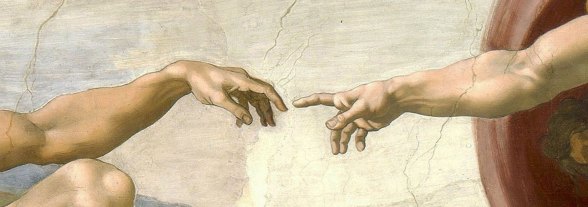
In Romans 5, Paul draws parallels between Adam and Jesus (who he refers to in 1 Corinthians 15 as the first man and second man) showing both similarities and differences between them. This is a profound insight by Paul, who recognises that Adam’s (and Eve’s) actions introduced sin and death into the world for all humans, while Jesus’s actions undid sin and death and brought grace, justification, righteousness and life into the world for all humans. In this sermon, which includes quite a bit of congregation participation, I tease out this parallel. I also apply it to a view of the whole scripture as a love story in which God works to undo the negative effects of Adam and Eve’s Fall.

It will help to have Genesis 3 and Matthew 4 open in front of you before you start to listen.

I wish you God’s blessings as you journey through Lent.
Adrian

Christ – The Delivered Deliverer

Click here to listen to this 28 minute sermon.

Today we study the passage from Matthew 2: 13-23 which reports on the flight of Joseph and his family from Bethlehem to Egypt and his later return to Nazareth in Galilee. It will be helpful if you have a copy of the passage in front of you before you listen to the recording. If you can’t lay your hands on one quickly, here is a link to an online Bible.

Sometimes, when we read this and similar passages, we get caught up in the events of the narrative and lose sight of the theological meaning that Matthew wove into the text. We read the scripture from our own, Gentile perspective, rather than from the perspective of Matthew’s audience – Jewish Christians, steeped in the Old Testament narrative and theology. In this sermon we peel back the layers to uncover some of the deeper messages that the original readers would have understood.

What we get from this is a deeper insight into Jesus as saviour and redeemer. At one level, the story is about the infant Jesus delivered from a paranoid and violent ruler (Herod). At a deeper level, the story is about Jesus as the deliverer of humanity, the new Moses inaugurating a new Exodus, embodying the new and true Israel.

May Christ rise in your heart as you reflect further on the great miracle of God coming into the world in the person of Jesus of Nazareth, the long awaited Messiah.

Reflecting on the Incarnation

Click here to listen to a podcast of this 23 minute sermon.

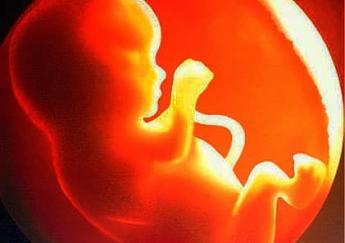
Today is the start of Advent, that season in which we reflect back on Christ’s entry into the world some two thousand years ago and anticipate his coming again, one day, in glory. Western Christians (in contrast to Eastern Orthodox Christians) have tended to reduce Advent to a celebration of Christmas – the birth of Jesus. But the incarnation properly starts at conception. Somehow – who knows how! – God spliced himself into Mary’s egg. The incarnation is a full blending of human and divine in the individual called Jesus. It is a profound mystery that I really cannot explain. But we assert that Jesus is both fully God and fully human. What we learn from the Orthodox tradition is that this is the central event in Christian history – that in the incarnation God changed the course of history forever – changing the genetic makeup of humanity and opening up a spiritual path that had til then been closed.

In this sermon I try to unpack this in terms of two central theologies:

  • The notion of kenosis, that God emptied himself in order to merge with Mary’s egg – emptied of omnipotence, omniscience, omnipresence – to be teeny tiny small; left the eternal and perfect union between Father, Son and Spirit in order to join with humanity; immersed himself into human experience with all its sorrows and joys. Kenosis is a profound and radical expression of God’s love for humanity. What else could prompt such an extravagant and risky venture?
  • The notion of theosis, that the chasm between God the uncreated and humans the created creatures was closed when God became human, thereby opening a path for humans to participate in the divine. That God would have incarnated even if humanity had not fallen. That the purpose for Jesus coming into the world was not merely to die on the cross, but to pioneer a path for humanity to reconcile with God. Theosis points us towards hope – hope for the future, hope for what God is able to achieve in us, hope for the coming transformation and restoration.

This is a rather cerebral sermon – be warned! It invites us to engage with ways of thinking about the incarnation that may be unfamiliar to us. Don’t feel obliged to agree with what I say – I myself am not sure about all of it! But engaging with different Christian perspectives can be deeply enriching. I do, however, assert that Love and Hope are key Advent themes, and hope that these reflections on kenosis and theosis may provide some food for thought to underpin these themes.

Oh, and it is World Aids Day today, so I attempt to make some links from all of this to the ongoing fight against HIV and Aids.

Blessings and joy during this season!

The Passion of our Lord Jesus Christ (according to Mark)

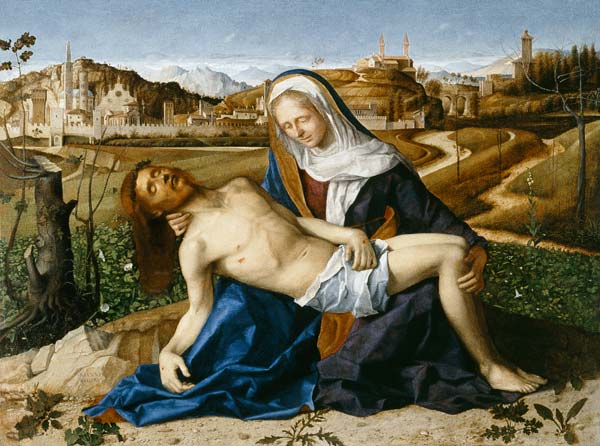
Pietà, by Giovanni Bellini (1505)

Click here to listen to the podcast of the Passion of Jesus Christ, according to St Mark.

Holy Week (from Palm Sunday to Easter Sunday) climaxes today (Good Friday) as we commemorate the death of Jesus Christ. It is the high point, or perhaps more accurately, the low point of the Christian year, because it is through Christ’s death that God’s works God’s ultimate act of salvation and redemption. It is also the day when our hearts break, because it is we ourselves who put Jesus there.

It is tradition in the Anglican church to read the whole passion narrative on Palm Sunday, and this post links to a recording of that reading that I did in 2012. It is taken from J.B. Phillips translation of the New Testament, a translation (actually, a paraphrase) that I find fresh and beautiful. It is the whole of Mark 14 and 15, starting with the anointing of Jesus at Bethany and ending with Jesus’ burial – 22 minutes of recording (click here).

I am also uploading a reflection on Holy Week that I prepared a couple of years ago, but have not previously shared here. Particularly for those who do not observe Holy Week, I hope that this may give you new and helpful insights into this important period in the life of the Christian. It is a written document, which you can download by clicking here.

My prayer is that over these last days of Lent, we will rediscover the meaning of Christ’s death for ourselves and for the world, that we will mourn and repent, and that we will experience new life with Christ in his resurrection on Sunday.

Love and blessings
Adrian

The Path of Jesus – A Path of Martyrdom & Death?

Click here to listen to the podcast of this 20-minute sermon.

On his way to the cross, Jesus said that we must hate our life in this world, that like a grain of wheat we must die, and that we must follow him on his journey to the cross (John 12:20-26). This seems to set us up for a path of martyrdom and death, a dark and twisted path. This was a path that many Christians in the early church followed – we read, for example, Ignatius of Antioche pleading with the Church of Rome in about AD107 to not save him from being martyred, eulogising and glorifying the path of suffering and death as the path mapped out by Christ and as the only means of his salvation.

If ‘the path of Jesus’ is a path of martyrdom and death, and if we are called to walk in his footsteps, then we too must become martyrs. Over the centuries this path has been used, for example, to exhort women to remain submissive in abusive marriages – they have the opportunity to suffer as Christ did, they have been told by Christians, and to do so without a word as Christ did. Is this really the path of Christ? Is this really what it means to walk in his footsteps?

All this raises fundamental and, to be honest, rather scary questions about God’s salvation plan: Did Jesus come into the world in order to die? Was it God’s intention – God’s desire – that Jesus should die? Was it always God’s plan that Jesus would die? Could salvation be found nowhere but through Christ’s death? If the answer to all these questions is ‘yes’, then we indeed have a dark message of salvation. And Christian discipleship is itself a dark path.

But in this sermon I want to suggest a different way of thinking about God’s intentions and desires. A different way of thinking about the place of Jesus’ death in God’s masterplan for the salvation of the cosmos. You may not agree with my conclusions – feel free to disagree! But perhaps a new look at Christ’s path will be helpful for all of us. Perhaps this will give us new insights into God’s love for us and God’s investment in our salvation. And perhaps this will open up a Path of Jesus that is truer to God’s deepest intentions.

Turning Water into Wine

Turning Water into Wine

The wedding in Cana of Galilee was the wedding of the decade, with fabulous catering! But John 2:11 explains that the point of the story is to reveal Christ’s glory so that we may have faith in him. This sermon unpacks these two related points:

  • We see that Christ is the one, full of love, who is concerned for the ordinary events of our lives and who desires to bless us with abundance;
  • And we see that when there are troubles in life, we can turn to Jesus and act in faith, even when we don’t understand or feel faith.

This is what it means to have faith in Jesus: to entrust ourselves to Jesus.

John 2:1-11

On the third day a wedding took place at Cana in Galilee. Jesus’ mother was there, and Jesus and his disciples had also been invited to the wedding. When the wine was gone, Jesus’ mother said to him, “They have no more wine.”

“Dear woman, why do you involve me?” Jesus replied. “My time has not yet come.”

His mother said to the servants, “Do whatever he tells you.”

Nearby stood six stone water jars, the kind used by the Jews for ceremonial washing, each holding from twenty to thirty gallons (75-115 litres). Jesus said to the servants, “Fill the jars with water”; so they filled them to the brim. Then he told them, “Now draw some out and take it to the master of the banquet.” They did so, and the master of the banquet tasted the water that had been turned into wine. He did not realize where it had come from, though the servants who had drawn the water knew. Then he called the bridegroom aside and said, “Everyone brings out the choice wine first and then the cheaper wine after the guests have had too much to drink; but you have saved the best till now.”

This, the first of his miraculous signs, Jesus performed at Cana in Galilee. He thus revealed his glory, and his disciples put their faith in him.

Painting by Romaya Puchman

Shepherd Leadership

Shepherd Leadership

Based on Jesus’ saying in John 10 that he is the “good shepherd”, it is a call to emulate Jesus’ style of leadership, characterised by commitment, relationship and sacrifice. In some ways it is my theology of education at university – I hope my students might appreciate the introduction, which is about my work with first years. John 10:11-18. 29 April 2012.

Father, into your hands I commit my spirit

Father, into your hands I commit my spirit

A Good Friday Reflection on one of Jesus’ last words on the cross: “Father, into your hands I commit my spirit”. 6 April 2012.

Emulating the U of Christ

Emulating the U of Christ

Here is my sermon Maundy Thursday, where we commemorate the institution of the Lord’s Supper and Jesus’ washing of the disciples’ feet. It is about the shape of Christ’s life – a U – and our emulation of that shape – a J (giving an appropriate UJ!). It is based on Philippians 2 and John 13. 5 April 2012.