God’s great forgiveness

Click here to listen to the audio of this 6-minute message. Or watch the YouTube video below, or read the text that follows after that.

The Lord is Risen! He is Risen Indeed!! Alleluia!!!

During this past week, we have confronted the dark side of humanity and of ourselves. We have recognised that it is our sin – each of ours – that contributed to Christ’s death. Humanity, in its arrogance, attempted to murder God the Son! What greater sin can there be? One might imagine that a God of justice would wipe the earth clean.

Instead, God forgives humanity. God returns to us the very Son that we murdered! What greater forgiveness can there be? All the rest of our sins are caught up in God’s great forgiveness of this greatest of all sins. All God asks of us to acknowledge our sin – Father, I am sorry; please forgive me. God says “Yes!” to humanity. God says “Yes!” to maintaining and enabling fellowship with each of us.

Moreover, Christ’s triumph over death, he rising from the grave to new life, is God’s “Yes!” to life and “No!” to death. Particularly during the COVID-19 plague, which has already taken the lives of over 100,000 people, we are in need of this reassurance that God has already triumphed over death. COVID-19 will do its worst, but it will die, and humankind will live. God will triumph over death.

Almighty God,
this night explodes with the radiance of the risen Christ;
set us ablaze with the power of your love
and propel us into the world
to live and proclaim the gospel of the living Lord;
who lives and reigns with you and the Holy Spirit,
one God, now and for ever.
Amen

2020.04.12_El_Greco_-_The_Resurrection_-_WGA10530

Painting of The Resurrection, by El Greco, 1597-1600. From here.

Featured image: Resurrection of Christ, by Raphael, 1499–1502. From here.

Painting in the YouTube video: Resurrection of Christ, by Rottenhammer (1564–1625)


At the Foot of the Cross

Click here to listen to the audio recording of this 10-minute message. Or watch the YouTube video below, or read the text that follows.

It is sometimes easy (and more comfortable) to gloss over the death of Jesus on Good Friday. I grew up in a church that didn’t have a Good Friday service, and so for years I’d hop from the happiness of Palm Sunday to joy of Easter Sunday. For sure, on Easter Day, we’d get a gruesome account of Jesus death, but the sermon would end with “but he has risen from the dead, hallelujah”.

I believe that it is important and good for our faith to position ourselves with the disciples and particularly with Jesus’ mother Mary, who did not (like us) know the happy ending to the story. As they stood at the foot of the cross watching Jesus’ life ebb away on that Friday afternoon, they could not foresee his resurrection. Imagine the pain and horror they experienced, the utter loss of hope, the grief at seeing someone so beautiful and innocent dying in such a dreadful and slow way. Their hope for a better society was shattered and their own sense of having a part to play in the transformation of the world was in pieces.

And this experience persisted through Friday and Saturday until Easter Sunday.

During this time of crisis, they did what needed to be done. Joseph of Arimathea negotiated with the authorities to claim Jesus body, placed him in a tomb he owned and wrapped Jesus temporarily in a burial shroud. He sealed the tomb to protect Jesus body. The disciples and Jesus’ family went home to observe the sabbath and remained at home until dawn on Sunday, when they went back to prepare his body properly for burial. In their shock and dismay, they continued to do what needed to be done.

I encourage you to stay with it. To stay in the midst of the distress and the heaviness of Jesus death over the coming days.

2020.04.10_Good_Friday

Featured image “Calvary” by Edward Munch (1900), from https://arthive.com/edvardmunch/works/269172~Calvary

The Great Love of Jesus

Click here to listen to this 7-minute message. Or watch the YouTube video below, or read the text that follows after that.

Today is Maundy Thursday, the first of a trio of days called the ‘Triduum’, which includes Maundy Thursday, Good Friday and Holy Saturday – the three days before Christ’s resurrection on Saturday. On Maundy Thursday evening we usually have a service that commemorates and celebrates two key events in Jesus’ life this day: the Last Supper and the washing of the disciples’ feet. These are two enormous demonstrations of the great, extravagant, generous love that Jesus has for all of humankind.

The Last Supper is a symbolic enactment of Jesus’ giving of himself to us – his body and his blood. He is about to pour himself out for humanity, and indeed for the cosmos. And so he takes and blesses bread and wine and gives them to his disciples as a metaphorical giving of himself to us, so that we have within us – which is why we consume the bread and wine – the presence of Christ.

During a Eucharist service, when I distribute the host – the body of Christ – I say the words, “Receive the body of Christ, broken for you, because he loves you.” I want people to experience that this bit of ‘bread’ is a tangible manifestation of Christ’s great love for them. Sometimes, I even press the host into the palm of their hand, until the person pushes back against me, to give an unmistakable physical experience of the presence of Jesus being pressed into their body.

The washing of the disciples’ feet speaks most clearly of Jesus’ servant attitude. He did not come to be glorified or worshiped or exalted. Rather, he came to serve. And this service is vividly demonstrated in his taking off his outer clothes, putting a towel around his waist and getting down on his knees to wash the feet of his followers. It shows again his self-giving and self-sacrificial love, and his willingness to give the whole of himself for our salvation.

In these two acts – the Last Supper and the foot washing – Jesus reminds you that he loves YOU. You who are reading this right now! Say your name out loud now ______________ and hear this message: God love you ______________ . He loves you profoundly and generously, utterly and unconditionally. Try to remember this during the rest of the day.

To help you remember, I suggest you periodically press your thumb into the palm of your other hand and think the words, “This is my body, broken for you, because I love you.”

Featured image from: https://baptistmag.org.nz/feet-washing/

Following Jesus’ Example

Click here to listen to this 14-minute message. Or watch the video below. Or read the text after that.

Today is Palm Sunday. Many churches on this day will start their service outside with the blessing of palm crosses and then process around the church or community, shouting or singing: “Hosanna to the Son of David! Blessed is he who comes in the name of the Lord! Hosanna in the highest heaven!” (Matthew 21:1-11). This is commemorate Jesus’ triumphal entry into Jerusalem on the back of donkey or colt and people’s recognition that he is king or messiah.

And then some churches will also read the whole passion story (Matthew 26:14-27:66). This is a long reading that can take 20 or more minutes (click here to listen to a recording of the passion narrative, from Luke). The juxtaposition of these two stories – one of triumph and glory and the other of suffering and death – is a stark and shocking contrast.

In today’s message, I suggest three main lessons we can learn from Jesus’ experience of suffering and challenge in life:

  1. Jesus does not rush towards suffering. He does not revel in it. Christianity has tended to glorify suffering, often encouraging people (such as women in abusive marriages) to endure their suffering as their sharing in the suffering of Christ. However, Jesus is not a masochist. He does not relish or rush towards or celebrate suffering. During this passion week, he appears to appreciate the recognition of the crowd as he enters Jerusalem, he enjoys supper with his friends and he spends time in prayer with his Father – he enjoys life. Of course, we do suffer, and some suffer more than others. But Jesus does not appear to enjoy or celebrate suffering.
  2. However, Jesus also does not run away from or avoid suffering. Instead, he moves into difficult places, and in the passion narrative, he walks towards his inevitable suffering and death. Jesus is a realist. He is not naive. He does not avoid difficulty; instead, he faces the truth. And he speaks the truth, challenging injustice, exclusion and poverty. He calls people out when they lie. He champions integrity. He faces the world as it is, without sugar-coating anything.
  3. Yet, Jesus is an idealist. Despite knowing that he will soon die, he continues to believe that God can use his suffering and death for good. He persists in believing that God can redeem humanity and the cosmos. He insists that people can participate in this salvific work of God. He remains steadfastly optimistic, hopeful and confident about the future.

There are many people whose example we can follow during difficult times, including this time of the Coronavirus and the lockdown that many countries are experiencing. I think Jesus provides a good, balanced and sensible example for us. Blessings.

2020.04.05_Palm-Sunday-messages-and-quotes-1264981

Featured image from https://www.express.co.uk/life-style/life/1264981/palm-sunday-messages-best-quotes-greetings-to-mark-palm-sunday-2020

Where is God?

Click here to listen to the audio of this 11-minute message. Or watch the video below.

During difficult times, such as we experiencing now with the Coronavirus, many of us find ourselves asking, “Where is God?” And even, “How can God allow such suffering in the world?”

This question is formally called ‘theodicy’ – the doctrine of how a good God can allow evil in the world. Theologians have grappled with this question for centuries. Augustine generated a solution that is widely accepted by the church, illustrated in the graphic below (from https://www.slideshare.net/SharanpreetKaur/augustines-theodicy).

2020.03.29_augustines-theodicy-3-638

But such answers provide little comfort when we are in the midst of suffering. These are intellectual and theological answers, not pastoral answers. Over the years, as I have grappled with this question in my own sufferings and particularly in responding to the suffering of others, I have reached two main conclusions:

First, God is always immanently present in our suffering. When God the Son incarnated into the human named Jesus of Nazareth, God fully entered into the human experience, with all its ups and downs. Ultimately, God experienced even death, on the cross, an experience God had not had until this moment. We read in John 11 of Jesus’ grief at the grave of Lazarus – he was genuinely distressed and saddened by the death of his friend and by his witnessing of the grief of Lazarus’ family.

Jesus was then, and always is, present in the midst of suffering. Where is God? He is right here, sharing our grief and pain, standing with us in the darkest of times. He is by no means far off and emotionally disengaged.

Second, while this is usually of little comfort in the midst of suffering, God repeatedly shows the capacity for bringing good out of bad. This does not make the bad good. No! The bad remains bad. But god has the capacity to give birth to good through bad. Paul assures of this in Romans 8:28, when he writes, “And we know that in all things God works for the good of those who love him, who have been called according to his purpose.” We this most dramatically on the cross. Humanity murdered, executed God the Son. This was a fundamentally bad and depraved thing we did. And yet through this, God gave birth to salvation for humankind, reconciliation and forgiveness for all who would seize it.

God is always working to bring good out of bad, giving us the capacity to transform darkness into light. This is not about persuading ourselves that a bad thing is actually good, but rather about being open to something good emerging out of the bad.

As we continue to journey through the crisis of COVID-19, which looks set to get worse before it gets better, I encourage you to keep turning towards God. I encourage you to ask the “Where is God?” question, because God wants to engage us honestly and sincerely with this tough question.

May God journey closely with you during this difficult time.

2020.03.29_maxresdefault

Look! The Lamb of God

Click here to listen to this 23-minute message.

This message is a call for us to see and look at Jesus, the Lamb of God. And to point him out others. This was the mission of John the Baptist, and it as much ours today.

We are still in the period of Epiphany, where we focus on the manifestation or revealing of Jesus Christ as the Son of God, as God’s Chosen One. Our reading for this Sunday is John 1:29-37:

29 The next day John saw Jesus coming toward him and said, “Look, the Lamb of God, who takes away the sin of the world! 30 This is the one I meant when I said, ‘A man who comes after me has surpassed me because he was before me.’ 31 I myself did not know him, but the reason I came baptizing with water was that he might be revealed to Israel.”

32 Then John gave this testimony: “I saw the Spirit come down from heaven as a dove and remain on him. 33 And I myself did not know him, but the one who sent me to baptize with water told me, ‘The man on whom you see the Spirit come down and remain is the one who will baptize with the Holy Spirit.’ 34 I have seen and I testify that this is God’s Chosen One [or Son].”

35 The next day John was there again with two of his disciples. 36 When he saw Jesus passing by, he said, “Look, the Lamb of God!” 37 When the two disciples heard him say this, they followed Jesus.

Bruner, who has written a wonderful (1200 page) commentary on John, translates some of these verses differently, emphasising the use of present and continuous tenses in the original Greek, notably:

29 The next day John sees Jesus coming toward him, and he says, “Look! The Lamb of the God, the One who is taking away the sin of the world!

36 And John looked intently at Jesus as Jesus is walking by and he says, “Look! The Lamb of God!” 

I focus on these two verses in this message, as I have felt God speaking to me particularly insistently this week about verse 29. And I make five points:

  1. John sees Jesus coming and walking towards him. Jesus is always coming towards us, even if we are moving away from him. His trajectory is always in our direction.
  2. Look! John twice says, “Look!”. I like Bruner’s addition of the exclamation mark, as it emphasises that this is a call, an imperative. John wants us to stop drifting through life blindly. Or from being so focused on other things that we don’t notice Christ coming towards us. So he calls out, in excitement, perhaps even in alarm, “Look! Look out!”
  3. Jesus is taking away the sin of the world. This is a pretty packed little sentence:
    • John speaks about ‘sin‘, not ‘sins’. It is the condition of being sinful that Jesus takes away, rather than the individual sinful acts that we do.
    • John says that Jesus ‘is taking‘, emphasising that this is a continuous activity, that has already begun, is presently happening and will continue to happen in the future. While Jesus’ death on and resurrection from the cross are surely pivotal in salvation, God has been saving humanity through the Son from the time of the fall, throughout the First Testament, through Jesus’ incarnation, life and ministry, through his death, resurrection and ascension, by the outpouring of Holy Spirit, and continuing to today and into the future. The Son of God has been and continues to be in the business of taking away sin.
    • It is the sin ‘of the world‘ (the ‘cosmos’) that Jesus takes away, not just the sin of those who repent, those who believe, those who are members of certain churches or religions, those who adhere to certain church rules or doctrine. Scripture abounds with verses that reinforce that salvation is for and of the whole world (the cosmos). It is a radical inclusion of the entire created order – the cosmos!
  4. Salvation is thus possible for all, but we have to take hold of it. That’s why John keeps saying, “Look!”, and why we are told in verse 37 that John’s disciples leave John to follow Jesus. Jesus is the Lamb of God who is taking away the sin of the world. In the Eucharist or Mass, we celebrate and re-member this great work of God the Son.
  5. And finally, we, like John and his disciples, and like Jesus’ disciples (about whose calling we learn in the rest of John 1), are invited to continue John’s ministry of pointing people to Jesus. We remind people that Christ is coming towards them. We call them to ‘Look!’ We point them not to our denomination, our pastors, our worship, ourselves; but towards Christ himself. And we show through our lives, our inclusivity, our radical love and our walking towards others that he is indeed taking away the sins of the world .

2020.01.19-Lamb of God

Featured image: Saint John the Baptist Bearing Witness, by Annibale Carracci, ca. 1600, downloaded from: https://www.metmuseum.org/art/collection/search/438813

Doubt seeking faith

Click here to listen to this 25-minute message.

Our text for today is Matthew 11:2-11. It is a story about doubt, questioning and uncertainty and about faith. It is about doubt seeking faith.

When John [the Baptist], who was in prison, heard about the deeds of the Messiah, he sent his disciples to ask him, “Are you the one who is to come, or should we expect someone else?”

Jesus replied, “Go back and report to John what you hear and see: The blind receive sight, the lame walk, those who have leprosy are cleansed, the deaf hear, the dead are raised, and the good news is proclaimed to the poor. Blessed is anyone who does not stumble on account of me.”

As John’s disciples were leaving, Jesus began to speak to the crowd about John: “What did you go out into the wilderness to see? A reed swayed by the wind? If not, what did you go out to see? A man dressed in fine clothes? No, those who wear fine clothes are in kings’ palaces. Then what did you go out to see? A prophet? Yes, I tell you, and more than a prophet. 10 This is the one about whom it is written:

“‘I will send my messenger ahead of you,
    who will prepare your way before you.’

11 Truly I tell you, among those born of women there has not risen anyone greater than John the Baptist; yet whoever is least in the kingdom of heaven is greater than he.”

There are three main points in this message:

  1. John the Baptist, Jesus’ cousin, is highly regarded by Jesus, who sees him as the greatest human to have ever lived. He is the only prophet in the Bible who was himself prophesied about (Malachi 3:1). He was the one who came before Christ, to prepare his way.
  2. Yet this John – this greatest of all humans – expresses doubt, uncertainty, questioning. Despite having witnessed the heavens opening and the Spirit descending and the Father speaking at Jesus’ baptism – performed by John’s own hand – he asks, “Are you the one who is to come? Or should we expect someone else?” John is not the only one in the Bible who has doubts – so too did Peter, Thomas, all the disciples and even Jesus. Doubt is part of the faith journey – it is not the antithesis of faith – it is an integral part of faith. It is doubt seeking faith and faith seeking understanding.
  3. Jesus does not rebuff John, but rather answers him. He draws on patterns of First Testament prophecy to shape his response to John, particularly Isaiah 35:1-6 and Isaiah 31:1-3. Being steeped in the First Testament, John would have heard these echoes and known that Jesus was the God who has come, as promised. Jesus’ answer speaks to what Jesus was currently doing in his ministry and also reminds John of the long passage of God’s working throughout history.

When we are journeying through doubt towards faith, I take two main points to heart:

  1. I should listen for what God has done in my own life – what I have witnessed first hand, and also what those who are close to me say about what God is presently doing in their lives. It is in hearing the present activity of God in the lives of his beloved that we kindle our faith.
  2. I should look for the long history of God’s working in the history of cosmos, which we find primarily in the words of the scriptures. It is in hearing the historical activity of God in the lives of his people through the millennia that we root our faith.

2019.12.15_man-looking-up-7

Featured image from here.

Beleaguered

Click here to listen to this 24-minute message.

Probably all of us go through times, at least now and then, when we feel beleaguered (click here for a definition of this word).

Jesus certainly did. The closer he got to the cross, the more the leaders of his time circled him, plotted against him, slandered him, entrapped him. By the time Judas became willing to betray him, Jesus had scores of vultures circling him. Our reading for today, from Luke 21:5-19, comes at just this time in his life. In it, Jesus speaks about the future – both the near future of the time of the destruction of the Jewish (second) temple, which would take place about 40 years later in AD70, and the distant eschatological future of the End Times, when Jesus prepares to return. In both times, followers of Christ will suffer persecution. They will be beleaguered.

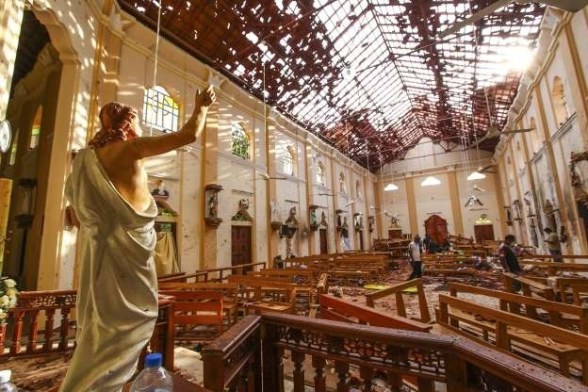
Even though we are probably not living in the End Times, we as Christians may already have experience of being beleaguered. Sometimes we become beleaguered in our workplace, when we stand up for Kingdom values: integrity, honesty, fairness, justice, inclusion and vulnerability. Or in families, someone who converts from the family’s faith into the Christian faith may be ostracized, even expelled and cut off. Churches are attacked and people at workshop are killed, as in Sri Lanka on Easter Day 2019. Even within the church, people can become beleaguered by leaders who are threatened by their vision, their Spirit-filledness, their willingness to ask for change and their desire for greater inclusion. Much as the church ought to be a place of sanctuary and community, it can become a place of persecution and exclusion.

In Luke 21:5-19, Jesus presents four words of advice – words of wisdom – for those of us in such situations.

  1. Know that God knows. Sometimes, when we are under such pressure, we feel alone and abandoned. But Jesus emphasizes that God knows and is mindful of our situation. In v9 he says, “When you hear of wars and uprisings, do not be frightened. These things must happen first, but the end will not come right away.” In other words, since God knows what is still to come, such as the destruction of the Temple, God also knows your situation. God knows. God cares. God is present. God is in control. Psalm 121 reminds us that “he who watches over you will not slumber; indeed, he who watches over Israel will neither slumber nor sleep.”
  2. Persecution is an opportunity for witness. He says in v13, “And so you will bear testimony to me.” While we are being persecuted and beleaguered, witness might not be uppermost on our minds, but Jesus says that this is the time to embody Kingdom values. But our capacity to witness is not something we do alone – no! He emphasizes that we need not stress about what we will say as witnesses (v14), because “I will give you words and wisdom that none of your adversaries will be able to resist or contradict.” We see such inspiration particularly in the life and death of St Stephen, in Acts 6 and 7.
  3. God protects his own. With God at our side, we have God’s protection: “But not a hair of your head will perish” (v18). Jesus appears to contradict himself here, because just two verses earlier he said, “they will put some of you to death“. We get some clarity about this from another passage that also speaks about the hair on our head, Luke 12:4-7, where he says, “The very hairs of your head are all numbered.” This follows a passage in which Jesus distinguishes between the death of the body and a more permanent death (which he there refers to as being thrown into hell). Jesus wants us to understand that to die does not mean to perish. Our bodies may suffer and even die, but we do not perish – those who are in Christ continue to live in the presence of God. (See my previous sermon on this passage in Luke 12.) So, yes, may may suffer when we are beleaguered and persecuted, but God protects us when it counts most.
  4. We are called to endure. Jesus concludes this passage saying, “Stand firm, and you will win life.” We are called to stand firm, to endure, to persevere, to be resolute, to hold the faith and (in South African idiom) to vasbyt (literally, to bite tightly). Paul says something similar in Ephesians 6:13, “Therefore put on the full armor of God, so that when the day of evil comes, you may be able to stand your ground, and after you have done everything, to stand.” This endurance is more than just standing still; it is about continuing to do God’s work. In Luke 8:15, in the parable about the seeds the fell on different types of ground, Jesus says, “But the seed on good soil stands for those with a noble and good heart, who hear the word, retain it, and by persevering produce a crop.”

Jesus never promises us an easy life, despite what many pastors and churches preach. Indeed, if anything, Jesus promises us that life will be difficult. But he provides us with the reassurance that God knows what we are going through and is present and in control, and that God will protect us, and ultimately whatever happens we will fall into his arms. He calls us to use these opportunities to witness to his values and Kingdom, and he calls us to stand firm and to produce good fruits, not matter what is going on around us.

If you are in such beleaguered circumstances, please know that I do not aim to diminish your suffering – not at all. Rather, I hope to encourage you with the words of Jesus, who suffered much, that God is right there with you and holding you through it all.


2019.11.17_Beleaguered churchFeatured photo of St. Sebastian’s Church in Negombo, Sri Lanka, which was bombed on Easter Day, 21 April 2019. May the souls of those who died rest in peace in God’s loving embrace. From https://ie.gofundme.com/f/victims-of-st-sebastian-church-negombo-sri-lanka

Let’s talk about Jesus

Click here to listen to this 13-minute message, preached on 3 November 2019.

Anyone who spent a year in Sunday School as a kid will surely remember the story of Zacchaeus – a short-statured tax collector, who climbed a tree to see Jesus passing by (Luke 19:1-10). Here’s the story:

Jesus entered Jericho and was passing through. A man was there by the name of Zacchaeus; he was a chief tax collector and was wealthy. He wanted to see who Jesus was, but because he was short he could not see over the crowd. So he ran ahead and climbed a sycamore-fig tree to see him, since Jesus was coming that way.

When Jesus reached the spot, he looked up and said to him, “Zacchaeus, come down immediately. I must stay at your house today.” So he came down at once and welcomed him gladly.

All the people saw this and began to mutter, “He has gone to be the guest of a sinner.”

But Zacchaeus stood up and said to the Lord, “Look, Lord! Here and now I give half of my possessions to the poor, and if I have cheated anybody out of anything, I will pay back four times the amount.”

Jesus said to him, “Today salvation has come to this house, because this man, too, is a son of Abraham. 10 For the Son of Man came to seek and to save the lost.”

In this message, I explore the mechanisms that led to Zacchaeus’ transformation, emphasising the importance of talking about Jesus. In short, I make three main points:

  1. Zacchaeus climbed the tree because he had heard people talking about Jesus: what he had done, including the miracles Jesus had performed, but perhaps more importantly, about the parable of the Pharisee and the tax collector in the previous chapter (Luke 18:9-14). Had it not been for people talking about Jesus, Zacchaeus would probably never have met Jesus.
  2. After Jesus comes into Zacchaeus’ house for tea, people start judging, grumbling, moaning, criticising, etc. They criticised Zacchaeus for being a dishonest tax collector, which was probably true. And they criticised Jesus for hanging about with ‘sinners’, which certainly was true, frequently! In response, Zacchaeus stands up and talks about his faith response to Jesus. He speaks directly to Jesus, not to the critical crowds, and he professes his faith. Jesus responds affirmingly: “This man, too, is a son of Abraham”.
  3. Two thousand years later, we are still reading about Zacchaeus! The question for us is: are we talking about Jesus? Are we following in the footsteps of the people of  Zacchaeus’ time and talking about Jesus? Are we following in footsteps of Zacchaeus and talking about our faith in Jesus? Are we, like we imagine Zacchaeus doing after this story, living out our faith, moment by moment, by the way we embody the values of Christ: compassion, inclusivity, justice, human dignity and rights, challenging the abuse of power and pointing to a God of extravagant love?

2019.11.03_Zacchaeus_Tissot

Zacchaeus in the Sycamore Awaiting the Passage of Jesus (Zachée sur le sycomore attendant le passage de Jésus), by James Tissot (French, 1836-1902), painted 1886-1896. Opaque watercolor over graphite on gray wove paper, Image: 7 1/8 x 9 15/16 in. (18.1 x 25.2 cm). Brooklyn Museum, New York. This image downloaded from https://www.newemangelization.com/meeting-jesus/catholic-mens-daily-devotional-and-bible-study-31st-week-in-ordinary-time-sunday-cycle-c-luke-191-10/

To be saved

Click here to listen to this 19-minute message.

Our Gospel reading for today is the rather curious passage from Luke 20:27-38, which involves a convoluted story about a woman who was married and remarried to seven brothers in succession, with the hope that one of them would impregnate her. The question asked of Jesus by the Sadducees was which of them would be her husband at the resurrection. It is a rather awful story, filled with patriarchal beliefs about women, marriage and child bearing.

I did not feel God leading me to preach on this passage today.

However, the point of the story is of interest. Jesus affirms that there IS a resurrection, that there is an afterlife, and that it will be wonderful. And this affirmation of Jesus – that life does not simply end when our bodies die – prompts us to think about salvation and what it means to be saved.

For that, we turn to our Second Testament reading: 2 Thessalonians 2:13-17 (I’ve bolded some of the key words):

13 But we ought always to thank God for you, brothers and sisters loved by the Lord, because God chose you as firstfruits to be saved through the sanctifying work of the Spirit and through belief in the truth. 14 He called you to this through our gospel, that you might share in the glory of our Lord Jesus Christ.

15 So then, brothers and sisters, stand firm and hold fast to the teachings[b] we passed on to you, whether by word of mouth or by letter.

16 May our Lord Jesus Christ himself and God our Father, who loved us and by his grace gave us eternal encouragement and good hope, 17 encourage your hearts and strengthen you in every good deed and word.

What do we learn about salvation from this passage?

  • First, God chose us – God called us. Salvation is always God’s initiative. And God chooses and calls every person into fellowship with God. God’s mission is to reconcile the WHOLE world to God’s self, under the headship of Christ (Ephesians 1:9-14). When God calls us, God calls us by name. It is personal. God wants YOU personally. It is not just that God wants to save everyone, like some anonymous conglomerate of humanity. No! It is that God’s has chosen YOU personally, by name, and called you to be in fellowship with God, to be saved.
  • Second, we are saved through two main actions (according to this passage):
    • First, we are saved through the sanctifying work of the Spirit. When God calls us, Holy Spirit comes and resides in us. Spirit makes a home in our hearts, comes and lives inside of us (1 Corinthians 6:19). God works to transform us into the image of Christ, from the inside out, through the sanctifying work of the Spirit.
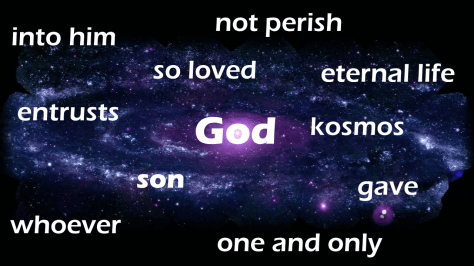
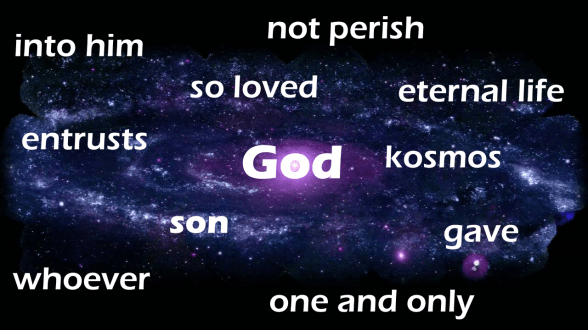
    • Second, we are saved through our belief in the truth. And what is this truth? Jesus Christ is truth (John 14:6; John 8:31-32). We can do nothing to attain salvation; salvation is in its entirety the result of Christ’s work, through creation, his incarnation, his ministry, his death, his resurrection and his ascension to the right hand of God. We can’t add to this. All we can do is respond to the truth of it. And ‘to believe in’ something or someone is much the same as ‘to trust in’ someone or even better, ‘to entrust ourselves’ to someone. We entrust ourselves into the truth of Jesus.
  • Third, the result of this salvation is that we get to share in the glory of our Lord Jesus Christ. It is not so much that we become glorious, but that we bask in the radiance of God’s glory. We can be confident that when we die, we enter into the enjoyable and wonderful presence of God. Jesus spoke about this in our earlier reading (Luke 20:36): “they can no longer die; for they are like the angels. They are God’s children, since they are children of the resurrection.”
  • Finally, because of all of this, we are encouraged to stand firm and hold fast to our faith. Sometimes, maybe often, our faith is frail and feeble. Sometimes life gets on top of us. Sometimes we succumb to sin. Sometimes pain, suffering and illness burden us. Sometimes evil in the world – violence, hatred, exclusion, oppression, poverty and injustice – overwhelm us. In these times, especially, God calls us, urges us, to stand firm in and to hold fast to Christ.

In Paul’s final words in this brief passage, he offers a blessing. I liked this blessing so much, we read it four times during the service, twice as a blessing, with my hand outstretched. I again stretch out my hands to you in blessing, saying:

May our Lord Jesus Christ himself and God our Father, who loved us and by his grace gave us eternal encouragement and good hope, encourage your hearts and strengthen you in every good deed and word.

2019.11.10_To_be_Saved