Sanctuary

Click here to listen to the audio recording of this 14-minute message. Or watch the video here on Facebook (the message starts 26 minutes into the recording). Or read the text summary below.

This message is a reflection on Psalm 48

1 Great is the Lord, and most worthy of praise,
in the city of our God, his holy mountain.

2 Beautiful in its loftiness,
the joy of the whole earth,
like the heights of Zaphon is Mount Zion,
the city of the Great King.
3 God is in her citadels;
he has shown himself to be her fortress.

4 When the kings joined forces,
when they advanced together,
5 they saw her and were astounded;
they fled in terror.
6 Trembling seized them there,
pain like that of a woman in labor.
7 You destroyed them like ships of Tarshish
shattered by an east wind.

8 As we have heard,
so we have seen
in the city of the Lord Almighty,
in the city of our God:
God makes her secure
forever.

9 Within your temple, O God,
we meditate on your unfailing love.
10 Like your name, O God,
your praise reaches to the ends of the earth;
your right hand is filled with righteousness.
11 Mount Zion rejoices,
the villages of Judah are glad
because of your judgments.

12 Walk about Zion, go around her,
count her towers,
13 consider well her ramparts,
view her citadels,
that you may tell of them
to the next generation.

14 For this God is our God for ever and ever;
he will be our guide even to the end.

________________________________________________________________________

Psalm 48 centres on Zion – God’s sanctuary, the temple, the City of our God, the Holy Mountain, the fortress. I will refer to Zion as God’s sanctuary from here on.

God’s sanctuary is inhabited by God, the Lord, the Lord Almighty, the Great King.

God’s sanctuary is a feminine space – the feminine pronoun ‘her’ is used eight times to emphasise the feminine character of the sanctuary. It is something like a womb – a safe, protective, nourishing and nurturing space. The enemies of God experienced pain like that of a woman in labour, but for those who dwell in the sanctuary, it is a womb.

God’s sanctuary is a place of refuge and safety – a sanctuary.

In God’s sanctuary, there is beauty, joy, security, meditation, unfailing love, God’s right hand, righteousness, rejoicing, gladness, our guide, God, for ever and ever.

God’s sanctuary is the place we are invited to enter: Walk about Zion, go around her, count her towers, consider well her ramparts, view her citadels.

God’s sanctuary is where we can retreat when things get on top of us, when we feel pressured or burdened, when we are worried or distressed, when we’re afraid, when we need replenishing, when our faith founders, when life’s adversities are too much, when we are alone. The sanctuary is God’s place, God’s grace.

Music to listen to while reading Psalm 48

Featured image of a labyrinth in a forest from: https://www.thedailyworld.com/life/creating-a-sanctuary-breathing-peace-into-this-challenged-world/
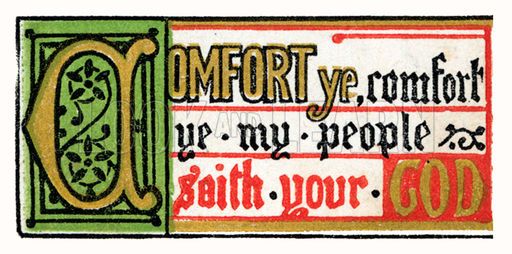
Repentance & Restoration (Advent 2)

Click here to listen to the audio recording of this 21-minute message. Or watch the video here on Facebook (the message starts about 35 minutes into the recording). Or read the text summary below.

Today (Sunday 10 December) is the Second Sunday in Advent, a season in which we remember and celebrate Christ’s first coming into the work and prepare ourselves for his second coming into the world.

Two key themes emerge from our readings: repentance and redemption.

Central to our preparation for Christ’s coming is repentance of sin:

  • Mark 1 speaks of John’s ministry of a call to prepare for Christ’s coming, to a baptism of repentance of sin, and to confession,
  • Isaiah 40 speaks of the sins of the people of Israel,
  • Psalm 85 refers to our iniquity and sin, and warns us of God’s wrath and anger, and
  • 2 Peter 3 calls us to repentance and warns of the possibility of us perishing.

Repentance is an important part of our lives as followers of Christ. The Greek word for repentance means to turn around – a 180 degree about turn. In repentance, we turn away from sin and towards God. It is a reorientation of ourselves in relation to God and sin. This is the most important work we can do during Advent, as we prepare for Christ.

Repentance leads to restoration. Through repentance, we are stored into our fellowship with God and experience the blessings of God in our lives:

  • Mark 1 speaks of John’s baptism of repentance leading to God’s forgiveness of our sins,
  • Isaiah 40 uses the most wonderful language, starting with “comfort, comfort my people”, tenderly, our hard service is complete, sin is paid for, valleys will be raised up and mountains made low, rough ground becomes levels and rugged places a plain, we all (humans) will see God’s glory and restoration, and God will tenderly gather, carry and lead us,
  • Psalm 85 says that God will restore us again and revive is again, That we will be together in righteousness and peace, that righteousness and peace will kiss, that faithfulness will spring up while righteousness will look down, and that God will give us what is good, and
  • 2 Peter 3 speaks of God’s patience with us, of a new heaven and earth, of us becoming spotless, blameless and at peace with God, and that God’s patience means our salvation.

These wonderful words of restoration are the fruit of repentance. As we turn 180 degrees away from sin and towards God, something most of us have to do daily (even hourly or minutely!), God forgives and restores. This is the great gift of God’s son – Jesus comes into our world to forgive and restore.

Church discipline

Click here to listen to the audio recording of this 22-minute message. Or watch the YouTube video below or read the text summary that follows.

Matthew 18:15-20 speaks about church discipline. Jesus provides us with both principles for church discipline and some practical steps that can be followed.

Principles

This specific passage is located within the larger narrative of Matthew chapter 18:

  1. Jesus starts by advocating for humility; a warning particularly to those who think they are important people in the church, including church leaders (Matthew 18:1-5).
  2. Jesus says we should be considerate of our sisters and brothers, not causing people to stumble while we stand on our rights (Matthew 18:6-13).
  3. Jesus tells the parable about the lost sheep – the shepherd leaves (and even risks) the 99, while he goes in search of the one (Matthew 18:10-14).
  4. Then we have today’s passage on church discipline (Matthew 18:15-20).
  5. Immediately after that, we have Peter asking how many times he should forgive a sister or brother who sins against him. Seven times? (which to Peter probably felt very generous!) But Jesus, says, no! 70 times 7. And goes on to the parable of the unmerciful servant who was forgiven much (as we all are forgiven very much by God) but was unwilling to forgive another person a little (Matthew 18:21-35).

In combination, this chapter strongly emphasizes relationships of love. Love that is humble and little, love that is considerate, love that see the individual as of inestimable value, love that forgives and forgives, love that recognized how we have been blessed and seeks to pass it on.

This is the context within which Matthew wants us to hear Jesus’ words about church discipline.

While we are instructed to challenge or confront sin – Jesus says, “Go! And point out their fault” – nevertheless, the way in which we do it, our purpose, our understanding of ourselves in this challenging role and our understanding the person being confronted, are all to be shaped by the deep love, consideration, valuing and forgiving that Jesus has presented to us in this chapter.

Practice

Perhaps the first thing to recognize in practice is that we are all sinners, so this is a case of one sinner confronting another sinner. This is not a situation of the righteous confronting the sinner. “For all have sinned and fall short of the glory of God” (Romans 3:23). The steps are really quite sensible:

  1. Go directly to the person whose sin you have become aware of and point it out to them. Have a conversation with them, according to the principles set out above. And hopefully they will be able to hear you and the prompting of Holy Spirit and repent. (In the sermon, I share an example where I was the one being confronted regarding my own sin against another person in the church.
  2. But if they don’t listen, go again with another one or two people, and try again. These other people are witnesses and may see that actually you are in the wrong in your assessment of the situation. They provide a third perspective.
  3. But if the person still does not listen, then bring it to ‘the church’, by which Matthew probably mean the whole church, though perhaps today it would be better to bring it to the church leaders or elders. This is now a more formal and confrontational situation
  4. But if the person still does not listen, then “treat them as you would a pagan or a tax collector”.

This final step appears to suggest excommunication or ‘shunning’, though Jesus does not make explicit what he means. There certainly are other passages in the Second Testament that make provision for casting someone out of the church community. However, when we look at how Jesus treats pagans and tax collectors, we see that he reaches out to them, engages them, works to reconcile them and save them:

  • The Canaanite woman in Matthew 15:21-28 was a pagan. Jesus engaged with her when she approached him, proclaimed her faith to be incredible, and healed her daughter from demon possession.
  • Zacchaeus in Luke 19:1-10 was a tax collector. Jesus initiated dialogue with him, invited himself to his house to share a meal with him, and concludes by saying, “Today salvation has come to this house, because this man, too, is a son of Abraham. For the Son of Man came to seek and to save the lost.”

Regarding both pagans and tax collectors, we Jesus working to reconcile, restore, include, forgive, save. Combining these examples of Jesus’ actual behaviour with pagans and tax collectors, and in light of the words just before this passage – “your Father in heaven is not willing that any one of these little ones should perish” (Mat 18:14) – and the words just after it – “[forgive] not seven times, but seventy-seven times” (Mat 18:22) – we should conclude that the fourth step in Jesus’ practice guidelines is not about excommunication, but rather about persistent attempts to challenge and restore.

Paul summarises this very neatly in Galatians 6:1:

Brothers and sisters, if someone is caught in a sin, you who live by the Spirit [meaning we need check our own faith and conduct before we step in to confront someone else] should restore that person [not dump on them, not humiliate or belittle them, not shame them, not cast them out] gently [with kindness, consideration, sensitivity and above all, authentic love]. But watch yourselves, or you also may be tempted [be humble, watch out for pride, arrogance of complacency, because you might easily be the one caught in a sin next week].

Love & Justice

Click here to listen the audio recording of this 12-minute message. Or watch the YouTube video below, or read the text summary after that.

Even though I emphasise God’s love as the central essence of God’s being, we see God behaving in angry, wrathful and violent ways. How are we to make sense of this? This message defines justice as follows

Justice is God’s love working to protect those who are vulnerable

As much as God stands up against those who harm God’s loved-ones, God also reaches out a hand of reconciliation, rooted in repentance and contrition. And God desires reconciliation between people, rooted in forgiveness. We call this restorative justice – love and justice.

Featured image adapted from https://metro.co.uk/2015/03/05/this-is-the-real-reason-why-people-shake-hands-5089999/