Today is the last Sunday in Advent, a few days before Christmas. During this Advent season, we’ve been reflecting on Christ’s coming into the world, both 2000 years ago and one day in the future. We’ve also reflected on John the Baptist, and the prophets before him, who prophesied Christ’s coming in the past and his coming again one day. And we’ve reflected on Christ’s birth in our hearts this Christmas, 2024.
Today, as we bring Advent to a close, we read about Mary’s and Elizabeth’s pregnancies, and about what they and the prophets thought about the kind of person the Messiah would be. Although he came as an infant, he was set to turn the world upside down. God’s emerging into humanity was a profound change for the universe – disruptive, outrageous and exciting. Watch the 18-minute video of today’s message, and let’s be challenged by the readings from Micah 5, Hebrews 10 and Luke 1.
Mary, the mother of Jesus, had a difficult start to her pregnancy – she was young (probably about 13) and unmarried (only betrothed). Many of us may have become parents in less than ideal circumstances, and so we can feel with her the challenges she faced, when the angel Gabriel comes and informs her that she will become the mother of Son of God (Luke 1:26-38).
In reflecting on this well-known passage, three things stand out for me afresh:
First, Mary had a community of people around her, who loved and supported her. First, Joseph, the man (probably a boy, really, aged perhaps 14 or 15) who she was engaged to. He could so easily have spurned her, but instead, he remains steadfast at her side and protects her from judgmental neighbours. He was accepting, loving and faithful in ways that are quite extraordinary. Although we know little about Joseph, he sounds like a great father.
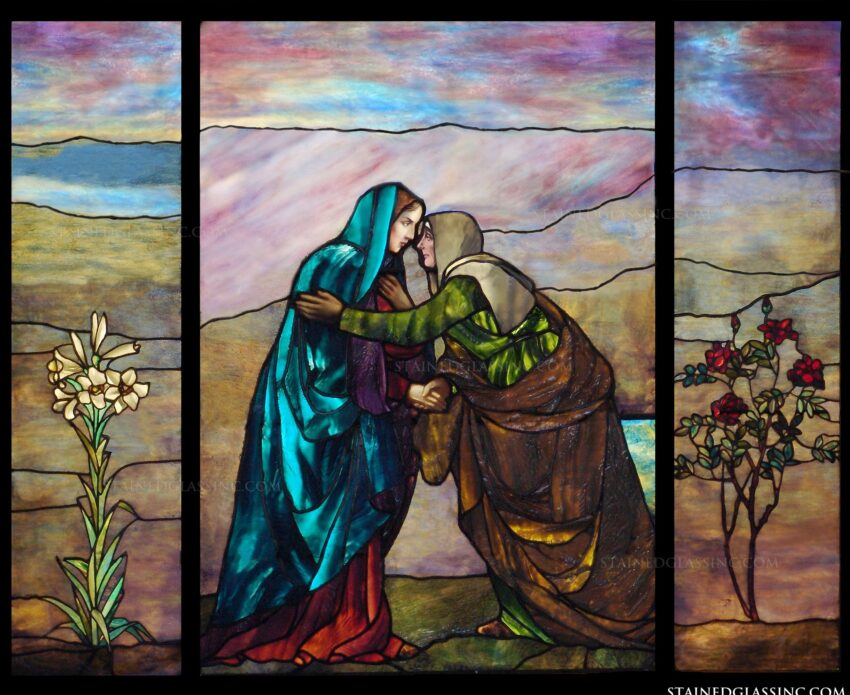
In addition, Mary’s aunt, Elizabeth, and her husband Zechariah. They were very old and Elizabeth had not borne a child. They too were vital sources of support for Mary, and in the following passage we read about Mary’s visit to Elizabeth.
This human community of support is important for all of us. We all need people in our orbit who care, love, accept, cherish, nourish, empower, advocate, challenge and enable. We need this at home, and we need it in the church.
Second, Mary did not go from ‘zero to hero’ in one leap. She was ‘greatly troubled’ by Gabriel’s message, so much so that the angel had to reassure her: Do not be afraid, Mary. And after Gabriel’s pitch to her, Mary asks questions of Gabriel, “How will this be since I am a virgin?” Gabriel is fully willing to engage her uncertainty, her fear, her incredulity and her questions.
This is in contrast to Gabriel’s response to Zechariah, who in v18 says something similar to Gabriel: “How can I be sure of this? I am an old man and my white is well on in years.” Zechariah’s words are not unlike Mary’s, but Gabriel responds strongly, asserting his authority, and silencing Zechariah until after John’s birth.
After some discussion with Gabriel, Mary come to a place of acceptance, or rather of acquiescence, “I am the Lord’s servant. May your word to me be fulfilled.” I have selected the word ‘acquiescence’ because I think it best captures Mary’s initial response. Acquiescence can be defined as “the reluctant acceptance of something without protest.” It is almost a resignation, similar to the Arabic “Inshallah”, which means “if God wills”, and implies that if God wills, it will happen whether we want it to or not. We surrender to God’s will.
We need also to learn to hear God’s voice speaking into our lives, to engage with God about God’s will, and to make decisions to acquiesce to God’s will. In other words, to trust in God.
Third, this passage shows forth a long-held principle (dating back to Genesis 1) of God choosing to partner with humans. Almost always there is a co-working between God and people to accomplish God’s aims. In this passage (v31), we get a series of things Mary will do: You will conceive. You will give birth to a son. You are to call him Jesus. And (v32-33), we get a series of things God will do: Jesus will be great, Jesus will be called the Son of the Most High, God will give him the throne of his father David, Jesus will reign over Jacob’s descendants for ever, Jesus’ kingdom will never end.
This plan that Gabriel brings to Mary involves a partnership between Mary and God. Without the partnership, the plan is impossible. And so it is with much of God’s work in the world – God chooses to limit God’s self by working with imperfect and limited human beings. This is God’s modus operandi.
In conclusion, let us follow Mary’s example, and that of Joseph, Elizabeth and Zechariah, and partnering with each other and with God, to accomplish those things that God desires in this world.
The Annunciation, fresco by Fra Angelico, 1438–45, San Marco, Florence
John the Baptist is arguably the second most important person in the New Testament – second only to Jesus. He was the last of the First Covenant prophets – prophesying about the coming Messiah. Once Jesus arrived, John’s ministry, and that of all the prophets in the First Testament, had reached fulfillment.
Curiously, in John 1:6-35, John the Baptist (or the writer of the Gospel according to the John) repeatedly speaks to who John is NOT, rather than to who John IS. In total, there are five negative declarations in this passage, suggesting a humility on the part of John and a clear understanding of his role, as the forerunner and preparer for the Messiah. John is not the light (8), not the Messiah (20), not Elijah (21), not the Prophet (21) (even though that is really what he is), and not worthy to untie the sandals of the Messiah (27). Strong negative statements about who he is NOT.
Alongside these are three affirmations of who John IS, only one of which he voices himself: he is a witness to testify concerning the light (7), he is a witness to the light (8) and he is the voice of one calling in the wilderness, ‘Make straight the way for the Lord’ (23), even though this last is John quoting Isaiah. John makes not independent statements of himself in his own words.
John’s negations and lack of affirmations about his pivotal role and place in the Christian story suggest great humility and that the focus of all his efforts is on Jesus, the Messiah, the promised Son of God. His life purpose is to point to Christ.
This is confirmed in John’s testimony about Jesus, which includes him sharing that he himself did not recognise Jesus (31), but that he saw the Spirit of God descend upon him and remain on him (33).
And so John points us to Jesus: “Look, the Lamb of God, who takes away the sin of the world! This is the one I meant…” (29) and the next day, “Look, the Lamb of God!” (35). This is the role of the Prophet – to witness to his experience of Jesus and to point us to Jesus. He is the pointer.
Our role, as Christians today, at the end of 2023, is to take up John’s prophetic role, by pointing to Jesus, as John did. Through our lives, our actions, our words and our values, we are (for better or worse) God’s prophets, pointing the way to Christ.
How do we do this? Our readings provide suggestions:
Isaiah 61 suggests we do so by sharing good news to the poor, binding up the broken hearted, proclaiming freedom to captives, comforting those who mourn, providing for those who grieve, restoring places long devastated, standing up for justice, and standing against robbery and wrong doing. All of these prophetic actions are located in the world – they all speak to the social justice that characterises the Kingdom of God.
Mary’s song in Luke 1:46-55 echoes some of Isaiah’s sentiments: extending mercy, lifting up the humble, and filling the hungry with good things. But Mary’s vision of her son, the Messiah, also includes some strong prophetic words: scattering the proud and sending the rich away empty.
And 1 Thessalonians 5:16-22 focuses on more obviously ‘spiritual’ actions: to rejoice always, pray continually, give thanks in all circumstances, hold to the good and reject evil.
It is all of these actions – standing up for social justice, speaking out against injustice and evil, and ensuring a robust spiritual life – that serve as a prophetic voice in the world today. This is perhaps the most important thing for us as Christians to be doing in the world – pointing the way to the Messiah.
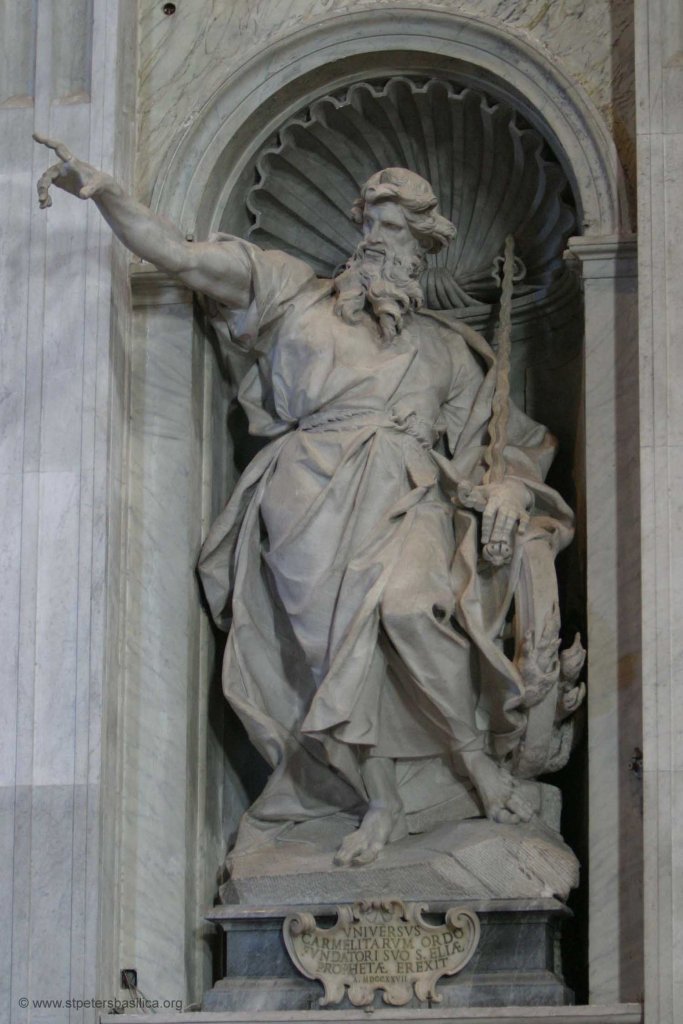
Statue of Elijah pointing, by Agostino Cornacchini (1727) at St Peter’s Basilica, Vatican City
Today (Sunday 10 December) is the Second Sunday in Advent, a season in which we remember and celebrate Christ’s first coming into the work and prepare ourselves for his second coming into the world.
Two key themes emerge from our readings: repentance and redemption.
Central to our preparation for Christ’s coming is repentance of sin:
Mark 1 speaks of John’s ministry of a call to prepare for Christ’s coming, to a baptism of repentance of sin, and to confession,
Isaiah 40 speaks of the sins of the people of Israel,
Psalm 85 refers to our iniquity and sin, and warns us of God’s wrath and anger, and
2 Peter 3 calls us to repentance and warns of the possibility of us perishing.
Repentance is an important part of our lives as followers of Christ. The Greek word for repentance means to turn around – a 180 degree about turn. In repentance, we turn away from sin and towards God. It is a reorientation of ourselves in relation to God and sin. This is the most important work we can do during Advent, as we prepare for Christ.
Repentance leads to restoration. Through repentance, we are stored into our fellowship with God and experience the blessings of God in our lives:
Mark 1 speaks of John’s baptism of repentance leading to God’s forgiveness of our sins,
Isaiah 40 uses the most wonderful language, starting with “comfort, comfort my people”, tenderly, our hard service is complete, sin is paid for, valleys will be raised up and mountains made low, rough ground becomes levels and rugged places a plain, we all (humans) will see God’s glory and restoration, and God will tenderly gather, carry and lead us,
Psalm 85 says that God will restore us again and revive is again, That we will be together in righteousness and peace, that righteousness and peace will kiss, that faithfulness will spring up while righteousness will look down, and that God will give us what is good, and
2 Peter 3 speaks of God’s patience with us, of a new heaven and earth, of us becoming spotless, blameless and at peace with God, and that God’s patience means our salvation.
These wonderful words of restoration are the fruit of repentance. As we turn 180 degrees away from sin and towards God, something most of us have to do daily (even hourly or minutely!), God forgives and restores. This is the great gift of God’s son – Jesus comes into our world to forgive and restore.
John the Baptist is the one who prepares the world for the first coming of Christ, some 2,000 years ago. We, today, follow in his footsteps in continuing to prepare the world to receive Christ when he comes again. The world we live in now continues to grapple with many challenges.
Currently, we think of those many who have died of Covid-10: in South Africa, since the start of the pandemic, some 102 000 people have died, amounting to an average of about 102 per day since March 2020.
We continue to grapple with HIV and AIDS: 14% of South Africans are living with HIV or Aids, an average of about one in seven people.
We continue to see high Aids-related death rates: 86 000 this year alone, an average of 235 deaths per day – and the death rates have been rising over the past five years.
And gender-based violence remains a scourge of our society, with an average 115 women raped every day this year – a total of 45 000 so far this year.
It is into this broken and wounded world that we prepare for the coming of Christ. How do we do this? What are the guidelines we’re given in the scriptures set for today?
Matthew 3:1-12 presents John’s call to repentance, confession and baptism. He strongly confronts the religious leaders of his day: “You brood of vipers!” His words are confrontational and damning. He calls them to produce the fruit of repentance – it is one thing to repent, and another to demonstrate that repentance in your behaviour – the fruit. And he warns, all very challengingly, that if they fail to do so, they will be chopped down like an unproductive tree, or burned up in the fire, like the chaff from winnowing.
The story of John’s ministry in Mark’s gospel is a little softer: there he speaks of a baptism of repentance for the forgiveness of sins. Matthew doesn’t make any mention of forgiveness. And Luke’s version incorporates both what Matthew and what Mark say. (And John provides a quite different version altogether.)
John, then, sets a pattern for us that is both encouraging and challenging. But what else can we learn from today’s readings about preparing the world for Christ?
Isaiah 11 presents a prophecy of the branch that will come from Jesse – King David’s father and, many generations later, forefather of Jesus. This passage opens with a repeated emphasis on the Spirit: “The Spirit of the LORD will rest on him— the Spirit of wisdom and of understanding, the Spirit of counsel and of might, the Spirit of the knowledge and fear of the LORD” (Isaiah 11:2). Clearly, we cannot do anything without the enabling of the Spirit of God.
And in the following verses, Isaiah emphasises God’s concern for those who are vulnerable: “He will not judge by what he sees with his eyes, or decide by what he hears with his ears; but with righteousness he will judge the needy, with justice he will give decisions for the poor of the earth” (Isaiah 11:3-4). Righteousness and justice are the keywords here.
And this is followed by the imagery of wolves, leopards and lions living in harmony with lambs, goats and yearlings, under the leadership of children (Isaiah 11:6). This is the kind of egalitarian and harmonious society that we are called to bring into being as we prepare for Christ’s return.
Psalm 72 continues some of these themes from Isaiah, notably God’s defence of the poor, vulnerable, needy, marginalised, silenced and outcast: “May he defend the afflicted among the people and save the children of the needy; may he crush the oppressor” (Psalm 72:4). Here we see God taking sides – he aligns with the poor and against the oppressor. God is not neutral – he sides with those who are vulnerable. The Psalmist goes on, “For he will deliver the needy who cry out, the afflicted who have no one to help. He will take pity on the weak and the needy and save the needy from death. He will rescue them from oppression and violence, for precious is their blood in his sight” (Psalm 72:12-14). In those days, life was in the blood, so when the Psalmist says, “precious is their blood in his sight”, s/he is in effect saying that God sees their lives as precious and worthy of protection. Theologians call this “God’s option for the poor” or “God’s preference for the poor”.
When we wonder where we should stand on things, the Biblical answer is unequivocal – stand with those who are vulnerable. That is always where we will find God. And that is where we should be found.
Romans 15 invites us to take on the attitude of Christ: “May the God who gives endurance and encouragement give you the same attitude of mind toward each other that Christ Jesus had, so that with one mind and one voice you may glorify the God and Father of our Lord Jesus Christ. Accept one another, then, just as Christ accepted you, in order to bring praise to God” (Romans 15:5-7). The result of thinking like Christ, is that we will accept one another – here again is a call to inclusivity and now also being non-judgmental. Indeed, in the previous chapter, Paul explicitly tells us to stop judging others: “Therefore let us stop passing judgment on one another. Instead, make up your mind not to put any stumbling block or obstacle in the way of a brother or sister” (Romans 14:13). This was in the context of conflicts of various dietary laws of the diverse group of Jewish and Gentile Christians. But regardless of the topic of conflict, the principles remain: accept and do not judge. Be tolerant and inclusive. Celebrate diversity.
As we strive to be Christians who, like John the Baptist, are preparing the way for Christ’s return, we need to take up the examples we are given in the Scriptures: honest words, an invitation to repent and receive forgiveness, the presence of the Spirit, values of righteousness and justice, an option for the ‘poor’, and acceptance and tolerance. These constitute the mind of Christ. And as we embody and live out Christ’s mind, we will be preparing the world for his return.
Last week we learned some Advent yoga – reaching back and seizing hold of the promises God made and fulfilled in Christ, which God has fulfilled, which feeds our faith; and reaching forward and grasping at the promises God has made that still will be fulfilled in Christ, which gives us hope. Today we focus forwards towards the hope of things yet to come. Central among this is Jesus’ second coming.
Our readings today (Malachi 3:1-4; Luke 1:68-79; Philippians 1:3-11 and Luke 3:1-6) all speak about the anticipation of Christ’s coming, including his second coming. Malachi (and Jesus) speaks about the second coming as being sudden, unexpected, which gives us a fright. We don’t know when to expect him. Malachi also says, when the Lord comes, the messenger we long for, the Son of Man, who will be able to stand? It will be daunting. (Though Jesus prays in Luke 21:36 that at the end times “you may be able to stand before the Son of Man”.)
Malachi, John the Baptist, Jesus and Paul all tell us we need to prepare for the coming of Christ. We must be ready. We must repent of our sins and receive God’s forgiveness, then we are made right God, and ready to receive Christ. Malachi speaks about purification – metal purified by fire and clothing cleansed with launderer’s soap.
There will be a sifting, a separation. Malachi calls it a sifting – of flour from chaff and sand and stones. Jesus speaks about it as a separation of sheep and goats, of pruning away and discarding unproductive branches off a fruit tree.
But it is not all challenge and judgement. It is also about hope. HOPE! The hope that comes through Jesus Christ and the great work he has done for us. Zechariah, praying over his new-born son, John (the Baptist), uses words of hope like: salvation, mercy, rescue, forgiveness, peace, covenant, righteousness, tender mercy, sunshine, rising sun. And Paul, writing to the Philippians, speaks of love that may abound more and more in knowledge and depth of insight.
Let us prepare for Christ’s return. And let us hope for what he will accomplish in and around us. Let us articulate and pray for what we hope for – our lives, our world as a better place, as redeemed and sanctified. Let us pray with hope for the world we desire God to make real for us.
Advent is a between-times season – between Christ’s first coming (with all the prophecies before that in the First Testament) and Christ’s second coming (with all the prophecies for that in both First and Second Testaments). In Advent, we look forward to celebrating Christ’s first coming and also anticipate his second coming – which could be today or in a thousand years.
One part of us looks back in time and grabs hold of all the prophesies that were given about Jesus’ first coming, knowing that these were fulfilled. These fulfilled prophesies strengthen our faith to know that God is good on God’s word – what God says will be, will indeed be. And that nourishes and vitalises our faith. So, we have to read back into the past and clasp those promises made and fulfilled by God, because they nourish and enrich our faith in God.
And another part of us looks forward in time and reaches out to the fulfilment of the prophesies concerning Jesus’ second coming, with the hope that they will be fulfilled. Our hope is not blind, nor futile. Because we have the evidence of previously fulfilled prophesies. Thus our faith flames our hopes.
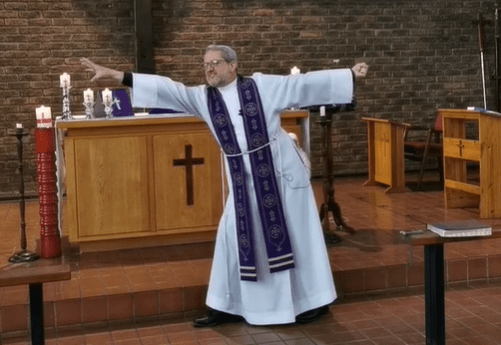
During this between-times, we are encouraged by Christ to “stand up and lift up your heads” (Luke 21:28). And so, in this very short homily, I act out (in a kind of ‘Advent yoga’) this reaching back and grasping the fulfilled promises of God, and stepping forward and reaching out towards the yet-to-be-fulfilled promises of God. And I get the congregation to stand up and join me in this.
Today, the central question I am asking is, What kind of people are we?
Or phrased differently, What kind of people ought we to be?
John the Baptist was the last in the line of First Testament prophets. He, like those who came before him, pointed the way to Messiah, the Christ, who appeared as Jesus of Nazareth. Mark 1:1-8 introduces John to us, telling that he came as a messenger in advance of the coming of Jesus, the Son of God, to prepare the way for the Lord.
John did this preparation by preaching a baptism of repentance for the forgiveness of sins. This was his clear message. And instead of pointing to himself or puffing himself up, he continually pointed to the one who was still to come, saying:
After me comes the one more powerful than I, the straps of whose sandals I am not worthy to stoop down and untie. I baptize you with water, but he will baptize you with the Holy Spirit. (Mark 1:7-8)
When John was a new-born, his father Zechariah said much the same about him in Luke 1:67-79. After eight verses about the coming Messiah, Zechariah finally gets to his own son, and in just four verses proclaims his mission:
And you, my child, will be called a prophet of the Most High; for you will go on before the Lord to prepare the way for him, to give his people the knowledge of salvation through the forgiveness of their sins, because of the tender mercy of our God, by which the rising sun will come to us from heaven to shine on those living in darkness and in the shadow of death, to guide our feet into the path of peace. (Luke 1:76-79)
And all of this was prophesied hundreds of years before by Isaiah in chapter 40:1-5. where he says:
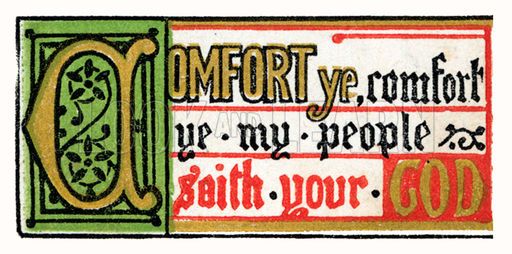
Comfort, comfort my people, says your God. Speak tenderly to Jerusalem, and proclaim to her that her hard service has been completed, that her sin has been paid for, that she has received from the LORD’s hand double for all her sins. A voice of one calling: “In the wilderness prepare the way for the LORD; make straight in the desert a highway for our God. Every valley shall be raised up, every mountain and hill made low; the rough ground shall become level, the rugged places a plain. And the glory of the LORD will be revealed, and all people will see it together. For the mouth of the LORD has spoken.” (Isaiah 40:1-5)
All of these passages have this in common:
John prepared the way for the coming of Jesus by preaching repentance, forgiveness and comfort
John came, Jesus followed and John died. And then Jesus died, rose again and ascended to heaven.
We are now waiting for him to return. And while we wait:
We are to prepare the way for the second coming of Jesus by preaching repentance, forgiveness and comfort
So, as we prepare for Jesus’ return, we need to consider who we are pointing to and what message we are proclaiming through our actions and words. In 2 Peter 3:11, Peter asks this penetrating question, “What kind of people ought you to be?” He asks this in the context of second coming of Christ Jesus. Given that he is coming back soon,
What kind of people ought we to be?
We at my parish, St Stephens in Lyttelton, South Africa, are currently conducting a survey among our parishioners about what kind of church we are and what kind of church we aspire to be. One of the questions we asked was, “What qualities, values or characteristics you would like St Stephen’s to embody?” We’re still busy with the survey, but here is what we’ve learned so far:
God focus:
Focus on God, honour God’s commandments, serve God
Prayer, spirituality, faith, hope, wisdom
Relational focus:
Love, care, kindness, compassion, tolerance
Friendliness, companionship, good relationships
Sense of community, collaboration
Honesty, authenticity
Equality for all
Family values
These qualities, values or characteristics align well with Paul’s encouragement in Philippians 4:8:
Whatever is true, whatever is noble, whatever is right, whatever is pure, whatever is lovely, whatever is admirable—if anything is excellent or praiseworthy—think about such things.
A church that embodied these kinds of values and qualities would surely be a church people would want to attend, and would surely help to prepare the way for the Lord’s return, and would surely be pleasing to God.
Let us be this kind of church!
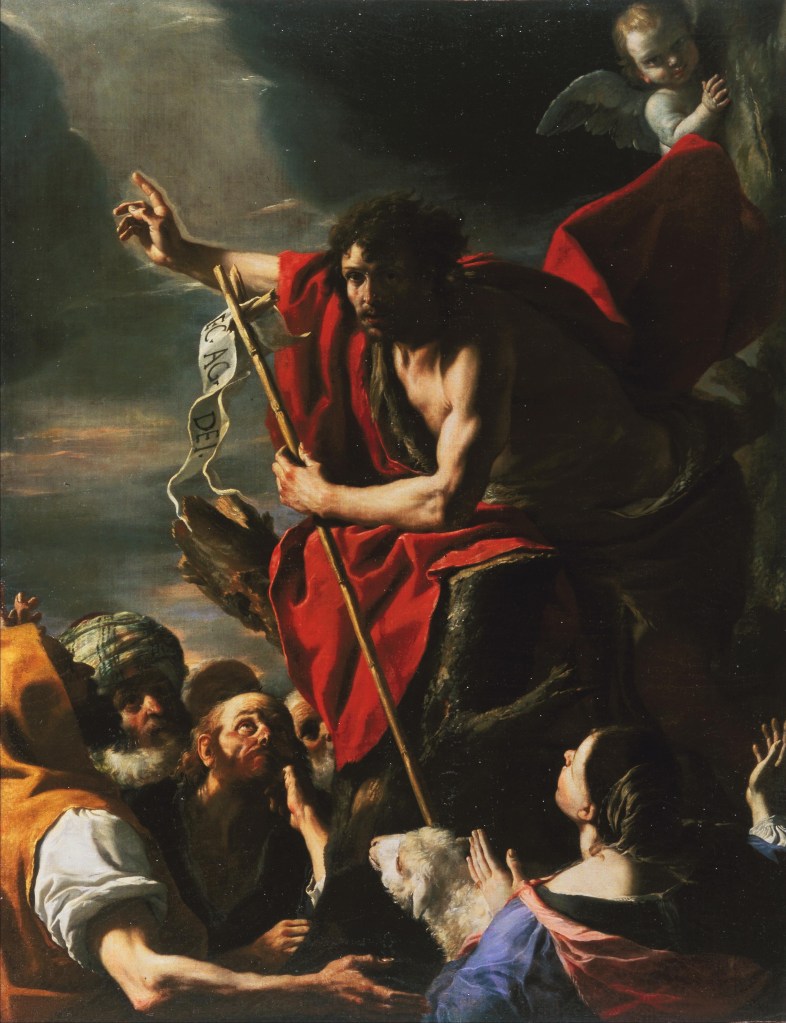
Featured image: St. John the Baptist Preaching, c. 1665, by Mattia Preti
Today is the first Sunday in Advent, a season in which we look forward to the coming of Christ into the world – historically 2,000 years ago (which we celebrate at Christmas), in this very moment (Christ is continually coming into the world) and one day in the near or distant future (when Christ comes again). Today we reflect on the last of these – Jesus’ second coming.
Our reading is Isaiah 64:1-9, which opens with these powerful words, “Oh, that you would rend the heavens and come down!” While this sounds like a joyful call for Christ to return, the passage is filled with caution and a call for critical self-reflection.
Let me summarise the flow of thought. Initially, there is a call for Christ to come down, to make the mountains tremble, to set fire to the world, to cause the nations to quake and to make his name known to his enemies. This passage seems to work from the assumption that there are clear enemies of God, and implicitly that we are in the right:
Oh, that you would rend the heavens and come down, that the mountains would tremble before you! As when fire sets twigs ablaze and causes water to boil, come down to make your name known to your enemies and cause the nations to quake before you! For when you did awesome things that we did not expect, you came down, and the mountains trembled before you. (Isaiah 64:1-3)
Second, there is a similarly smug and self-satisfied view that God is inevitably on our side – that we are right, and everyone else is wrong, because we wait for Christ, we gladly do right, and we remember his ways. There is a complacency that we are right and thus God is for us – a complacency that easy slides into arrogance – an arrogance that easily slides into hatred and judgement of everyone else:
Since ancient times no-one has heard, no ear has perceived, no eye has seen any God besides you, who acts on behalf of those who wait for him. You come to the help of those who gladly do right, who remember your ways. (Isaiah 64:4-5a)
But third, it seems that Isaiah pauses and reflects. He becomes self-critical, as he writes, “But…” That ‘but’ initiates a series of recognitions that there is little difference between ‘us’ and ‘them’. He faces up to our continued sin, our uncleanness, that even the best we do is like filthy rags, that we are shrivelled like a leaf, that the wind of our sins will sweep us away, and that we neglect to call on God’s name or to strive towards him. Isaiah recognises that, as a result, God hides his face from us and gives us over to our sin. And so he says, “How then can we be saved?”:
But when we continued to sin against them, you were angry. How then can we be saved? All of us have become like one who is unclean, and all our righteous acts are like filthy rags; we all shrivel up like a leaf, and like the wind our sins sweep us away. No-one calls on your name or strives to lay hold of you; for you have hidden your face from us and have given us over to our sins. (Isaiah 64:5b-7)
And then, out of this stepping down, stepping back, looking within, critically self-reflecting, challenging himself and his religious community, Isaiah comes to some important realisations. He starts the next passage with, “Yet”, signalling that he has recognised something new. He discovers afresh that God is our father and we all are his children. That God is the potter and we are but clay in his hands. That God is merciful and does not store up anger against his children. That God sees us as we pray. And that we all are God’s people, all the work of his hand.
This last line is perhaps the most the important of all – having started by dividing the world into right and wrong, good and bad, saved and lost; and then realising that we also are wrong, bad and lost – he realises that God is for everyone. God desires to save everyone. God longs to reconcile with all of us. And that we can be reconciled only through the work of Christ, not by us being ‘more right’ than anyone else:
Yet you, LORD, are our Father. We are the clay, you are the potter; we are all the work of your hand. Do not be angry beyond measure, LORD; do not remember our sins for ever. Oh, look upon us we pray, for we are all your people. (Isaiah 64:8-9)
As much as we long for Christ to return – for the rending of the heavens and the coming down of Christ – let us recognise that we are little different from anyone else. We are as dependent on Christ for our salvation as anyone else, because we are as sinful as anyone else. That when we become smug about our salvation or about how spiritual or righteous we think we are, we are actually moving away from God, not towards him.
And so let us be cautious, humble, critically self-reflective and watchful. As Jesus says at the end of Mark 13:24-37,
I preached this message on 1 December 2019, the first Sunday in Advent, but did not have a chance at that time to publish it. I thought today would be a good day to post it, given that so many people in South Africa and globally are staying away from church to promote physical distancing during the Coronavirus (COVID-19) crisis. In the recording, I apply the message to Aids and violence against women and against children. But in this blog, I apply it to the Coronavirus.
This message draws on Matthew 24:36-44, where Jesus speaks about That Day when he will return – one day still in the future (as of writing this blog!). Jesus’ teaching in his passage tells us two main things:
First, God does not want us to know when he will return again.
Indeed, he explains that NO-ONE knows. Not even the angels. Not even the Son of Man! If God wanted us to know, God would have told us. Or at very least, God would have told the Son. This means for us:
We need to stop worrying about when he is going to come back and should stop believing people who think they’ve worked out the date.
We need to believe and accept that Jesus WILL return. One day, perhaps not in our lifetime, or perhaps tonight, he will return.
Second, Jesus’ return will be unexpected.
Whenever it is that he returns, we will be caught off guard. Jesus uses the story of Noah and the flood as an example – in those days, life was just going on as usual. There were no signs to warn anyone of the flood, until the day the flood started – then it came unexpectedly. This means for us:
“Therefore, keep watch” – stay awake, be alert – so that when Jesus comes, we will awake to see him.
And keep watch not for the signs, but rather for Jesus himself. It is for Jesus we need to keep a lookout.
Coronavirus
During this time of the Coronavirus – as we watch the death toll rise by the hundreds day by day, and as we experience countries closing borders, hear of people stopping work, see the empty streets – we may think that these are the signs of the end times.
But no! Jesus’ teaching in Matthew 24 clearly indicates that because we might think these are the signs, he will not be coming back now. If we are expecting him to return, he is not returning.
There are many things we may learn from Coronavirus, but it is not about the End Times. Rather, it is about the present times. What may we learn?
We may learn how reversable the negative impact of humanity on the environment might be.
We may learn how important human relationships are, while we have to keep away from each other.
We may recognise the vulnerability of certain groups of people, such as those in precarious employment, older persons and single parents.
We may learn that we are not really in control of the planet and that nature can, if it wants, profoundly disrupt human society.
These are not lessons for the End Times. Rather, they are lessons for the present time and for life after the Coronavirus. Just imagine how stupid we’d have to be to exit the Coronavirus crisis and revert to our former ways of living. How dumb would be? I don’t believe God has sent this virus to punish or teach us. But I do believe God desires us to learn something important from this virus.
The summary of this message:
Live your life in such a way that, when you are surprised by Christ’s return, you will be ready for him!








 Reflections of God's Love