Christ – The Delivered Deliverer

Click here to listen to this 28 minute sermon.

Today we study the passage from Matthew 2: 13-23 which reports on the flight of Joseph and his family from Bethlehem to Egypt and his later return to Nazareth in Galilee. It will be helpful if you have a copy of the passage in front of you before you listen to the recording. If you can’t lay your hands on one quickly, here is a link to an online Bible.

Sometimes, when we read this and similar passages, we get caught up in the events of the narrative and lose sight of the theological meaning that Matthew wove into the text. We read the scripture from our own, Gentile perspective, rather than from the perspective of Matthew’s audience – Jewish Christians, steeped in the Old Testament narrative and theology. In this sermon we peel back the layers to uncover some of the deeper messages that the original readers would have understood.

What we get from this is a deeper insight into Jesus as saviour and redeemer. At one level, the story is about the infant Jesus delivered from a paranoid and violent ruler (Herod). At a deeper level, the story is about Jesus as the deliverer of humanity, the new Moses inaugurating a new Exodus, embodying the new and true Israel.

May Christ rise in your heart as you reflect further on the great miracle of God coming into the world in the person of Jesus of Nazareth, the long awaited Messiah.

Reflecting on the Incarnation

Click here to listen to a podcast of this 23 minute sermon.

Today is the start of Advent, that season in which we reflect back on Christ’s entry into the world some two thousand years ago and anticipate his coming again, one day, in glory. Western Christians (in contrast to Eastern Orthodox Christians) have tended to reduce Advent to a celebration of Christmas – the birth of Jesus. But the incarnation properly starts at conception. Somehow – who knows how! – God spliced himself into Mary’s egg. The incarnation is a full blending of human and divine in the individual called Jesus. It is a profound mystery that I really cannot explain. But we assert that Jesus is both fully God and fully human. What we learn from the Orthodox tradition is that this is the central event in Christian history – that in the incarnation God changed the course of history forever – changing the genetic makeup of humanity and opening up a spiritual path that had til then been closed.

In this sermon I try to unpack this in terms of two central theologies:

  • The notion of kenosis, that God emptied himself in order to merge with Mary’s egg – emptied of omnipotence, omniscience, omnipresence – to be teeny tiny small; left the eternal and perfect union between Father, Son and Spirit in order to join with humanity; immersed himself into human experience with all its sorrows and joys. Kenosis is a profound and radical expression of God’s love for humanity. What else could prompt such an extravagant and risky venture?
  • The notion of theosis, that the chasm between God the uncreated and humans the created creatures was closed when God became human, thereby opening a path for humans to participate in the divine. That God would have incarnated even if humanity had not fallen. That the purpose for Jesus coming into the world was not merely to die on the cross, but to pioneer a path for humanity to reconcile with God. Theosis points us towards hope – hope for the future, hope for what God is able to achieve in us, hope for the coming transformation and restoration.

This is a rather cerebral sermon – be warned! It invites us to engage with ways of thinking about the incarnation that may be unfamiliar to us. Don’t feel obliged to agree with what I say – I myself am not sure about all of it! But engaging with different Christian perspectives can be deeply enriching. I do, however, assert that Love and Hope are key Advent themes, and hope that these reflections on kenosis and theosis may provide some food for thought to underpin these themes.

Oh, and it is World Aids Day today, so I attempt to make some links from all of this to the ongoing fight against HIV and Aids.

Blessings and joy during this season!

Persevere in Faith

Click here to listen to the podcast of this 20 minute sermon.

Sometimes our faith flags – God seems absent, silent, unresponsive; our hearts feel dry and dusty; we are thirsty, but barely know we’re thirsty. Sometimes the world around us presses in and squashes our faith – the demands are so great, so burdensome, that it is hard to remain connected to God. Sometimes people say things or we witness or experience things that shake our confidence in God – how could a good God allow these things to happen, how can a rational person believe in God?

All of us experience ups and downs in our faith journeys. We are, though, encouraged to persevere in our faith through the dry times, in the hope that better days will come. Today, here in Pretoria, South Africa, we are experiencing our first real rain after the long dry winter. What a blessing when the rains finally come! The ground sucks it up and brings new life. What a blessing it is when God’s Spirit falls afresh on us after a period of drought!

This sermon speaks about persevering in faith – about hanging on to God, about clinging to the Word of God, about staying in touch with other Christians. It is about continuing to walk in faith, even if not in feelings or experience, praying that God will rekindle our faith, restore our hope, bring the fresh rains.

It draws on four readings:

  • Luke 18:1-8 – “Always pray and never give up”
  • 2 Timothy 3:14 – 4:5 – “Continue in what you have learned”
  • Jeremiah 31:27-34 – “God’s Law is written on our hearts”
  • Psalm 119:97-105 – “Thy Word is a lamp unto my feet”

Love, peace and fresh rains
Adrian

Tithing

Click here to listen to the podcast of this 25 minute sermon.

Money is a touchy subject for many Christians and particularly in some Christian denominations. In our church, our giving is extremely private – our financial contributions are known only to ourselves and one other person (the dedicated giving recorder, who keeps a record of monies received). So discussing money is sensitive.

In this sermon I map out four principles of money matters in the church, on the premise that our thinking about money is in need of transformation. Paul says that we need to be transformed by the renewing of our minds, so that we can test and approve God’s will. Finance is an area in need of transformative, sanctified thinking.

  • The first two principles speak to how we think about our own money:
    • Everything we have belongs to God
    • God has entrusted everything to our care and for our use.
  • The second two principles speak to how we think about giving:
    • Our giving should be in proportion to what we have
    • Our giving should emanate from our confidence in God’s trustworthiness

I advocate a particular position on the ten percent tithe that not everyone will agree with. As it is, tithing is hotly debated in the church. I think that my position is aligned with Jesus’ approach to Old Testament Law. Listen and see what you think.

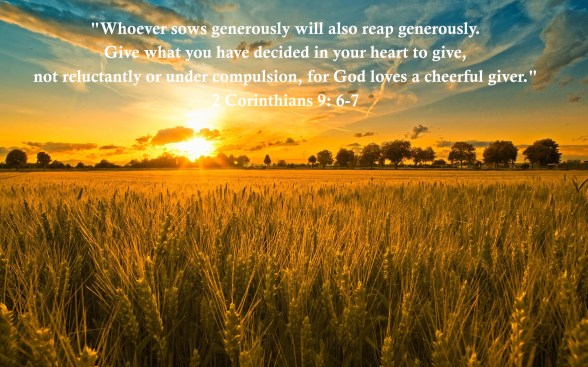
When all is said and done, we have a unique opportunity to participate with God in God’s great work in the world. One of the ways of participating is through our financial giving. What a privilege to partner with God in the work of bringing into being God’s Kingdom on earth!

Love and peace
Adrian

The Passion of our Lord Jesus Christ (according to Mark)

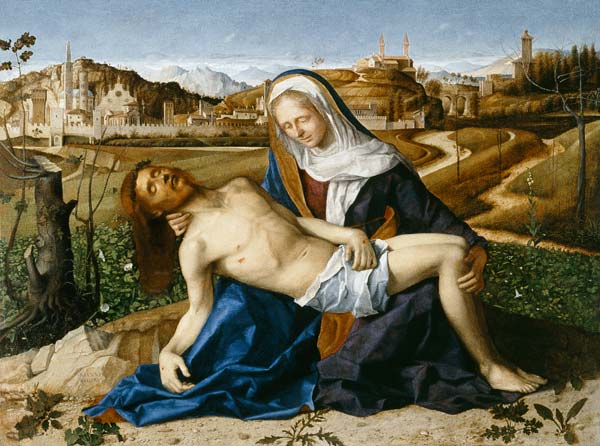
Pietà, by Giovanni Bellini (1505)

Click here to listen to the podcast of the Passion of Jesus Christ, according to St Mark.

Holy Week (from Palm Sunday to Easter Sunday) climaxes today (Good Friday) as we commemorate the death of Jesus Christ. It is the high point, or perhaps more accurately, the low point of the Christian year, because it is through Christ’s death that God’s works God’s ultimate act of salvation and redemption. It is also the day when our hearts break, because it is we ourselves who put Jesus there.

It is tradition in the Anglican church to read the whole passion narrative on Palm Sunday, and this post links to a recording of that reading that I did in 2012. It is taken from J.B. Phillips translation of the New Testament, a translation (actually, a paraphrase) that I find fresh and beautiful. It is the whole of Mark 14 and 15, starting with the anointing of Jesus at Bethany and ending with Jesus’ burial – 22 minutes of recording (click here).

I am also uploading a reflection on Holy Week that I prepared a couple of years ago, but have not previously shared here. Particularly for those who do not observe Holy Week, I hope that this may give you new and helpful insights into this important period in the life of the Christian. It is a written document, which you can download by clicking here.

My prayer is that over these last days of Lent, we will rediscover the meaning of Christ’s death for ourselves and for the world, that we will mourn and repent, and that we will experience new life with Christ in his resurrection on Sunday.

Love and blessings
Adrian

The Path of Jesus – A Path of Martyrdom & Death?

Click here to listen to the podcast of this 20-minute sermon.

On his way to the cross, Jesus said that we must hate our life in this world, that like a grain of wheat we must die, and that we must follow him on his journey to the cross (John 12:20-26). This seems to set us up for a path of martyrdom and death, a dark and twisted path. This was a path that many Christians in the early church followed – we read, for example, Ignatius of Antioche pleading with the Church of Rome in about AD107 to not save him from being martyred, eulogising and glorifying the path of suffering and death as the path mapped out by Christ and as the only means of his salvation.

If ‘the path of Jesus’ is a path of martyrdom and death, and if we are called to walk in his footsteps, then we too must become martyrs. Over the centuries this path has been used, for example, to exhort women to remain submissive in abusive marriages – they have the opportunity to suffer as Christ did, they have been told by Christians, and to do so without a word as Christ did. Is this really the path of Christ? Is this really what it means to walk in his footsteps?

All this raises fundamental and, to be honest, rather scary questions about God’s salvation plan: Did Jesus come into the world in order to die? Was it God’s intention – God’s desire – that Jesus should die? Was it always God’s plan that Jesus would die? Could salvation be found nowhere but through Christ’s death? If the answer to all these questions is ‘yes’, then we indeed have a dark message of salvation. And Christian discipleship is itself a dark path.

But in this sermon I want to suggest a different way of thinking about God’s intentions and desires. A different way of thinking about the place of Jesus’ death in God’s masterplan for the salvation of the cosmos. You may not agree with my conclusions – feel free to disagree! But perhaps a new look at Christ’s path will be helpful for all of us. Perhaps this will give us new insights into God’s love for us and God’s investment in our salvation. And perhaps this will open up a Path of Jesus that is truer to God’s deepest intentions.

Instructed Eucharist – Lent 2013

Communion

Click here to listen to the audio recording of the whole service – it is an hour and a quarter, because I’ve included the WHOLE service!

Figuring out the Anglican communion service (known as the Holy Eucharist) can be quite a challenge, particularly for those of us who did not grow up Anglican. So many words in the prayer book, sit-stand-kneel-stand-kneel-sit and all the robes, chalices, bowing and crossing – it can leave you feeling quite overwhelmed and confused! Many of those who have been members of the Anglican church for many years have forgotten what everything means – we just do what we’ve always done, often without understanding why we’re doing what we’re doing. Many people who are not familiar with the sacramental tradition find it all far to elaborate and ritualistic – a real turn-off.

Because of this, our church decided to run an ‘instructed Eucharist’ – this is our second one. It is a regular Eucharist service (though a little trimmed down to keep it not too long) with commentary provided as we go along, to explain what we’re doing and why we’re doing it. The Anglican service offers some unique experiences of worship, different from most Protestant and charismatic churches. While it is not for everyone, it may still be interesting – even if you’re not Anglican. We are not a very ‘high’ Anglican church – just regular folk who love Jesus and who are members of a small Anglican community church.

Click here to download just the transcript (PDF) of the instruction. You are most welcome to use and adapt our transcript for your own church. My thanks to the various sources that I drew on to prepare this one.

Click here to watch a video extract of the setting up of the communion table and the prayers leading up to the Eucharist 

(Apologies for the poor visuals. The original video was quite shaky. YouTube has kindly removed the shake by keeping the picture steady but moving the frame around. It’s a little odd, but at least Father Aaron is not shaking anymore!)

Thanks to Lynda Smith for the photograph of an outdoor Eucharist at our parish, held in November 2012.

Which Way are You Going?

Repentance

Click here to listen to or download the audio recording of this message.

Often, in the busyness of life, we just go on. We walk the same way we walked yesterday. We go through the motions. We just do what needs to be done. We are not especially purposeful in how we live. We often don’t really think about the direction we are taking, and whether this path will lead us closer to or further away from God. This can be a dangerous way of living – like a zombie. And so the Apostle Paul says, “If you think you are standing firm, be careful that you don’t fall!” (1 Corinthians 10:12).

So, God calls us to repent. Repentance does not mean to beat yourself up. Rather it is about turning away from sin and death and turning towards God and life. It is about choosing to live in a way that rejects darkness, and embraces the light. It about giving up the negative things in life and taking up the positive. It about turning our back on the devil and walking towards God. It is about salvation!

God stands always with open arms and says “Come! Come, all you who are thirsty; come to the waters; and you who have no money, come, buy and eat! Come, buy wine and milk without money and without cost. Listen! Listen to me, and eat what is good, and your soul will delight in the richest of fare. Turn to the Lord, and he will have mercy on you. Turn to God, for he will freely pardon” (from Isaiah 55:1-7). God gives second, third, fourth chances – he is infinitely patient. God does not coerce or force – God invites and waits.

We need to challenge ourselves with this question – which way are we going? Are you walking towards sin and death? Or are you walking towards God and life? Such an important question, particularly during Lent – Which way are you going?

In this audio message (click here) we unpack this idea of turning away from death and turning towards life.

In All Things, God Works

http://e-thor-carlson-fine-art.com/Fine-Art-Tapestry.html

Click here to listen to the audio recording of this message

In all things, God works. Even during the darkest times of our life, God continues to work God’s purposes out.

I’ve been through some pretty dark times in my life – a long history of depression, a survivor of sexual abuse, a month in a psychiatric hospital. Life can be tough! And when we or those we love are in the midst of suffering, we often wonder where God is in all this. We wonder how God can allow these bad things. And how God can make anything good come out of the bad.

In Romans 8:28, Paul assures us that in all things, God works for our good. But this verse, so thrown around, can feel like an assault, rather than a beacon of hope, when we are in the midst of suffering. When suffering is really bad, it is hard to imagine that God could in any way be involved. It becomes hard to remember that God loves us, passionately.

This recording is a re-presentation of the transcript of a sermon that I delivered five years ago. A friend of mine, who found this sermon meaningful back then, sent it to me recently, to preach my own sermon back at me, while I have been going through a difficult time. And I felt ministered to. She didn’t know this, but it was particularly meaningful because this month it has been 20 years since I was admitted to hospital for severe depression, an experience that is one of the touchstones of my life. And so, I present this message again, as a podcast, hoping that it may minister to you.

In all things, God works. Even during the darkest times of our life, God continues to work God’s purposes out.

Click here to access the written transcription of this sermon, as preached on 27 July 2008.

Participating with God

Dear Friends

Usually, my blogs are podcasts, and this will continue next week as usual. But today I wanted to post a brief reflection on our participation with God.

I do believe, with my whole heart, that God places a call upon each of us – sometimes this is a call to an explicitly Christian ministry, for example, a call to ordination or missionary work. But most often it is a call to be God’s person in the world, to use the gifts that we have been given to reveal God’s love to the people in our environment, to do our job in a way that reflects God’s values and priorities, to care for those in need, to live out our faith in authentic ways. It is a call to be Christ in the world.

For myself, after God called me into a relationship with him in 1984, I began to feel a sense of calling into ministry. I really can’t articulate what this call constitutes. I’m not one who has heard the Voice of God saying, “Adrian, I want you to do this.” Perhaps it was just a feeling. But it was a deep seated feeling, a strong conviction, an imperative, a persistent yearning, a burning in my belly, an annoying compulsion. There is something about this calling that I could not get away from. Nevertheless, I spent the first 20 years of my Christian life running away from this call. I was doing the Jonah! I genuinely did not feel equipped for ministry – my faith is far too frail and uncertain.

Then, back in 2004, through my participation in a version of the purpose driven church, I experienced a renewal of the call, so strong in fact that I HAD to do something about it. I approached a trusted spiritual advisor, and she affirmed the call and took it to our Church Council. Eventually, in August 2005 I preached my first sermon, on Romans 12:1 (you can access the text of this sermon, by clicking here). That first sermon was a confirmation of God’s call – as I stood at the lectern and broke open God’s Word, I knew, for absolute certain, that this is what I was put here for. It was only in acting upon God’s call that I really got confirmation of that call.

It has been a little over seven years, and I have been blessed, by God and the church, to have the opportunity to preach regularly – for the past couple of years it has been twice a month. I thank God for this privilege. God has opened up a space for me to do God’s work, for me to be used by God. This is something amazing about our God – God likes us to participate with him in his work in the world – God chooses to share the work with us. In the process of my participating with God, I have been blessed. And apparently others have been blessed through me. The knowledge that God’s Spirit touches others through my fragile offering of myself is awesome! It is in my brokenness and uncertainty, that God does what God does best – God loves his people.

For myself, the call that God has placed in me is not just an optional thing. Not something I can turn off. Not something that I can run away from. I cannot help but believe that since God gifts each of his children, and since God has a vision for each of his children, God must also have a call for each of his children. I believe firmly that God has a call for you. And if you are still reading this, then I want to prompt you to seek out that calling. To listen to God’s voice – typically, a still, small voice. To listen for God’s call – something in your bones, in your gut. Something burning, something that wants to grow, something that leads you towards God.  God does not just call some; God calls each one. God calls you!

There is a poem that has been very meaningful to me in my journey, which I wish to share with you this week. I’m not much into poetry (I hear some of you gasp! Sorry about that), but this one expresses most accurately what I experience in myself. It puts into words an experience that I am not able to articulate myself. I stumbled across is by accident, but really I think this is a gift from God. And maybe it is a gift for you too.

What is this seed that thou has planted in me
that I must bring to fruit
or pass my life in sterile waste?

What is this gift that thou hast given me
that I must in turn pass on
or it will destroy me?

What is it you are asking me to do
that I must do
or know my life defeated?

I ask, in Christ’s name
Amen.

–        Edward Tyler, 1978
Prayers in Celebration of the Turning Year.